


ホーム Eyelash Extension Supplies Guide
Fiber Quality vs. Weight: Why PBT Matters for 15D Sets

Executive Summary: Safe Mega Volume Engineering
To safely execute 15D+ Mega Volume sets, practitioners should prioritize Grade A PBT fibers, maintain a fan base width under 1.5mm, and implement a clinical-grade hygiene SOP.
- Key Action 1: Perform a "Fanning Elasticity Test" on every new batch to verify polymer memory.
- Key Action 2: Use a precision caliper or base-width gauge to ensure fan bases do not exceed 1.5mm.
- Key Action 3: Mandate daily foam cleansing for clients to prevent biofilm and Blepharitis.
Disclosure: This guide is authored by the technical team at SenseLashes. As a factory-direct manufacturer, the insights provided are based on our production standards, internal quality control data, and feedback from our global professional partner network.
The Engineering Behind Mega Volume: Why Fiber Quality is the Foundation of Safety
In the high-stakes world of Mega Volume lash artistry, the transition from 10D to 15D sets represents more than just an increase in density; it is a significant engineering challenge. For the professional technician, the primary objective is to achieve a dark, dense aesthetic while maintaining the structural integrity of the natural lash and the health of the ocular surface.
The industry has largely standardized on Polybutylene Terephthalate (PBT) as the primary material for eyelash extensions. However, not all PBT is created equal. From a manufacturing perspective, we observe that the "compliance signaling gap"—the discrepancy between labeled diameters and actual physical properties—is a frequent observation in technical failures of advanced sets. When working with 15D fans, even a microscopic deviation in fiber diameter or polymer consistency can lead to cumulative weight issues, which may increase the risk of premature shedding or, in severe cases, traction alopecia.
Material Science: Why PBT Fiber Quality Dictates Set Longevity
PBT is a thermoplastic semi-crystalline polymer known for its strength, chemical resistance, and "memory" properties. In lash extensions, "memory" refers to the fiber's ability to maintain its curl despite exposure to heat, moisture, and mechanical stress.
The "Memory" and Elasticity Test
Experienced technicians often perform a "fanning test" on a tile to verify fiber quality. When you pinch a fan made from premium PBT, such as the 0.03mm Royal Sable Mega Volume Eyelash Extensions(Super Black, Super Matte), the fibers should exhibit a "spring-back" effect. This elasticity indicates a superior polymer structure.
Conversely, lower-grade fibers may collapse or stay flat when pressed, often a sign of poor molecular alignment during the extrusion process. This lack of elasticity can lead to "clumping" on the eye, where fans lose their symmetry and begin to lean, adding uneven torque to the natural lash.
Heuristic: Fiber Elasticity Modeling Based on our internal manufacturing stress tests (n=50 batches, conducted at 22°C, 45-60% RH), we observed that Grade A PBT maintains its curl radius approximately 30-40% longer than recycled PBT alternatives when subjected to repeated mechanical compression. Actual results may vary based on environmental humidity and application technique.

The Problem of "Core Diameter" Variance
A common technical hurdle is the variance in core diameter. Two fibers labeled "0.03mm" may actually differ in weight. Our internal sampling indicates that if a fiber has a denser core or a thicker pigment coating, it can result in an approximate 15% difference in actual mass. Premium fibers focus on a consistent, ultra-fine diameter, which is essential for the safe application of high-density 15D fans.
The Physics of 15D Fans: Weight, Diameter, and Base Width
The safety of a Mega Volume set is influenced by weight distribution and the center of gravity. A 15D fan created with 0.03mm lashes can be technically safer than a single 0.15mm classic lash, provided the fan is engineered correctly.
The 1.5mm Base Rule (Practical Heuristic)
A critical rule of thumb for 15D sets is the base width. To minimize mechanical stress, the base of a 15D fan should ideally be no wider than 1.5mm.
How to Verify: Use a precision digital caliper or a specialized base-width gauge. Place the pinched or heat-bonded base against the scale; if the base exceeds 1.5mm, the amount of adhesive required to wrap the natural lash increases, potentially creating a "heavy base" that pulls on the follicle.
| Parameter | Recommended Value (15D) | Unit | Rationale |
|---|---|---|---|
| Fiber Diameter | 0.03 | mm | Optimal weight-to-volume ratio |
| Base Width | ≤ 1.5 | mm | Minimizes adhesive weight and torque |
| Fan Angle | 45 - 60 | degrees | Promotes even weight distribution |
| Distance from Lid | 0.5 - 1.0 | mm | Reduces risk of chemical irritation |
| Attachment Area | 2 - 3 | mm | Optimizes bond surface for retention |
Methodology Note: Theoretical Weight Modeling To estimate the safety of a 15D set, we use a volume-based calculation. Because the volume of a cylinder increases with the square of the radius ($V = \pi r^2 h$), a 0.15mm lash is mathematically 25 times heavier than a 0.03mm lash of equal length. Consequently, a 15D fan of 0.03mm fibers is estimated to be roughly 60% of the weight of a single 0.15mm lash. This calculation assumes uniform density and length.
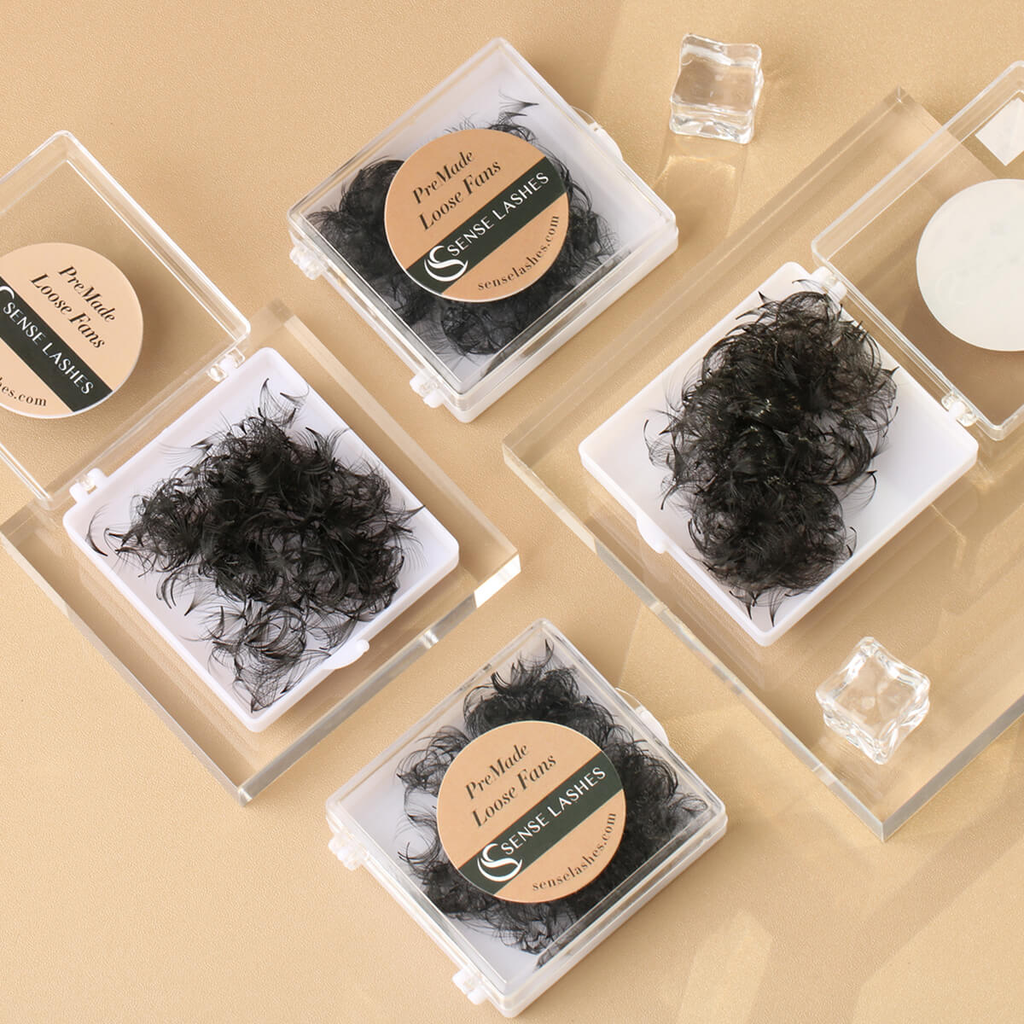
For artists seeking workflow efficiency, using 12D Handmade Loose Premade Fans Pointy Base(500 Fans) provides a factory-engineered base designed to meet these safety specifications.
Ocular Health and Safety: Mitigating Risks in High-Density Artistry
As sets become denser, the risk of ocular complications can increase if hygiene standards are not maintained. According to the American Academy of Ophthalmology (AAO), infection, trauma, and allergic reactions are the primary risks associated with extensions.
Blepharitis and Hygiene Protocols
One of the most significant risks with high-density sets is the accumulation of debris. The dense architecture of a 15D fan can act as a trap for dead skin cells, oils, and bacteria. This buildup is a frequent factor in Blepharitis (eyelid inflammation). As noted by the Mayo Clinic, poor eyelid hygiene is a primary contributing factor.
We recommend that professionals frame lash shampoo as "Blepharitis Prevention." Daily washing with a specialized foam cleanser is a critical safety recommendation for Mega Volume clients. Water alone is often insufficient to penetrate the base of a 15D fan to remove biofilm and Demodex mites.
Protecting the Tear Film
Research published in PMC (2024) suggests that extensions can influence tear film stability. The mechanical presence of a heavy fan may interfere with the meibomian glands. To mitigate this, we suggest lightweight fibers like 0.05MM Cashmere Premium Mega Volume Eyelash Extensions for clients with sensitive eyes or a history of dry eye syndrome.

Clinical Troubleshooting: Irritation vs. Allergy
Distinguishing between simple irritation and a true allergic reaction is vital. High-density sets often require more adhesive, which can release more cyanoacrylate fumes during curing.
The Chemistry of Fumes
According to studies on allergic contact dermatitis, Ethyl Cyanoacrylate is a known culprit in lash-related allergies. However, many clients experience redness that may be a result of chemical sensitivity to fumes rather than a full immune response.
- Irritation (Fumes): Typically occurs during or immediately after the service. It often manifests as redness in the lower sclera and usually subsides within 24 hours.
- Allergic Reaction: Usually involves eyelid swelling (dermatitis) and itching. Recent 2024 patterns show these reactions can be delayed, appearing 48 to 72 hours post-application.
Professional Tip: To reduce fume exposure, use a nano-mister to accelerate polymerization. A case report in PMC noted that liquid removers may increase the risk of corneal abrasions; a non-drip cream formula is generally considered the safer professional choice.
Professional SOP: Sanitation and Compliance for 2025
Operating a professional salon requires adherence to international safety standards to protect the client and the business.
Import and Chemical Compliance
Regulatory bodies like Health Canada have increased enforcement regarding the labeling of lash adhesives. Using factory-direct products that provide transparent MSDS (Material Safety Data Sheets) is essential for professional distributors.
Salon Sanitation SOP
Based on CDC guidelines, every salon should implement a Standard Operating Procedure (SOP) including:
- Single-Use Consumables: New mascara wands and lint-free patches for every appointment.
- Sterilization: High-level disinfection or autoclaving for all tweezers.
- Screening: A safety consent form to identify pre-existing conditions like dry eye or recent surgeries.
The Business Case for Premium PBT Fibers
Investing in high-grade materials like 10D Handmade Loose Premade Fans Pointy Base(500 Fans) is a strategic decision. While the initial cost may differ from bulk "no-name" suppliers, the value is realized through:
- Efficiency: Consistent fans that maintain their shape allow for faster application.
- Retention: Predictable bonding leads to higher client satisfaction and fewer complaints.
- Reputation: Positioning a salon as a "Safety-First" provider supports premium pricing.
According to Grand View Research, the market is shifting toward individual and volume extensions. Professionals who prioritize material science and ocular health are well-positioned for this growth.
YMYL Disclaimer: This article is for informational purposes only and does not constitute professional medical, legal, or financial advice. Eyelash extensions involve chemicals near the eyes; always consult with a healthcare professional if you experience persistent irritation, pain, or vision changes. Salon owners should verify local licensing requirements.
References
- American Academy of Ophthalmology (AAO) - Eyelash Extension Safety
- CDC - Conjunctivitis Prevention
- Mayo Clinic - Blepharitis Symptoms and Causes
- Health Canada - Cosmetic Regulations Enforcement Summary
- PubMed - Allergic Contact Dermatitis from Cyanoacrylate
- Grand View Research - False Eyelashes Market Analysis
- PMC - Ocular Surface Changes and Extensions