


ホーム Eyelash Extension Supplies Guide
Hazel Eye Complexity: Identifying Fleck-Enhancing Lash Tones

Hazel Eye Complexity: Identifying Fleck-Enhancing Lash Tones
Hazel eyes are often described as "chameleon eyes" due to their unique ability to shift appearance based on lighting, clothing, and—most critically for the professional artist—lash selection. Unlike solid brown or blue irises, hazel eyes are multi-tonal, typically featuring a burst of gold, green, or amber around the pupil that transitions into a darker outer ring.
For the professional lash artist, hazel eyes represent the ultimate opportunity for customization. Moving beyond standard black extensions allows us to manipulate which "fleck" of color is emphasized. This guide provides a technical framework for iris analysis, color harmonization, and the clinical safety standards required when working with advanced colored pigments.
The Science of Iris Harmonization: Why Black Isn't Always the Answer
In traditional lash training, "jet black" is the default. However, when working with hazel eyes, a fully opaque black lash can often create too much contrast, effectively "dulling" the subtle shifts in the iris. This occurs because the human eye perceives color relative to its surroundings. A heavy black frame can make the green and gold tones in a hazel eye appear flatter or more muted.
Based on our observations of hundreds of custom sets, we have found that the transparency and diameter of the lash fiber play a significant role in how light interacts with the iris. For instance, using a 0.05mm diameter fiber in a deep chocolate or mocha tone allows light to pass through the lash fringe and hit the iris, illuminating the internal flecks.
Logic Summary: Our iris harmonization model assumes that lower-opacity lash fibers (0.05mm–0.07mm) increase light scattering toward the iris, whereas high-opacity fibers (0.15mm+) create a shadow effect that reduces the visible "pop" of hazel tones.
Identifying the "Active" Fleck
To select the correct lash tone, you must first identify the dominant fleck. We recommend a specific diagnostic heuristic:
- Natural Light Assessment: Have the client stand near a window with indirect natural light. Artificial salon lighting often has a blue or yellow bias that distorts hazel tones.
- The Pupil-Spoke Method: Instead of looking at the overall eye color, focus on the "spokes" or freckles immediately surrounding the pupil. These are the "active" colors.
- The Contrast Rule: To make green flecks pop, use red-based browns or burgundy. To make gold flecks pop, use deep espresso or violet-tinted browns.

Strategic Color Selection: The 70/30 Blending Framework
Once you have identified the target fleck, the next step is fanning and blending. A common mistake is using 100% of a single color, which can look artificial or "costume-like." We advocate for a structured blending ratio to maintain professional sophistication.
The 70/30 Heuristic for Hazel Eyes
Through scenario modeling and client feedback, we have established the 70/30 Rule for naturalistic color enhancement:
- 70% Base Tone: This should be a dark brown or "black-brown" that provides the necessary depth and definition at the lash line.
- 30% Accent Tone: These are isolated spikes or fans of the enhancing color (e.g., burgundy, plum, or light copper) placed strategically to align with the iris flecks.
| Target Iris Tone | Recommended Base Lash | Recommended Accent Lash | Effect |
|---|---|---|---|
| Emerald/Green Flecks | Dark Mocha | Burgundy or Deep Wine | Complementary contrast makes green appear more vivid. |
| Amber/Gold Flecks | Espresso | Copper or Light Brown | Harmonizes with the warmth of the gold spokes. |
| Gray/Blue-Hazel | Black-Brown | Plum or Navy | Cool tones pull the blue/gray out of the hazel mix. |
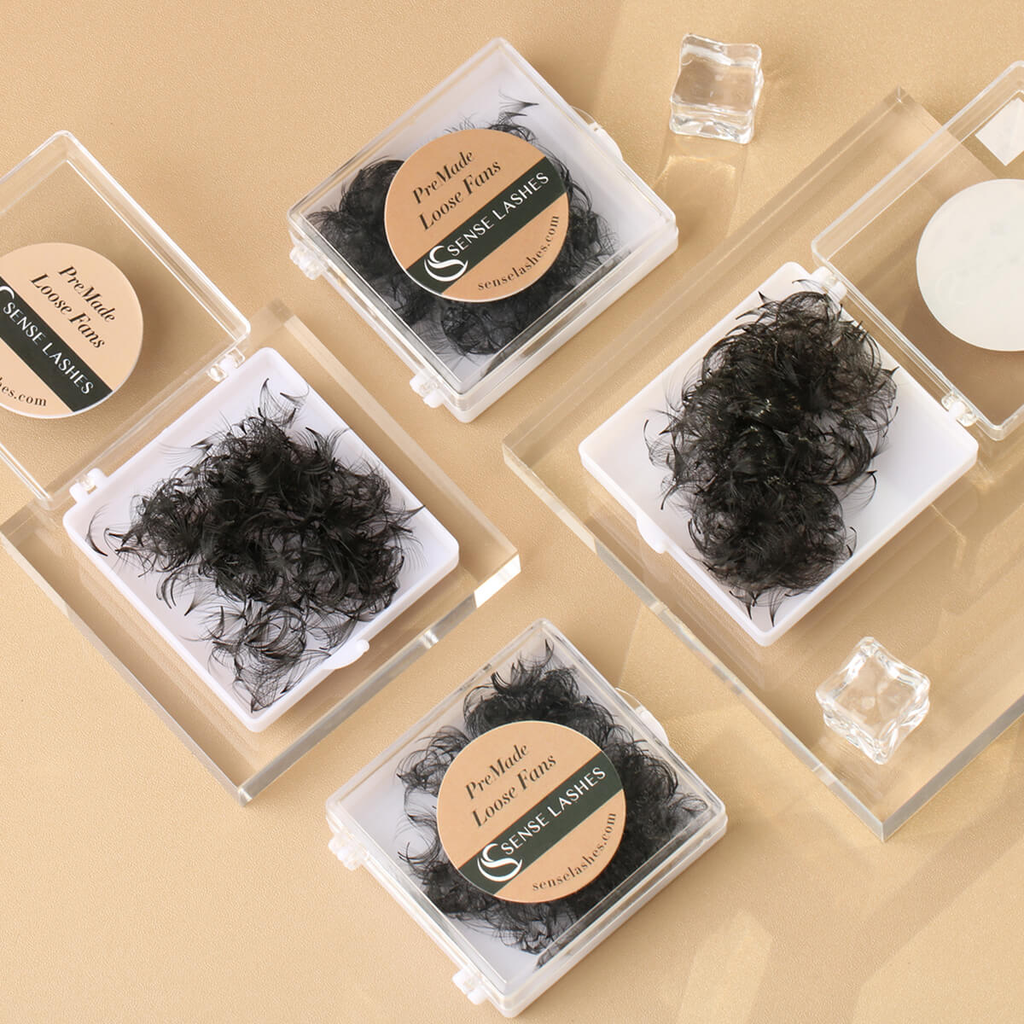
When executing these sets, using high-quality premade fans can ensure consistency in the color distribution. For example, the Brown 12D PreMade Loose Fans - 0.05 - 500 Fans provide a soft, flexible base that blends seamlessly with natural lashes, preventing the "stiff" look often associated with lower-quality PBT fibers.
Technical Execution and Material Safety
When moving into colored lash artistry, technical precision regarding adhesive chemistry and material quality becomes even more critical. Colored lashes often use different dyes than standard black lashes, which can occasionally impact the surface energy of the lash and, consequently, its bond with the adhesive.
Adhesive pH and Formaldehyde Mitigation
Historically, lash adhesives were known for high acidity and formaldehyde release. According to a seminal study by Amano et al. (2012), the pH of the glue and the release of formaldehyde can lead to keratoconjunctivitis. Modern professional-grade adhesives, like those used in conjunction with SenseLashes products, are formulated to be pH-neutral.
If a client experiences burning or irritation, it is vital to distinguish between a chemical sensitivity and a pre-existing condition. According to WebMD, dry eye syndrome can often be exacerbated by lash fumes, leading to a misdiagnosis of a "glue allergy."
Methodology Note: Our troubleshooting guide for artists is based on common patterns from customer support and return handling. Irritation that subsides within 24 hours is typically fume-related (irritation), whereas redness that persists or worsens after 48 hours may indicate a true acrylate allergy, as noted in recent studies on contact dermatitis.
Pigment Quality and FDA Compliance
Not all colored lashes are created equal. Industrial-grade dyes can leach or cause eyelid dermatitis. We prioritize the use of Korean PBT (Polybutylene Terephthalate) infused with pigments that align with FDA Eye Cosmetic Safety guidelines. This ensures that the vibrant burgundy or brown tones do not cause long-term ocular surface changes.

Advanced Mapping for Hazel Eyes: Texture and Wispy Styles
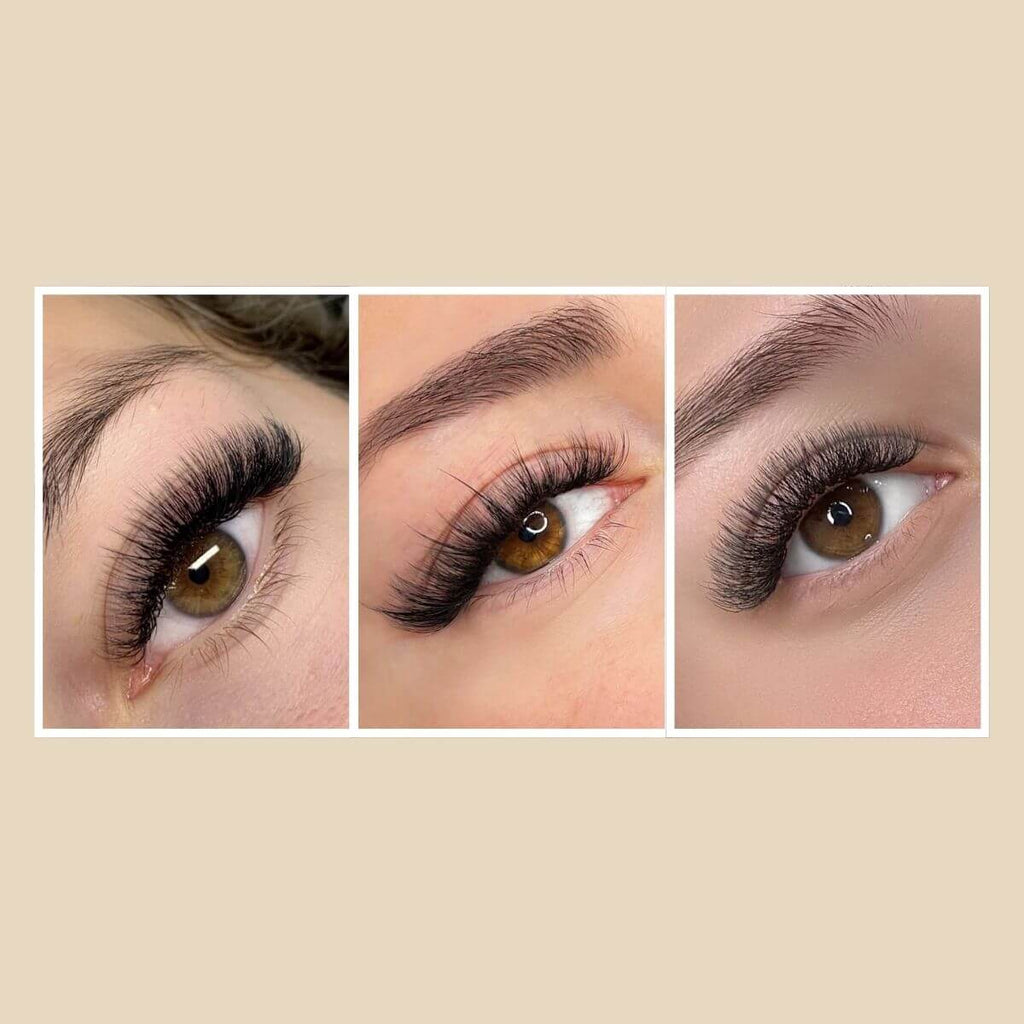
To truly elevate a hazel eye set, the mapping must account for texture. A flat, uniform top line can look heavy. Instead, we recommend a "Wispy" or "Kim K" style mapping that uses varying lengths and curls to create an airy, multidimensional look.
Using 0.07mm Cashmere Volume Wispy Eyelash Extensions allows the artist to create "spikes" that act as conduits for light. When these spikes are placed over the areas of the iris with the most color complexity, they act like a frame for a masterpiece.
Managing Retention and Anatomy
The weight of the fan must always be balanced against the health of the natural lash. For hazel-eyed clients who often want a "full" look to showcase the color, using Brown 20D PreMade Loose Fans - 0.05 - 500 Fans or Brown 14D PreMade Loose Fans - 0.05 - 500 Fans offers high density without the excessive weight of a thicker diameter.
Proper isolation is the only way to prevent mechanical damage. As noted in PMC research on ocular surface changes, poor application can disrupt the tear film and meibomian glands. We recommend a strict "one-to-one" isolation protocol to ensure that the lash microbiome remains healthy throughout the wear cycle.
The Salon Sanitation SOP: Protecting the Artist and Client
With the rise of advanced lash services, sanitation cannot be an afterthought. Professionalism is defined by the safety protocols you maintain. According to the CDC (Centers for Disease Control), preventing the spread of conjunctivitis requires strict adherence to hand hygiene and the sterilization of multi-use tools.
The "Blepharitis Prevention" Protocol
We encourage artists to reframe "aftercare" as "eye health maintenance." Instead of just selling a lash shampoo, educate your clients on Blepharitis, an eyelid inflammation often caused by bacteria buildup.
- Daily Cleansing: Use a dedicated foam cleanser to remove oils and skin cells.
- Mite Prevention: Research in PMC (Demodex Studies) highlights that poor hygiene can lead to Demodex mite infestations, which are catastrophic for lash retention and eyelid health.
Professional Documentation
To protect your business, always use a Client Safety Consent Form that outlines the risks of allergic reactions and the necessity of proper aftercare. This positions you as a responsible authority rather than just a service provider.
Business Strategy: Pricing the "Hazel Eye Custom Set"
Custom color work is a premium service. It requires more time for consultation, a larger inventory of lash tones, and advanced technical skill.
Justifying the Premium
According to Grand View Research, the lash industry is seeing a significant shift toward "individual" and "customized" segments. Clients are no longer looking for a one-size-fits-all solution; they are looking for artistry.
- Consultation Fee: Consider adding a 15-minute "Color Analysis" to your initial set price.
- Inventory Management: Use high-count loose fans like our 500-fan boxes to keep your cost-per-application low while offering premium brown tones.
- Retention Marketing: Use the unique nature of hazel eye sets in your social media marketing. Before-and-after photos that specifically highlight the change in iris "pop" are highly effective for attracting high-end clientele.
Summary of Professional Takeaways
For the professional lash artist, mastering hazel eye complexity is a gateway to a more loyal and higher-paying client base. By moving away from "standard black" and embracing the nuances of brown and burgundy tones, you demonstrate a level of expertise that sets you apart in a crowded market.
- Analyze the Flecks: Identify the dominant spokes near the pupil in natural light.
- Apply the 70/30 Rule: Use 70% dark base and 30% accent tones to create a sophisticated, multidimensional look.
- Prioritize Safety: Use FDA-compliant pigments and pH-balanced adhesives to protect the delicate ocular surface.
- Educate on Hygiene: Frame aftercare as a medical necessity for preventing blepharitis and Demodex, ensuring long-term lash health.
- Leverage Quality Materials: Utilize high-quality Korean PBT fans, such as the Brown 14D PreMade Loose Fans - 0.05 - 500 Fans, to ensure a soft, professional finish.
By integrating these scientific principles and technical frameworks, you transition from a lash technician to a true lash artist and authority.
Disclaimer: This article is for informational purposes only and does not constitute professional medical or legal advice. Always consult with a qualified health professional regarding eye conditions and ensure compliance with local cosmetic regulations.
References
- CDC - Conjunctivitis Prevention
- Mayo Clinic - Blepharitis Symptoms and Causes
- American Academy of Ophthalmology - Eyelash Extension Safety
- FDA - Eye Cosmetic Safety
- PubMed - pH and Formaldehyde in Eyelash Adhesives (Amano et al.)
- Grand View Research - False Eyelashes Market Analysis
- Health Canada - Cyanoacrylate Compliance Report