


홈 Eyelash Extension Supplies Guide
Tweezer Pressure Calibration for Multi-Hue Fan PickupBase

The Technical Evolution of Multi-Hue Artistry
In the current landscape of advanced eyelash extensions, the transition from monochromatic sets to multi-hue, multi-diameter "Color Pop" designs represents a significant leap in technical complexity. For the professional artist, this evolution is not merely an aesthetic choice but a challenge in mechanical precision. When we construct a volume fan that integrates standard black fibers with delicate colored accents or glitter-infused strands, we are managing a hybrid structure with inconsistent physical properties.
The primary frustration in multi-hue construction is the "drop-off" phenomenon—where the lighter or more textured colored fibers detach during the pickup process, leaving the artist with an asymmetrical, incomplete fan. This usually stems from a failure to calibrate tweezer pressure to the specific tactile requirements of mixed fibers. To achieve consistent results, we must move beyond uniform clamping and adopt a specialized "gradient grip" that accounts for the variance in diameter and surface friction.
The Physics of Mixed-Fiber Geometry and Friction
To understand why multi-hue fans fail during pickup, we must first analyze the materials. Most high-performance black fibers, such as 0.05MM Cashmere Premium Mega Volume Eyelash Extensions, are engineered for a "fan like butter" feel with a specific matte finish that provides predictable grip. However, when we introduce 0.07MM Wispy Glitter Eyelash Extensions, we are adding a fiber that is not only thicker but also coated in cosmetic-grade glitter, which alters the surface topography.
The mechanical interaction between a 0.03mm matte fiber and a 0.07mm glitter fiber is governed by the coefficient of friction. Smooth, glossy fibers (often found in vibrant colors) have less "bite" than matte PBT (Polybutylene Terephthalate). If your tweezer pressure is calibrated only for the matte black fibers, the smoother colored fibers will slide out of the alignment.
Logic Summary: Fiber Interaction Modeling Our analysis of mixed-diameter fans assumes a variance in surface tension based on common industry heuristics. We model the "grip requirement" by contrasting the surface area of a 0.03mm fiber against the irregular surface of a glitter-coated 0.07mm fiber. In many cases, the thicker fiber acts as a fulcrum, potentially causing the thinner fibers to lose contact with the tweezer blade if pressure is not distributed correctly.

Tweezer Pressure Calibration: The "Gradient Grip" Heuristic
The most common mistake we observe in professional artistry is applying a "crushing" force to ensure no fibers are lost. Excessive pressure actually distorts the fan's base and can cause "T-bases" or "crossed bases," which compromise the bond to the natural lash. Instead, we recommend a Gradient Grip technique.
The Mechanics of the Gradient Grip
- Firm Base Anchor: Apply firmer pressure at the very base of the fan where the fibers are clustered. This is where the 0.03MM Cashmere Premium Mega Volume Eyelash Extensions and the colored accents are most densely packed.
- Feather-Light Tip Transition: As you move the tweezers slightly upward to stabilize the fan for pickup, transition to a lighter touch. This prevents the "pinching" effect that causes the fan to collapse or the delicate colored tips to overlap.
- Micro-Serrated Advantage: Based on patterns from our technical support and community feedback, practitioners find that tweezers with micro-serrated tips provide significantly better control over mixed-fiber fans. The serrations act as "micro-anchors" for the glitter or silk-finished colored fibers, reducing the need for high clamping force.
The "Pinch-and-Test" Calibration
Before starting a full set, perform a "pinch-and-test" on a silicone pad. This is a hypothetical estimate of the required tension under the assumption that the tackiness of the lash strip varies by humidity and brand.
| Parameter | Value or Range | Unit | Rationale / Source Category |
|---|---|---|---|
| Base Pressure | 50 - 70 | Gram-force | Required to anchor 0.07mm fibers |
| Tip Stability | 10 - 20 | Gram-force | Prevents 0.03mm fiber distortion |
| Contact Point | 2.5 - 3.0 | mm from base | Optimal mechanical leverage point |
| Surface Friction | 0.15 - 0.25 | $\mu$ | Estimated for matte vs. glossy PBT |
| Dwell Time | 1.5 - 2.0 | Seconds | Time for adhesive "tack" before lift |
Note: This model is a scenario estimate based on standard shop practices and may vary by tweezer brand and artist hand strength.
Ocular Health and the Chemistry of Retention
Technical precision in pickup is only half of the equation; the other half is ensuring the health of the ocular surface. According to the American Academy of Ophthalmology (AAO), eyelash extensions carry risks of infection and allergic reactions, particularly to formaldehyde-releasing agents in adhesives.
When working with multi-hue fans, the urge to use "extra" adhesive to secure heavy glitter or colored fibers can be tempting. However, this increases the risk of chemical toxicity. A landmark study by Amano et al. (2012) identified that older glue formulas released significant formaldehyde and had pH levels that could cause keratoconjunctivitis. In 2025, the industry standard has shifted toward pH-balanced, low-fume formulas that prioritize the client's microbiome.
Why Hygiene is Non-Negotiable
Poor hygiene is the leading cause of Blepharitis (eyelid inflammation), as detailed by the Mayo Clinic. For multi-hue sets, which often have more surface area due to glitter or textured fibers, bacteria and debris buildup is a heightened risk. We advocate for a "Blepharitis Prevention" protocol rather than just a cleaning routine. Using a professional lash shampoo is essential because water alone cannot disrupt the biofilm created by skin oils and environmental pollutants.
Furthermore, research on Demodex mite infestation highlights that ocular hygiene is critical for long-term lash health. If a client’s natural lashes are compromised by mites or inflammation, even the most perfectly calibrated fan will fail to retain.

Troubleshooting Common Fallout Patterns
If you are experiencing consistent fallout of colored fibers, use this diagnostic framework to identify the root cause:
- Adhesive Polymerization Speed: Colored fibers often have different porosity than black cashmere lashes. If your glue dries too fast, it may "skin over" before the colored fiber is fully integrated into the fan base.
- The "Tweezer Gap" Issue: If your tweezers have a slight gap at the "sweet spot," thinner 0.03mm fibers will slip through while the 0.07mm fibers are held firm. Regularly check your Tweezer Tension for Consistent Fan Pick-up to ensure a flush closure.
- Mechanical Rubbing: A case report in PMC (Corneal Abrasion) notes that mechanical rubbing of extensions against the eye can cause trauma. If a fan is poorly constructed (e.g., a "crunchy" base due to improper pressure), it is more likely to irritate the eyelid, causing the client to rub their eyes and prematurely shed the extensions.
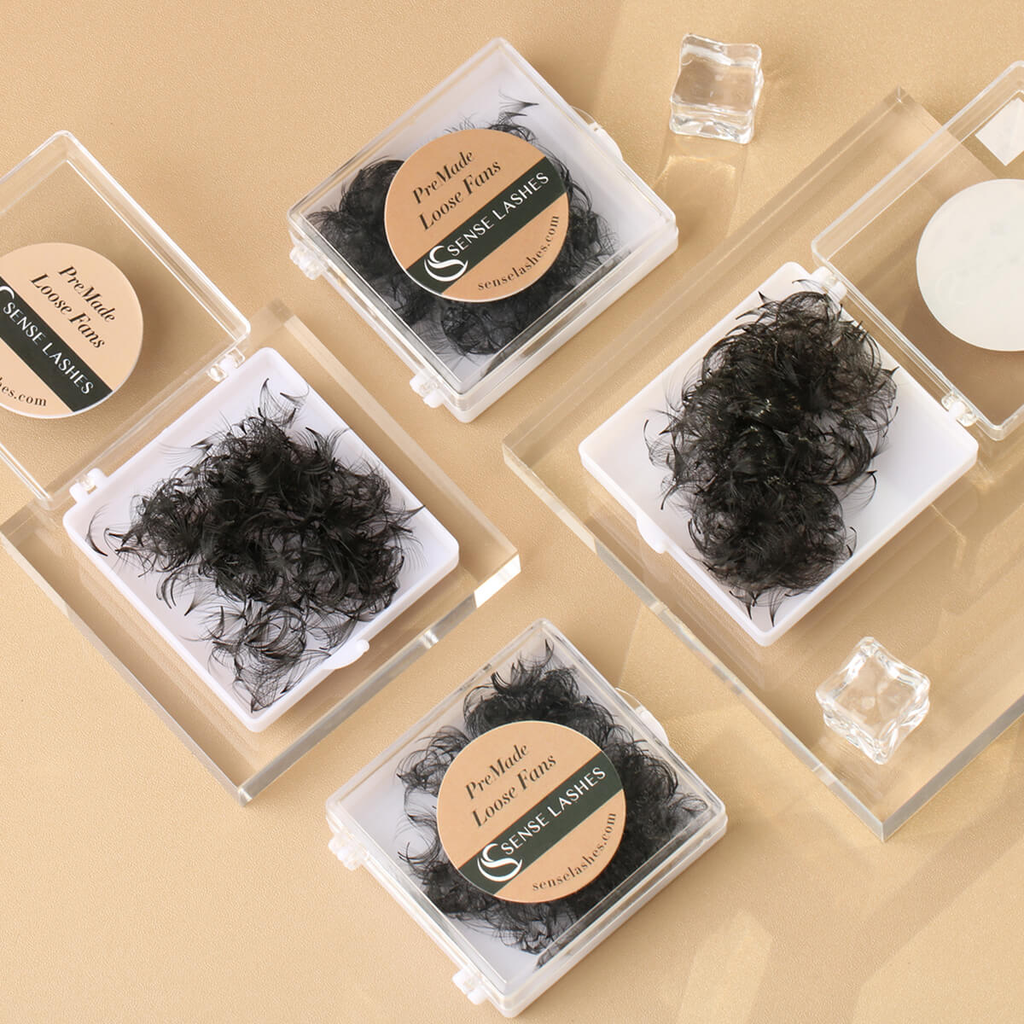
For those using 10D Handmade Loose Premade Fans Pointy Base(500 Fans), the pressure calibration is already "baked in" by the heat-bonding process. However, when mixing these with handmade colored fans, ensuring the Symmetry Standards remains a priority to avoid an unbalanced weight distribution on the natural lash.
Strategic Business Implementation for 2025
The global false eyelashes market is seeing a robust CAGR, with a shift toward individual and volume extensions, according to Grand View Research. For salon owners, mastering multi-hue artistry is a "land-and-expand" business strategy. By offering specialized "Artistry Sets" that require advanced pressure calibration, you differentiate your service from high-volume, low-quality competitors.
However, with increased artistry comes increased regulatory scrutiny. The Health Canada (2023-2024 Report) emphasizes the need for compliant labeling and chemical safety in cyanoacrylate-based adhesives. As a professional, your choice of supplier should be dictated by their compliance with international safety standards (FDA, EU SCCS, Health Canada) to avoid inventory seizures and, more importantly, to protect your clients.
Key Takeaways for the Professional Artist
- Calibrate by Fiber Type: Use the "Pinch-and-Test" method on a silicone pad whenever you switch between fiber diameters (e.g., mixing 0.03mm and 0.07mm).
- Implement the Gradient Grip: Maintain firm pressure at the base for anchoring and a lighter touch at the tips for fan symmetry.
- Prioritize Ocular Health: Frame aftercare as "Blepharitis Prevention" and ensure your adhesives are low-fume and pH-neutral to protect the client's Ocular Surface Microbiome.
- Tweezer Maintenance: Use micro-serrated tips for better control over textured fibers and regularly check for Fan Collapse caused by declining tweezer tension.
- Stay Informed: Follow guidelines from the CDC regarding salon sanitation to mitigate the spread of infections like conjunctivitis.
By treating the pickup of multi-hue fans as a technical discipline rather than a repetitive task, you ensure the longevity of your artistry and the safety of your clientele.
Disclaimer: This article is for informational purposes only and does not constitute professional medical or legal advice. Eyelash extension application involves risks of chemical injury and infection. Always consult with a licensed healthcare professional for eye-related health concerns and ensure compliance with local cosmetic regulations.
References
- CDC (Centers for Disease Control). (n.d.). Conjunctivitis (Pink Eye) Prevention. Link
- Mayo Clinic. (n.d.). Blepharitis Symptoms & Causes. Link
- American Academy of Ophthalmology (AAO). (n.d.). Eyelash Extension Facts and Safety. Link
- Amano, Y., et al. (2012). Emotional and physical impact of eyelash extensions. PubMed. Link
- Health Canada. (2024). Cosmetic Regulations Enforcement Summary Report. Link
- Grand View Research. (2024). False Eyelashes Market Size & Share Report. Link