


홈 Eyelash Extension Supplies Guide
Full Set vs. Mini-Fill: Choosing the Right Mega Volume Service

The Mega Volume Dilemma: Precision vs. Profitability
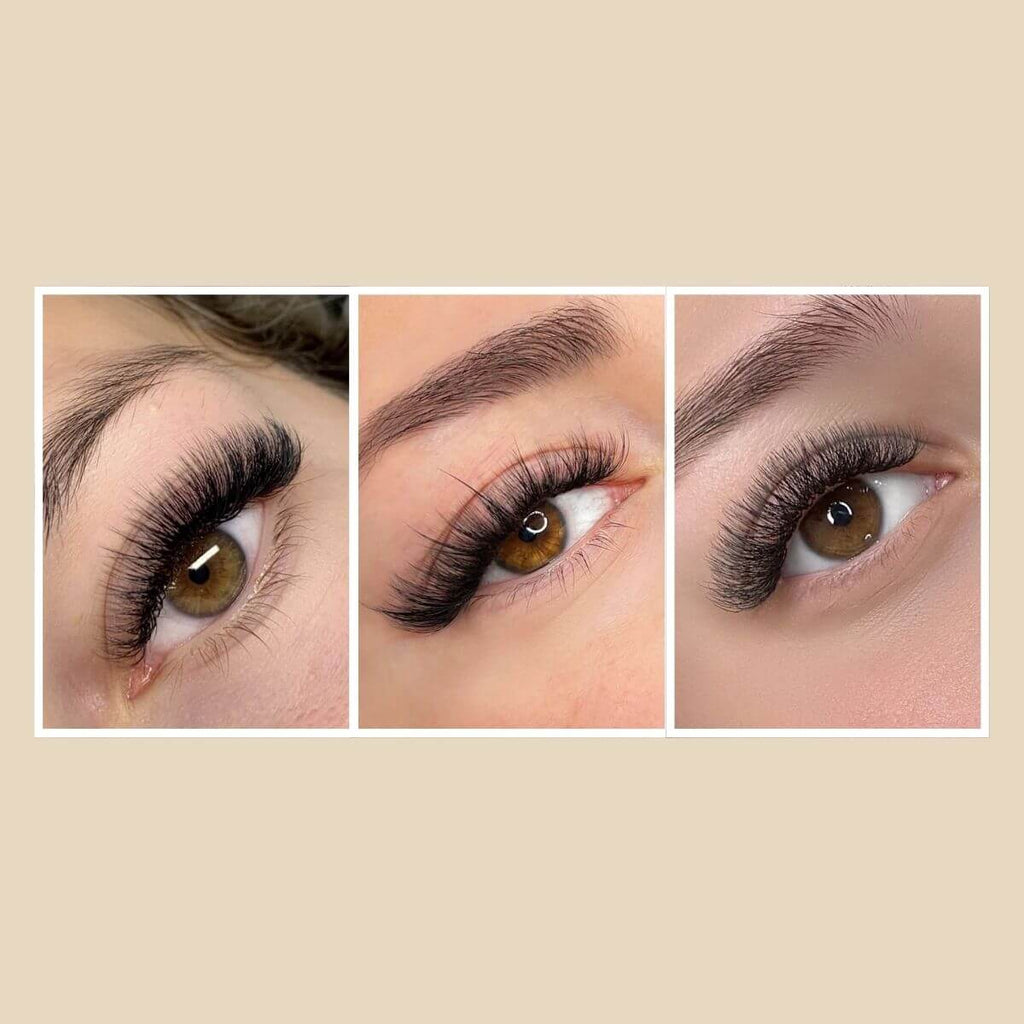
In the world of high-density lash artistry, the distinction between a "quick touch-up" and a "full restoration" is often the difference between a profitable day and a scheduling nightmare. Mega volume sets, typically characterized by 10D to 20D fans, present unique challenges during the maintenance phase. Unlike classic or light volume sets, the sheer weight and surface area of mega volume fans mean that mechanical stress and adhesive degradation happen on a much more complex scale.
For the professional artist, the decision to offer a mini-fill (or "tweak") versus requiring a full removal and new set is not merely an aesthetic choice—it is a technical and clinical one. We often observe that technicians who fail to accurately assess the state of a returning set end up performing "rework" for free, or worse, compromising the long-term health of the client's natural lashes.
This guide establishes a professional framework for evaluating mega volume sets, utilizing industry heuristics and clinical safety standards to ensure your services remain high-performance and your clients' ocular health remains uncompromised.
The "50% Rule" and the Heuristics of Infill Efficiency
The most common baseline in the industry is the "50% Rule": if a client returns with less than 50% of their extensions remaining, the service should typically be classified as a full set rather than an infill. However, in mega volume, numbers alone are deceptive.
The Isolation Heuristic
Experience has taught us a more practical "friction point" assessment. If isolating a single natural lash for a new fan requires more than two attempts due to existing adhesive bridges or "twisted" fans from the previous set, the service has likely passed the point of efficiency. At this stage, the time spent "cleaning up" the previous work exceeds the time it would take to apply a fresh, clean set.
Logic Summary: This heuristic is based on operational time-modeling in high-traffic salons. We estimate that "directional chaos" in outgrown fans adds approximately 15–20 minutes of troubleshooting per eye, which often negates the time-saving benefits of an infill.
Visual Markers of Lash Stress
When evaluating a set for a mini-fill, look for the following "Red Flags":
- Directional Chaos: Fans leaning more than 15 degrees from their original vertical axis.
- Adhesive Bridges: Multiple natural lashes stuck to a single fan base, often caused by poor isolation in the previous session or client "picking."
- Outgrowth Distance: Any fan sitting more than 2mm away from the eyelid margin is technically "outgrown" and must be removed. If more than 60% of the remaining fans are outgrown, an infill will result in a messy, uneven top line.

Clinical Safety: When Removal is Non-Negotiable
As lash professionals, we operate in a "Yellow Zone" of ocular health. High-density sets provide more surface area for the accumulation of debris, oils, and bacteria.
Preventing Blepharitis and Infection
According to the Mayo Clinic, Blepharitis is a common eyelid inflammation often caused by bacteria or clogged oil glands. In mega volume sets, the dense "forest" of fans can trap these irritants. If you observe redness at the lash line, crusting, or "sleeves" of debris (cylindrical dandruff) at the base of the lashes, a full removal is mandatory.
We must market aftercare not just as a "retention booster" but as a preventative health measure. Water alone is insufficient for cleaning the base of a 12D fan. We recommend a professional-grade foam cleanser to reach the "micro-spaces" between the PBT fibers.
The Microbiome and Tear Film Stability
Recent research published by PMC (2024) suggests that long-term extension wear can alter the ocular surface microbiome and affect tear film stability. This is why we advocate for a "Clean Slate" policy every 3–4 months. Even if a client's retention is excellent, a full removal allows the artist to thoroughly cleanse the meibomian glands and ensure the natural lash cycle is not being mechanically suppressed by "heavy" outgrown fans.
Technical Specifications for the Perfect Infill
If the set passes the health and isolation checks, the technical execution of the infill requires a different approach than a full set.
Adhesive Viscosity and Bonding
For a full set, many advanced artists prefer ultra-fast adhesives like the 0.5-1 Second Diamond Eyelash Extension Glue. However, during an infill, you are navigating through an existing "forest" of extensions.
A slightly thicker, slower-drying adhesive (in the 1–2 second range) can actually be more effective here. This provides the "grab" needed to wrap the new fan around a natural lash that may be slightly crowded by its neighbors. The 0.5-1 Second Diamond Eyelash Extension Glue remains a high-performance choice due to its flexibility post-polymerization, which helps the new bonds withstand the mechanical friction of the older, stiffer extensions.
The Blending Strategy: Diameter and Weight
One of the most effective "secret" tweaks for a seamless infill is the 0.02mm reduction rule. If the original set was created using 0.05mm diameters, such as the 0.05MM Easy Fanning Eyelash Extensions, try infilling with 0.03mm fans.
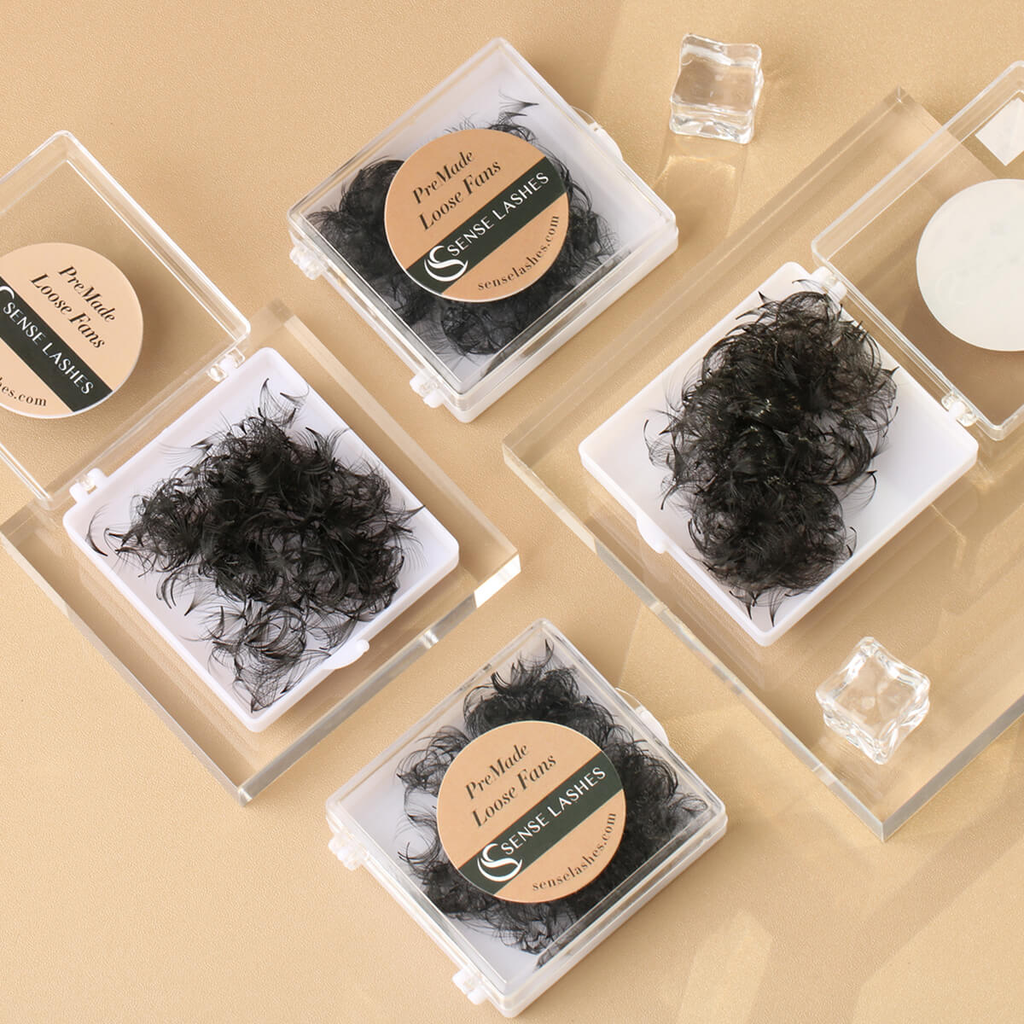
Using a product like the 12D Handmade Loose Premade Fans Pointy Base(500 Fans) in a 0.03mm diameter allows you to fill gaps with high density without adding significant weight to the natural lashes, which may already be under stress from the previous set's load. This creates a "fluffy" texture that disguises the transition between the old and new fans.
| Service Type | Recommended Remaining Lashes | Time Allocation | Primary Goal |
|---|---|---|---|
| Mini-Fill | 70% - 80% | 30 - 45 Mins | Gap filling & "Tweak" |
| Standard Infill | 40% - 60% | 75 - 90 Mins | Outgrowth removal & re-balancing |
| Full Set | < 40% | 150+ Mins | Complete design restoration |
Methodology Note: These ranges are estimated based on common industry practices for 10D+ mega volume services. Individual timing may vary based on the artist's speed and the client's natural lash count.
Managing the "Mini-Fill" Expectation
A "Mini-Fill" should be marketed as a luxury convenience service, not a replacement for regular maintenance. It is ideal for clients with a special event occurring between their regular 3-week appointments.
The "New Growth" Challenge
The primary limitation of a mini-fill is that it rarely allows enough time to remove all outgrown extensions. According to the American Academy of Ophthalmology (AAO), mechanical trauma to the follicle is a real risk when extensions are too heavy or outgrown. If a client constantly opts for mini-fills, they are effectively "stacking" weight on outgrown lashes, which can lead to traction alopecia.
You must communicate that a mini-fill is a "surface-level" aesthetic fix. For long-term health, the "Standard Infill" (where every outgrown lash is popped off and replaced) is the professional requirement.

Advanced Troubleshooting: The "Twisted Fan" Problem
When a mega volume fan "twists," it's often because the base was too wide or the natural lash was too weak to support the weight as it grew out. Attempting to bond a new fan next to a twisted one is a recipe for an adhesive bridge.
The Professional Solution:
- Mechanical Removal: Use the "banana peel" method to remove the twisted fan.
- Clean the Base: Ensure no residual adhesive remains on the natural lash.
- Re-Prime: Use a micro-brush to apply a tiny amount of primer to the specific natural lash to ensure the new bond is robust.
For artists transitioning into mega volume, using 0.05MM Easy Fanning Eyelash Extensions can reduce the occurrence of base-splitting, which is the leading cause of "twisting" during the growth cycle.
Business ROI: Why "Full Sets" Can Be More Profitable
Many salon owners fear the "Full Set" price tag will scare away clients. However, performing a 2-hour infill on a set that is 80% gone is a financial loss.
Consider the "Cost of Rework":
- Adhesive Usage: Infilling a messy set uses ~30% more adhesive due to the need for multiple attempts on poor bonds.
- Tool Wear: Excessive picking at old adhesive bridges accelerates the "micro-wear" on your high-precision tweezers.
- Reputation Risk: A "patchy" infill on a compromised base reflects poorly on your artistry.
By enforcing a strict "Full Set" requirement for sets under 40% retention, you ensure that every client leaving your chair is a walking advertisement for your best work. For those who need speed without sacrificing quality, integrating 10D Handmade Loose Premade Fans Pointy Base(500 Fans) into your full sets can reduce application time by up to 40%, making the "Full Set" price point more attractive to the time-pressed client.
Safety and Sanitation SOP
To maintain professional authoritativeness, your salon should follow a strict Sanitation SOP aligned with CDC guidelines.
- Disposable Consumables: Wands and eye patches must be single-use.
- Medical-Grade Sterilization: Tweezers must be cleaned in an ultrasonic cleaner and then soaked in a high-level disinfectant (like Barbicide or an autoclave) between every client.
- Adhesive Integrity: As noted in the Health Canada 2023-2024 Report, proper labeling and storage of cyanoacrylate products are essential for safety. Ensure your adhesive is fresh; old glue loses its "flex," leading to brittle bonds that snap off prematurely.

Summary of Professional Takeaways
Deciding between a full set and an infill is a balance of technical assessment and client management. By utilizing the 50% Rule and the "Two-Attempt Isolation" heuristic, you can protect your time and your client's lash health.
- Prioritize Health: Use Mayo Clinic standards to identify when a set must be removed for hygiene reasons.
- Optimize Speed: For full sets, use 12D Handmade Loose Premade Fans Pointy Base(500 Fans) to achieve maximum density efficiently.
- Refine the Infill: Use a slightly thinner diameter (0.03mm) to blend into existing 0.05mm sets for a seamless finish.
- Adhesive Choice: Rely on a high-retention, flexible adhesive like the 0.5-1 Second Diamond Eyelash Extension Glue to ensure that even "mini-fills" stay secure until the next full maintenance session.
Mastering these distinctions positions you not just as a technician, but as a lash health consultant—a role that commands higher rates and fosters lifelong client loyalty.
Disclaimer: This article is for informational purposes only and does not constitute professional medical or legal advice. Always consult with a qualified health professional regarding ocular conditions or allergic reactions.
References
- Centers for Disease Control and Prevention (CDC). Conjunctivitis Prevention.
- Mayo Clinic. Blepharitis: Symptoms & Causes.
- American Academy of Ophthalmology (AAO). Eyelash Extension Facts and Safety.
- Health Canada. Cosmetic Regulations Enforcement Summary 2023-2024.
- PubMed Central (PMC). Ocular Surface Microbiome and Extension Wear (2024).