


홈 Eyelash Extension Supplies Guide
Optimizing Cleansing Frequency for Clients with Active Allergies

Navigating the Sensitivity Cycle: Precision Aftercare for Active Reactions
For a professional lash artist, encountering a client with an active allergic reaction is a critical moment that tests both technical expertise and client management skills. When a client presents with mild redness, localized swelling, or itching, the immediate instinct is often to either "wash it all away" or "leave it completely alone." However, our observations from years of troubleshooting sensitivity patterns suggest that neither extreme is optimal.
Managing an active reaction requires a dynamic cleansing strategy that balances the removal of residual allergens—such as cyanoacrylate vapors or carbon black particles—with the necessity of preserving the compromised skin barrier. Excessive mechanical friction can exacerbate eyelid dermatitis, while total neglect allows for the accumulation of debris that can lead to secondary conditions like blepharitis or Demodex mite proliferation.
In this guide, we will analyze the physiological mechanisms of lash-related allergies and provide a structured "Patience Protocol" for cleansing frequency. By grounding your advice in evidence-based hygiene standards and technical product knowledge, you can guide your clients through the sensitivity cycle while protecting their ocular health.
The Mechanism of Reaction: Why Frequency Matters
To determine the correct washing cadence, we must first understand what we are fighting. Most "lash allergies" are actually forms of allergic contact dermatitis. According to a case study published in PubMed, ethyl cyanoacrylate is a primary culprit, triggering a delayed-type hypersensitivity (Type IV) reaction.
Furthermore, research by Amano et al. (2012) identified that lash adhesives can release trace amounts of formaldehyde during the curing process and that the pH level of certain glues can cause keratoconjunctivitis. If the adhesive is still off-gassing or if the ocular surface pH is disrupted, the cleansing routine must serve as a neutralizing and soothing intervention, not an abrasive one.
Logic Summary: Our cleansing frequency recommendations are based on a "Sensitivity Decay Model." We assume that allergen concentration is highest in the first 24–48 hours post-application and that the skin's inflammatory response peaks during this window. The goal is to maximize allergen removal while minimizing mechanical stress (friction).
The Risk of Over-Cleansing vs. Under-Cleansing
In our professional experience, clients typically fall into two counterproductive camps:
- The Over-Cleanser: Driven by discomfort, they scrub the eyes multiple times a day. This disrupts the tear film stability and can lead to meibomian gland dysfunction, as noted in studies on ocular surface changes.
- The Under-Cleanser: Fearing they will "lose their lashes" or cause more pain, they avoid water entirely. This allows bacteria and oils to build up, increasing the risk of Blepharitis, which the Mayo Clinic identifies as a leading cause of eyelid inflammation.

The "Patience Protocol": A Structured Cleansing Schedule
When a client reports active irritation or mild redness, we recommend a shift from standard aftercare to the "Patience Protocol." This is a 72-hour specialized routine designed to soothe the tissue while maintaining hygiene.
1. The Initial 48-Hour Reset
During the peak of a reaction, the skin is hyper-reactive. We suggest an evening-only cleansing for the first 48–72 hours.
- Rationale: Cleansing in the evening removes the day's accumulation of environmental pollutants and any residual adhesive vapors that may have settled. Avoiding a morning wash reduces the total daily "friction events," allowing the skin barrier to begin its repair cycle undisturbed overnight.
- The Method: Use lukewarm distilled water. Tap water can contain minerals or chlorine that further irritate sensitive membranes.
2. The "Weight of the Pad" Technique
The most common mistake is the use of pressure. We advise clients to use a fragrance-free, pH-balanced foaming cleanser applied with a disposable cotton pad.
- The Instruction: "Apply the foam to the pad, and let only the weight of the pad touch your lid. Do not rub. Use a gentle patting motion."
- Why this works: This minimizes mechanical trauma to the eyelid, which is already prone to swelling.
3. Gradual Reintroduction
Once visible redness or swelling subsides by approximately 50%, the client can transition back to a twice-daily routine. The key indicator for this shift is not just visual; it is the client-reported comfort level 30 minutes post-cleansing. If the eye feels "tight" or "stinging" long after washing, they are not yet ready to increase frequency.
| Phase | Duration | Frequency | Method |
|---|---|---|---|
| Acute (Peak Redness) | 0–48 Hours | 1x Daily (Evening) | Lukewarm distilled water + Foam (No friction) |
| Sub-Acute (Healing) | 48–72 Hours | 1x Daily (Evening) | Transition to tap water if tolerated; light rinsing |
| Stabilization | 72 Hours + | 2x Daily | Normal aftercare; focus on lash base hygiene |
Methodology Note: This protocol is a heuristic developed from common patterns observed in salon environments and is intended for mild reactions. It is not a medical treatment for severe allergic responses.
Technical Product Selection for Sensitive Clients
Managing allergies isn't just about how the client washes; it's about what you apply. If a client has shown sensitivity in the past, your choice of adhesive and lash weight is paramount.
Adhesives and Off-Gassing
High-performance glues like the 1-2 Second Gold Eyelash Extension Glue are designed for professional precision. However, for a sensitive client, the speed of cure is vital. A faster cure time (1–2 seconds) can actually be beneficial because it reduces the duration of vapor exposure, provided the salon humidity is controlled (48-70%).
If you suspect the irritation is related to the curing process, consider how humidity and hot spots trigger reactions. Using a nano-mister can help polymerize the glue faster, effectively "locking in" the fumes.
Reducing Mechanical Load
Mechanical irritation is often confused with chemical allergies. A heavy lash set can pull on the natural lash follicle, causing micro-tears in the skin that then become entry points for allergens. According to a 2024 study in PubMed, the spectrum of disorders caused by extensions includes significant mechanical damage.
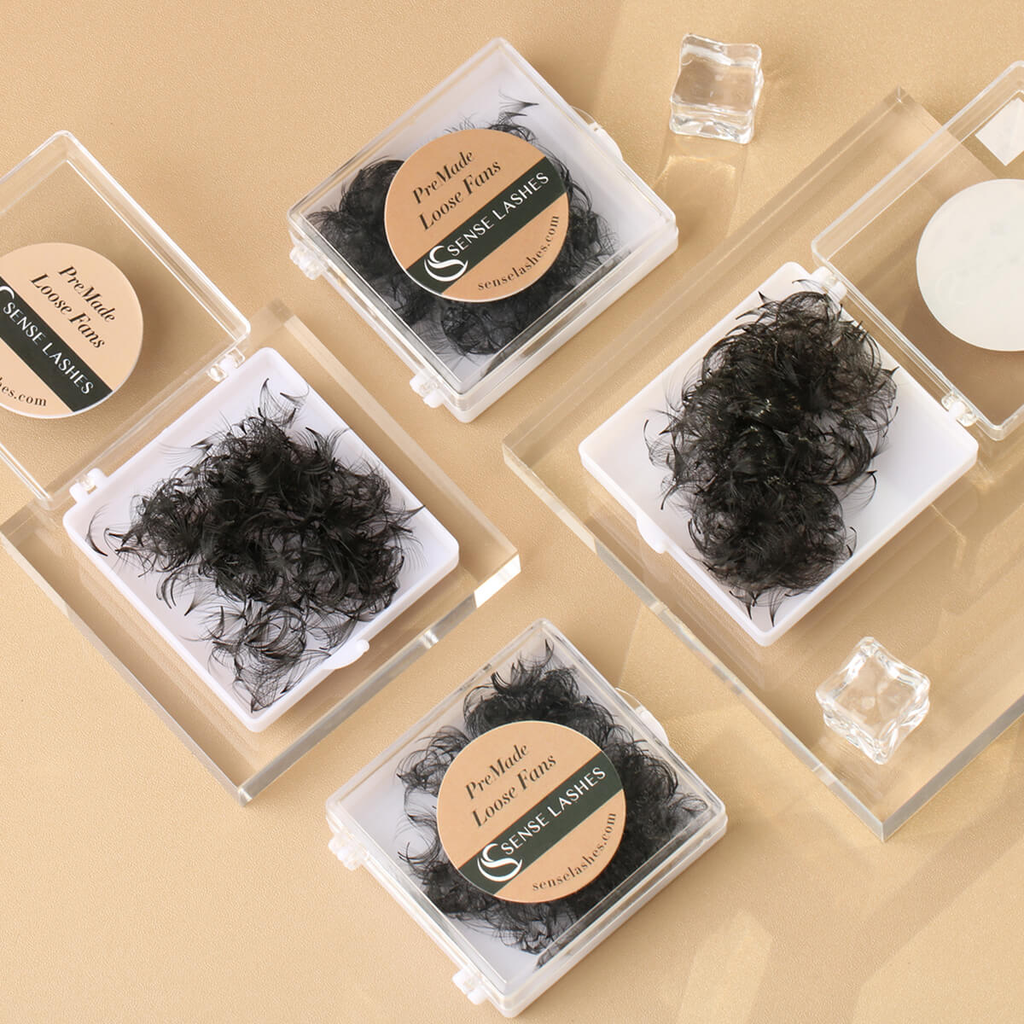
To mitigate this, we recommend moving toward ultra-lightweight fibers. Using 0.05MM Easy Fanning Eyelash Extensions or 0.07MM Easy Fanning Eyelash Extensions allows you to create volume without the weight of traditional 0.15mm lashes. For even faster application with minimal manipulation, 12D Handmade Loose Premade Fans Pointy Base(500 Fans) provide a lightweight, mega-volume look that places less stress on the eyelid.

Identifying the Culprit: Troubleshooting Irritation
When a client complains of burning or redness, the artist must play detective. Is it the product, the environment, or a pre-existing condition?
- Dry Eye Syndrome: As noted by WebMD, dry eye syndrome can be exacerbated by lash fumes. If the client’s eyes are red but not swollen, they may simply need to use preservative-free artificial tears (administered at least 30 minutes before or after cleansing).
- Corneal Abrasions: If the client feels a "sharp" pain, it may be a corneal abrasion caused by the eye pads or the removal process. A PMC case report highlights how mechanical rubbing or liquid removers running into the eye can cause these injuries. This is why we advocate for non-drip cream removers and precise gel patch placement.
- Allergy vs. Irritation: Understanding when symptoms signal allergy vs. irritation is the first step in deciding whether to proceed with the Patience Protocol or recommend immediate removal.
Sanitation and Long-Term Risk Management
The foundation of any sensitivity management plan is impeccable salon hygiene. The CDC provides strict guidelines on preventing the spread of eye infections, which should be the baseline for your Salon Sanitation SOP.
Preventing Blepharitis and Mites
A lack of proper cleansing leads to the "Ugly Truth About Dirty Lashes." Research on Demodex mites shows a direct link between poor ocular hygiene and infestation. These mites feed on the oils and dead skin cells trapped at the base of the extensions. For a client already experiencing an allergy, a secondary mite infestation can turn a minor reaction into a chronic inflammatory condition.
The Importance of pH Balance
Long-term wear can alter the ocular surface microbiome. Using a lash shampoo that is specifically formulated to be pH-balanced is non-negotiable. Many "DIY" cleansers or uncertified products are too acidic or alkaline, which disrupts the natural protective acid mantle of the skin.
Professional Tip: Always provide a Client Safety Consent Form that outlines these risks. This not only protects your business but also educates the client on the importance of the aftercare steps you are prescribing.
Strategic Checklist for Managing Active Reactions
- Assess the Severity: If there is significant swelling (chemosis) or pus, refer the client to an optometrist immediately.
- Adjust Cleansing Frequency: Implement the 1x daily "Patience Protocol" for the first 48 hours.
- Switch to Distilled Water: Eliminate potential irritants found in tap water.
- Review the Adhesive: Ensure you are using a high-quality, compliant adhesive. Check the Health Canada Compliance Report to ensure your products meet international safety standards for cyanoacrylate.
- Monitor and Document: Keep a log of the reaction, the products used, and the client's response to the adjusted cleansing routine. This helps identify cumulative sensitivity patterns over time.
Conclusion
Optimizing cleansing frequency for clients with active allergies is a delicate exercise in clinical observation and technical application. By moving away from a "one size fits all" aftercare model and adopting a nuanced "Patience Protocol," you demonstrate a level of expertise that builds profound trust with your clients.
Remember, the goal is to maintain a clean environment for the lashes to thrive while respecting the body's inflammatory response. Through the use of lightweight fibers like 0.07MM Easy Fanning Eyelash Extensions and high-stability glues like the 1-2 Second Gold Eyelash Extension Glue, you can minimize the triggers for these reactions before they even begin.
Managing eye health is not just about aesthetics; it is about the long-term safety and comfort of every person who sits in your chair. By adhering to authoritative guidelines from organizations like the AAO and the FDA, you position yourself as a premier professional in the lash industry.
Disclaimer: This article is for informational purposes only and does not constitute professional medical advice. Eyelash extension professionals should always encourage clients to consult with a qualified healthcare provider or ophthalmologist if they experience severe pain, persistent redness, or loss of vision.
References
- CDC - Conjunctivitis Prevention and Hygiene
- Mayo Clinic - Blepharitis Symptoms and Causes
- American Academy of Ophthalmology - Eyelash Extension Safety
- PubMed - Allergic Contact Dermatitis from Cyanoacrylate (Study 35674514)
- PMC - Ocular Surface Microbiome and Extension Wear (Study 11397841)
- Health Canada - Cyanoacrylate Ingredient Compliance Report