


ホーム Eyelash Extension Supplies Guide
Pre-Service Screening: Identifying High-Risk Clients for Reactions

Pre-Service Screening: Identifying High-Risk Clients for Reactions
For the professional lash artist, the consultation is not merely a design session; it is a critical risk-management phase. In an industry where reputation is built on safety and consistency, identifying high-risk clients before the first lash is applied is the hallmark of a premier technician. Every year, salons face operational disruptions due to client reactions that could have been predicted—and prevented—through rigorous pre-service screening.
The goal of this guide is to bridge the gap between manufacturing-grade chemistry and salon-floor application. By understanding the physiological and environmental triggers of ocular irritation, we can transform a "wait and see" approach into a proactive safety protocol.
The Clinical Foundation of Client Screening
The ocular surface is a delicate ecosystem. When we apply extensions, we introduce chemical adhesives and mechanical weight into this environment. According to the American Academy of Ophthalmology (AAO), the primary risks associated with extensions include infection, allergic reactions to acrylates, and trauma to the eyelid or cornea.
Screening for Pre-existing Conditions
We often observe that the most common "allergic reactions" reported by clients are actually exacerbations of pre-existing conditions.
- Blepharitis: This chronic inflammation of the eyelids is frequently caused by bacteria or clogged oil glands. The Mayo Clinic identifies blepharitis as a leading cause of eyelid redness and crusting. If a client presents with visible debris at the lash base, applying extensions will likely trap more bacteria, leading to a severe flare-up.
- Dry Eye Syndrome: Clients with undiagnosed dry eye are highly susceptible to adhesive fumes. As noted by WebMD, dry eyes lack the protective tear film necessary to buffer the ocular surface. During the curing process, cyanoacrylate releases microscopic vapors that can cause intense burning in these clients.
- Seasonal Allergies: Histamine responses during high-pollen seasons can make the eyelids hypersensitive. A client who is already rubbing their eyes due to hay fever is at a significantly higher risk of mechanical irritation and secondary infection.
Logic Summary: This screening framework is based on common patterns from customer support and industry heuristics (not a controlled lab study). We assume that identifying these conditions early allows for a "delay and treat" approach rather than a "service and react" crisis.
Differential Diagnosis: Allergy vs. Irritation
Distinguishing between a true chemical allergy and simple irritation is the most difficult technical skill in the industry. A true allergy is an immune response, while irritation is a localized reaction to a stimulus.
The Chemistry of the Bond
Most professional adhesives, such as our 1-2 Second Gold Eyelash Extension Glue, are formulated with Ethyl Cyanoacrylate. While this provides the 6-8 week retention professionals demand, it is a known sensitizer. A study published in PubMed highlights that allergic contact dermatitis from acrylates can develop even after years of trouble-free wear.
| Symptom | True Allergy (Immune Response) | Irritation (Chemical/Mechanical) |
|---|---|---|
| Onset | Usually 24–72 hours post-service | Immediate or within 24 hours |
| Location | Both eyes, often extending to eyebrows | Often localized to one eye or the lash line |
| Sensation | Intense itching, "throbbing" swelling | Stinging, burning, or "grittiness" |
| Duration | Persists until lashes are removed | Usually subsides within 48 hours |
One of the most cited studies in the field, by Amano et al. (2012), identified that the curing process of lash glue can release trace amounts of formaldehyde and that the pH of some glues can trigger keratoconjunctivitis. Modern formulations have evolved to balance pH levels, but the risk remains for clients with compromised ocular barriers.
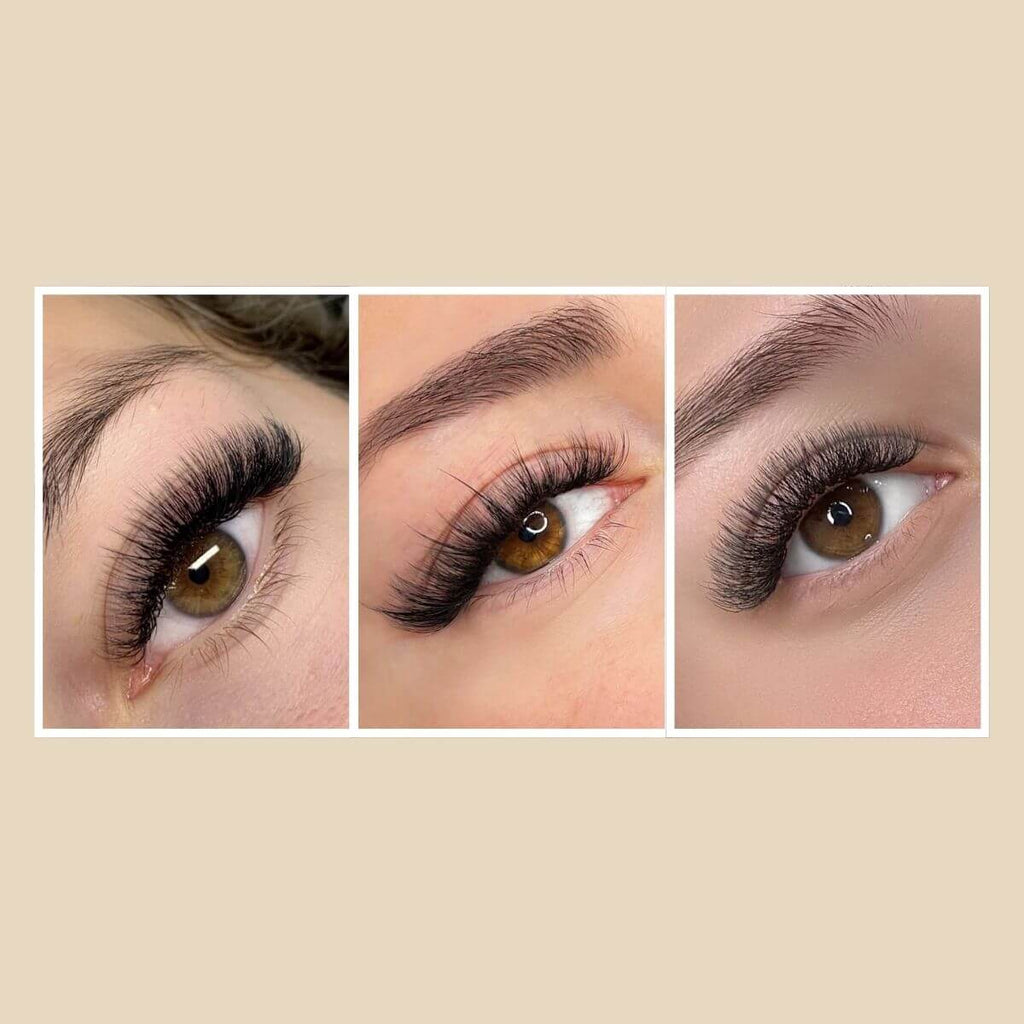
Close-up macro photography of high-quality, ultra-fine eyelash extensions being applied to a single natural lash, demonstrating precision and safety.
Environmental and Mechanical Risk Factors
Risk is not just about the client's biology; it is about the physics of the application.
Humidity and Fume Management
The humidity of your workspace dictates how quickly the adhesive cures. In low-humidity environments, cyanoacrylate stays in a liquid state longer, allowing fumes to linger and irritate the eyes. Conversely, in high humidity (above 60%), the glue cures faster, but the rapid chemical reaction can create a "heat spike" or shock-curing, which may lead to brittle bonds and irritation.
For advanced technicians working in high-humidity zones, the 0.5-1 Second Diamond Eyelash Extension Glue is optimized for a 0.5-1 second dry time, minimizing the duration of fume exposure.
Mechanical Stress and Lash Diameter
We frequently see mechanical irritation misdiagnosed as an allergy. When a natural lash is overloaded with a diameter that is too thick (e.g., 0.15mm or 0.20mm), the weight causes the lash to droop, potentially scratching the cornea or pulling on the follicle.
Recent research in PubMed (2024) emphasizes that mechanical damage is a leading cause of long-term ocular disorders in lash wearers. To mitigate this, we recommend switching high-risk or sensitive clients to ultra-fine diameters. Using 0.05MM Cashmere Premium Mega Volume Eyelash Extensions allows for a full look with a fraction of the weight, significantly reducing the mechanical "pull" on the eyelid.
Modeling Note (Mechanical Load):
- Assumptions: Natural lash can safely support 1.5x its own weight.
- Heuristic: A 0.05mm lash is approximately 1/9th the weight of a 0.15mm lash.
- Boundary Condition: This model does not account for the additional weight of the adhesive, which varies by technician technique.
The Professional Patch Test Protocol: Moving Beyond the 24-Hour Myth
Many salons perform a "24-hour patch test." However, clinical data on contact dermatitis suggests this is often insufficient. A study on Eyelid Dermatitis indicates that acrylate reactions are often delayed-type hypersensitivities.
The 48-72 Hour Rule
For high-risk clients (those with a history of sensitive skin or reactive eyes), we recommend a 48-72 hour observation period.
- Placement: Apply 3-5 short extensions per eye using the full adhesive system (primer, glue, and sealant).
- Alternative Site: For extreme sensitivity, apply a small drop of adhesive behind the ear or on the inner arm. While skin is different from the ocular surface, a systemic allergy will often manifest here.
- Documentation: Use a digital consultation form to record the date, time, and specific products used. This creates a "paper trail" of professional due diligence.
Advanced Sanitation and Operational SOPs
Client safety is inextricably linked to salon hygiene. The Centers for Disease Control (CDC) provides strict guidelines on preventing the spread of conjunctivitis (pink eye), which is highly contagious in a salon environment.
The Salon Sanitation SOP
- Disposable Consumables: Never reuse items that touch the eye area. Tools like Clear Mascara Wands 50pcs/pack should be given to the client for aftercare or disposed of immediately.
- Cross-Contamination Prevention: Adhesives should never be dispensed on top of a previous drop. Fresh drops must be placed on a clean jade stone or in a new glue ring every 20 minutes to ensure the chemistry remains stable and the risk of bacterial growth is minimized.
- Microbiome Protection: Long-term wear can alter the ocular surface microbiome, as investigated in PMC (2024). Encouraging clients to use a dedicated lash cleanser is not just about retention; it is about preventing Demodex mite infestations and maintaining eye health.
Import and Compliance Signaling
As a salon owner, your choice of supplier is your first line of defense. A Health Canada Enforcement Report recently highlighted high rates of non-compliance in adhesive labeling and chemical safety among unverified imports. Using factory-direct products that prioritize transparency—such as those free from latex and formaldehyde—protects your business from regulatory scrutiny and liability.

Managing Post-Service Reactions
Even with perfect screening, reactions can occur. A professional response is what separates a technician from a specialist.
The Troubleshooting Checklist
If a client contacts you with discomfort, use this diagnostic flow:
- Timing: Did it start immediately (Irritation) or 2 days later (Allergy)?
- Visual Check: Is there swelling on the eyelid (Allergy) or redness in the white of the eye (Chemical Burn/Dry Eye)?
- Mechanical Check: Are any extensions twisting or poking the lid?
- Action: For minor irritation, suggest a saline rinse. For swelling or intense itching, recommend immediate professional removal and advise the client to consult a medical professional.
For more insights on tailoring your services to specific client needs, see our guide on Matching Lash Finishing to Client Skin Tones and Ages.
Final Professional Recommendations
Operational risk management in the lash industry is a commitment to "Safety First, Beauty Second." By implementing a rigorous pre-service screening process, you not only protect your clients but also insulate your business from the reputational and financial costs of adverse reactions.
- Screen for Health: Use the "Dry Eye and Blepharitis" heuristic during every consultation.
- Optimize Environment: Match your adhesive to your room's humidity and temperature.
- Prioritize Lightness: Use 0.05mm or 0.03mm lashes for clients with fine or sensitive natural lashes.
- Sanitize Rigorously: Follow CDC guidelines and use disposable tools for every service.
Your expertise is your most valuable asset. When you lead with safety, client trust and retention naturally follow.
Disclaimer: This article is for informational purposes only and does not constitute professional medical advice. Eyelash extension application involves chemicals and proximity to the eyes; always follow local health regulations and consult with a medical professional if a serious reaction occurs.
Sources
- American Academy of Ophthalmology (AAO) - Lash Safety
- Mayo Clinic - Blepharitis Symptoms and Causes
- CDC - Conjunctivitis Prevention
- Health Canada - Cosmetic Regulations Enforcement Summary
- PubMed - Formaldehyde and pH in Eyelash Adhesives (Amano et al.)
- PMC - Ocular Surface Microbiome and Extensions (2024)