


ホーム Eyelash Extension Supplies Guide
How Fan Width Affects Light Refraction in Colored Sets

The Physics of Color: Why Fan Geometry Dictates Vibrancy
In professional lash artistry, the transition from monochromatic black sets to sophisticated colored designs requires more than just a change in palette. It requires a fundamental shift in how we perceive the relationship between fiber geometry and light. While many artists focus on the pigment of the extension itself, the most critical factor in achieving a luminous, high-definition result is the width of the fan.
When light hits a volume fan, it doesn't just bounce off the surface; it refracts, reflects, and absorbs based on the angle of the fibers. A common frustration among artists is the "muddy" or "flat" appearance of deep purples, blues, or browns once applied. This is rarely a fault of the pigment. Instead, it is often a result of fan construction that is too dense or narrow, which traps light rather than allowing it to play across the fiber surfaces.
To master colored sets, the professional must act as both an artist and a physicist, understanding how to manipulate fan width to optimize light refraction.
The Mechanism of Light Refraction in PBT Fibers
Most premium extensions, including the 0.07MM Cashmere Premium Mega Volume Eyelash Extensions, are manufactured from Polybutylene Terephthalate (PBT). PBT is favored for its viscosity and curl retention, but it also possesses specific optical properties.
Light refraction occurs when light passes through the curved surface of the lash fiber. In a colored set, the goal is to maximize the amount of light that enters the fiber, interacts with the pigment, and returns to the observer's eye.
The Narrow Fan Trap
When a fan is constructed with a narrow opening (where the fibers are closely packed), the individual lashes shield one another from ambient light. This creates internal shadows within the fan. For darker colors like chocolate brown or deep emerald, these shadows neutralize the pigment, making the set appear almost black from a distance.
The Wide Fan Advantage
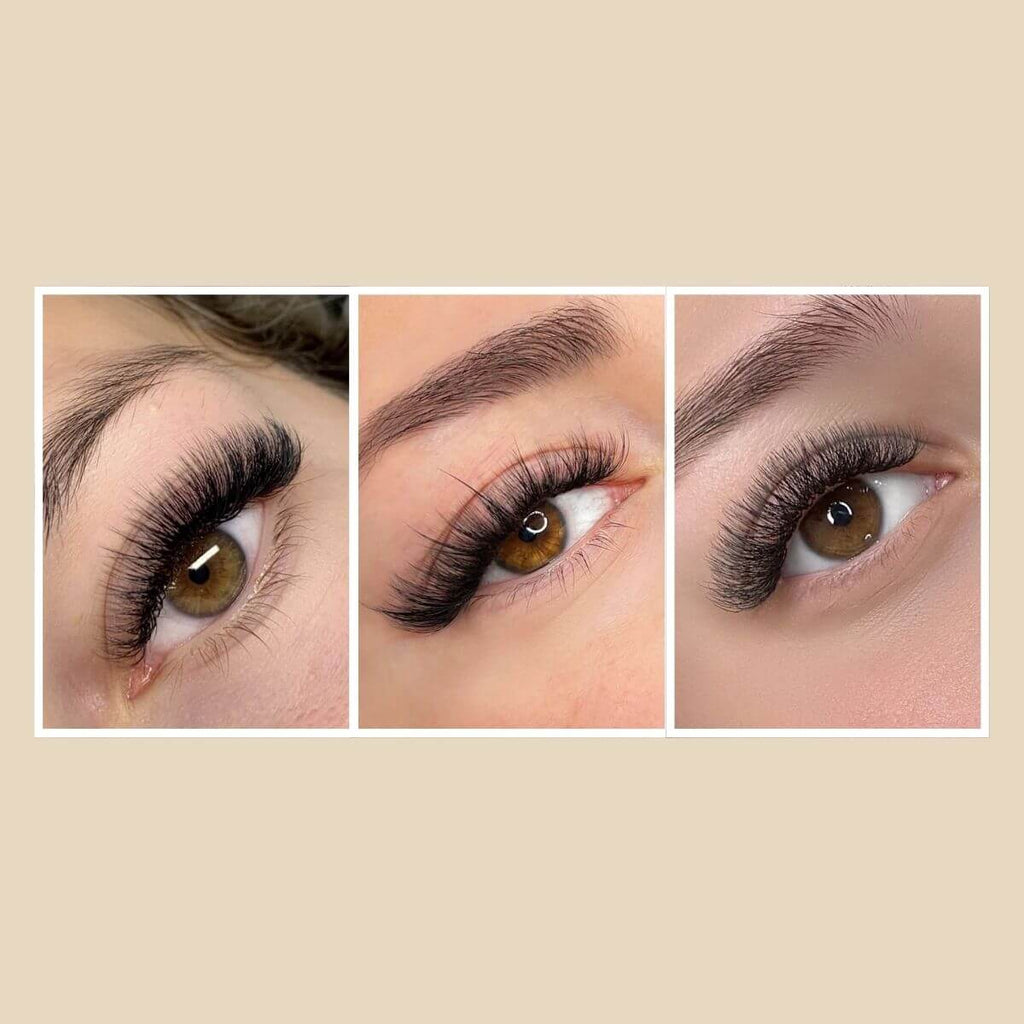
Conversely, a wider fan opening increases the surface area exposed to light. By spreading the fibers, you allow light to penetrate the "heart" of the fan. This creates a luminous effect, especially in pastel or iridescent "glitter" lashes, as the light refracts across multiple surfaces simultaneously.
Logic Summary: Light Interaction Model Our analysis of color visibility assumes a standard indoor lighting environment (approx. 500-1000 lux).
- Narrow Fans: High internal occlusion; light absorption > refraction.
- Wide Fans: Low internal occlusion; light refraction > absorption.
- Boundary Condition: This model applies to PBT fibers; natural silk or real mink (rarely used in professional settings) have different refractive indices.

The 1.5x Heuristic: Balancing Geometry and Health
While wider fans enhance color, they must be balanced against mechanical safety. Based on common industry heuristics and patterns observed in technical support, we recommend the 1.5x Base Width Rule.
The Heuristic: The width of the fan base (where it attaches to the natural lash) should be no greater than 1.5 times the diameter of the natural lash.
This is not a mandated regulatory standard but a practical baseline for professionals to ensure both aesthetic vibrancy and long-term follicular health. Adhering to this ratio prevents the "choking" of the natural lash and ensures the adhesive bond remains flexible. According to the American Academy of Ophthalmology (AAO), mechanical trauma to the eyelid is a primary risk of improper extension application. By maintaining a slim, controlled base while opening the top of the fan wide, you achieve color pop without compromising safety.
Modeling Fan Geometry for Color Saturation
| Parameter | Recommended Value | Unit | Rationale |
|---|---|---|---|
| Fiber Diameter | 0.03 - 0.07 | mm | Optimizes weight-to-color ratio |
| Fan Base Width | ≤ 1.5x Natural Lash | ratio | Prevents mechanical tension |
| Fan Opening Angle | 45 - 60 | degrees | Maximizes light penetration |
| Adhesive Zone | 1.0 - 2.0 | mm | Ensures secure wrap without stiffness |
| Fiber Spacing | Even | N/A | Prevents "clumping" of color |
Note: These values are hypothetical estimates under the assumption of healthy natural lashes and professional-grade PBT fibers.
Environmental Impact: Humidity and Fiber Swelling
A non-obvious factor in colored lash performance is the local environment. High-performance PBT fibers are engineered for consistency, but they are not entirely immune to atmospheric changes.
In environments where humidity exceeds 60%, seasoned artists often observe a slight "swelling" of the PBT fibers. While this change is microscopic, it is enough to alter the light refraction angle post-application. If you create a fan that is already borderline narrow in high humidity, the subsequent swelling can close the fan further, leading to a loss of color vibrancy within 48 hours.
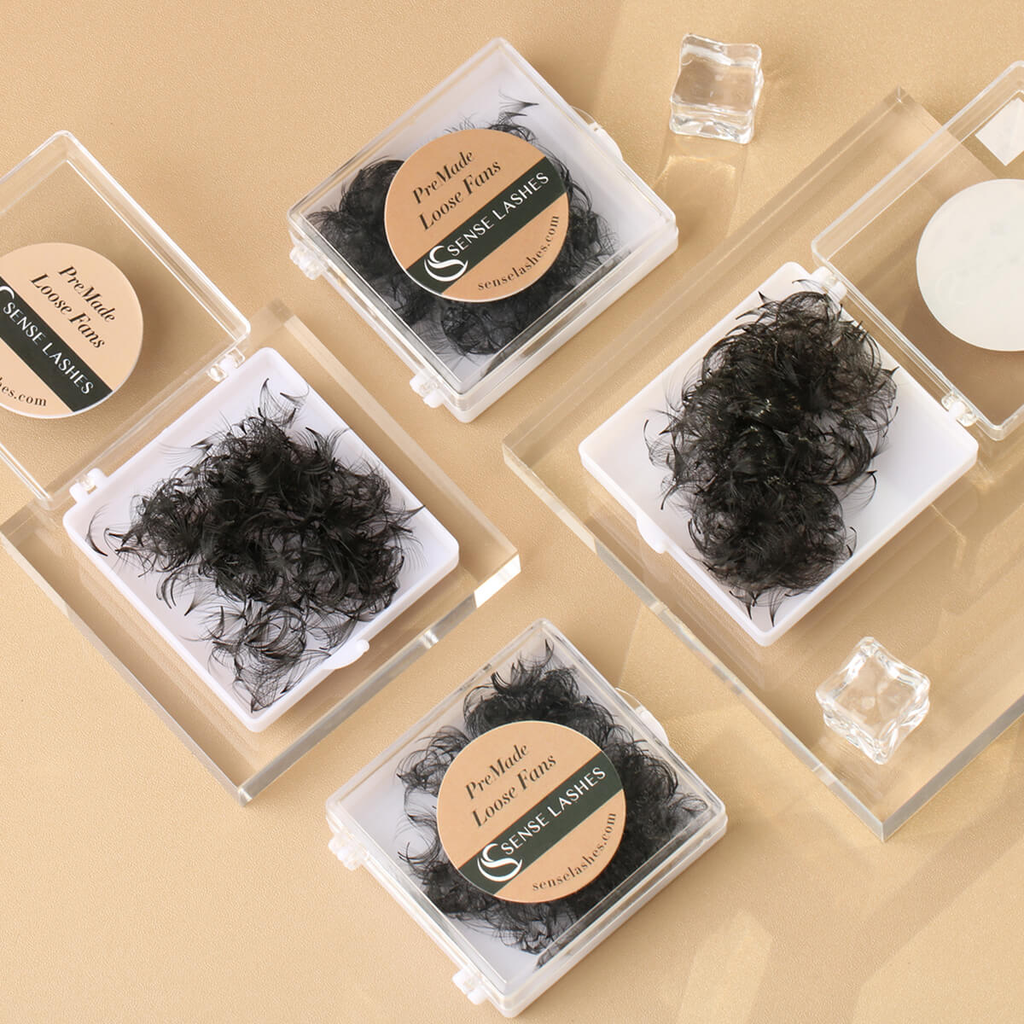
The Professional Adjustment: In humid climates, pre-open your colored fans slightly wider than your standard "dry" technique. This compensates for the expected fiber expansion and ensures the intended color luminosity remains stable as the adhesive cures. Using products like Brown 10D PreMade Loose Fans can help maintain consistency, as these are heat-bonded to preserve their geometry regardless of minor atmospheric shifts.

Safety First: Protecting the Ocular Microbiome
Elevating your artistry also means elevating your commitment to client health. When working with colored sets, artists often use more adhesive or complex mapping, which can inadvertently increase the risk of irritation.
Blepharitis Prevention
Proper fan construction is the first step, but hygiene is the foundation. According to the Mayo Clinic, blepharitis is a common inflammation of the eyelids often caused by bacteria or clogged oil glands. Dense colored sets can trap debris more easily than classic sets. It is a professional responsibility to educate clients that "water is not enough." Daily use of a dedicated lash shampoo is non-negotiable for preventing bacteria buildup and Demodex mite infestation.
Chemical Safety and Sensitivities
The pigments used in professional colored lashes must meet rigorous safety standards. The FDA highlights the importance of color additive restrictions in eye cosmetics to prevent severe allergic reactions. Furthermore, the adhesive used for colored sets often contains Ethyl Cyanoacrylate, which can cause allergic contact dermatitis in sensitive individuals.
We recommend a strict 48-hour Patch Test Protocol for all new clients, especially when transitioning to colored sets which may involve different adhesive formulations or higher lash densities.
Technical Application: Choosing the Right Tools
The choice between handmade and premade fans often depends on the desired level of customization. For high-hue density, handmade fans using 0.07mm Cashmere Volume Wispy Eyelash Extensions allow the artist to control the exact width of every fan.
However, for consistency in brown or multi-tonal sets, Brown 20D PreMade Loose Fans provide a pre-set geometry that guarantees optimal light refraction across the entire lash line. These are particularly effective for artists who are still perfecting their Symmetry Standards.
Troubleshooting Common Color Issues
- "My Purple Lashes Look Black": Your fans are likely too narrow. Increase the opening angle and reduce the number of fibers per fan (e.g., move from 10D to 6D) to let more light in.
- "The Set Looks Messy": This is often a result of inconsistent fan width. Ensure your Base Geometry is pointed and consistent.
- "Retention is Poor on Colored Sets": Check your adhesive. Some pigments can subtly change the curing speed of the glue. Ensure you are using a fresh, pH-balanced adhesive and consider a Lash Primer to restore the lash cuticle after cleaning.
Summary of Professional Best Practices
To achieve benchmark-level results with colored lash sets, professionals must move beyond basic application and master the nuances of fan geometry.
- Prioritize Fan Width: Open fans wider than usual to maximize light refraction and color vibrancy.
- Respect the 1.5x Rule: Keep fan bases slim to protect the natural lash and ensure a flexible bond.
- Account for Humidity: In environments over 60% humidity, pre-compensate for fiber swelling by widening your fans.
- Enforce Hygiene: Use authoritative resources like the CDC's guidelines on eye hygiene to educate clients on the necessity of lash shampoo.
- Verify Compliance: Ensure your supplies are sourced from manufacturers that prioritize Import Compliance and chemical safety.
By integrating these technical insights with a rigorous commitment to safety and hygiene, you position yourself as a "Pro-Grade Partner" in the industry, building a reputation for artistry that is as reliable as it is beautiful.
Disclaimer: This article is for informational purposes only and does not constitute professional medical or legal advice. Always consult with a qualified health professional regarding eye health concerns and ensure compliance with local cosmetic regulations.