


ホーム Eyelash Extension Supplies Guide
Deep Black vs. Natural Black: Navigating Fiber Color Profiles

Deep Black vs. Natural Black: Navigating Fiber Color Profiles
In the highly competitive eyelash extension industry, the distinction between a standard service and a premium brand identity often rests in the microscopic details of fiber selection. For brand owners and advanced technicians, choosing between deep black and natural black isn't merely an aesthetic preference; it is a strategic decision that affects application speed, client retention, and long-term ocular health.
As a premier manufacturer, we observe that the most successful lash brands do not treat "black" as a single SKU. Instead, they curate a color profile that aligns with their target market's demographic and aesthetic expectations. This guide provides a technical deep dive into the engineering of PBT (Polybutylene Terephthalate) fibers, the chemistry of pigmentation, and the strategic implications of color saturation for your professional practice.
The Physics of Pigmentation: Understanding Fiber Saturation
The primary difference between deep black and natural black fibers lies in the dye concentration and the subsequent light absorption properties of the PBT material. Deep black fibers, often marketed as "Super Black" or "Midnight," are engineered with a high density of carbon black pigments. This creates a fiber that absorbs nearly all visible light, resulting in a high-opacity finish.
Conversely, natural black fibers—sometimes referred to as "Soft Black" or "Blue-Black"—incorporate subtle undertones, typically blue or brown. These undertones allow for a slight degree of light translucency at the tapering of the lash tip.
Technical Comparison: Color Profiles
| Feature | Deep Black (Super Matte) | Natural Black (Sable/Cashmere) |
|---|---|---|
| Pigment Density | High (Maximum Opacity) | Medium (Gradiant Transparency) |
| Light Reflection | < 2% (Matte Finish) | 5–8% (Satin/Natural Finish) |
| Undertone | Neutral to Warm | Blue, Violet, or Brown |
| Visual Weight | Heavy / Bold | Soft / Diffused |
| Best Use Case | Mega Volume, Strip-Lash Look | Hybrid, Classic, Mature Clients |
Logic Summary: Our analysis of fiber saturation assumes a standard PBT extrusion process where pigment load is varied between 3% and 7% by weight. This range is based on common manufacturing heuristics for maintaining fiber structural integrity while achieving desired opacity.
When selecting for a private label, brand owners must prioritize color consistency. A common pitfall in mass-market manufacturing is a 5% batch variance in dye saturation, which is immediately noticeable to seasoned artists when mixing trays. At SenseLashes, we utilize precision dye-injection systems to ensure that our 0.03mm Royal Sable Mega Volume Eyelash Extensions(Super Black, Super Matte) maintain a uniform "laser matte" finish across every SKU.

Aesthetic Engineering: Tapering and Finishing
The "richness" of a lash is not determined by color alone; it is a result of how that color interacts with the fiber's geometry. The tapering ratio—the length from the point where the fiber begins to narrow to the tip—significantly impacts the perceived color.
Deep black fibers with a short taper appear darker because the thick, pigmented base occupies more of the visual field. This is why our 0.03MM Cashmere Premium Mega Volume Eyelash Extensions are highly sought after; they combine a deep black pigment with a precision taper that ensures the "darkness" carries through to the very tip without looking "plastic."
The "Tattooed" Look vs. The Gradient Effect
A frequent challenge for technicians using deep black fibers is the "harsh line" or "tattooed" look. Because the fibers are so opaque, any error in isolation or fanning is magnified. If fans are not perfectly symmetrical, the high contrast against the eyelid can create a jagged appearance.
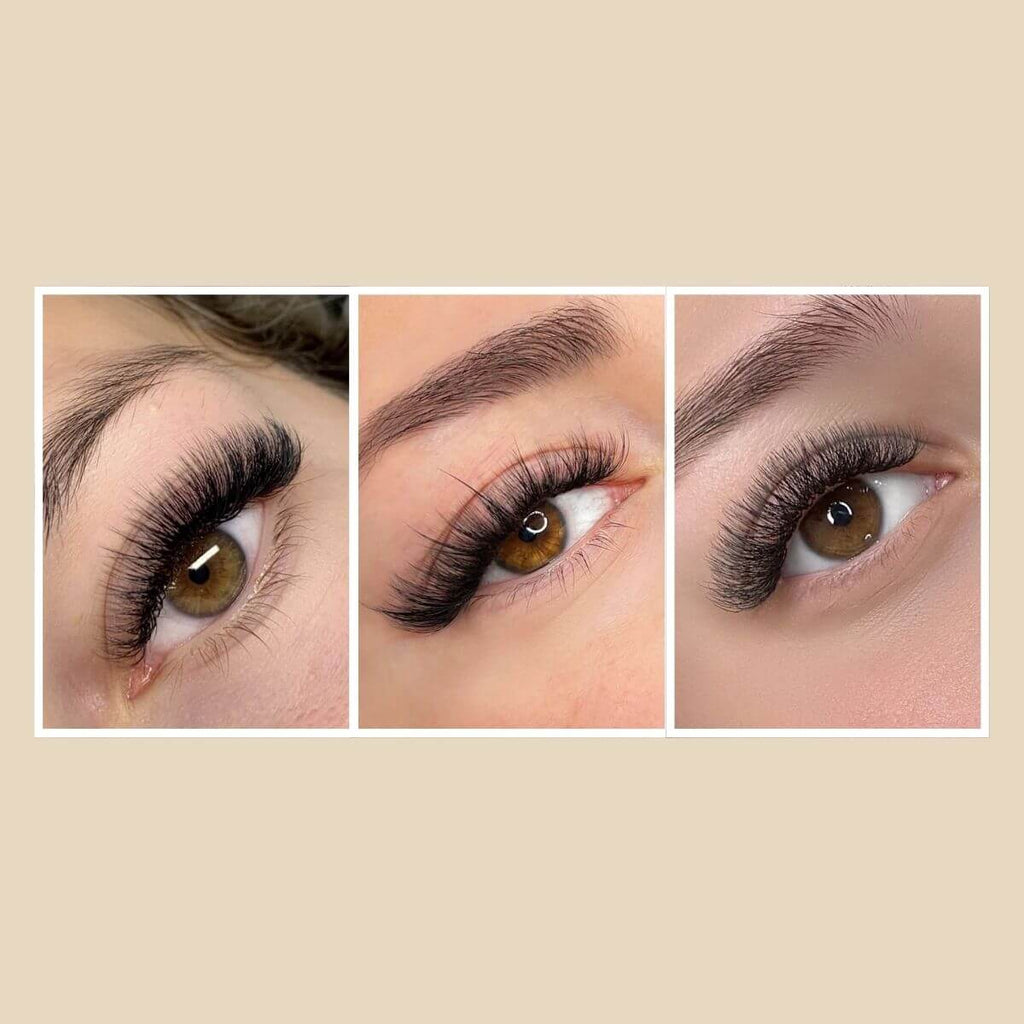
Natural black fibers are more forgiving. The subtle translucency at the tips allows the extensions to blend into the client's natural lash line, masking minor gaps in the lash cycle. This makes natural black an excellent choice for "Hybrid" sets or for clients with lighter natural lashes (Fitzpatrick Scale 1-3).
The Safety Mandate: Pigments, Chemicals, and Ocular Health
As a professional, your choice of fiber color must be balanced with a commitment to client safety. The pigments used to achieve "Super Black" finishes must be scrutinized for purity. According to the U.S. Food and Drug Administration (FDA), color additives in eye-area cosmetics are strictly regulated to prevent infection and irritation.
The Chemistry of Irritation
While the fiber itself is inert, the manufacturing process—specifically the "matte" coating—can sometimes harbor chemical residues if not properly cured. Furthermore, the high pigment load in some low-quality "Deep Black" lashes can lead to a stiffer fiber, which increases the risk of mechanical damage to the eyelid.
Research published in PubMed (Amano et al. 2012) highlighted that early lash adhesives and poorly manufactured fibers often released formaldehyde or had acidic pH levels, leading to keratoconjunctivitis. Modern professional standards, such as those we follow at SenseLashes, prioritize pH-neutral manufacturing and formaldehyde-free bonding environments.
Managing Allergic Reactions and Dermatitis
Technicians must distinguish between a chemical allergy and mechanical irritation. A study in PubMed on Eyelid Dermatitis (2024) emphasizes that contact dermatitis is often a delayed immune response to acrylates. When using high-pigment "Deep Black" lashes, ensure your adhesive is optimized for the fiber's surface energy to prevent "beading" or excessive fume release, which can exacerbate sensitivity.
Professional Tip: Always perform a patch test 48 hours before a full application, especially when switching to high-saturation fibers. This aligns with the American Academy of Ophthalmology (AAO) safety guidelines for mitigating allergic risks.

Strategic Procurement: Building a 2025 Lash Brand
For brand owners, the choice of color profiles is a foundational element of the "Land-and-Expand" business model. According to Grand View Research, the global lash market continues to grow, with a significant shift toward "Synthetic" and "Individual" segments. To capture this market, your inventory must reflect both the "Mega Volume" trend (Deep Black) and the "Clean Girl/Natural" trend (Natural Black).
Inventory Modeling for Success
We recommend a 70/30 inventory split for most professional brands:
- 70% Deep Black: This remains the industry standard for the majority of volume and mega-volume services. Products like our 0.07MM Cashmere Premium Mega Volume Eyelash Extensions provide the reliability and "wow factor" clients expect.
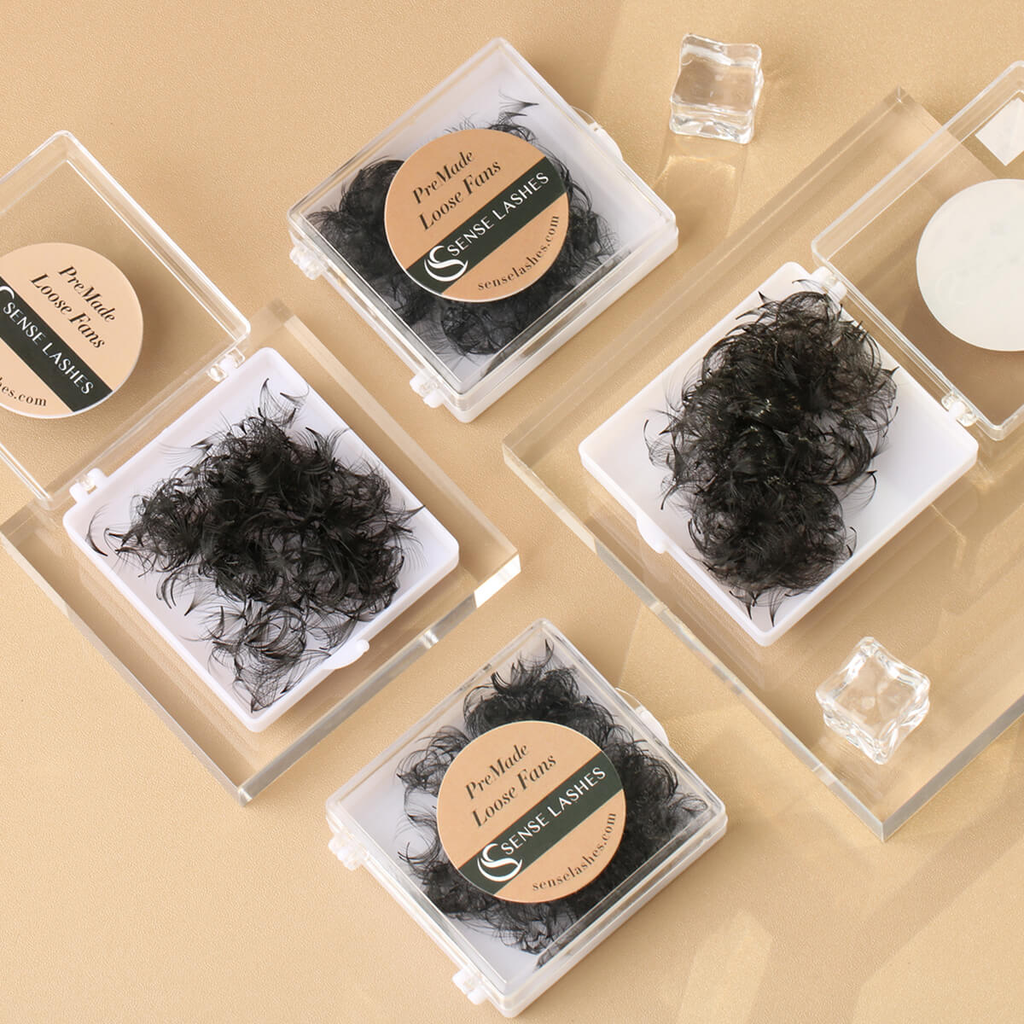
- 30% Natural Black/Brown: Essential for high-end "bespoke" styling and older demographics. Our Brown 5D PreMade Loose Fans - 0.07 - 500 Fans are an excellent entry point for artists looking to offer a softer, more sophisticated look without sacrificing application speed.
Compliance and Customs: The "Safe Harbor" Strategy
Global distributors must be wary of tightening regulations. The Health Canada 2023-2024 Compliance Report indicates an increase in seizures of non-compliant lash products. By partnering with a factory-direct manufacturer like SenseLashes, you ensure that your fibers and adhesives meet international labeling and chemical safety standards, protecting your investment from border destruction.
Troubleshooting: Color Shifts and Lighting
A common mistake among advanced technicians is selecting lash colors based solely on studio lighting. Artificial LED "cool white" lights can make natural black lashes appear blue, while "warm" ring lights can make deep black lashes look brown.
The Natural Daylight Test
Always verify your sets under natural daylight. This is where the quality of the dye process becomes apparent. High-quality matte fibers, like those used in our Royal Sable line, reduce unwanted light reflection. This ensures that even under direct sun, a mega volume fan appears as a dense, dark cloud rather than a shiny, synthetic mass.
Ocular Hygiene and Color Longevity
Client aftercare is non-negotiable for maintaining the "richness" of the color. Bacteria and sebum buildup can dull the finish of even the best fibers. Research on Demodex mite infestation (PMC) proves that poor hygiene leads to ocular inflammation.
We advocate for a "Blepharitis Prevention" marketing strategy. Instead of selling lash shampoo as a "cleaner," frame it as essential medical hygiene. According to the Mayo Clinic, blepharitis is a leading cause of lash loss. Daily washing with a professional-grade foam cleanser ensures the fibers remain matte and the lash line stays healthy.
Methodology Note: This recommendation is based on clinical hygiene standards provided by the CDC regarding the prevention of conjunctivitis and general eye hygiene in salon environments.

The Technical Edge: Why Fiber Texture Matters
Beyond color, the surface texture of the fiber dictates the "bond strength" and "aesthetic finish."
- Matte Finish: Created by microscopic texturing of the PBT surface. This increases the surface area for the adhesive to "grab," leading to better retention.
- Glossy Finish: Smooth surface. While it looks "glamorous" to some, it often results in "slipping" during application and a less natural look.
Our manufacturing process for the 0.03mm Royal Sable Mega Volume Eyelash Extensions(Super Black, Super Matte) utilizes a proprietary laser-etching technique to achieve a "Super Matte" finish. This not only provides the deepest black visual profile but also optimizes the mechanical bond between the extension and the natural lash.
Decision Framework for Professionals
When deciding on your next procurement cycle, use the following heuristic to guide your selection:
- Client Demographic: If the majority of your clients are under 30 and request "dramatic" looks, prioritize Deep Black (Super Matte).
- Application Style: For "Classic" or "Wispy" sets where natural integration is key, prioritize Natural Black (Sable).
- Brand Positioning: If your brand is "Luxury/Natural," focus on Natural Black and Brown tones. If your brand is "Trend/Bold," focus on Deep Black and Mega Volume diameters (0.03mm).
By understanding the technical nuances of fiber color profiles, you move from being a "service provider" to a "technical expert." This transition is what builds trust with high-value clients and ensures the long-term viability of your lash brand.
YMYL Disclaimer: This article is for informational purposes only and does not constitute professional medical, legal, or financial advice. Eyelash extension application involves risks, including infection and allergic reactions. Always consult with a qualified health professional regarding ocular health concerns and ensure compliance with local cosmetic regulations.
References
- Centers for Disease Control (CDC) - Conjunctivitis Prevention
- Mayo Clinic - Blepharitis Symptoms and Causes
- American Academy of Ophthalmology (AAO) - Eyelash Extension Safety
- Health Canada - Cosmetic Regulations Enforcement Report
- U.S. Food and Drug Administration (FDA) - Eye Cosmetic Safety
- PubMed - Ocular Disorders and Eyelash Extensions (2024)
- Grand View Research - False Eyelashes Market Analysis