


How to Map A Squirrel Style Eyelash Extension Set

Clients crave the squirrel style eyelash extensions for their soft lift without drama. Master the mapping technique to create stunning, balanced sets.
Squirrel style keeps topping client request lists for good reason: it lifts the eye without looking dramatic. But the signature shape only happens when your mapping is accurate. You need the right peak placement, smooth length transitions, and that crucial outer taper. Perfect these basics and you'll create sets clients love.
What Defines the Squirrel Lash Extension Shape
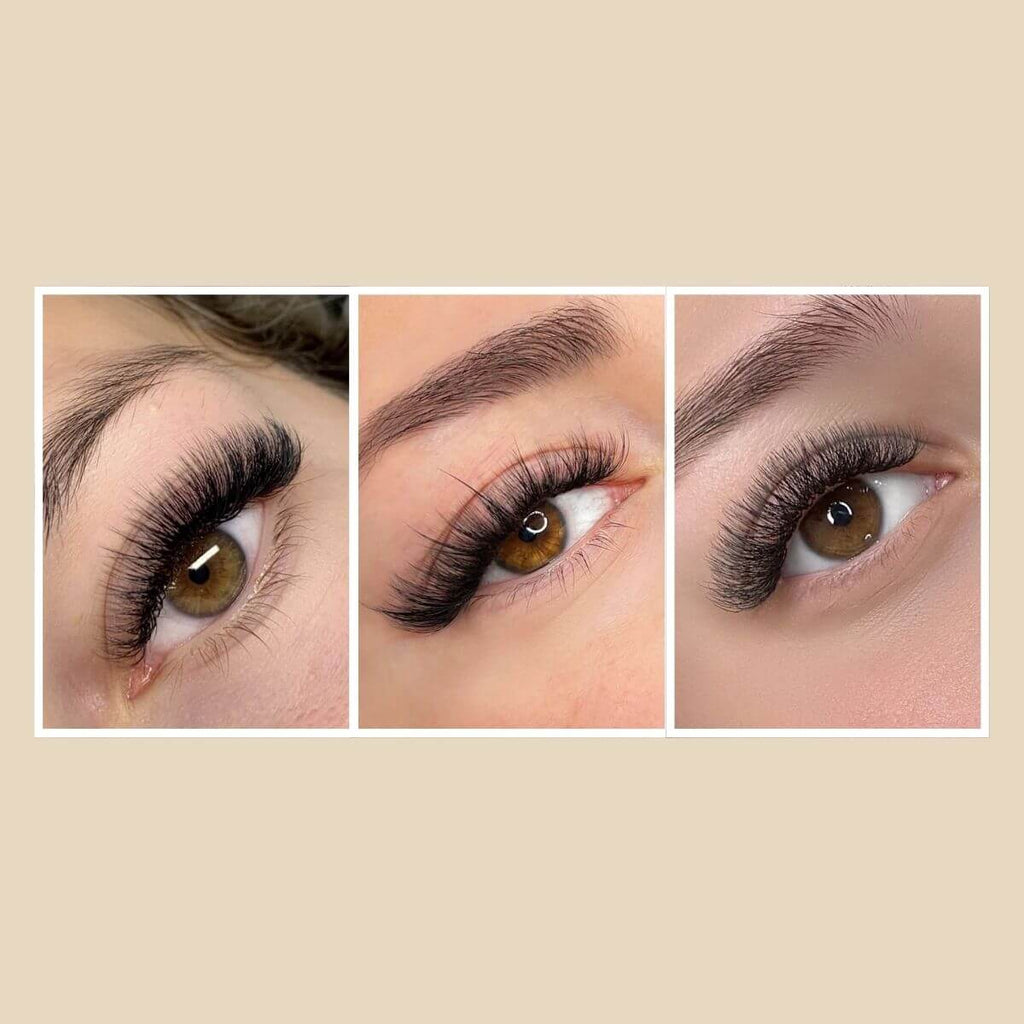
The squirrel style creates a gradual lift that peaks at the outer third of the eye. It's a gentle upward sweep that opens up the eye without the sharp, dramatic wing of a cat eye style.
Key Characteristics:
✓ Length builds gradually from inner corner to the longest point at 2/3 to 3/4 across the lash line (NOT at the outer corner)
✓ Lashes taper slightly after the peak toward the outer corner
✓ Result: A softer, natural-looking lift that elongates the eye while maintaining balance
Why clients love it: It enhances their natural eye shape without looking overdone. Versatile for everyday wear with a noticeable "wow" factor.
Best Eye Shapes for Squirrel Style Extensions
While squirrel style can be adapted for any eye shape, some are naturally perfect candidates.
Ideal Eye Shapes
- Round Eyes benefit significantly from squirrel style because the outer lift creates length and elongation. The upward sweep balances out the roundness and gives a more almond-like appearance, dramatically improving overall proportions.
- Almond Eyes are already well-proportioned, so squirrel style simply enhances what's naturally there. This makes it an easy win that adds a subtle lift without changing the eye's basic shape.
- Downturned Eyes get an instant rejuvenating effect with squirrel style. The lifted outer corner counteracts the natural droop and creates a more youthful, awake appearance.
Eye Shapes That Need Adjustments
- Hooded Eyes can still work beautifully with squirrel style, but you'll need to be strategic. The challenge is making sure the lift is visible when the eyes are open, so you'll need to adjust your curl selection and may need to shift the map apex slightly to account for the hood.
- Close-Set Eyes require a small modification to create the illusion of wider spacing. Move the peak length slightly more toward the outer corner to help the eyes appear farther apart.
During consultation, assess your client's natural eye shape and bone structure around the eyes. This tells you whether the classic squirrel map will work or if you need customization to achieve the best result for their unique features.

Step-by-Step: How to Map the Squirrel Style
Step 1: Mark Your Key Reference Points
First, establish your reference points—these are your guideposts for the entire lash map.
Main reference points to mark:
- Inner cornerof the eye
- Center of the pupil
- Outer cornerof the eye
Use a lash mapping pen or marker on your lint-free gel eye pad to mark these points clearly.

The most critical mark: Your peak length point
- Position this at 2/3 to 3/4 of the way across the lash line from the inner corner
- For most eyes, this falls just past the outer edge of the iris when your client looks straight ahead
- This is where your longest lashes will be placed
Important: Mark both eyes simultaneously and constantly check for symmetry. Since eyes are rarely perfectly symmetrical, you may need to adjust slightly to create visual balance.
Step 2: Plot Your Length Progression
Now that you have your reference points marked, plan out your actual lengths. This is where the squirrel shape comes to life.
Classic squirrel style length progression:
| Section | Position | Length | Purpose |
|---|---|---|---|
| Inner Corner | First 3-5mm of lash line | 8-9mm | Keep natural, avoid overwhelming inner eye |
| Moving Toward Center | Between inner corner and pupil | 9mm → 10mm → 11mm | Gradual the 1mm rule create smooth transition |
| Center to Peak | Pupil to peak point | 12mm → 13mm → 14-15mm | Build to maximum length based on client preference |
| Peak Zone | 2/3 to 3/4 point | 14-15mm (or 12-13mm for conservative) | Your longest lashes—the focal point |
| Peak to Outer Corner | After peak to end | Drop 1-2mm (e.g., 14mm → 12-13mm) | Critical taper creates the squirrel lift |
Why the taper matters:The long tapering profile after the peak is what separates squirrel from other styles:
- No taper (continuing to increase to outer corner) = Cat eye
- Uniform lengths throughout = Doll eye
- Taper after peak = Squirrel style
Step 3: Divide Into Workable Sections
To make application smoother and maintain consistent transitions, divide the eye into 5-7 clearly marked sections on your lash map.
Practical 7-section mapping approach:
Section 1 (Inner corner): 8-9mm
Section 2: 10mm
Section 3 (Approaching center): 11mm
Section 4 (Center to peak): 12-13mm
Section 5 (Peak zone): 14-15mm ← Your longest
Section 6 (Beginning taper): 13-14mm
Section 7 (Outer corner): 12mm ← Completes the taper
7 Pro Tips for Perfect Squirrel Style Mapping
These expert tips will help you avoid common mistakes and achieve consistent, beautiful results.
1. Always Check for Symmetry
Don't map one eye and assume you can perfectly mirror it on the other side. Most clients have natural facial asymmetries—one eye may sit slightly higher, have more lid space, or differ in shape.
What to do:
- Step back every few minutes during mapping
- View both eyes together from your client's perspective
- Make adjustments to create visual balance between both eyes
2. Adapt to Your Client's Natural Lashes
If your client has very short or sparse natural lashes, adjust your standard squirrel map to protect natural lash health and ensure good retention.
Key adjustments:
- Start with shorter extensions at the inner corner (7-8mm instead of 8-9mm)
- Be conservative with your peak length (12-13mm instead of 14-15mm)
- Remember: Extensions that are too long for short natural lashes cause retention issues and potential damage
3. Document Every Set
Taking a few extra minutes to document your work makes future appointments smoother and ensures consistent results.
What to document:
- Take a photo of your completed lash map on the eye pad before applying
- Note which curls you used in each section (B, C, D, etc.)
- Record the specific lengths used throughout the set
- Store all information in your client's file for easy reference at fills
The payoff: You can work efficiently without second-guessing your choices, and you'll have an exact record for the client's next fill appointment.
4. Adjust for Individual Eye Shapes
Even when both eyes belong to the same person, they may require slightly different mapping approaches.
When to adjust:
- One eye is more hooded than the other
- Eyes have different shapes or angles
- One eye has less lid space
How to adjust:
- Shift your peak point slightly to accommodate the difference
- Modify curl selection on the eye that needs more lift
- Focus on achieving symmetry in lash spacing, not identical measurements
5. Perfect the Outer Corner Taper
The most common mistake with squirrel style is failing to taper the outer corner properly. This single error can ruin the entire squirrel effect.
What happens if you skip the taper:
- The set looks like cat eye instead of squirrel
- You lose the characteristic lifted effect
- The lashes appear heavy and droopy at the ends
The fix: After reaching peak length, drop down 1-2mm as you move to the outer corner. This taper is what creates the signature squirrel lift.
6. Factor in Your Client's Lifestyle
Your client's daily habits should influence your mapping decisions to ensure their lashes work with their lifestyle.
Consider these factors:
| Lifestyle Factor | Mapping Adjustment |
|---|---|
| Wears glasses | Modify length/curl to prevent lashes from hitting lenses |
| Side sleeper | Use stronger curls to maintain lift between fills |
| Very active/athletic | Choose more durable curl patterns and conservative lengths |
| Makeup wearer | Account for how extensions will layer with their usual look |
7. Master Smooth Length Transitions
Professional squirrel sets are defined by seamless, gradual length changes. Choppy transitions immediately signal amateur work.
The problem: Jumping from 10mm directly to 14mm creates visible gaps and an unpolished look.
The solution:
- Use 1mm increments throughout your progression (10mm → 11mm → 12mm → 13mm → 14mm)
- Blend sections carefully where lengths change
- Take your time—rushing the transitions shows in the final result
A smooth gradient is the hallmark of expert squirrel style mapping.
Squirrel vs. Cat Eye: Key Differences You Need to Know
"What's the difference between squirrel and cat eye?" This is one of the most common questions lash artists get from clients—and for good reason. While both styles create a lifted effect, they're quite different in execution and final look.
The main difference comes down to where the drama happens and how pronounced the lift is.
Quick Style Comparison
| Feature | Squirrel Style | Cat Eye Style |
|---|---|---|
| Peak Length Position | 2/3 to 3/4 point across lash line | Very outer corner |
| Length Progression | Gradual and smooth | Dramatic and pronounced |
| Outer Corner | Tapers down slightly after peak | Longest lashes at the end |
| Overall Effect | Soft, natural, subtly lifted | Bold, dramatic, distinct wing |
| Best For | Everyday wear, natural enhancement | Statement look, high-impact drama |
| Wearability | Versatile for all occasions | Best for special events or bold preference |
Breaking Down Each Style
Squirrel Style Characteristics:
✓ Peak length positioned at the 2/3 to 3/4 point (NOT the outer corner)
✓ Gradual, smooth length progression creates a gentle upward sweep
✓ Lashes taper down slightly after the peak toward the outer corner
✓ Softer, more natural, and subtly lifted overall effect
✓ Perfect for clients seeking wearable, everyday enhancement
Cat Eye Characteristics:
✓ Longest lashes placed at the very outer corner for maximum elongation
✓ More dramatic and pronounced length increase as you move outward
✓ Little to no taper at the end—the outer corner IS the statement
✓ Bolder, more dramatic with a distinct winged effect
✓ Ideal for clients wanting maximum impact and attention
The lash mapping for these two styles is fundamentally different. Using a cat eye map when your client wants squirrel style (or vice versa) will result in a look that doesn't match their expectations.
Create Flawless Squirrel Lash Extensions
Once you understand the fundamentals—gradual build, outer third peak, and essential taper—squirrel mapping becomes second nature. Focus on precision: mark your points accurately, plan smooth 1mm transitions, and choose curls strategically for each section. Those few extra minutes you invest in mapping will transform into symmetrical, camera-ready sets that clients love. Document each set so you can replicate perfection at every fill. Start practicing today—each squirrel set you complete builds your expertise and reputation for delivering this highly requested, flattering style consistently.
コメントを残す