

SENSELASHES Conventional Curl Lash Extensions
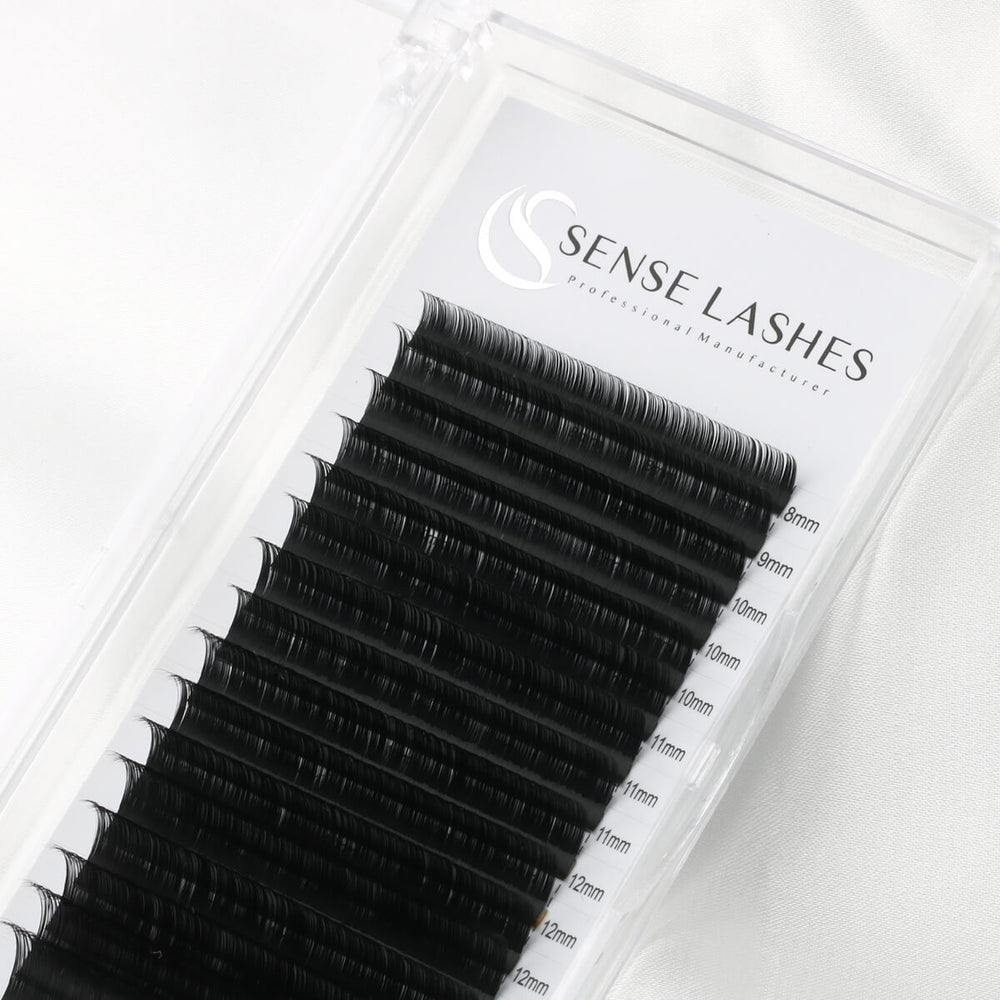
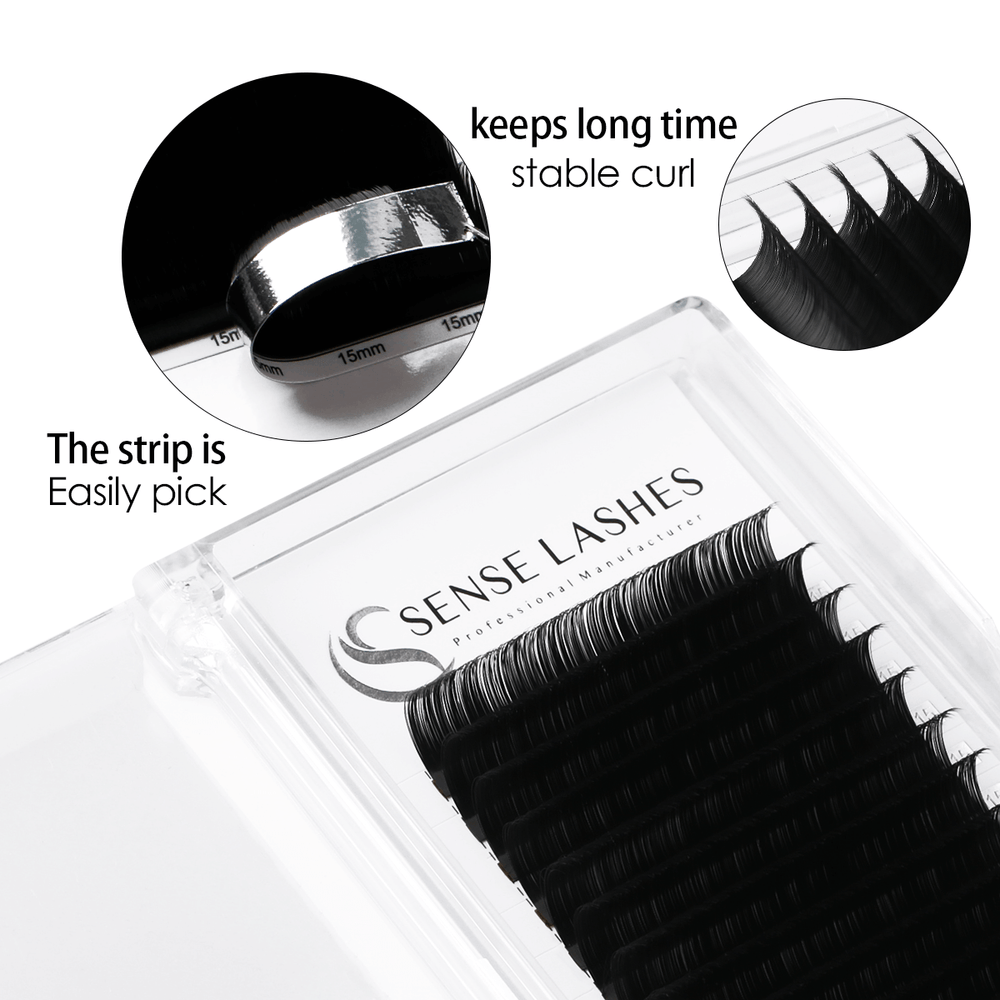
SENSELASHES Conventional Curl Lash Extensions are for lash artists who already know what core curl options they need, but still need to choose the right product type, diameter, and length for the set. The most efficient way to start with is estimating lash direction and desired lift, then narrow the product type by technique, and then choose diameter and length.
Start with the Curl Problem
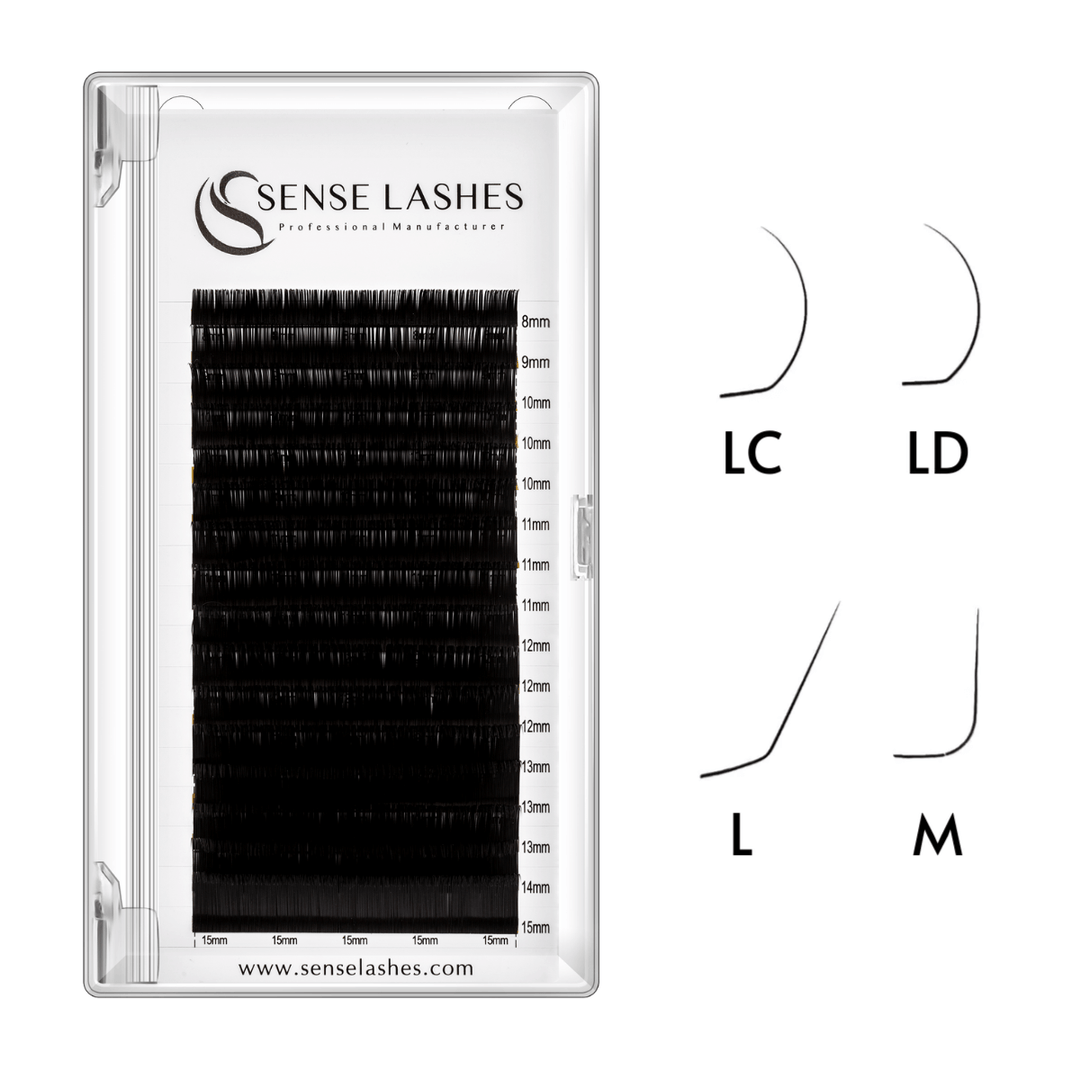
- C curl is the safest starting point when the goal is clean, wearable enhancement.
- CC curl is useful when C looks too soft but D may be too strong.
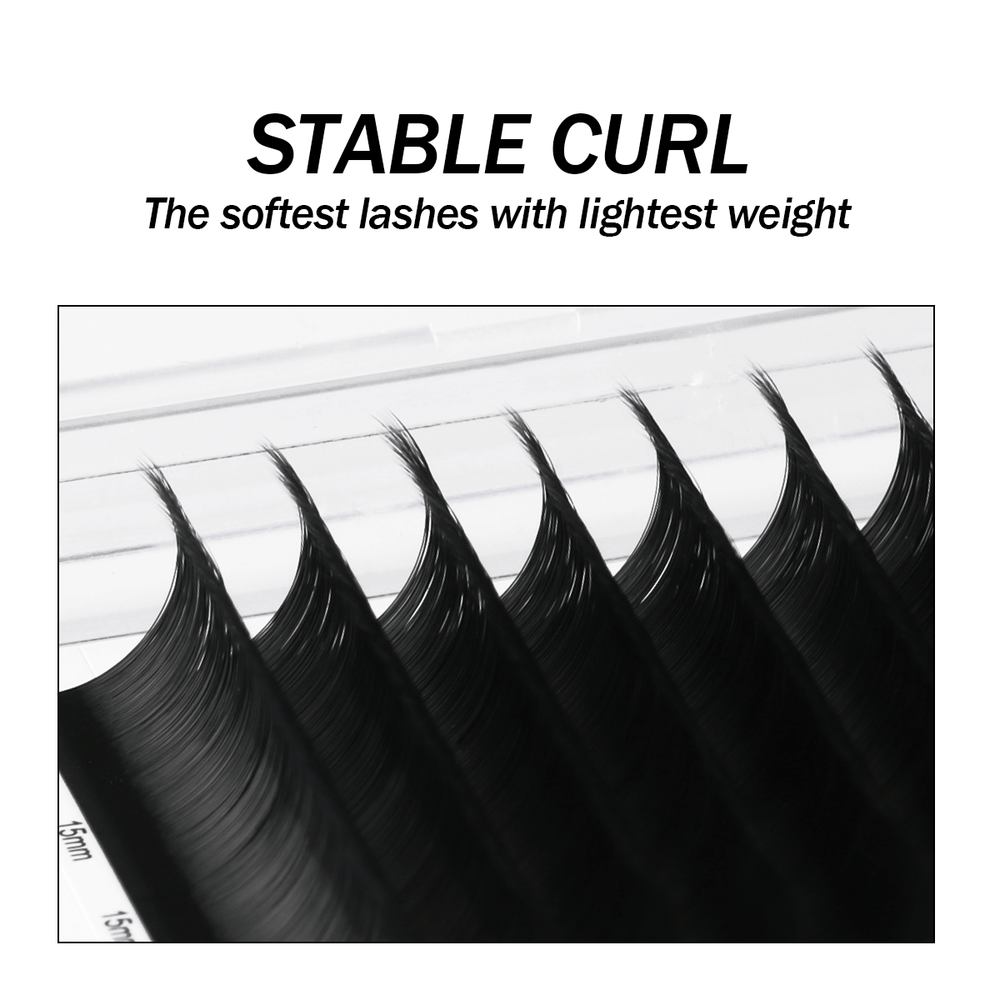
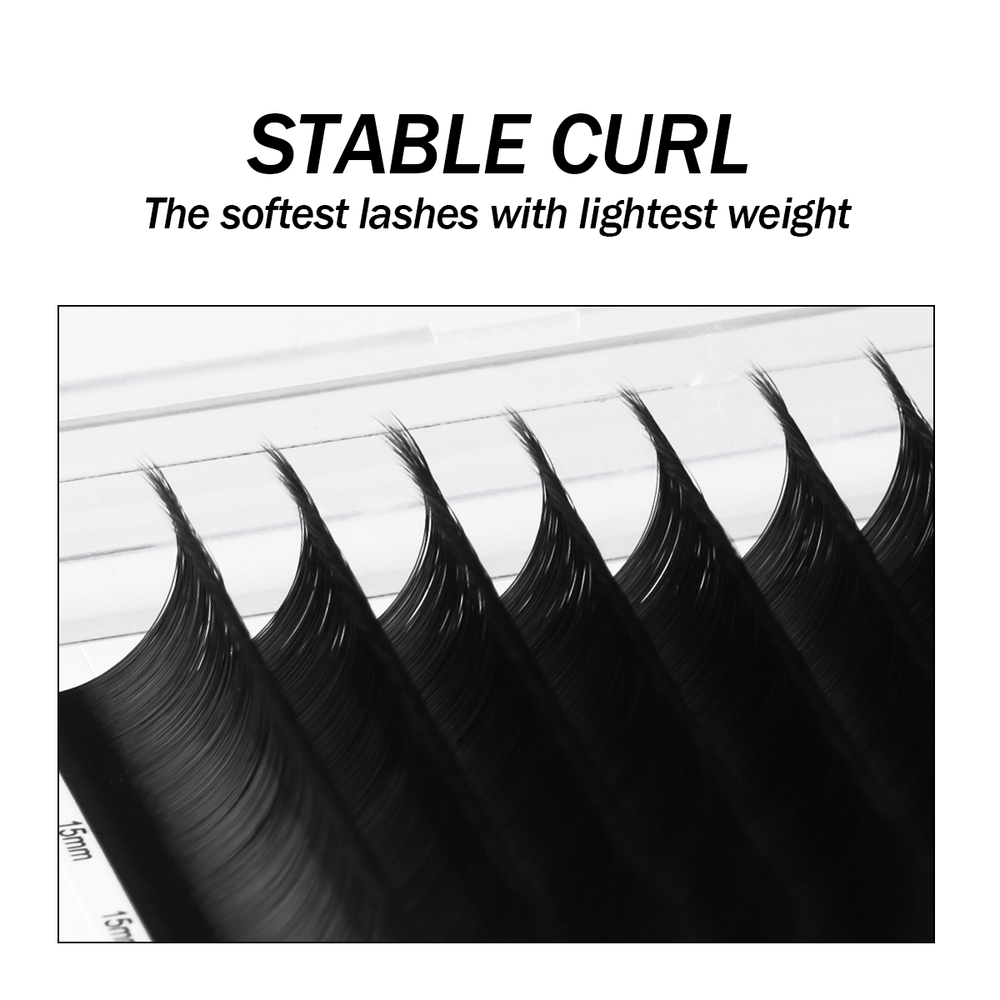
- D curl can open the eye more clearly, especially when the natural lashes need lift, but it should not be chosen automatically for people who wants dramatic effect.
- DD curl is the most intense choice in this group and should be used when natural lash direction and the intended style can support that curve.
For a deeper curl-by-curl explanation, our lash extension curls guide can support you with more details on matching curl to natural lash direction.
Choose Product Type by Technique
| If You Are Creating | Choose This Type First | What It Solves |
|---|---|---|
| Clean one-to-one definition | Classic lashes | Gives each natural lash a single, visible extension line |
| Soft volume or handmade fans | Volume lashes | Balances density with manageable fan work |
| Very full density with fine fibers | Mega Volume lashes | Builds darker fullness with lighter individual fibers |
| Faster handmade volume fans from the strip | Easy Fanning lashes | Helps the base gather more easily during fan creation |
| Natural texture with simple pickup | YY / W Shape lashes | Adds more fullness than classic without building a full fan |
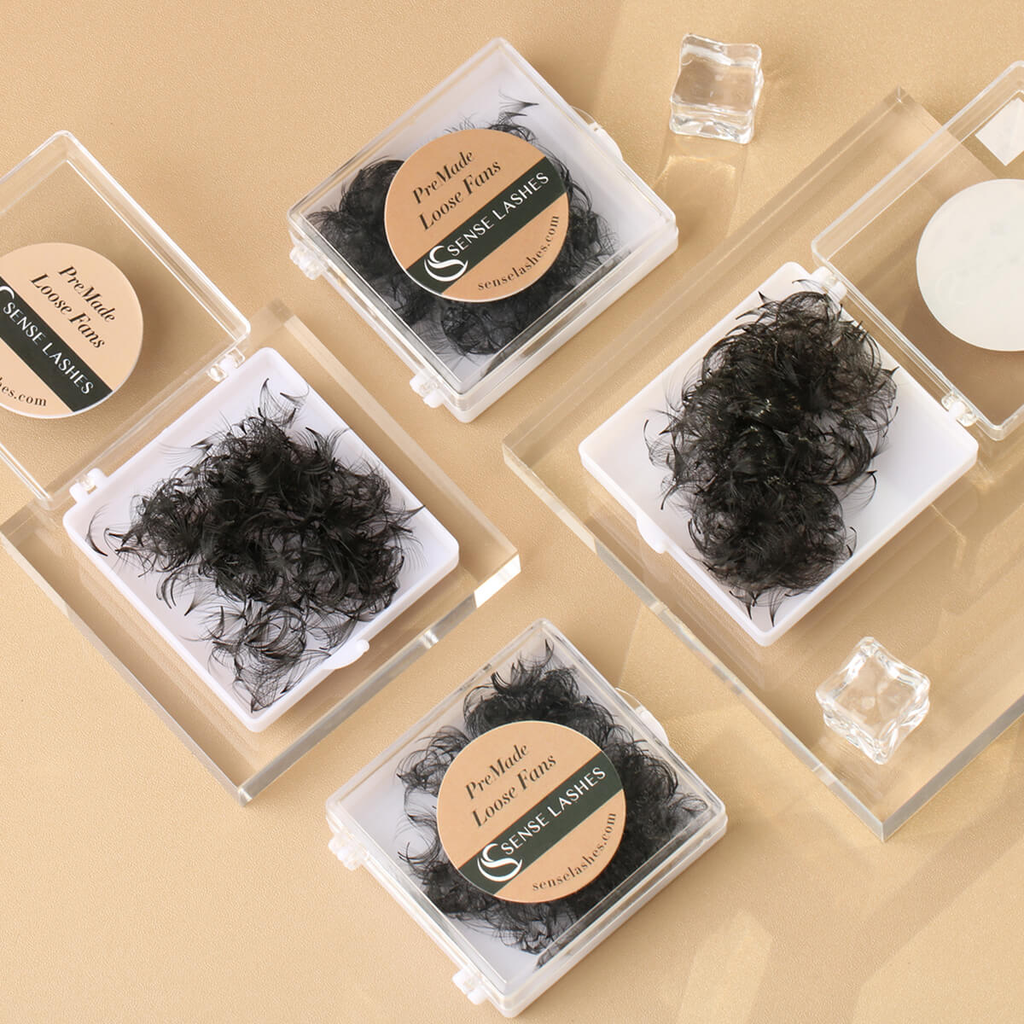
| Faster ready-made volume placement | Loose premade fans | Reduces fan-making time while still requiring correct isolation and attachment |
| Softer-looking classic or volume styling | Cashmere lashes | Useful when the finished set needs a less rigid visual effect |
| Bold classic definition with reduced visual bulk | Ellipse Flat lashes | Supports stronger definition in classic-style work when selected appropriately |
For artists choosing between classic, volume, and mega volume work, check out our comparison guide and make your choice according to your cases.
Match Diameter to Load, Not Just Darkness
Diameter controls more than the visible thickness of the lash. It affects weight, fan size, attachment behavior, and how much the natural lash has to carry.
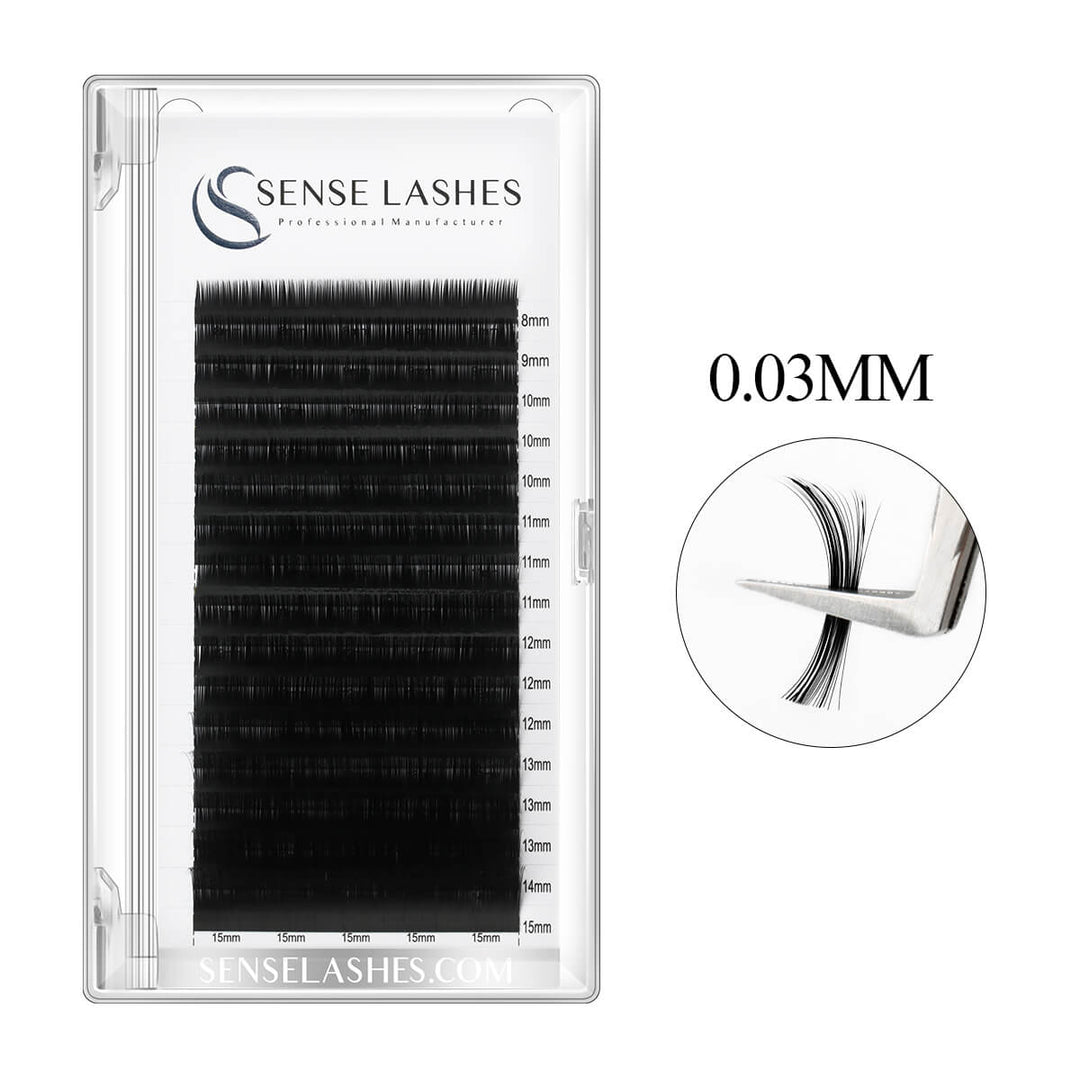
- 0.03 mm is suited to mega volume and very fine fan work. It is useful when the set needs density without relying on thicker individual fibers.
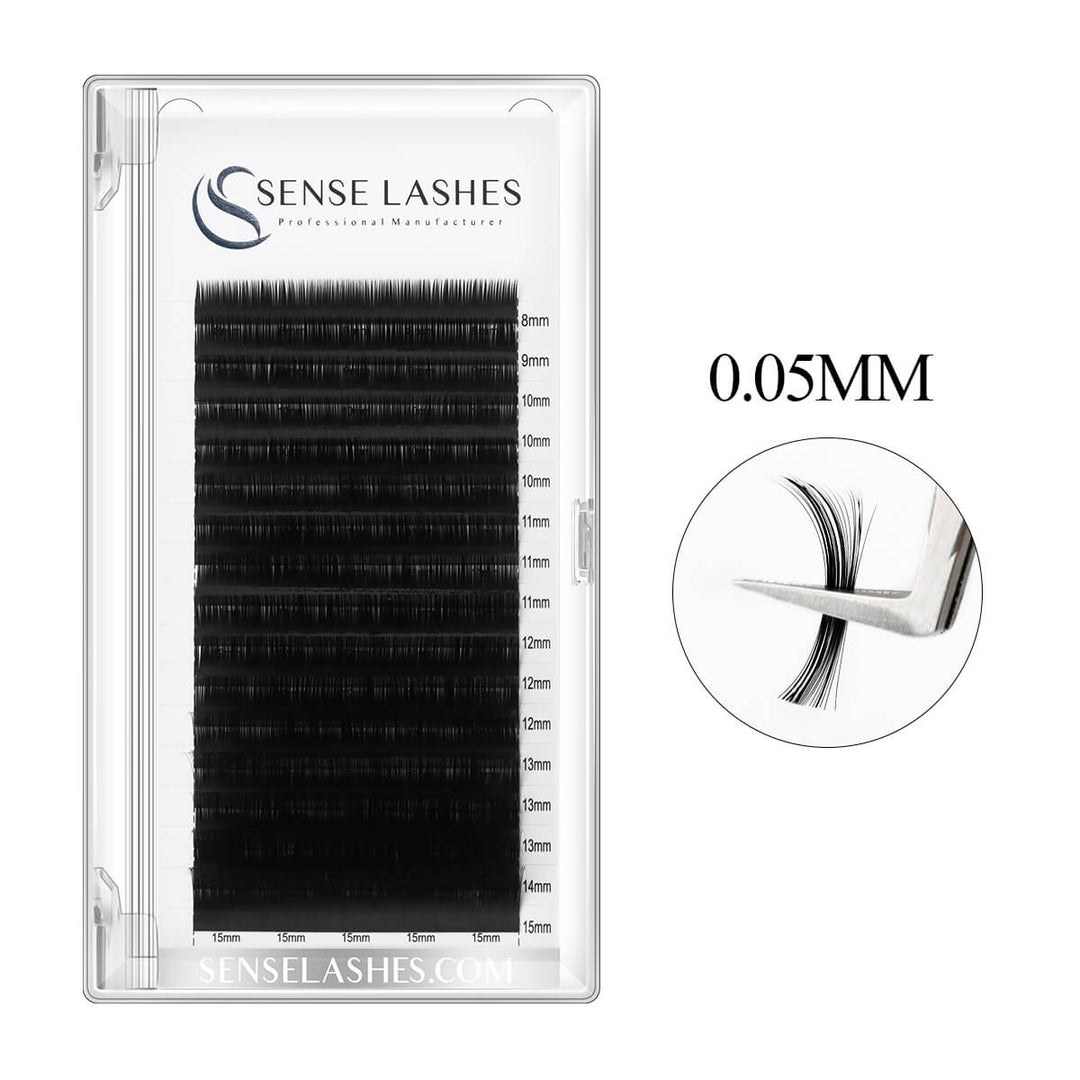
- 0.05 mm works well for full volume and denser fans. It helps build a darker lash line with finer individual strands.
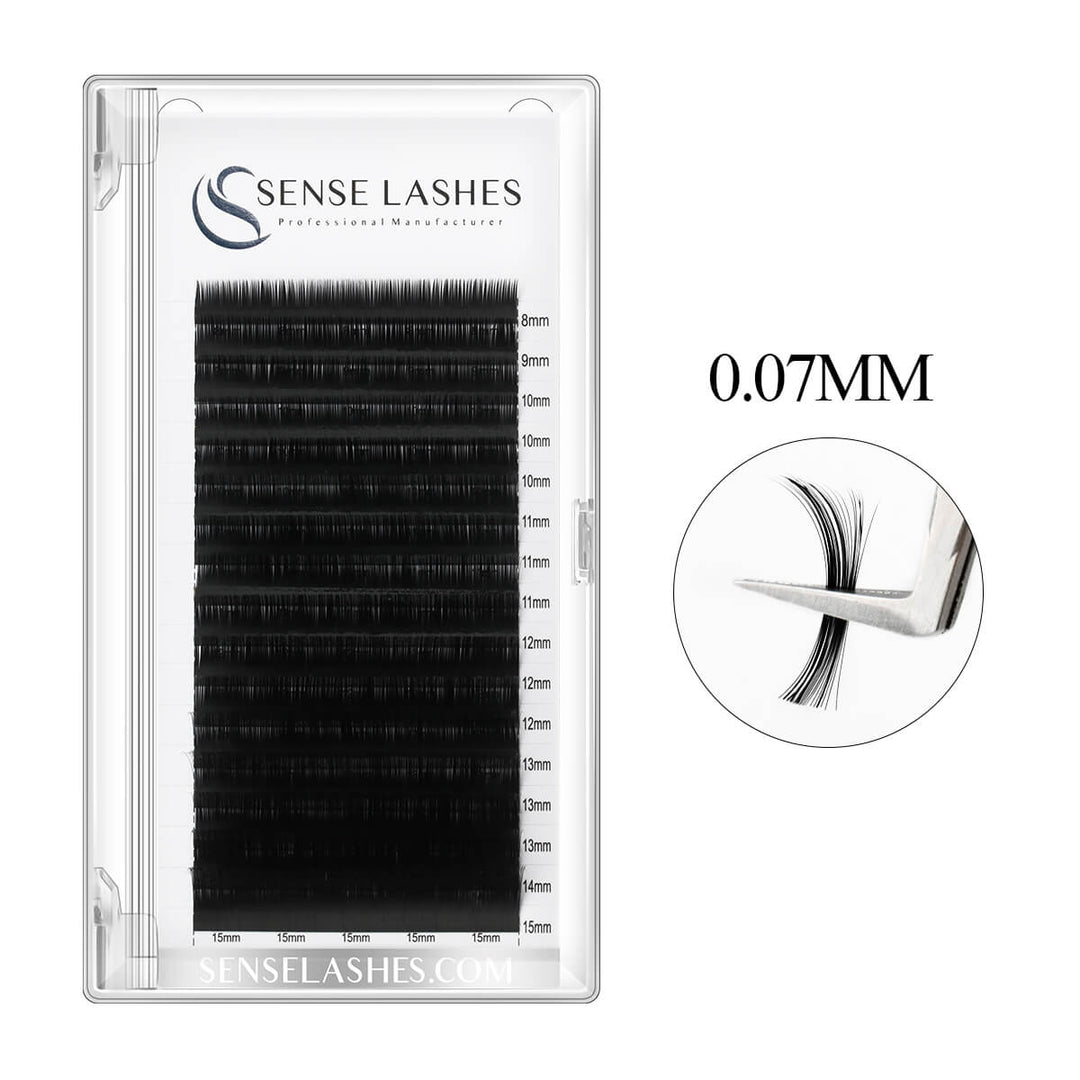
- 0.07 mm is commonly used for standard volume, hybrid work, YY lashes, and some premade fans. It gives each strand more body and creates clearer definition.
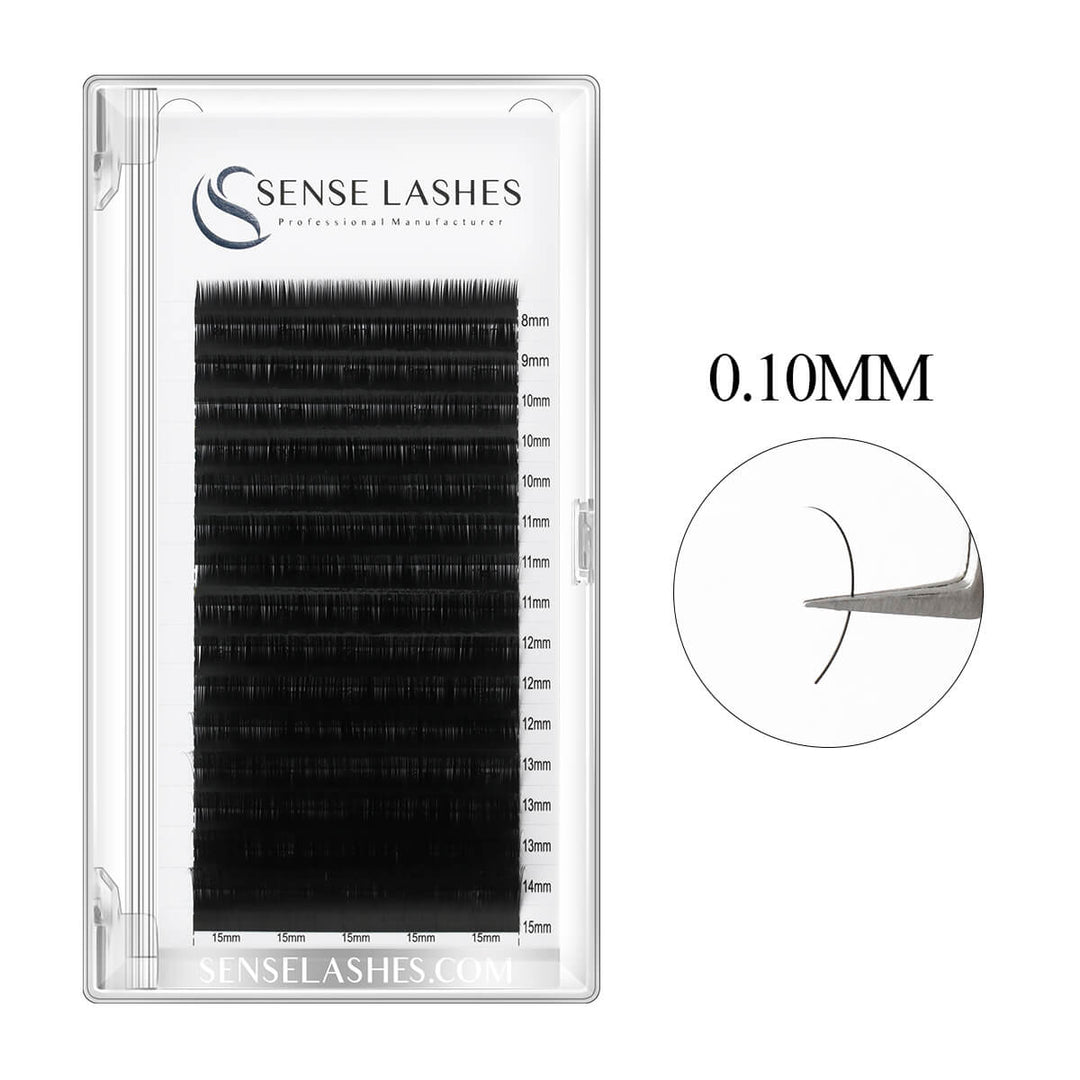
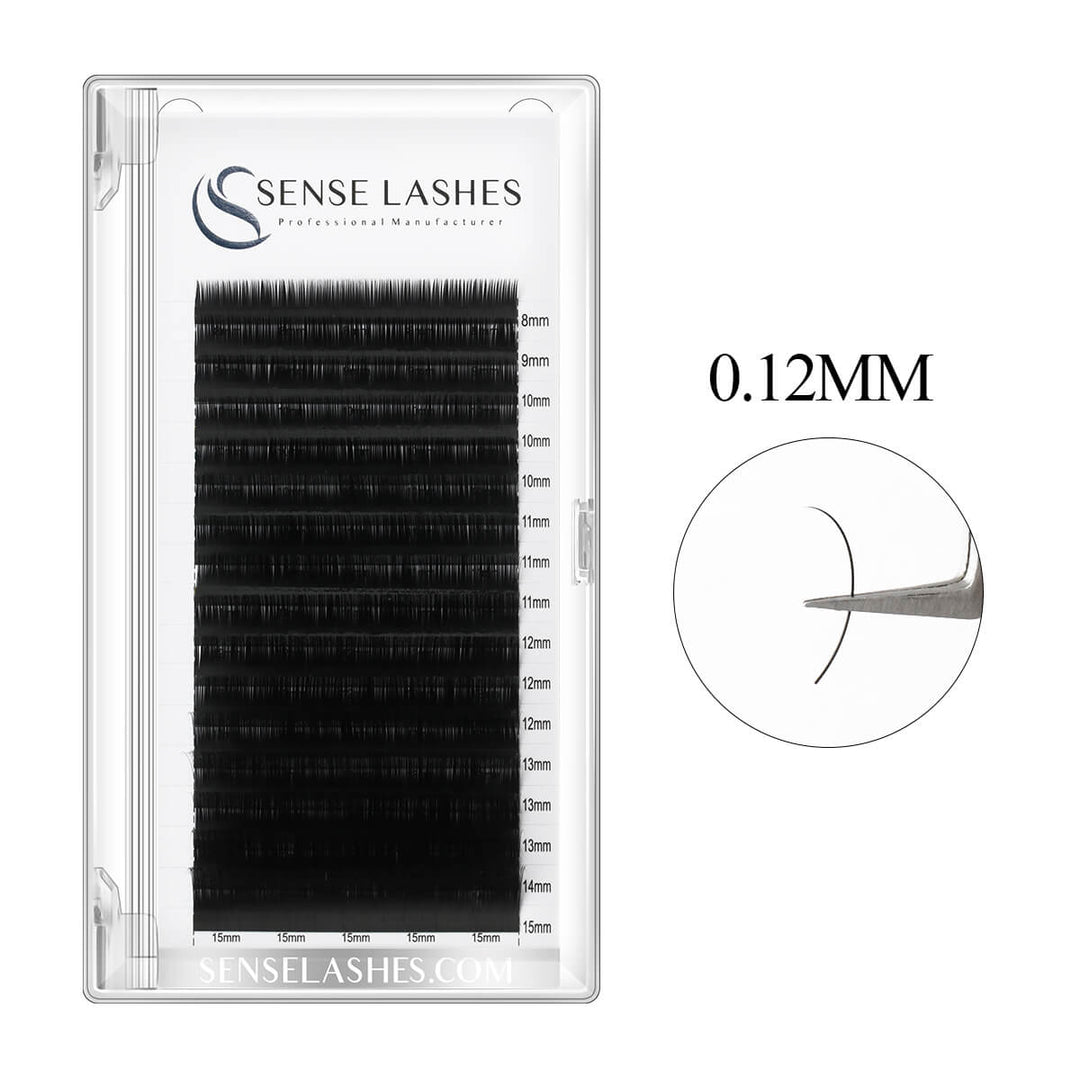
- 0.10 mm / 0.12 mm can support light classic or soft classic effects. These diameters give visible single-lash definition without moving into the strongest classic weight.
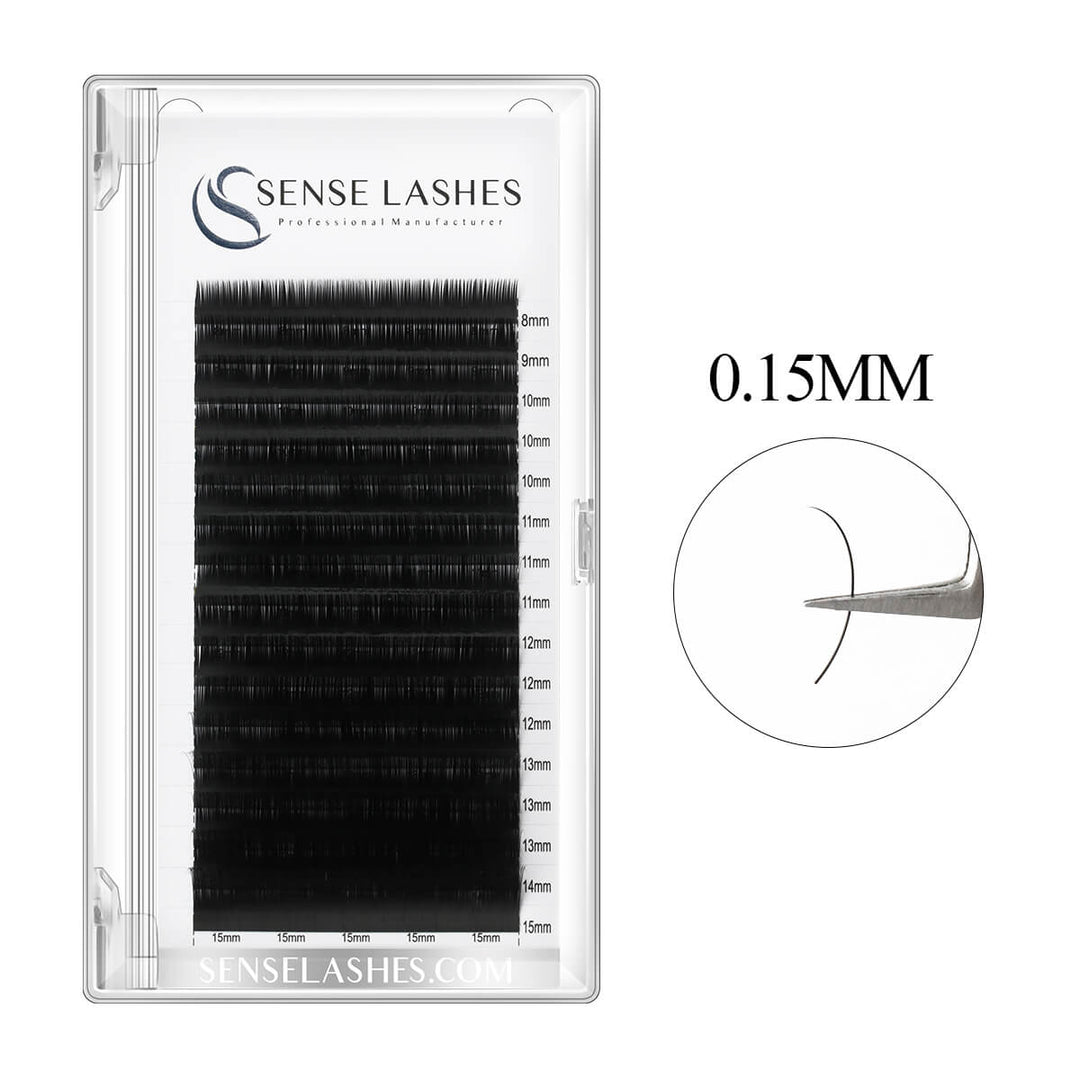
- 0.15 mm is a common choice for standard classic sets. It creates a clean, mascara-like lash line when natural lashes can support the selected length and diameter.
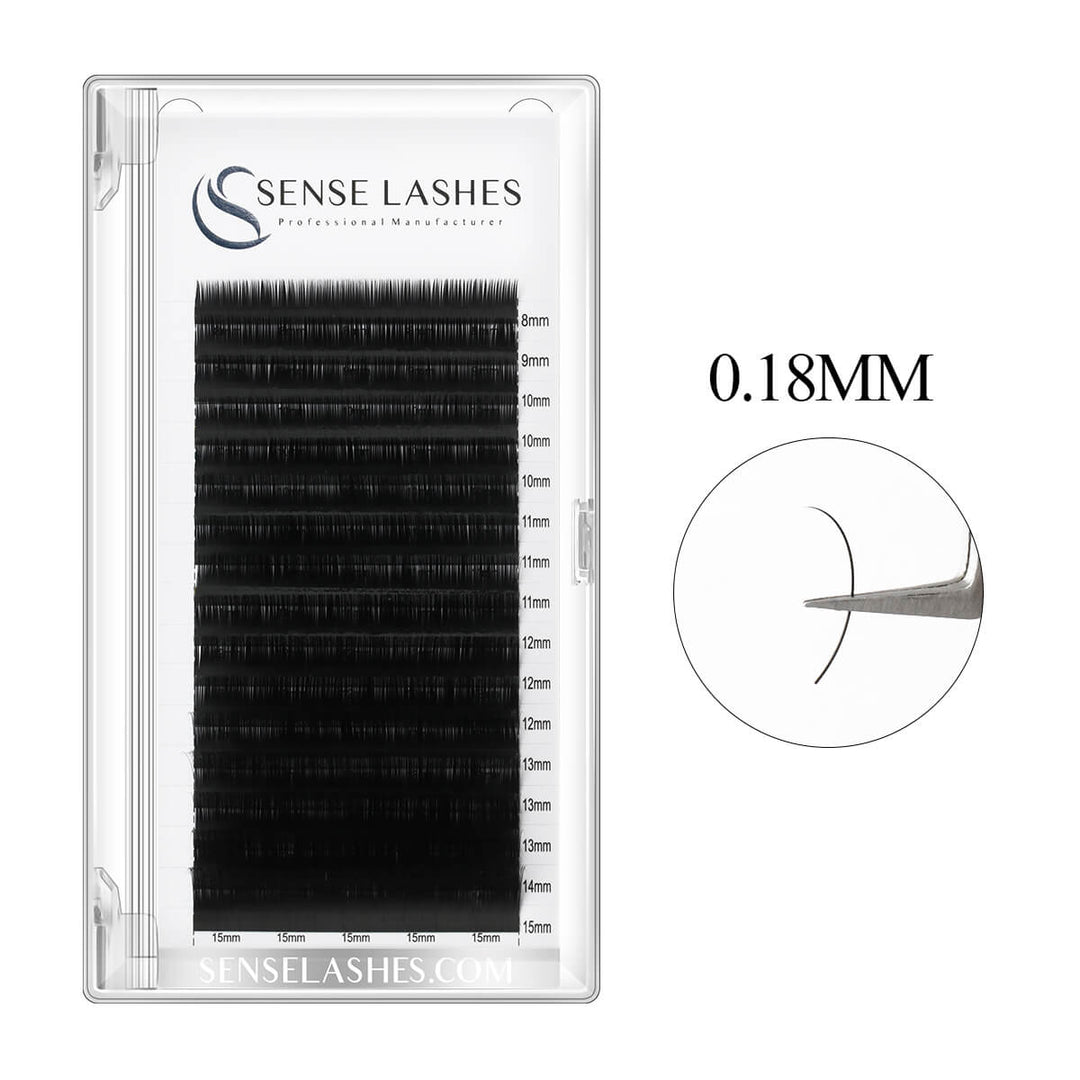
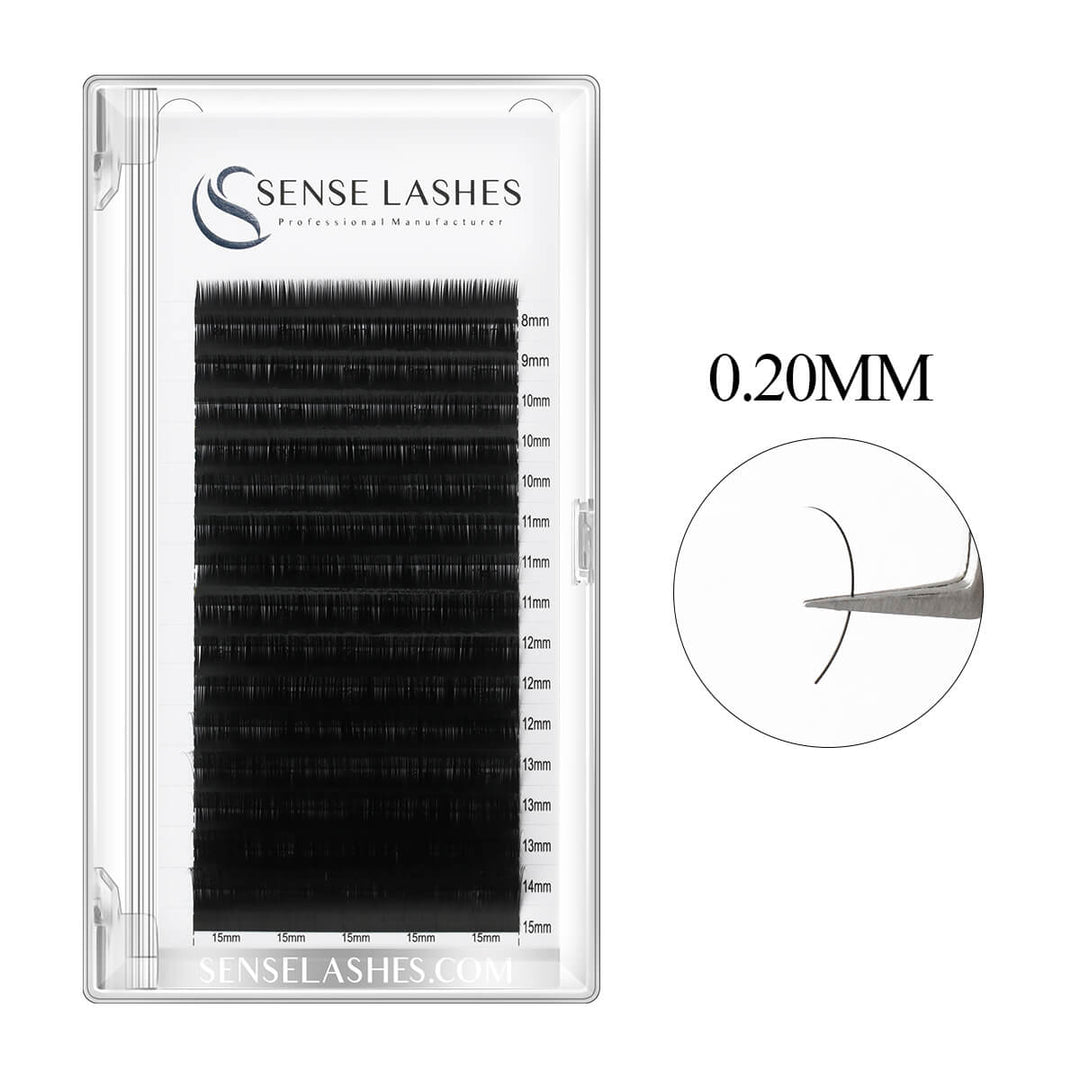
- 0.18 mm / 0.20 mm are better reserved for bold classic styling. They should be used with stronger natural lashes and moderate length choices to avoid placing unnecessary load on the lash.
If you want more darkness but has fine natural lashes, it may be better to reduce diameter and build the look with mapping, fan count, or shorter dense sections. If you want classic definition but cannot support a heavy classic diameter, a lighter classic option or a soft volume approach may be more appropriate.
Use Length After Curl and Diameter Are Decided
Length should be the last major decision. A longer extension increases leverage on the natural lash, especially when combined with a stronger curl or heavier diameter. This is why the same D curl can look clean at a moderate length but become too lifted, too heavy, or too separated from the natural lash when the length is pushed too far.
- Use shorter lengths for inner corners, restrained styling.
- Use medium lengths for most everyday maps.
- Reserve longer lengths for people whose natural lashes can support the extra leverage and whose eye shape benefits from the added extension.
Mixed-length trays are useful when building a complete lash map. Single-length trays are better for restocking salon staples or frequently used zones. In both cases, the correct length is the one that supports natural lashes and the map.
A Simple Way to Narrow the Selection Scope
Use this order when choosing products:
-
Check natural lash direction.
If the natural lashes grow straight, downward, upward, or in mixed layers, curl selection should change. A stronger curl is not always better if it reduces the contact area.
-
Decide the service type.
Choose classic, volume, mega volume, YY, Easy Fanning, flat, cashmere, or premade fan products based on how you plan to build the set.
-
Match diameter to safe load.
Diameter should support the natural lash, fan size, and length. If the set feels too heavy on paper, reduce diameter, length, or density.
-
Use length to complete the map.
Length should refine the style, not compensate for the wrong curl or diameter.
-
Keep attachment clean.
No curl or diameter can fix poor isolation, excessive adhesive, shallow attachment, or an unsuitable placement angle.
FAQs About SENSELASHES Conventional Curl Lash Extensions
Q1: Does C curl retain better than D curl? +
Not really. C curl may create more contact on some natural lashes, but retention depends on the fit between the extension base and the natural lash. If D curl matches the natural lash direction and is applied with full base contact, it can retain well. If D curl is too curved for the natural lash, the attachment area may become smaller and retention can suffer.
Q2: Why does D curl sometimes look too curly from the side? +
This usually happens when the extension curve does not blend well with the natural lash direction. On very straight or forward-growing natural lashes, a strong curl can make the natural lash and extension appear like two separate layers from the side.
If that happens, the next set may need a softer curl, shorter length, or adjusted placement angle. Do not try to relax the extensions with heat or mechanical curling tools.
Q3: Can I mix C, CC, and D curl in one set? +
Yes, but the mix should solve a mapping problem. Different curls can be used to adjust lift across the lash line, correct uneven natural lash directions, or soften the transition between zones.
The set should still look intentional. Keep the length progression, direction, and density controlled so the curl mix does not create a broken or uneven lash line.
Q4: What if I wants a dramatic look but have weak natural lashes? +
Do not solve every dramatic request with a stronger curl, longer length, or thicker diameter. If the natural lashes are weak, the better approach is to create visible impact with mapping, shorter dense zones, finer diameters, or lighter volume choices. For high-density requests, review fan size, diameter, and natural lash strength together.