


Accueil Eyelash Extension Supplies Guide
Seamless Aesthetics: Comparing Base Visibility in Volume Sets

Seamless Aesthetics: The Technical Evolution of Volume Fan Bases
For the professional lash artist, the "seamless" aesthetic is the gold standard of volume application. It represents a delicate balance between structural integrity and visual invisibility. As the industry shifts toward high-density sets—moving from traditional 3D fans to advanced 10D and 20D configurations—the visibility of the fan base has become a critical performance metric.
The choice between heat-bonded and glue-bonded premade fans is no longer just a matter of convenience; it is a strategic decision that impacts the eyeliner effect, client comfort, and long-term ocular health. Understanding the manufacturing nuances and mechanical behaviors of these bonding methods allows technicians to mitigate risks such as mechanical damage to the natural lash and chemical sensitivities.
The Anatomy of the Base: Heat-Bonded vs. Glue-Bonded
To master seamless aesthetics, one must first understand how the base of a volume fan is constructed. Each method offers a distinct profile that interacts differently with the natural lash and the chosen adhesive.
Heat-Bonded Fans: The "Invisible" Standard
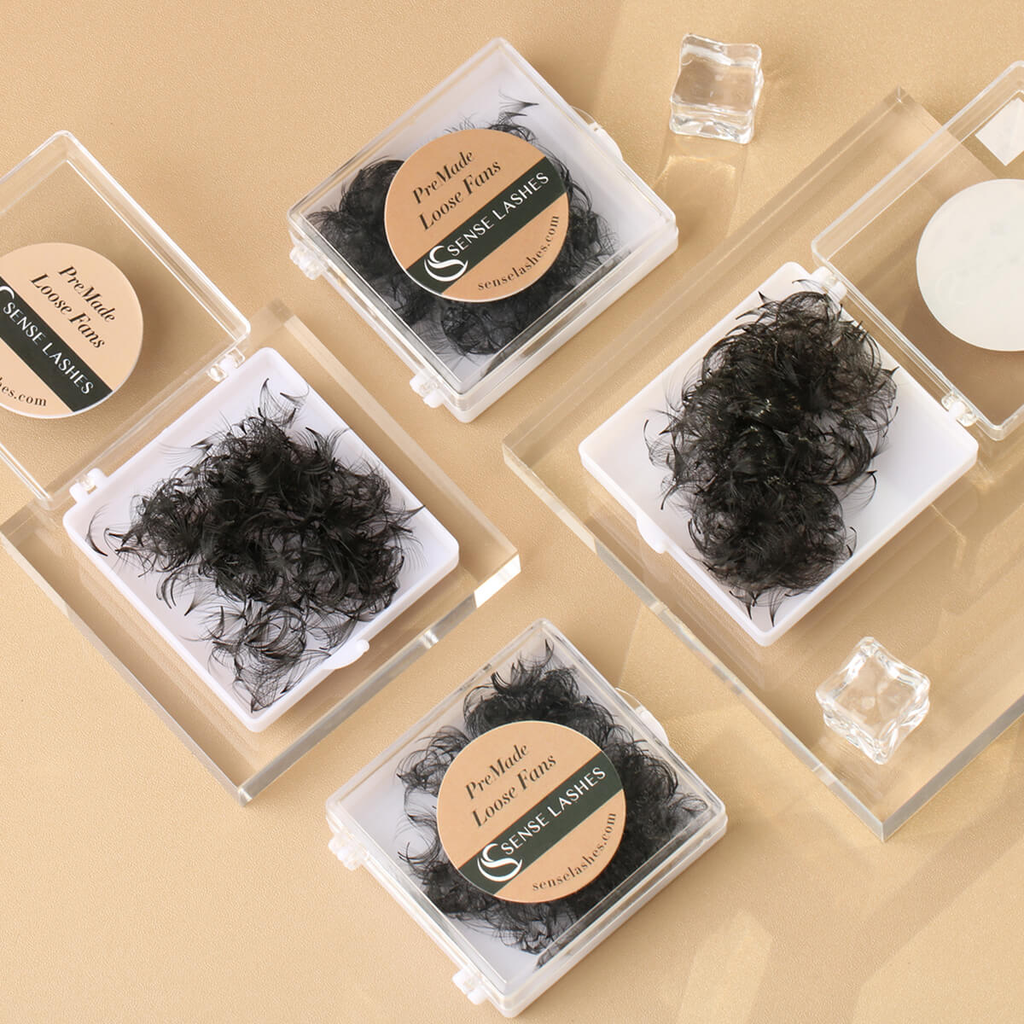
Heat-bonded fans are manufactured by applying precision heat to the base of the PBT (Polybutylene Terephthalate) fibers. This process causes the fibers to fuse together at a molecular level without the addition of a secondary bonding agent.
- Visual Profile: These fans typically feature an ultra-slim, "pointy" base. Because there is no extra mass from a factory adhesive, the root remains translucent and flexible.
- Mechanical Advantage: The absence of a pre-applied adhesive "sleeve" allows for a more intimate bond between the fan and the natural lash. This is particularly evident in products like the 16D Handmade Loose Premade Fans Pointy Base(500 Fans), where the heat-fused base is designed to mimic the footprint of a hand-wrapped fan.
Glue-Bonded Fans: The "Eyeliner" Effect
Glue-bonded fans utilize a microscopic amount of adhesive at the base to hold the fan's shape during transport and application. While this provides a very stable fan that is resistant to "falling apart" during pick-up, it introduces a secondary layer of material.
- Visual Profile: The base of a glue-bonded fan is inherently thicker and darker. In many cases, this creates a built-in "eyeliner effect," which can be desirable for clients seeking maximum drama but may appear "clumpy" if the technician applies too much additional adhesive during the set.
- Application Nuance: Technicians often report that glue-bonded fans require a more precise dipping technique. Because the base is already "sealed" by factory glue, the secondary adhesive must be applied sparingly to avoid creating a "ridge" at the attachment point.

Logic Summary: Our analysis of base visibility assumes a standard application of 0.5mm to 1mm of adhesive depth. Heat-bonded fans offer ~30-40% less mass at the root compared to glue-bonded fans, based on typical manufacturing specifications for PBT fiber fusion.
Aesthetic Mapping: Choosing the Right Bond for the Look
The "look" of the lash line is heavily influenced by how these bases sit against the eyelid. Professional mapping requires selecting the bonding method that complements the client's desired finish.
The "Wet Look" and Wispy Sets
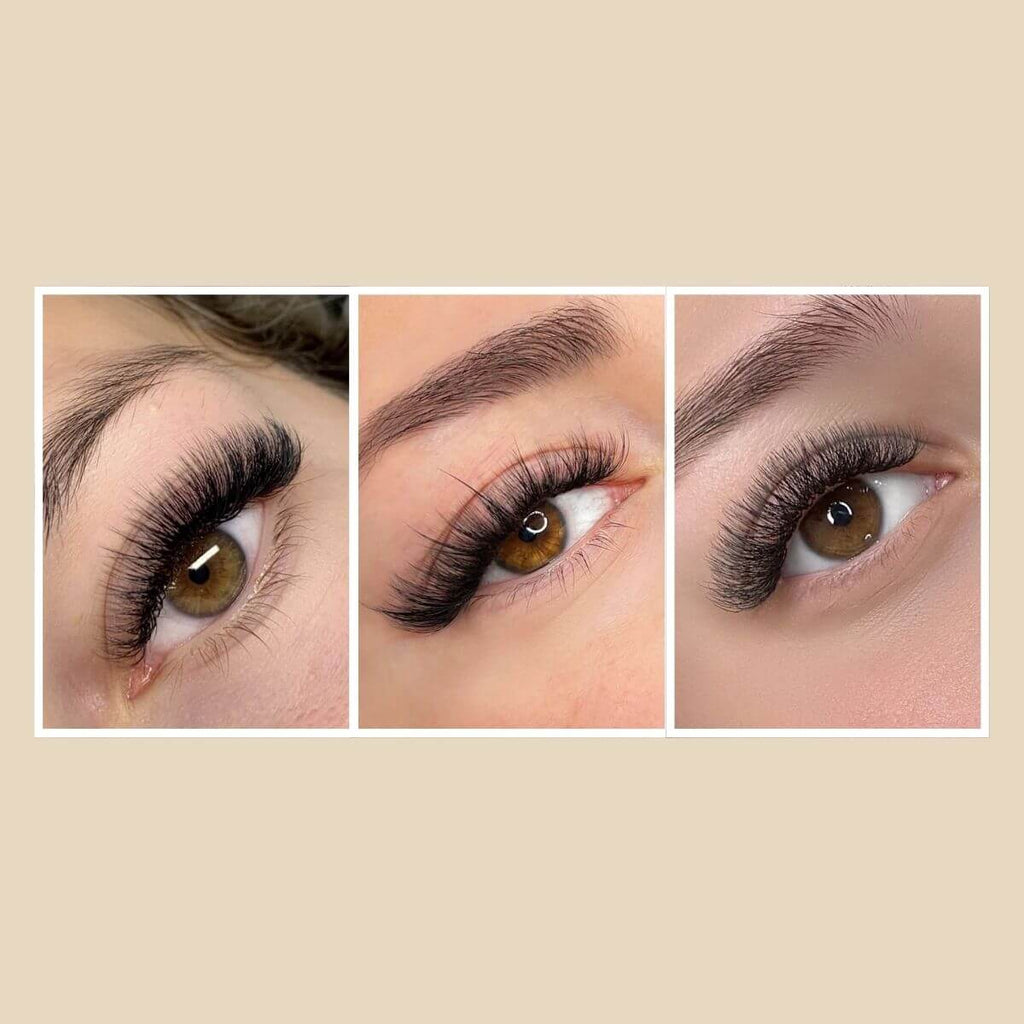
For "wet" or wispy styles, where the goal is a sharp, defined spike or a feathery, natural-looking root, heat-bonded fans are the default choice. Their slim bases allow for strategic gapping without the risk of visible "dots" along the lash line. Products like the 20D Handmade Loose Premade Fans Pointy Base(500 Fans) provide the density required for mega-volume while maintaining a needle-thin attachment point.
High-Drama and Dense Volume
When a client requests a dense, dark lash line that mimics the look of heavy eyeliner, glue-bonded fans can be an asset. The added bulk at the base fills in the gaps between natural lashes more effectively. However, the technician must be wary of the "ridge" effect. If excess adhesive is not meticulously wiped, the base can feel stiff, leading to client discomfort during the first 24–48 hours of wear as the cyanoacrylate fully polymerizes.
Clinical Considerations: Safety and Ocular Health
As professional lash artists, our primary responsibility is the safety of the client's ocular surface. The choice of fan base directly impacts the risk of infections and allergic reactions.
Blepharitis Prevention and Hygiene
A thicker, glue-bonded base can inadvertently create "pockets" where makeup residue, sebum, and dead skin cells accumulate. According to the Mayo Clinic, blepharitis is often caused by bacteria buildup or clogged oil glands at the base of the eyelashes.
To mitigate this, technicians should:
- Prioritize Heat-Bonded Fans for clients with sensitive skin or a history of eyelid inflammation, as the slimmer base is easier to keep clean.
- Educate on Aftercare: Stress the importance of daily cleansing. Using a professional lash shampoo is non-negotiable for preventing Demodex mite infestation and maintaining tear film stability.
Managing Cyanoacrylate Exposure
The adhesive used in lash extensions is typically ethyl cyanoacrylate. A study published in PubMed highlights that allergic contact dermatitis is a known risk with these acrylates. Because glue-bonded fans already contain a layer of factory adhesive, the total "chemical load" on the lash line is slightly higher.
For clients prone to sensitivities, using a heat-bonded fan paired with a high-purity adhesive like the 0.5-1 Second Diamond Eyelash Extension Glue is a safer approach. This glue is formulated to be formaldehyde-free and maintains flexibility after polymerization, reducing the mechanical "tugging" that can irritate the eyelid.

Mechanical Stress and Weight Distribution
One of the most common causes of premature lash shedding is mechanical overload. A recent study (2024) in PubMed emphasizes that extensions can cause mechanical damage if the weight exceeds the natural lash's carrying capacity.
The Weight-to-Base Ratio
The physics of a lash fan dictate that the further the weight is from the natural lash, the more leverage it exerts.
- Glue-bonded fans have a concentrated mass at the very base. If applied to fine or sparse lashes, this "bottom-heavy" fan can cause the natural lash to droop or snap.
- Heat-bonded fans distribute the weight more evenly because the fibers are fused into a singular, tapered point.
| Parameter | Heat-Bonded (e.g., 16D 0.03mm) | Glue-Bonded (Standard) | Unit | Rationale |
|---|---|---|---|---|
| Base Diameter | ~0.08 - 0.10 | ~0.15 - 0.20 | mm | Manufacturing specs for fused vs. glued PBT |
| Additional Mass | 0% (Fused) | ~5-10% (Factory Glue) | % | Estimated weight of bonding agent |
| Flexibility | High | Moderate/Low | - | Glue creates a rigid "sleeve" at the root |
| Surface Area | Optimized for Wrapping | Restricted by factory seal | - | Interaction with secondary adhesive |
| Ideal Lash Type | Fine, Sparse, Healthy | Robust, Coarse | - | Based on mechanical support heuristics |
Modeling Note: This comparison is a scenario model based on common industry heuristics for 0.03mm and 0.05mm PBT fibers. Actual weights may vary by manufacturer and fiber density.
Technical Troubleshooting: The "Pick-Up" and "Dip"
Experienced artists note that the two bonding types require different handling to maintain seamless aesthetics.
The Pick-Up Rate
Technicians often report that heat-bonded fans, such as the 0.07 5D Pre-Made Volume Fans Lashes (base tape), have a faster "pick-up" rate with tweezers. Because the base is clean and free of sticky residue, it releases from the tape or silicone pad with minimal resistance. This prevents the fan from collapsing or "twisting" during the transfer to the natural lash.
The Dipping Technique
To avoid a visible "bead" of glue:
- Heat-Bonded: Angle the fan so the adhesive coats primarily the underside of the base. This facilitates a seamless wrap around the natural lash.
- Glue-Bonded: Use a "sliding" motion into the adhesive drop. This ensures a thin, even coat that doesn't add excessive bulk to the already-glued base.
Protecting the Ocular Surface Microbiome
Long-term wear of eyelash extensions can alter the ocular surface microbiome and tear stability, as investigated in a 2024 PMC article. A seamless, clean application isn't just about beauty—it's about preserving the natural environment of the eye.
When the base of a fan is too thick or roughly applied, it can cause corneal abrasions if the extensions rub against the eye during sleep or blinking. This is why a non-drip cream remover is essential for the removal process; liquid removers can easily seep into the eye, causing chemical burns or further irritation.

Strategic Selection Framework
To help salon owners and technicians make the best choice for their inventory, we recommend the following selection logic based on client profiles:
Scenario A: The High-Sensitivity Client
- Priority: Risk mitigation and comfort.
- Selection: Heat-bonded fans (e.g., 5D or 10D).
- Why: Minimizes chemical exposure and allows for easier cleaning to prevent blepharitis. pair with a low-fume, flexible adhesive.
Scenario B: The Mega-Volume "Eyeliner" Client
- Priority: Maximum density and "dark" lash line.
- Selection: Glue-bonded fans or high-count heat-bonded fans (16D-20D).
- Why: The slightly thicker base contributes to the visual "blackout" effect desired in dramatic sets.
Scenario C: The Beginner Volume Artist
- Priority: Speed and ease of use.
- Selection: 0.07 5D Pre-Made Volume Fans Lashes (base tape).
- Why: These fans are designed to stay open and are easier to pick up without collapsing, allowing the artist to focus on pad placement and isolation.
Technical Summary for Professionals
Achieving seamless aesthetics in volume lashing requires a deep understanding of the mechanical and chemical interplay at the lash root. While glue-bonded fans offer a darker, more dramatic base, heat-bonded fans provide the superior flexibility and "invisibility" required for high-end, natural-looking volume.
By aligning your product selection with the client's lash health and aesthetic goals, you position yourself as a responsible, expert technician. Always prioritize sanitation—following CDC guidelines—and stay informed on the latest ocular research to ensure your "seamless" sets are as healthy as they are beautiful.
Disclaimer: This article is for informational purposes only and does not constitute professional medical advice. Always consult with an ophthalmologist if a client experiences persistent eye irritation, redness, or signs of infection.