


Accueil Eyelash Extension Supplies Guide
Internal Fan Geometry: Strategic Layering of Color Fibers

The Evolution of Dimensional Artistry: Beyond Flat Color
For the modern lash professional, the transition from standard volume sets to bespoke, multi-hue artistry represents a significant leap in technical maturity. We have observed that the most common frustration among advanced artists is the "striped" or "artificial" look that occurs when colored fibers are integrated without a structural plan. Achieving a sophisticated, naturalistic blend requires more than just mixing colors; it demands a deep understanding of internal fan geometry.
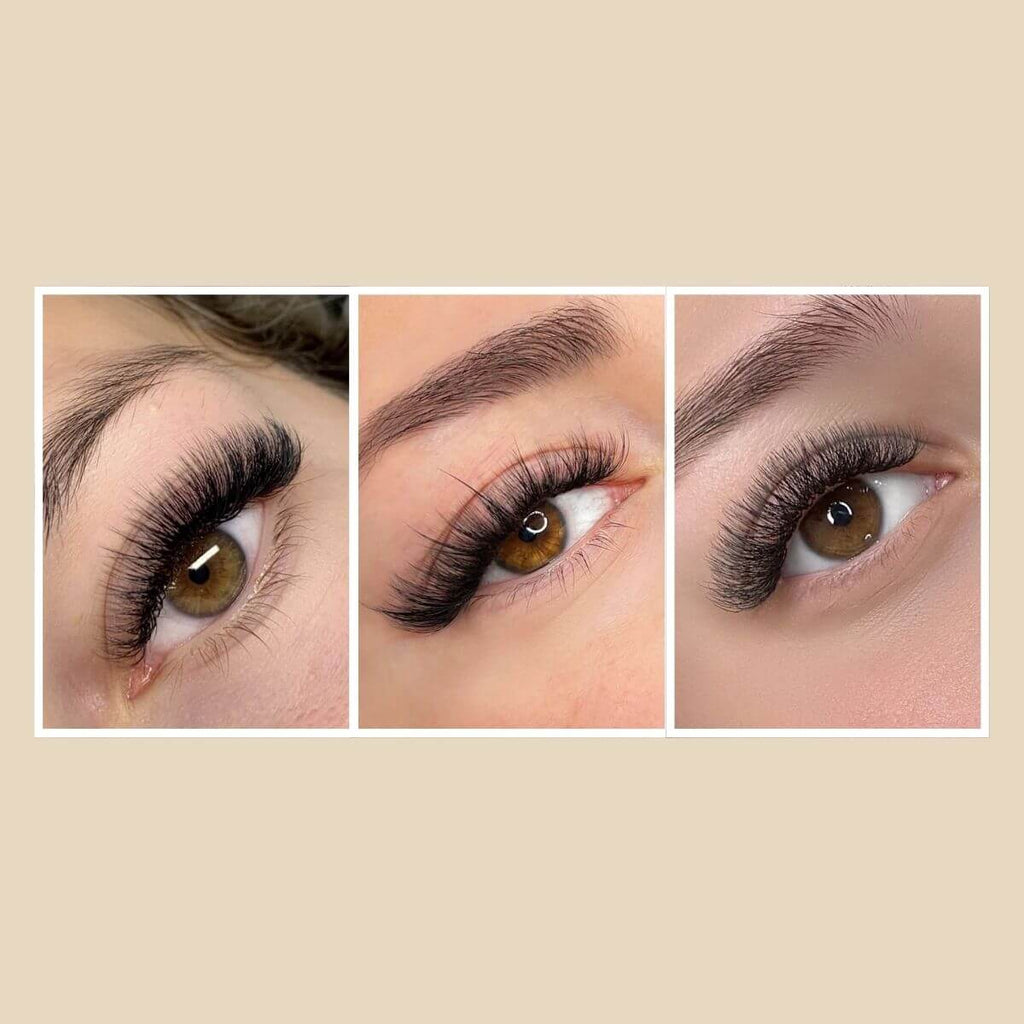
In our experience working with high-volume salons, the difference between a set that looks "colored" and one that looks "dimensional" lies in the strategic layering of fiber diameters. By manipulating the physical weight and placement of fibers within a single fan, we can create a "halo effect" that mimics the natural variation of human lashes while providing the high-impact depth clients expect from premium volume services.
The Physics of Multi-Hue Fans: Diameter Layering
Successful multi-hue fans rely on a controlled, asymmetrical layering of diameters. We typically recommend a heuristic where the thicker, darker-colored fiber—such as a 0.07MM Cashmere Premium Mega Volume Eyelash Extensions—is placed at the fan's core or base. This acts as the structural "spine" of the fan.
The core provides:
- Structural Support: The 0.07mm diameter offers the rigidity needed to prevent the fan from collapsing under the weight of softer fibers.
- Visual Depth: Placing the darkest, thickest fiber at the center creates an immediate focal point, giving the illusion of a denser lash line.
- Adhesive Surface Area: A slightly thicker core allows for a more robust Wrap Technique when attaching to the natural lash.
Conversely, finer, lighter fibers (0.03mm or 0.05mm) should be fanned outward. These outer fibers catch the light differently, creating a soft, blended halo effect. When we use fibers of the same diameter but different colors, the result is often a flat, striped appearance because the light reflects off the surfaces at identical angles.
Modeling Fan Weight and Balance
To ensure the health of the natural lash, we must calculate the total weight of these hybrid fans. Using a deterministic scenario model, we can estimate the relative load of a multi-hue fan compared to a standard volume fan.
Logic Summary: This model assumes a standard natural lash can safely support the weight equivalent of a 0.15mm classic lash. We use the volume of a cylinder ($V = \pi r^2 h$) as a proxy for weight, assuming consistent PBT density.
| Fiber Composition | Core Diameter | Outer Diameter | Estimated Weight Ratio (vs 0.15mm) | Rationale |
|---|---|---|---|---|
| Standard 5D | 0.07mm | 0.07mm | ~1.1 | High density, standard volume. |
| Hybrid 5D (Core focus) | 0.07mm (x1) | 0.05mm (x4) | ~0.85 | Safer for medium natural lashes. |
| Halo 7D (Mega) | 0.07mm (x1) | 0.03mm (x6) | ~0.78 | Maximum dimension, minimum weight. |
| Uniform 0.07mm Color | 0.07mm | 0.07mm | ~1.1 | Risk of "striped" flat look. |
Note: These are hypothetical estimates under the assumption of equal fiber length (12mm). Actual weight may vary based on the specific PBT blend and adhesive quantity.

Material Science: Why Matte PBT is Non-Negotiable
When working with color, the finish of the fiber is as critical as the diameter. In our professional assessment, a shiny or "plastic" finish is the leading cause of poor color blending. High-quality PBT (Polybutylene Terephthalate) fibers with a matte finish are essential for three reasons:
- Light Absorption vs. Reflection: Matte fibers absorb a portion of the ambient light, allowing the pigment (brown, mocha, or violet) to appear more saturated and true-to-tone. Shiny fibers reflect light harshly, which can make even high-end colored lashes look artificial under studio lighting.
- Texture Integration: Natural lashes are inherently matte. Using matte fibers like our 0.07MM Cashmere Premium Mega Volume Eyelash Extensions ensures that the extensions blend seamlessly with the client's own lashes, even when using contrasting colors.
- Adhesive Micro-Bonding: A matte surface often has a slightly higher micro-porosity than a high-gloss surface, which can improve the mechanical bond with the cyanoacrylate.
The Adhesive Variable: Managing the "Glue Window"
Constructing complex, multi-diameter fans takes more time than standard fanning. This creates a challenge with high-speed adhesives. If you use a glue with a 0.5-second drying time, the fan may partially cure or "close" before you can achieve the perfect asymmetrical spread.
For multi-hue artistry, we recommend the 0.5-1 Second Diamond Eyelash Extension Glue. While it is rated as an "advanced" adhesive, its "syrup-like" viscosity allows for a slightly more forgiving "glue window."
Expert Insight: Experienced artists often slightly under-cure the adhesive bead for multi-hue fans. This involves using a slightly larger bead than usual and allowing the humidity to begin the polymerization process for an extra 0.5 seconds before placement. This provides enough "tack" to allow for final micro-adjustments to the fan's shape once it is on the natural lash.
Chemical Safety and pH Balance
According to the American Academy of Ophthalmology (AAO), allergic reactions to formaldehyde and irritation from cyanoacrylate are primary risks in lash application. Historically, many adhesives were highly acidic, which contributed to keratoconjunctivitis—an inflammation of the cornea and conjunctiva.
A landmark study by Amano et al. (2012) identified that older glue formulas released significant formaldehyde and had unstable pH levels. In response to these findings, professional-grade suppliers like SenseLashes have moved toward pH-neutral, low-fume formulas. When selecting an adhesive for complex sets, ensure it is free of latex and formaldehyde to minimize the risk of Eyelid Dermatitis, which a late 2024 study highlights as a recurring pattern with acrylate-containing cosmetics.
Sanitation and Client Health: The Professional SOP
Advanced artistry is meaningless if client health is compromised. Poor hygiene can lead to Blepharitis, an eyelid inflammation often caused by bacteria buildup at the base of the extensions. We advocate for a "Blepharitis Prevention" protocol rather than just a "cleaning" routine.
Salon Sanitation Checklist (Based on CDC Guidelines)
To maintain a professional environment and comply with CDC guidelines on preventing conjunctivitis, your salon should implement the following Standard Operating Procedure (SOP):
- Disposable Consumables: Use fresh mascara wands and lint-free applicators for every client.
- Adhesive Management: Change your glue drop every 20–30 minutes. Never dispense fresh adhesive on top of a previous drop, as the old cyanoacrylate can act as a catalyst, causing the new drop to cure inconsistently.
- Client Screening: Use a comprehensive consent form to screen for Dry Eye Syndrome. Fumes from the curing process can exacerbate dry eye symptoms, leading to client discomfort that is often misdiagnosed as an allergic reaction.
- Post-Application pH Balancing: Long-term extension wear can alter the ocular surface microbiome. We recommend using a lash primer and sealant to restore the natural pH balance of the lash area immediately after the set is complete.

Solving Common Pitfalls in Multi-Hue Artistry
Even with the right materials, technical errors can occur. Based on patterns from our technical support and community feedback, here are the non-obvious "friction points" in multi-hue construction:
The "Striped" Effect
- The Cause: Placing all fibers of one color on one side of the fan and all fibers of another color on the other.
- The Fix: Use a "sandwich" technique. Place your 0.07mm black core, then place brown fibers on both the left and right flanks. This creates a radial gradient rather than a linear split.
Premature Fan Closure
- The Cause: Using too much adhesive or an adhesive that cures too slowly for the humidity of the room.
- The Fix: Monitor your environment. The 0.5-1 Second Diamond Eyelash Extension Glue performs optimally at 50-70% humidity. If your humidity is lower, the glue will dry slower, causing the fan to "wick" and close. If it is higher, it may flash-cure before you can wrap the base.
Mechanical Damage
- The Cause: Using fibers that are too heavy for the natural lash, leading to traction alopecia.
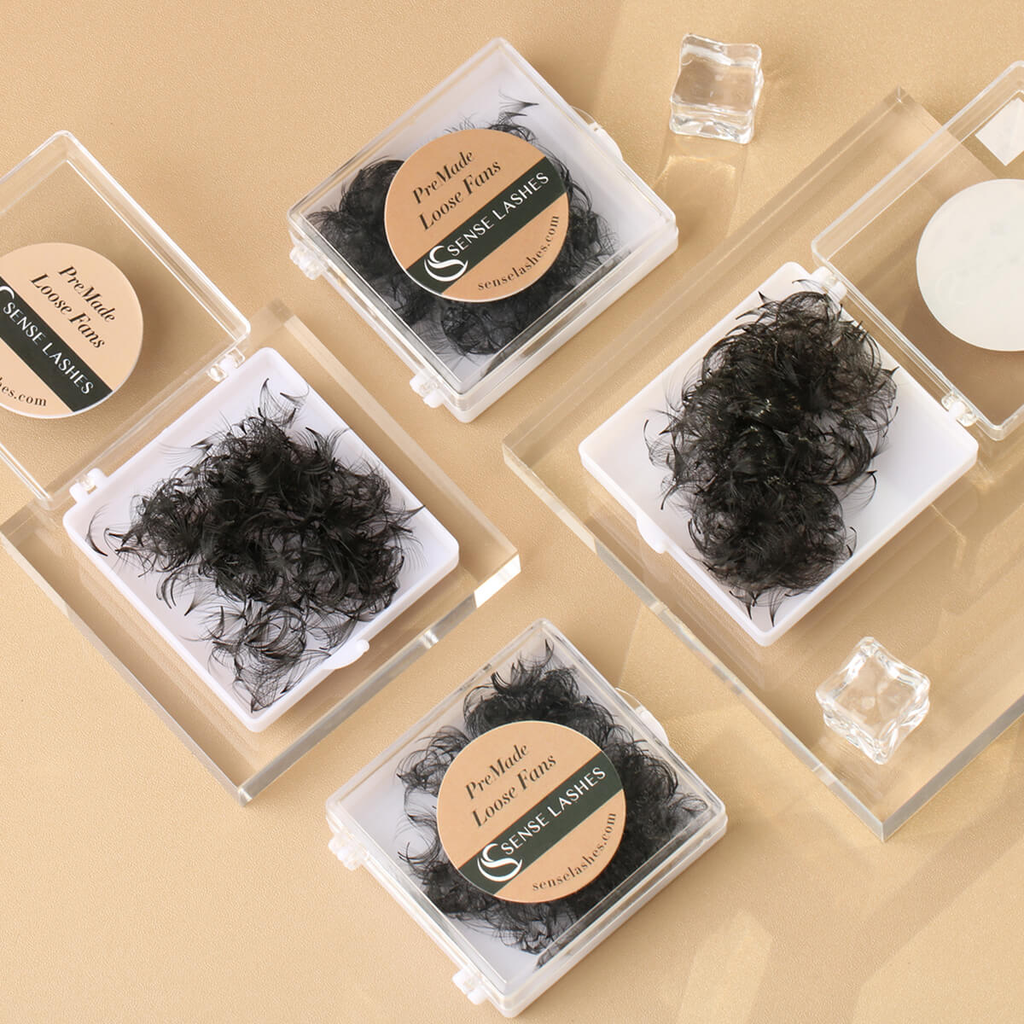
- The Fix: Use the weight modeling table above. When in doubt, switch to Brown 5D PreMade Loose Fans - 0.07. These are hand-made and heat-bonded, ensuring a Lightweight Base Architecture that protects the natural lash.
The Business of Artistry: Market Trends for 2025
The demand for customized lash services is accelerating. According to Grand View Research, the global false eyelashes market continues to see robust growth, with a shift toward individual and volume extensions over traditional strips.
For salon owners, this means that "off-the-shelf" lash sets are becoming a commodity. To maintain premium pricing and client loyalty, you must offer services that cannot be easily replicated. Mastery of internal fan geometry and color theory allows you to position your salon as a "bespoke" boutique rather than a high-volume "lash mill."
By utilizing professional-grade tools like Brown 6D PreMade Loose Fans - 0.07 for consistent mapping and high-performance adhesives for retention, you reduce your professional risk while increasing your artistic output.
Technical Takeaways for the Professional
- Core Structure: Use 0.07mm fibers for the fan's core to provide structural support and visual depth.
- Halo Effect: Surround the core with 0.03mm or 0.05mm fibers in lighter hues (brown, mocha) to create a dimensional, naturalistic blend.
- Matte Finish: Strictly use matte PBT fibers to avoid an artificial, plastic appearance under studio lighting.
- Adhesive Precision: Choose an adhesive with a manageable curing window (0.5-1 second) and maintain neutral pH to protect client eye health.
- Hygiene First: Prevent Blepharitis and ocular surface disease by implementing a strict sanitation SOP and educating clients on daily lash cleansing.
Mastering the internal geometry of your fans is the final frontier in lash artistry. It requires a blend of physical precision, chemical understanding, and an eye for color theory. By grounding your practice in these technical principles, you ensure outcomes that are as safe as they are beautiful.
Disclaimer: This article is for informational purposes only and does not constitute professional medical or legal advice. Always consult with a qualified health professional regarding eye health and follow local regulations regarding cosmetic applications.