


Accueil Eyelash Extension Supplies Guide
Choosing Between Flat Lashes and Rounds for Structural Spikes

Choosing Between Flat Lashes and Rounds for Structural Spikes
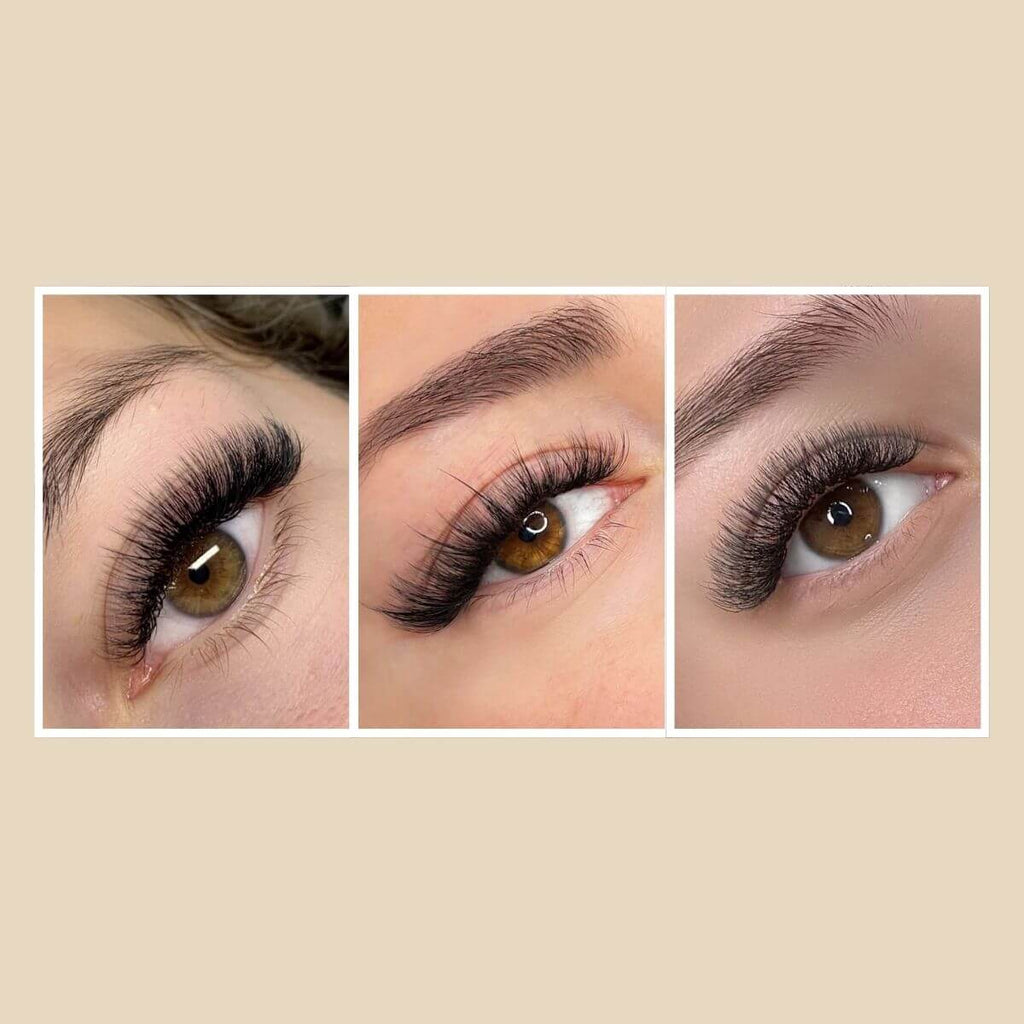
The architecture of a 'Wispy' or 'Kardashian-style' lash set relies entirely on the integrity of the spikes. These focal points create the high-low texture that defines modern lash artistry. However, a recurring dilemma for professionals is selecting the correct fiber shape: should you use traditional round lashes or the increasingly popular flat (ellipse) lashes?
Choosing the wrong fiber for your structural spikes can lead to premature shedding, mechanical damage to the natural lash, or a lack of visual impact. In this guide, we will analyze the structural logic, weight distribution, and chemical bonding requirements of both shapes to help you optimize your mapping for reliability and aesthetic density.
The Physics of Fiber Shape: Surface Area vs. Weight
The fundamental difference between round and flat lashes lies in their cross-sectional geometry. A standard round fiber, such as our 0.10MM Premium Classic Eyelash Extensions, has a circular cross-section. In contrast, flat lashes, like the 0.20MM Ellipse Flat Classic Eyelash Extensions, feature an oval or "concave" base.
Based on our internal modeling of fiber dimensions, we observe that flat lashes (typically in the 0.10mm to 0.20mm range) create spikes with approximately 40-50% more visual surface area than round fibers of an equivalent diameter. This is because the width of the flat lash is maximized while the depth is compressed.
Logic Summary: This "40-50% more surface area" estimate is derived from comparing the frontal width of an elliptical fiber (e.g., 0.15mm wide by 0.07mm deep) against a standard 0.15mm round fiber. The flat lash provides the visual "punch" of a thicker lash while maintaining the weight profile of a much finer one.

Weight Management and Ocular Health
One of the most critical aspects of spike construction is weight management. According to a 2024 study published in PubMed (Ocular Disorders), mechanical damage and chemical toxicity are the primary drivers of extension-related disorders. Excessive weight on a single natural lash can lead to traction alopecia or premature follicle exhaustion.
Experienced practitioners often note that for clients with fine natural lashes (less than 0.08mm in diameter), 0.10mm flat lashes provide significantly better retention than 0.07mm round fibers. While 0.07mm round lashes are light, the 0.10mm flat lash offers a wider bonding "cradle" that distributes the weight more evenly across the natural lash cuticle.
The "Weight-to-Surface" Advantage
Flat lashes are engineered to weigh approximately half as much as a traditional round fiber of the same width. This allows you to create dramatic, dark spikes without overloading the natural lash. When building structural spikes in high-tension areas like the outer corners, managing this weight-to-surface ratio is essential for long-term lash health.
Adhesive Chemistry and Bonding Dynamics
The success of a spike depends heavily on the adhesive bond. Flat lashes and round lashes interact with cyanoacrylate differently due to their surface geometry.
When using a high-performance adhesive like 0.5-1 Second Diamond Eyelash Extension Glue, the viscosity and drying time play a major role in how the spike sets. Flat lashes require 15-20% less adhesive volume than round fibers. This is because the wider, flatter base provides more contact points with the natural lash, requiring a thinner film of glue to achieve a secure bond.
Conversely, round fibers need slightly more adhesive to ensure "complete base encapsulation." Because a round fiber only touches the natural lash at a single tangent point initially, the adhesive must wrap around the fiber to create a structural sleeve.
Method & Assumptions (Scenario Modeling): To understand these bonding requirements, we modeled the adhesive load for a standard 12mm spike.
Parameter Flat Lash (0.15mm) Round Lash (0.15mm) Rationale Adhesive Volume ~0.05µl ~0.065µl Flat base requires less "fill" Bonding Surface High (Cradle) Low (Tangent) Elliptical vs. Circular contact Drying Speed Req. 0.5 - 1.0s 1.0 - 2.0s Flat lashes "grab" faster Retention Target 6-8 Weeks 5-7 Weeks Based on Diamond Glue specs Stress Distribution Even Centralized Impact of fiber geometry Note: These are hypothetical estimates based on common industry heuristics and product specifications, not a controlled lab study.
Managing Chemical Risks and Irritation
As professionals, we must be aware of the chemical properties of our tools. A landmark study by Amano et al. (2012) identified that older adhesive formulas could release formaldehyde and cause keratoconjunctivitis. Modern professional adhesives, such as the Diamond Eyelash Extension Glue, are formulated to be latex-free and formaldehyde-free to mitigate these risks.
Furthermore, Health Canada's 2023-2024 report on cosmetic regulations highlights the importance of using compliant, high-quality cyanoacrylate. Using "industrial-grade" glues for spikes can lead to severe allergic contact dermatitis, as detailed in recent PubMed research.
Application Techniques: The "Spike" Strategy
Creating spikes requires a different technical approach than building a standard volume fan.
1. The Flat Lash Pinch
When working with flat lashes for spikes, we recommend a "wider base pinch." Because of the elliptical cross-section, a tight pinch can cause the base to twist or become too bulky. A shallower adhesive dip—just 1-2mm of the base—is sufficient to anchor a flat lash spike.
2. The Round Lash Encapsulation
For round fibers, such as the 0.15MM Premium Classic Eyelash Extensions, you should aim for a deeper adhesive dip (2-3mm) to ensure the glue wraps around the circular base. This provides the "360-degree" bond necessary for structural stability in a spike.
3. The Hybrid Mapping Approach
In our experience, the most durable wispy sets use a hybrid approach:
- Inner Corners: Use 0.07mm round fibers for the innermost 2-3 spikes. These areas are prone to moisture and friction; the round fiber’s flexibility reduces irritation.
- Middle Section: Transition to 0.15mm or 0.20mm flat lashes for the dramatic middle spikes. This provides maximum visual impact where it matters most.
- Outer Corners: Use 0.10mm flat lashes to maintain the spike's height without the weight that could cause the outer lashes to droop.

Hygiene and Long-Term Maintenance
No matter which fiber you choose, the longevity of the spikes depends on client aftercare. Poor hygiene can lead to Blepharitis, an inflammation of the eyelids often caused by bacteria buildup. The Mayo Clinic notes that eyelid hygiene is the primary treatment and prevention method for this condition.
Spikes, by their nature, create more surface area for debris to collect. We must educate clients that "water is not enough." Daily cleansing with a professional foam cleanser is non-negotiable. This is supported by PMC research on Demodex mites, which shows that ocular hygiene significantly reduces mite infestation and maintains tear film stability.
Professional Sanitation SOP
To protect your clients and your business, align your salon practices with CDC guidelines on conjunctivitis prevention. This includes:
- Using disposable wands and patches for every client.
- Sterilizing all metal tweezers between sets.
- Ensuring your adhesive is fresh; University of Waterloo research suggests that expired or degraded cosmetics can lead to increased contamination risks.
Business Considerations: The 2025 Market Landscape
The lash industry is evolving rapidly. According to Grand View Research, the demand for individual extensions (especially synthetic fibers) continues to outpace strip lashes. For salon owners, investing in high-quality flat lashes is a strategic move. They allow you to offer "Mega-Volume" looks with "Classic" safety profiles, justifying premium pricing for wispy sets.
Summary of Best Practices
When deciding between flat and round lashes for your structural spikes, consider the following checklist:
- Client Lash Health: If the natural lashes are fine or brittle, prioritize 0.10mm flat lashes for their superior weight distribution.
- Desired Aesthetic: For a bold, "eyeliner effect" spike, flat lashes provide 40-50% more visual width.
- Adhesive Management: Reduce your glue usage by ~20% when switching to flat lashes to prevent "wicking" up the fiber.
- Mapping Logic: Use round fibers for flexibility in the inner corners and flat fibers for drama in the central zones.
- Safety Compliance: Always use AAO-compliant materials and educate clients on the risks of poor hygiene and Blepharitis.
By mastering the technical differences between these fiber shapes, you can create wispy sets that are not only visually stunning but also structurally sound and safe for long-term wear.
Disclaimer: This article is for informational purposes only and does not constitute professional medical, legal, or financial advice. Eyelash extension application should only be performed by trained and certified professionals. If a client experiences an adverse reaction, they should consult an eye care professional immediately.
References
- American Academy of Ophthalmology (AAO) - Eyelash Extension Safety
- Centers for Disease Control and Prevention (CDC) - Conjunctivitis Prevention
- Mayo Clinic - Blepharitis Symptoms and Causes
- Health Canada - Cosmetic Regulations Enforcement Report
- PubMed - Ocular Disorders and Eyelash Extensions (2024)
- PubMed - Formaldehyde and pH in Eyelash Glues (Amano et al. 2012)