


Accueil Eyelash Extension Supplies Guide
The 1mm Rule: Choosing Lengths for Smooth Curl Transitions

The Geometry of a Perfect Top Line: Mastering Curl Transitions
In the pursuit of technical mastery, advanced lash artists often encounter a frustrating phenomenon: the "staircase effect." This occurs when a transition between two different curls—such as moving from a softer C-curl to a more dramatic D-curl—results in a jagged, uneven top line despite using the exact same length. To the untrained eye, it is a minor flaw; to the professional, it is a failure of mapping precision.
Achieving a seamless, multi-dimensional set requires more than artistic intuition. It requires an understanding of lash geometry. Because different curls have different radii, a 12mm C-curl and a 12mm D-curl do not "stand" at the same height. This article introduces the 1mm Rule, a mathematical heuristic designed to compensate for these height discrepancies, ensuring a smooth, professional gradient across the entire lash line.
Understanding the Physics of PBT Curl Memory
To understand why the 1mm Rule is necessary, we must first look at the material science of our extensions. Most professional lashes are crafted from Polybutylene Terephthalate (PBT). As discussed in our guide on PBT Curl Memory, this synthetic fiber is prized for its ability to retain its shape under heat and moisture.
However, the tighter the curl (the higher the "lift"), the more the fiber must curve back toward the eyelid. This curvature consumes the "vertical height" of the lash. A D-curl, having a tighter radius than a C-curl, will always appear shorter when viewed from the front, even if the fiber itself measures the same length from base to tip.
Logic Summary: Our analysis of lash geometry assumes that as the angle of lift increases (e.g., C to D), the visual projection of the tip decreases. This is based on standard trigonometric principles applied to curved fibers in a three-dimensional space.
The 1mm Rule: A Technical Heuristic for Length Compensation
The 1mm Rule is a professional baseline used to maintain a consistent visual top line when switching between curl types. It is not a rigid law, but a high-performance heuristic derived from pattern recognition in advanced artistry.
The Basic Formula
- When moving to a tighter curl (e.g., C → CC or CC → D): Increase the length by 1mm to maintain the visual height.
- When moving to a looser curl (e.g., D → CC or CC → C): Decrease the length by 1mm to prevent the lash from appearing too long or "poking" out of the map.
| Starting Curl/Length | Transition To | Recommended Length | Visual Outcome |
|---|---|---|---|
| C-Curl 10mm | CC-Curl | 11mm | Level Top Line |
| CC-Curl 12mm | D-Curl | 13mm | Seamless Lift |
| D-Curl 11mm | CC-Curl | 10mm | Smooth Taper |
| L-Curl 10mm | M-Curl | 11mm (approx) | Defined Angle |
Methodology Note: These values are estimated ranges based on common industry practice and the standard curvature profiles of SenseLashes' PBT fibers. Variations in manufacturing can affect these ratios, so always verify against your specific product line.

Advanced Mapping: Sectional Application and Edge Cases
While the 1mm Rule provides a starting point, experienced artists know that a blanket application across the entire eye can lead to "flat" styling. The rule should be applied per-section within your lash map.
Transitioning in the Outer Corner
One of the most common challenges is the outer corner, where natural lashes often grow weaker or downward. If you are transitioning from a high-lift D-curl in the "Power Point" to a softer C-curl in the outer corner to prevent a "droopy eye" look, a simple 1mm reduction might not be enough.
In our experience observing patterns from professional feedback, if the natural lashes are significantly weaker in the outer corner, a 1.5mm reduction may be necessary when dropping from a D to a C curl. This compensates for the natural lash's inability to support the weight, preventing the extension from sagging.
Blending with Multi-Layered Lashes
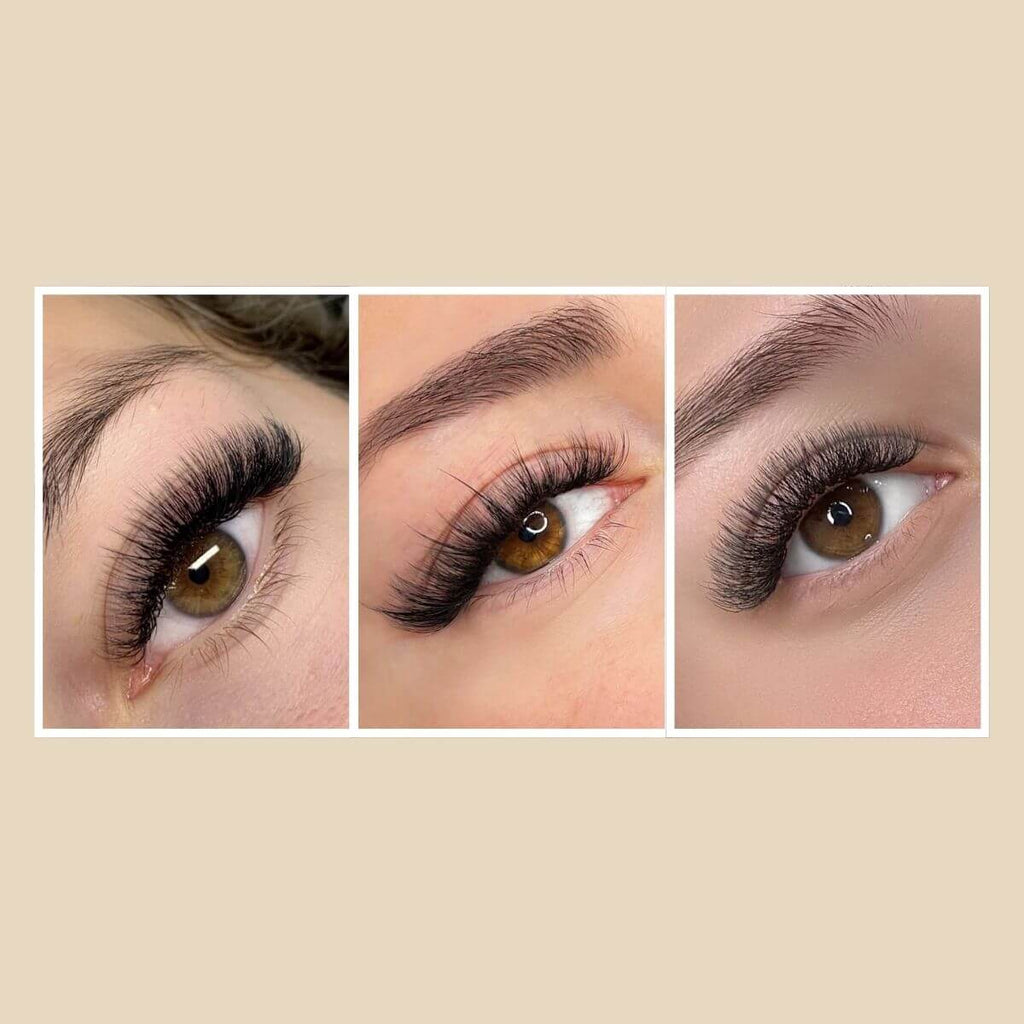
For artists specializing in hybrid or "textured" looks, products like 5D Multi Layer Camellia Lashes offer a built-in solution. These lashes feature multiple lengths within a single fan, mimicking the natural growth cycle. When using these, the 1mm Rule is often "pre-solved" by the product's geometry, allowing for a softer, feathered finish without manual length stepping.
Adhesive Performance and Curl Locking
The success of a curl transition isn't just about length; it’s about "locking" the fan in place before gravity takes over. The weight of a mega volume fan can pull a high-lift curl downward if the adhesive doesn't set quickly enough.
For transitions involving D, DD, or U curls, we recommend a faster-setting adhesive (0.5–1 second). This ensures the fan bonds instantly at the intended angle. For blended zones where you are meticulously placing 0.03MM Cashmere Premium Mega Volume Eyelash Extensions, a medium-set glue (1–2 seconds) provides the necessary working time to ensure the base is perfectly wrapped around the natural lash, which is critical for Symmetry Standards.

Ocular Health: The Professional’s Responsibility
As an advanced artist, technical precision must always be balanced with client safety. According to the American Academy of Ophthalmology (AAO), risks associated with extensions include infection, trauma, and allergic reactions.
Preventing Mechanical Damage
A 2024 study published in PubMed emphasizes that improper extension application can lead to mechanical damage of the eyelid and natural lash follicles. The 1mm Rule actually serves a safety function here: by choosing the correct length compensation, you avoid using excessively long fibers that could cause leverage-induced stress on the natural lash.
Using ultra-lightweight fibers, such as the 0.03MM Cashmere series, significantly reduces this mechanical load compared to traditional 0.15mm classic lashes. This is particularly important for long-term wearers, as chronic weight stress can alter the ocular surface microbiome and tear stability, as noted in recent PMC research (2024).
Hygiene and Blepharitis Prevention
A smooth transition also makes for easier cleaning. Jagged top lines and "steps" in the lash map can create pockets where debris and bacteria accumulate. The Mayo Clinic identifies poor eyelid hygiene as a primary cause of Blepharitis (eyelid inflammation).
Educating clients on the use of a dedicated Lash Shampoo is non-negotiable. It is not merely a "cleaner" but a preventative measure against Demodex mite infestation and bacterial buildup.
Troubleshooting Common Transition Issues
Even with the 1mm Rule, unexpected issues can arise. Professionals must be able to diagnose whether a problem is technical, product-related, or physiological.
The "Burning" Sensation: Glue Fumes vs. Dry Eyes
When a client complains of burning during or after a transition-heavy set, it is often attributed to adhesive fumes. However, WebMD's overview of Dry Eye Syndrome suggests that lash fumes can exacerbate pre-existing dry eye conditions. If the burning is localized and persistent, it may be an allergic response to Ethyl Cyanoacrylate, a common ingredient in lash glues. A 2024 study in PubMed highlights that contact dermatitis patterns from acrylates can be delayed by 48 hours or more.
Ensuring Consistent Adhesion
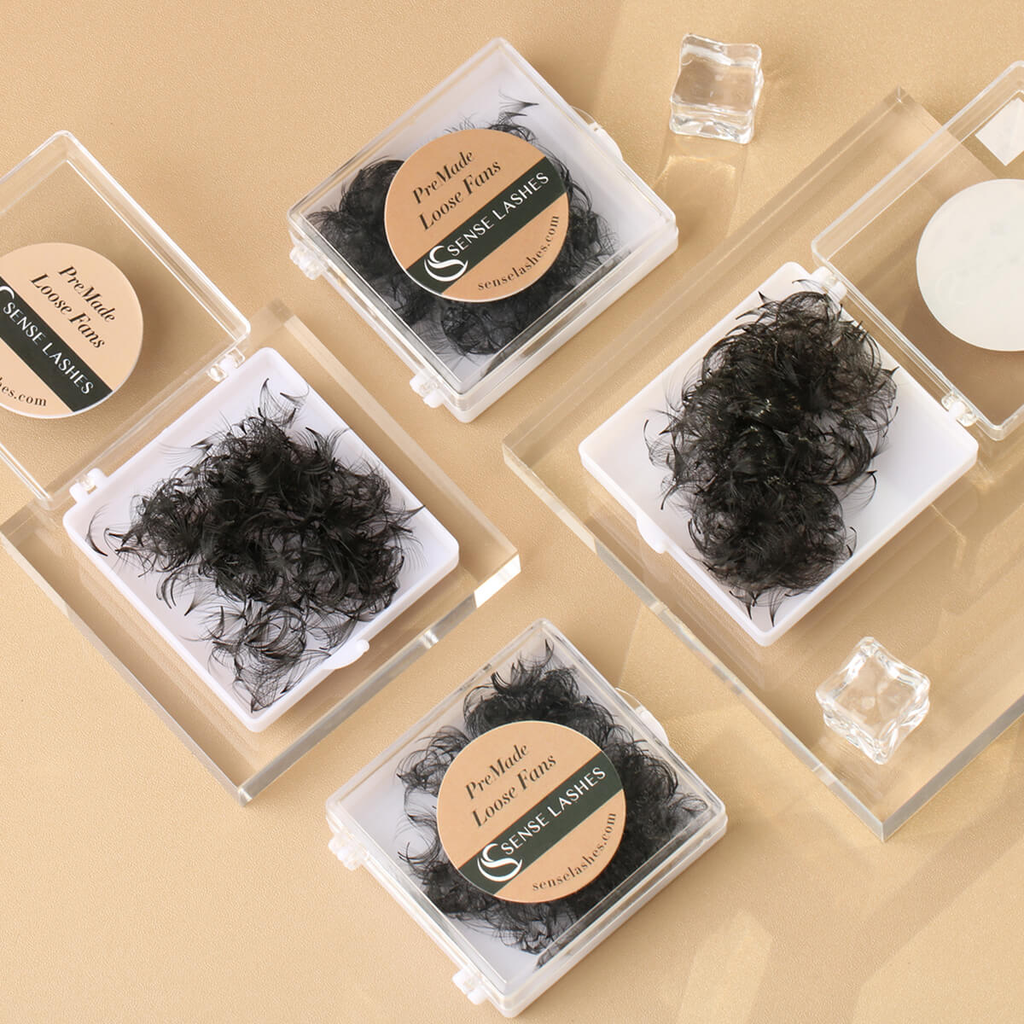
To maintain the integrity of the transition, the base of the fan must be consistent. Using 12D Handmade Loose Premade Fans Pointy Base provides a uniform, ultra-slim base that bonds easily to the natural lash. This consistency reduces the risk of premature shedding, which often occurs at the "stress points" where curl types change.
Modeling Note (Reproducible Parameters): To verify the 1mm rule in your own studio, we suggest the following modeling scenario:
Parameter Value/Range Unit Rationale Fiber Material PBT Synthetic N/A Industry standard for curl memory Base Attachment 1.0 - 1.5 mm Standard safety margin from eyelid Fan Dimension 0.03 - 0.07 mm Weight-safe volume range Adhesive Speed 0.5 - 2.0 sec Varies by curl lift requirement Room Humidity 45% - 55% % Optimal cyanoacrylate curing Note: This is a scenario model based on common professional environments, not a controlled lab study.
Professional Outcomes and Business Growth
Mastering complex, multi-dimensional styles is a significant competitive advantage. According to Grand View Research, the global eyelash market continues to grow, with a shift toward individual and volume extensions. Clients are increasingly seeking "bespoke" looks that require the technical precision of curl blending.
By implementing the 1mm Rule and prioritizing ocular health through high-quality consumables like 0.10MM Ellipse Flat Classic Eyelash Extensions for dramatic yet lightweight sets, you position your salon as an authority in the field.
Key Takeaways for the Professional
- Compensate for Lift: Always add 1mm when moving to a tighter curl to maintain visual height.
- Sectional Mapping: Adjust the rule based on natural lash strength, especially in the outer corners.
- Adhesive Synergy: Use faster glues for higher curls to lock the angle instantly.
- Weight Management: Prioritize 0.03mm fibers for multi-curl volume sets to protect the natural lash follicle.
- Hygiene is Health: Use the "Blepharitis Prevention" narrative to ensure client compliance with aftercare.
YMYL Disclaimer: This article is for informational purposes only and does not constitute professional medical advice, diagnosis, or treatment. Always seek the advice of an ophthalmologist or other qualified health provider with any questions regarding eye health or medical conditions. The 1mm Rule is a technical heuristic for aesthetic purposes and should be adapted to the individual client's natural lash health.
References
- CDC - Conjunctivitis Prevention
- Mayo Clinic - Blepharitis Symptoms and Causes
- American Academy of Ophthalmology - Eyelash Extension Safety
- Health Canada - Cosmetic Regulations: Cyanoacrylate Ingredients
- PubMed - Mechanical Damage and Chemical Toxicity in Eyelash Extensions (2024)
- PMC - Ocular Surface Microbiome and Extension Wear (2024)
- WebMD - Dry Eye Syndrome Overview
- Grand View Research - Eyelash Market Analysis