


Accueil Eyelash Extension Supplies Guide
0.03mm vs. 0.05mm: Choosing Diameters for 15D+ Fans

The Engineering of Mega Volume: 0.03mm vs. 0.05mm Diameters
In the evolving landscape of lash artistry, the transition from Russian Volume to Mega Volume (15D+) represents a significant leap in both technical complexity and mechanical load. For the advanced technician, the choice between 0.03mm and 0.05mm diameters is not merely a preference for "fluffiness"—it is a critical decision involving fan architecture, weight distribution, and long-term ocular health.
As a manufacturer-direct supplier, we have observed that the most successful high-density sets are built on a foundation of precision. This article provides a technical deep dive into these ultra-fine diameters, helping you navigate the trade-offs between dramatic density and the physiological safety of your clients.
The Physics of High-Density Fan Architecture
When we discuss 15D+ fans, we are entering the realm of "Mega Volume." At this density, the cumulative weight of the extensions can quickly exceed the natural lash's carrying capacity if the diameter is not selected with mathematical precision.
Weight Distribution and Cumulative Load
A common heuristic in the industry is the "Weight Equivalence" model. To maintain natural lash health, a volume fan should not exceed the weight of a single 0.15mm or 0.18mm classic lash.
Logic Summary: Our weight comparison assumes a standard PBT (Polybutylene Terephthalate) density of approximately 1.3g/cm³. This is a scenario model used for technical training and does not account for the varying weight of different adhesive amounts.
| Diameter (mm) | Approximate Weight per Lash (Unitless Ratio) | Max Fan Size (to equal 0.15mm Classic) |
|---|---|---|
| 0.15 (Classic) | 1.00 | 1D |
| 0.07 (Volume) | 0.22 | 4D - 5D |
| 0.05 (Mega) | 0.11 | 9D - 10D |
| 0.03 (Mega) | 0.04 | 20D - 25D |
Based on this modeling, a 15D fan using 0.05mm lashes significantly exceeds the weight of a 0.15mm classic lash. However, for clients with exceptionally strong, healthy natural lashes, 0.05mm 15D sets provide a structural rigidity that many artists prefer. Conversely, 0.03mm lashes allow for up to 25D fans while remaining within the safety threshold for most healthy natural lashes.
The Mechanical Impact on the Ocular Surface
Safety is paramount when applying such high-density sets. According to a 2024 study published in PubMed regarding ocular disorders, eyelash extensions can cause mechanical damage if the weight or application method is improper. This is why we prioritize 0.03MM Cashmere Premium Mega Volume Eyelash Extensions for 15D+ sets; their lightweight profile minimizes the mechanical leverage exerted on the hair follicle, reducing the risk of traction alopecia or premature shedding.

0.03mm: The Specialist’s Tool for Extreme Density
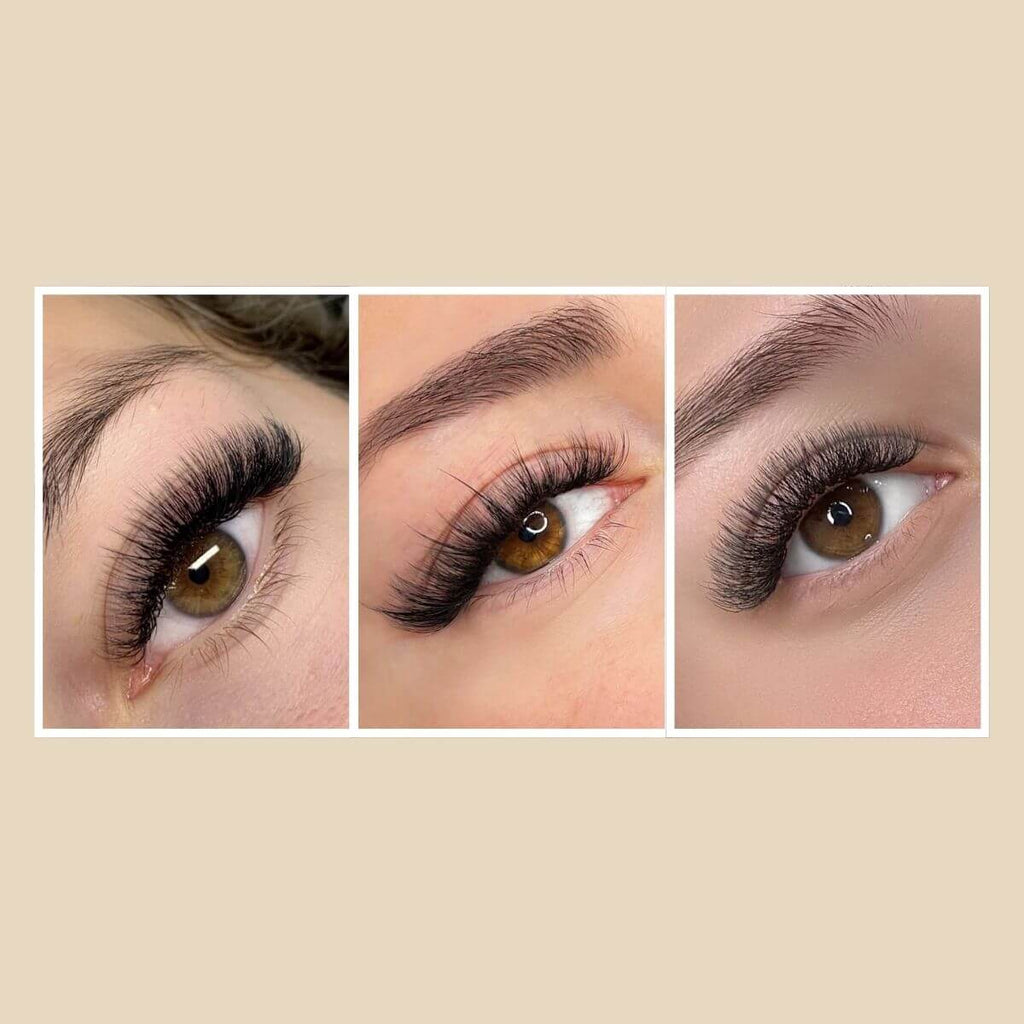
The 0.03mm diameter is the "gold standard" for technicians aiming for the softest, darkest, and densest Mega Volume sets. Because these fibers are approximately 1/3 the thickness of a standard volume lash, they offer a level of flexibility that creates a "cloud-like" texture.
Technical Advantages
- Maximum Density (15D-25D): You can achieve incredible fullness without overloading the natural lash.
- Superior Flexibility: The ultra-fine fibers move naturally with the client's own lashes, reducing the "stiff" feeling often associated with high-density sets.
- Deep Matte Finish: Our 0.03MM Cashmere Premium Mega Volume Eyelash Extensions feature an extremely black finish, ensuring the lash line looks solid and defined even at extreme lengths.
Common Pitfalls: The "Wicking" Effect
A significant challenge with 0.03mm lashes is their tendency to "wick" adhesive. Because the fibers are so close together in a 15D+ fan, a high-viscosity or slow-drying glue can travel up the fibers, causing the fan to collapse or become a "blocky" mass.
To prevent this, we recommend using a thin-viscosity adhesive like the 1-2 Second Gold Eyelash Extension Glue.
Expertise Insight: When working with 0.03mm, dip only the bottom 1mm of the base into the adhesive. This "Micro-Dipping" technique ensures enough bond for retention without the capillary action that ruins fan symmetry. This observation is based on common patterns from our technical support team and professional feedback (not a controlled lab study).
0.05mm: The Powerhouse for Stability and Speed
While 0.03mm is the pinnacle of lightness, 0.05mm remains a staple in many high-volume studios. It offers a more robust fiber that is often easier to manipulate for technicians who are transitioning from standard Russian Volume (0.07mm) to Mega Volume.
Why Many Studios Standardize on 0.05mm
For 12D to 16D services, 0.05mm provides a "forgiving" margin for error. The fibers are slightly stiffer, which helps the fan stay open during the curing process. In a fast-paced salon environment, this can translate to faster service times and more predictable results.
- Stability: 0.05mm fans are less likely to "wilt" or close if the client has oily skin or if the environment is humid.
- Bonding Surface: The slightly larger diameter provides a marginally larger surface area for the adhesive to grab, which can sometimes lead to better retention for technicians still perfecting their wrapping technique.
- Visual Impact: A 15D fan of 0.05mm lashes creates a much more "structured" and dramatic look compared to the "fluffy" look of 0.03mm.
The Constraint: Natural Lash Integrity
The primary risk with 0.05mm at 15D+ is the weight. We strictly advise against using 15D 0.05mm fans on clients with fine or sparse natural lashes. Overloading can lead to drooping and, eventually, damage to the meibomian glands or the lash follicle itself.

Decision Framework: 0.03mm vs. 0.05mm
Choosing the right diameter requires an assessment of both the client's biology and your own technical proficiency.
Scenario A: The "Sparse Lash" Client
If a client presents with fine, weak, or sparse natural lashes but desires a "full" look, 0.03mm is the only responsible choice. Using 0.05mm in a high-density fan on these lashes would likely cause premature shedding.
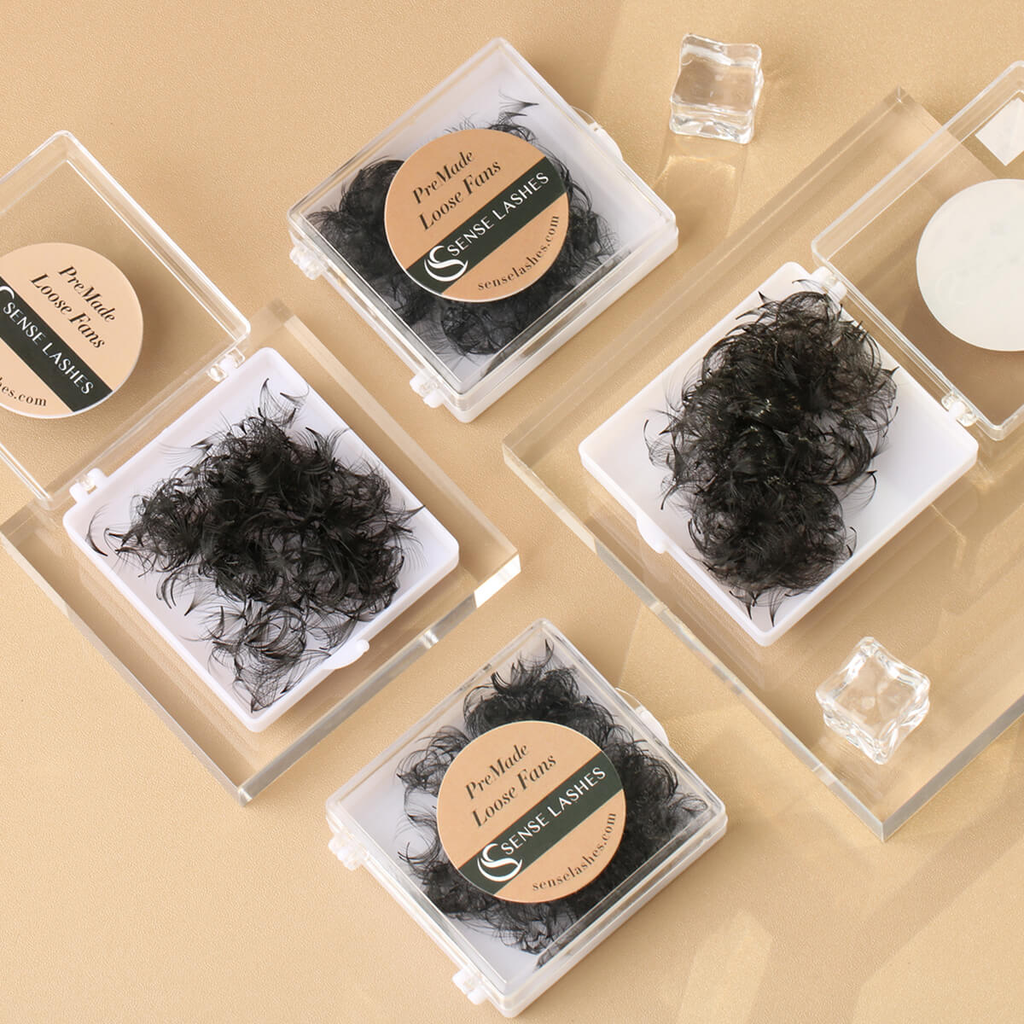
- Recommendation: Use 14D Handmade Loose Premade Fans Pointy Base(500 Fans) in 0.03mm to fill gaps safely and efficiently.
Scenario B: The "Mega Drama" Client
For clients with thick, healthy natural lashes who want a "blackout" look, 0.05mm provides the necessary structure.
- Recommendation: Focus on 12D-15D fans. Ensure you are using a high-performance adhesive to lock the base.
Summary Comparison Table
| Feature | 0.03mm | 0.05mm |
|---|---|---|
| Ideal Fan Size | 15D - 25D | 10D - 15D |
| Texture | Soft, airy, cloud-like | Structured, bold, dense |
| Ease of Fanning | Higher (requires precision) | Moderate (more stable) |
| Risk of Wicking | High | Low |
| Lash Health Safety | Excellent for all lash types | Best for strong, healthy lashes |
Salon Sanitation SOP: Beyond the Application
High-density sets create more surface area for bacteria and debris to accumulate. According to the CDC (Centers for Disease Control), proper hygiene is the primary defense against conjunctivitis and other eye infections.
For Mega Volume technicians, sanitation must be a multi-layered process:
- Disposable Consumables: Always use fresh Clear Mascara Wands for every client. Brushing through 15D fans is essential to ensure they haven't "stuck" together during the curing process.
- Sterilization: All tweezers must be medical-grade sterilized between every service.
- Client Education: High-density fans act like "dust magnets." Educating clients on daily cleaning is not just about retention—it is about preventing Blepharitis.
The "Blepharitis Prevention" Argument
Poor lash hygiene often leads to Blepharitis (eyelid inflammation). The Mayo Clinic notes that bacteria buildup at the base of the eyelashes is a leading cause. When you sell a lash shampoo to a Mega Volume client, you aren't just selling a "cleaner"; you are providing a preventative health measure.
Modeling Note: We assume a 15D fan has approximately 15x the surface area of a classic lash, meaning it can trap significantly more allergens and oils. Regular brushing with Clear Mascara Wands helps distribute natural oils and remove debris.

Troubleshooting Adhesive and Chemical Safety
The chemistry of your adhesive is just as important as the diameter of your lashes. A 2012 study by Amano et al. (published in PubMed) highlighted that many early adhesives released significant formaldehyde and had pH levels that could cause keratoconjunctivitis.
Modern professional formulas, like our 1-2 Second Gold Eyelash Extension Glue, are engineered to be pH-balanced and low-fume. However, even with premium products, technical errors can lead to issues:
Allergic Contact Dermatitis vs. Irritation
It is vital to distinguish between a chemical burn (irritation from fumes) and an actual allergy. A case study on PubMed regarding Ethyl Cyanoacrylate details how allergic contact dermatitis is an immune response that can develop over time.
- Irritation (Fumes): Usually happens during or immediately after the service. Often caused by the eyes not being fully closed or using too much glue.
- Allergy (Immune Response): Often appears 24-48 hours later. Swelling and redness are common.
To minimize these risks, especially with the high adhesive load required for 15D+ fans, always perform a patch test for new clients and ensure the salon is well-ventilated.
Maximizing Retention in Mega Volume Sets
Retention is the "holy grail" of lash artistry. With 15D+ fans, the weight of the fan means that even a slight bond failure will result in the fan falling off prematurely.
The Role of pH and Priming
As discussed in recent research on Ocular Surface Disease (PMC 2024), long-term extension wear can alter the microbiome of the eye. Using a professional primer to balance the pH of the natural lash before application is critical. This ensures the 1-2 Second Gold Eyelash Extension Glue creates a permanent, secure bond.
Aftercare: The Client's Responsibility
Because Mega Volume sets are a significant investment for the client, aftercare must be non-negotiable.
- No Water for 24 Hours: While some "super-bonders" claim to allow immediate wetting, we typically recommend a 24-hour wait to ensure the cyanoacrylate has fully polymerized.
- Daily Cleansing: Use a dedicated lash foam.
- Gentle Brushing: Use Clear Mascara Wands twice daily to keep fans fluffy and prevent tangling.
Technical Summary for the Professional
Expanding into 15D+ Mega Volume requires a shift from "eyelash styling" to "lash engineering." By choosing the correct diameter, you protect your client's health and ensure the longevity of your work.
- Choose 0.03mm for the highest density (15D-25D), for clients with fine lashes, and for the softest possible texture.
- Choose 0.05mm for bold, structured sets (10D-15D) on healthy natural lashes and for faster application speed.
- Prioritize Safety: Use manufacturer-direct, compliant adhesives and maintain a strict sanitation SOP based on CDC guidelines.
By mastering the nuances of 0.03mm and 0.05mm diameters, you position your salon as a leader in technical excellence, offering results that are as safe as they are stunning.
Disclaimer: This article is for informational purposes only and does not constitute professional medical or legal advice. Always consult with local health regulations and professional insurance providers regarding lash application safety and sanitation requirements.
References
- CDC - Conjunctivitis Prevention
- Mayo Clinic - Blepharitis Overview
- American Academy of Ophthalmology - Eyelash Extension Safety
- PubMed - Ocular Disorders and Eyelash Extensions (2024)
- PubMed - Allergic Contact Dermatitis Study
- PubMed - Formaldehyde and pH in Lash Adhesives (Amano et al. 2012)
- PMC - Ocular Surface Microbiome and Extensions (2024)