


Inicio Eyelash Extension Supplies Guide
Why Hybrid Sets Look Flat: Solving Texture Mapping Gaps

The Hybrid Paradox: Why Texture Often Fails in Application
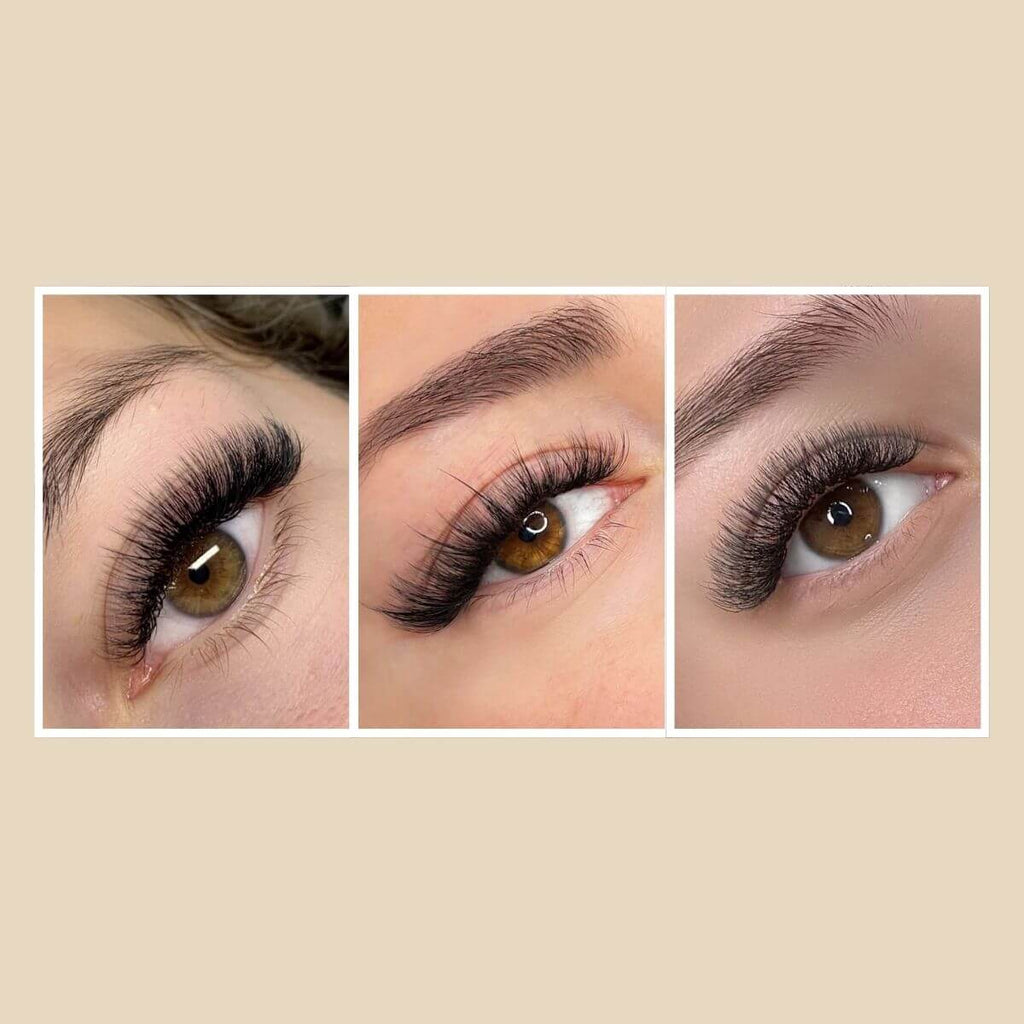
In the professional lash industry, the "Hybrid Set" is frequently marketed as the perfect middle ground—a bridge between the natural simplicity of classic extensions and the high-impact drama of volume. However, a common technical frustration among advanced artists is the "flat" hybrid. Despite using a mix of fans and singles, the resulting set often looks one-dimensional, lacking the wispy, multi-layered texture that clients expect.
This lack of dimension is rarely a result of poor isolation or speed; rather, it is a failure of Texture Mapping Logic. When the diameter, ratio, and placement of extensions are too uniform, the human eye ceases to perceive the individual "spikes" and "fluff," instead seeing a solid, flat plane of black. Achieving a benchmark hybrid set requires a deep understanding of contrast physics and adhesive behavior.
The Physics of Contrast: The 0.05mm Diameter Rule
The most frequent mistake leading to a flat hybrid is using volume lashes with a diameter too close to the classic lashes. For example, many artists pair 0.10mm volume fans with 0.15mm classic singles. From a distance, the 0.05mm difference is virtually imperceptible to the naked eye when blended. This creates a "muddy" texture where the fans and singles bleed into one another visually.
To solve this, we advocate for the 0.05mm Delta Heuristic. For a texture to be truly perceptible, there should be a significant contrast in the visual weight of the extensions. If you are using 0.15mm classics, you should utilize 0.05MM Easy Fanning Eyelash Extensions for your volume components. This creates a clear distinction between the "spine" of the set (the classics) and the "fill" (the volume fans).
Logic Summary: Our texture modeling suggests that visual depth is a product of light diffusion. Thinner lashes (0.05mm) diffuse light differently than thicker lashes (0.15mm), creating the shadow and highlight effect necessary for a 3D appearance.

Mapping Logic: The 70/30 Ratio and Transition Zones
Consistency in mapping is the enemy of texture. If you apply a 50/50 ratio of classic to volume across the entire eye, the set will likely look uniform and flat. Experienced artists utilize a 70/30 Hybrid Ratio: 70% volume fans (typically 0.07mm) blended with 30% classic singles (0.15mm).
The Strategic Placement of "Spikes"
The 30% classic lashes should not be distributed randomly. To avoid the "flat" look, classics should be placed primarily on the middle and top layers of the natural lash line. This creates "spikes" that sit above the volume base. When these spikes are isolated and placed at the lash line's apex, they maintain the textured silhouette even as the client’s natural lash cycle progresses.
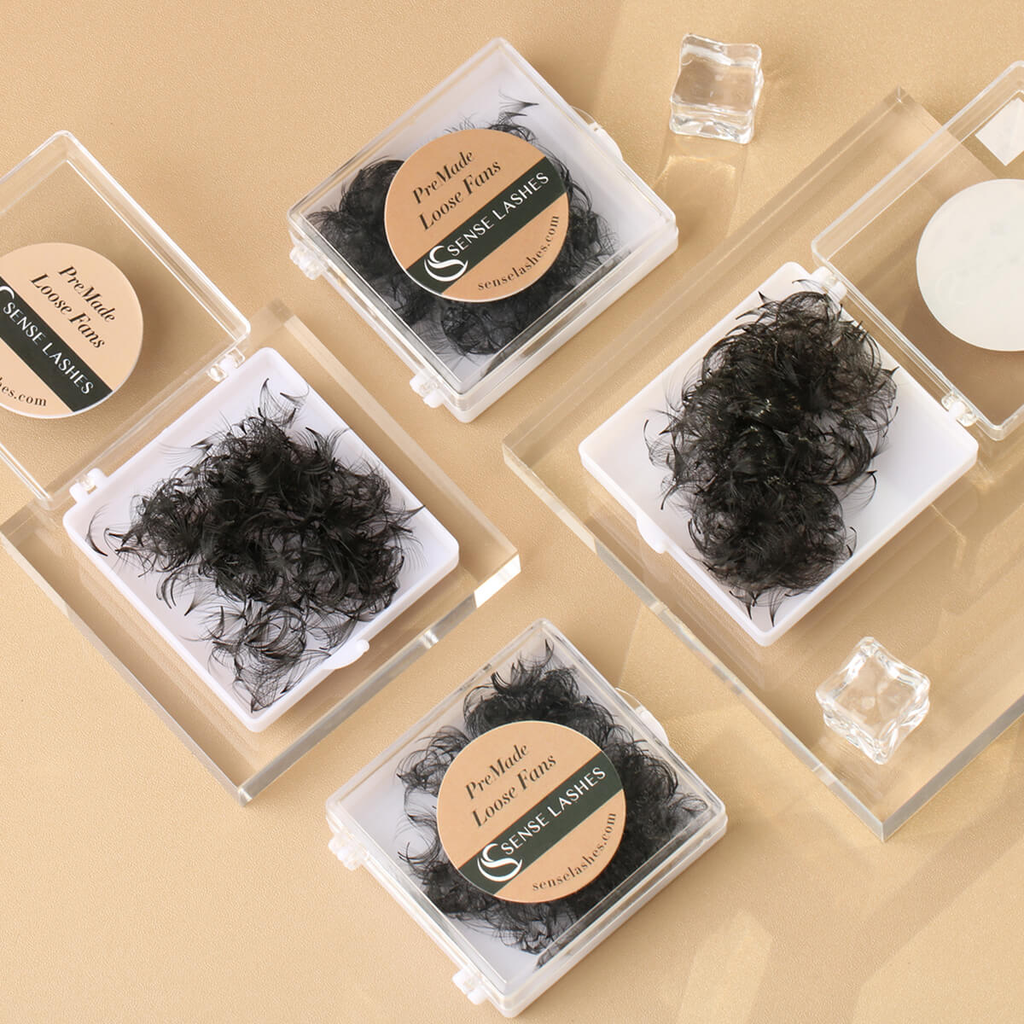
For artists struggling with manual fanning, using 0.07MM YY Volume Eyelash Extensions provides an immediate solution. The unique crisscrossed effect of the YY fan offers built-in texture that mimics the look of a hand-made hybrid without the complexity of balancing different diameters.
Transition Zone Management
The mid-lash line is the "danger zone" for flatness. This is where most artists lose their mapping discipline. To maintain dimension, you must Mix 0.05 and 0.07 Diameters for Multi-Dimensional Volume. By staggering the lengths—using the 1mm Rule for Seamless Lash Curl Transitions—you ensure that no two adjacent lashes are identical in height or weight.
Adhesive Chemistry and the "Locking" Effect
The adhesive you choose plays a silent but critical role in texture. Ultra-fast glues (0.5 seconds) are excellent for speed, but they can be detrimental to hybrid sets. These glues "flash-cure," locking the lash into a rigid, uniform plane.
A 1-2 second working time is often superior for hybrid mapping. This slight delay allows the artist to microscopically adjust the angle of the fan. By fanning lashes at varying angles (tilting some slightly outward and others inward), you create a multi-directional "fluff" that prevents the set from looking like a solid wall.
Compliance and Safety
According to the Health Canada 2023-2024 Compliance Report, cyanoacrylate-based adhesives are under increasing scrutiny for labeling and chemical safety. High-quality professional glues must balance pH levels to avoid irritation. Historical data from Amano et al. (2012) via PubMed highlighted that acidic glues could cause keratoconjunctivitis. Modern formulations, such as those used with 0.07MM Cashmere Premium Mega Volume Eyelash Extensions, are engineered to be pH-neutral, reducing the risk of chemical injury while maintaining superior retention.
Ocular Health: Why Lightweight Lashes are Non-Negotiable
A flat hybrid set isn't just an aesthetic failure; it can be a precursor to mechanical damage. When an artist uses heavy diameters (like 0.15mm or 0.20mm) to compensate for a lack of density, they increase the weight on the natural lash.
A 2024 study published in PubMed emphasizes that extensions can cause a spectrum of disorders, including mechanical damage to the meibomian glands. By shifting toward lightweight components like 0.07MM Easy Fanning Eyelash Extensions, you reduce the physical load on the eyelid. This is critical for preventing Blepharitis—an inflammatory condition of the eyelids often exacerbated by poor hygiene and heavy extensions, as noted by the Mayo Clinic.
The Sanitation SOP
To maintain professional authoritativeness, every salon should implement a sanitation Standard Operating Procedure (SOP). The CDC (Centers for Disease Control) provides clear guidelines on preventing the spread of conjunctivitis (pink eye). This includes the mandatory use of disposable consumables.
Expert Insight: "Lash Shampoo" is not just a cleanser; it is a preventative tool against Demodex mite infestation. Research in PMC (2023) shows a direct link between ocular hygiene and mite populations. Educating clients on daily washing is essential for both retention and long-term ocular health.

Modeling the Ultimate Textured Hybrid
To help artists visualize the technical requirements, we have modeled a "Texture Density Scenario." This model assumes a healthy natural lash count (approx. 90-120 lashes per eye) and aims for a "Wispy Kim-K" style hybrid.
Texture Density Model: Parameters & Assumptions
| Parameter | Value / Range | Unit | Rationale |
|---|---|---|---|
| Classic Diameter | 0.12 - 0.15 | mm | Provides the "Spike" structure |
| Volume Diameter | 0.05 - 0.07 | mm | Provides the "Fluff" base |
| Length Variance | 2 - 4 | mm | Necessary for Wispy Texture |
| Adhesive Speed | 1.0 - 2.0 | sec | Allows for angle adjustment |
| Placement Ratio | 70/30 | % | Optimal Volume/Classic balance |
Method & Assumptions: This model is a hypothetical estimate based on common industry heuristics and pattern recognition from professional salon environments. It is not a controlled lab study. The "0.05mm Delta" is a rule of thumb intended to maximize visual contrast under standard salon lighting.
Identifying Boundary Conditions
The above model may not apply in the following scenarios:
- Sparse Lash Cycles: If a client has fewer than 60 natural lashes per eye, a 70/30 ratio may leave visible gaps. In these cases, refer to our guide on Camouflaging Gaps for Sparse Lash Cycles.
- Extreme Asymmetry: If the client has significant lid asymmetry, standard ratios must be adjusted using the Asymmetrical Mapping Compensation Rule.
Troubleshooting Allergic Reactions vs. Irritation
When a client experiences redness or "burning," artists often blame the product. However, it is vital to distinguish between Allergic Contact Dermatitis and simple irritation. A study in PubMed (2022) notes that Ethyl Cyanoacrylate is a known allergen.
True allergies involve an immune response and typically present with swelling and itching 24-48 hours after application. Irritation, conversely, is often caused by adhesive fumes or "dry eyes." The WebMD Guide on Dry Eyes explains how tear film instability can make eyes more sensitive to chemical vapors. Using a Nano-mister or an aftercare sealant can help restore the Ocular Surface Microbiome and lock in fumes, reducing immediate irritation.
Strategic Takeaways for the Professional Artist
To eliminate flat hybrid sets and elevate your artistry, focus on these three pillars:
- Diameter Contrast: Never pair diameters that are too similar. Use the 0.05mm Delta to ensure your spikes stand out from your fluff.
- Angle Variation: Avoid the "perfectly straight" application. Use a slightly slower adhesive to tilt your fans, creating a multi-dimensional silhouette.
- Client Education as Retention: Market your aftercare as "Blepharitis Prevention" rather than just "cleaning." This positions you as a health-conscious expert and improves the longevity of your work.
By implementing these technical adjustments and adhering to the safety standards set by the American Academy of Ophthalmology (AAO), you can provide sets that are both aesthetically superior and medically responsible.
Medical Disclaimer: This article is for informational purposes only and does not constitute professional medical advice, diagnosis, or treatment. Always seek the advice of your physician or other qualified health provider with any questions you may have regarding a medical condition. The use of eyelash extensions carries risks of infection and allergic reaction; professional training and strict hygiene protocols are mandatory.
References
- Centers for Disease Control and Prevention (CDC). Conjunctivitis Prevention.
- Mayo Clinic. Blepharitis: Symptoms & Causes.
- American Academy of Ophthalmology (AAO). Eyelash Extension Facts and Safety.
- Health Canada. Cosmetic Regulations Enforcement Summary 2023-2024.
- PubMed. Ocular Disorders Associated with Eyelash Extensions (2024).
- PubMed. Allergic Contact Dermatitis from Cyanoacrylate (2022).
- PMC. Impact of Eyelash Extensions on the Ocular Surface Microbiome (2024).