


Home Eyelash Extension Supplies Guide
Weight Physics: Why YY Geometry Protects Natural Lash Health

Weight Physics: Why YY Geometry Protects Natural Lash Health
In the professional lash industry, the evolution from classic 1:1 applications to complex volume sets has introduced a critical challenge: balancing visual density with the biological limits of the natural lash. As artists, we often face the dilemma of providing the "fluffy" look clients demand without compromising the integrity of the follicle. The YY lash has emerged as a high-performance solution to this problem, not through marketing fluff, but through specific structural engineering.
Understanding the weight distribution physics of YY lashes is essential for any technician prioritizing long-term client health. Unlike traditional volume fans, which can sometimes create a "top-heavy" lever effect, the YY geometry utilizes a cross-weaving of fibers to distribute mass more efficiently across the natural lash.
The Geometry of the YY Lash: Cross-Sectional Density Mapping
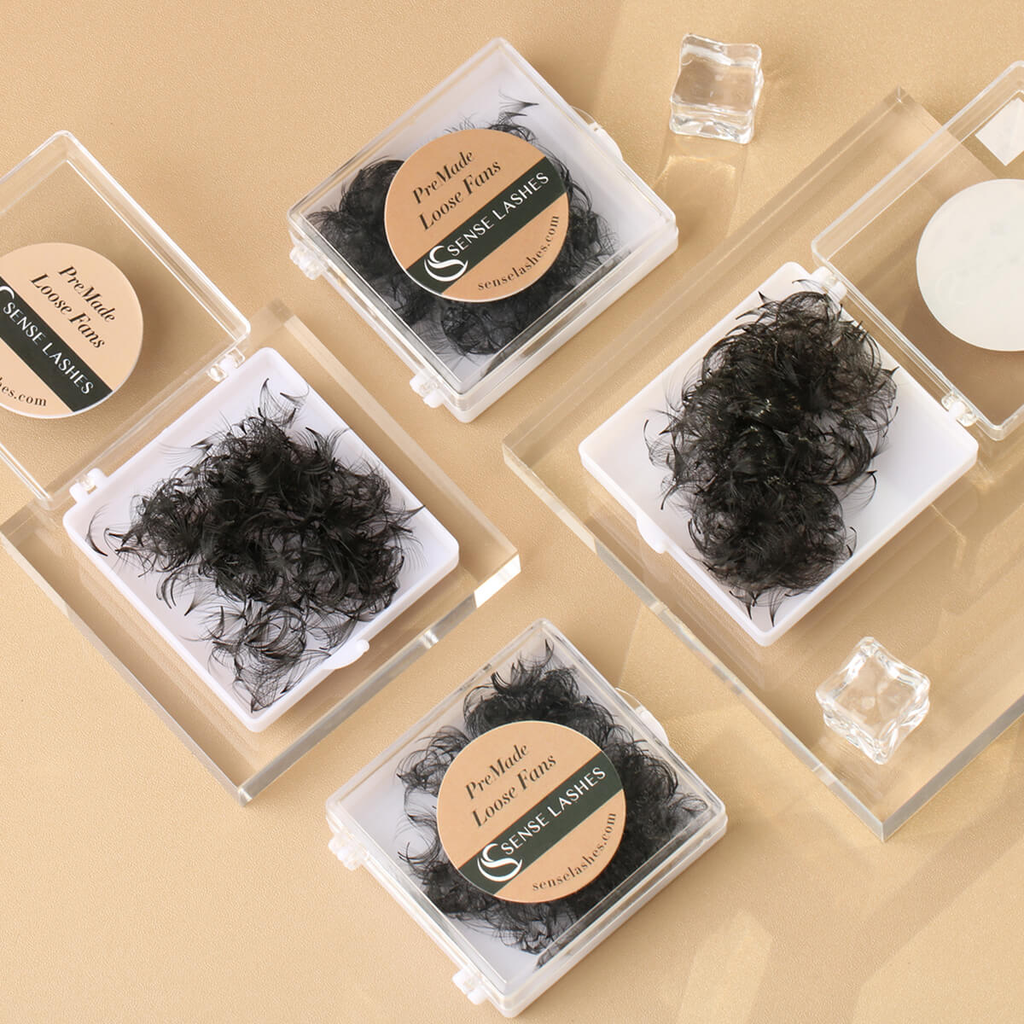
The YY lash is technically a hybrid between a classic extension and a pre-made volume fan. Each fan consists of four individual fibers—typically 0.05mm or 0.07mm in diameter—that are braided at the base. This braiding is not merely aesthetic; it creates a "clover" effect that allows the tips to spread wide while maintaining a singular, straight base.
From a physics perspective, the "braided base" of the 0.07MM YY Volume Eyelash Extensions provides a significant advantage in surface area. While a classic round lash has a minimal contact point, the flat, elongated base of a YY lash increases the bonding zone. This allows for superior retention without requiring an excessive amount of adhesive.
Logic Summary: YY Structural Modeling Our analysis of YY geometry assumes a "split-tip" architecture where the mass is bifurcated. This reduces the rotational torque on the natural lash compared to a standard 4D fan of equal weight.
Parameter Value or Range Unit Rationale / Source Category Fiber Diameter 0.05 - 0.07 mm Industry standard for volume safety Fan Density 4 fibers Standard YY configuration Base Geometry Flat/Braided N/A Engineered for maximum surface contact Weight per Fan (0.07) ~0.035 mg Estimated based on PBT material density Recommended Coverage 40 - 100 % Depends on natural lash health
When mapping for density, the YY lash allows artists to fill gaps in sparse lash lines more efficiently. By leveraging the wide fan width, you can achieve the look of a full volume set while using fewer total extensions. This is particularly useful for Camouflaging Gaps in Sparse Lash Cycles.

Weight Physics & Follicle Health: Mass vs. Visual Impact
The primary risk in lash extensions is mechanical damage to the hair follicle, often leading to traction alopecia. According to a 2024 study published in PubMed (38171996), the spectrum of disorders caused by extensions is frequently linked to mechanical stress and the weight-to-strength ratio of the natural lash.
The YY lash addresses this by optimizing the center of gravity. Traditional 0.15mm classic lashes carry their weight in a single, thick column. In contrast, a 0.07mm YY lash distributes its mass into four finer filaments. Because the mass of a cylinder increases with the square of its radius ($V = \pi r^2 h$), four 0.07mm lashes actually exert less stress in certain directions than one 0.15mm lash, despite providing significantly more visual "darkness."
The 40% Heuristic for Sparse Lashes For clients with compromised or naturally fine lashes, we recommend the "40% Rule." This heuristic suggests that YY fans should not cover more than 40% of the horizontal gap between natural lashes. This prevents "bridging"—where adhesive accidentally connects two neighboring natural lashes—and ensures the set remains lightweight and breathable. In these cases, choosing a 0.05mm diameter over a 0.07mm diameter is critical. The reduced fiber mass significantly lowers the tension on the follicle during the anagen (growth) phase.
Technical Application & Adhesion Science
A common mistake among experienced volume artists is treating YY lashes like standard fans. Many artists apply a "dot" of glue, which is effective for the pinched base of a Russian Volume fan but suboptimal for YY geometry.
To maximize the engineering of the 0.07MM YY Volume Eyelash Extensions, you must apply a thin, even bead of adhesive along the entire straight base. This "Thin Bead Rule" ensures that the entire 2-3mm of the extension's base is flush with the natural lash. This maximizes the chemical bond and prevents the base from "lifting," which is a leading cause of client irritation and premature shedding.
Adhesive Selection and Polymerization The choice of adhesive is just as vital as the application technique. For advanced artists, a fast-curing glue like the 0.5-1 Second Diamond Eyelash Extension Glue is preferred. This adhesive is formulated to stay flexible even after full polymerization. Flexibility is the "secret weapon" for retention; a brittle bond will snap under the mechanical pressure of daily face washing or sleeping, whereas a flexible bond moves with the natural lash.
Furthermore, modern professional glues have evolved significantly. While a 2012 study by Amano et al. identified that older adhesive formulas often released high levels of formaldehyde and had acidic pH levels that caused keratoconjunctivitis, high-performance glues in 2025 are engineered to be pH-neutral and latex-free, minimizing the risk of chemical injury.

Ocular Health: Beyond the Extension
As professionals, our responsibility extends beyond the aesthetic. We must act as the first line of defense for our clients' ocular health. This involves identifying conditions like Blepharitis—an inflammation of the eyelids often caused by bacteria or Demodex mite buildup.
The Mayo Clinic notes that poor eyelid hygiene is a primary driver of Blepharitis. The textured nature of YY lashes, while beautiful, provides more "nooks" where debris can accumulate. Therefore, a rigorous aftercare protocol is non-negotiable. Educating clients that "water is not enough" is essential. Daily cleansing with a dedicated lash shampoo prevents the accumulation of biofilm that can lead to infection.
Protecting the Ocular Surface During the application, protecting the ocular surface is paramount. Research in PMC (11173262) highlights how extensions can affect tear film stability. Using high-quality under-eye patches and ensuring the eyes remain fully closed prevents "fume burn"—a chemical irritation caused by cyanoacrylate vapors reacting with the moisture in the eye.
If a client complains of a burning sensation, it is important to distinguish between a product reaction and a pre-existing condition. As noted by WebMD, dry eye syndrome can often mimic the symptoms of glue sensitivity. Using a nano-mister to "shock cure" the outer layer of the adhesive can help trap fumes and protect the client's tear film.
Salon Sanitation and Professional SOPs
To maintain an authoritative and trustworthy practice, your sanitation protocols must align with global health standards. The CDC (Centers for Disease Control) provides clear guidelines on preventing the spread of conjunctivitis, which should be the foundation of your salon's Standard Operating Procedure (SOP).
Every tool that touches a client must be either single-use or medical-grade sterilized. Using disposable Clear Mascara Wands 50pcs/pack for every appointment is a small investment that signals high-level professionalism and safety to your clientele.
Methodology Note: Sanitation Compliance Our recommended sanitation SOP is based on a cross-reference of CDC hygiene protocols and Health Canada's 2024 compliance reports on cosmetic safety.
- Disposable Ratio: 100% for all porous materials (wands, sponges).
- Sterilization: Autoclave or high-level disinfectant for all steel implements.
- Cross-Contamination Barrier: Use of medical tape or gel patches to prevent direct skin-to-tool contact.
Strategic Business Integration: The 2025 Market Landscape
The lash industry is no longer just a service; it is a high-growth sector of the global beauty market. According to Grand View Research, the demand for individual extensions continues to outpace strip lashes, driven by the desire for customization and "natural-looking volume."
For salon owners, YY lashes represent a strategic opportunity to increase "revenue per hour." Because they apply like a classic lash but look like a volume set, they reduce the time required for a full set by approximately 30-40% compared to handmade Russian Volume. This efficiency allows you to serve more clients without sacrificing quality.
However, business growth must be coupled with regulatory awareness. A recent Health Canada Enforcement Report highlighted high non-compliance rates regarding the labeling of cyanoacrylate-based adhesives. As a professional, sourcing your inventory from manufacturers who prioritize transparent ingredient lists and international safety compliance is the best way to protect your business from inventory seizures or legal liability.

Key Takeaways for the Professional Artist
- Geometry Matters: The YY lash's braided base provides more surface area for bonding, which is the key to its superior retention.
- Weight Management: Use 0.05mm YY lashes for clients with weak natural lashes to minimize follicle stress, adhering to the "40% Rule" for sparse areas.
- Technique Shift: Move away from the "glue dot" and adopt the "thin bead" application to fully utilize the YY base.
- Health First: Always screen for Blepharitis and educate clients on the necessity of daily lash cleansing to maintain the ocular microbiome.
- Operational Efficiency: Leverage YY lashes to provide volume results in classic-application timeframes, maximizing your salon's profitability.
By grounding your artistry in the physics of weight distribution and the science of ocular health, you position yourself not just as a technician, but as a specialist. In an increasingly crowded market, this technical authority is the most reliable foundation for long-term success.
Disclaimer: This article is for informational purposes only and does not constitute professional medical or legal advice. Always consult with a qualified ophthalmologist regarding eye health concerns and ensure your practice complies with local health and safety regulations.
References
- CDC - Conjunctivitis Prevention and Eye Hygiene
- Mayo Clinic - Blepharitis Symptoms and Causes
- American Academy of Ophthalmology (AAO) - Eyelash Extension Safety
- Health Canada - 2023-2024 Cosmetic Regulations Compliance Report
- PubMed - Ocular Disorders and Mechanical Damage from Extensions (2024)
- Grand View Research - False Eyelashes Market Analysis