


Accueil Eyelash Extension Supplies Guide
Troubleshooting Fan Collapse: Solving Retention Speed Gaps

Troubleshooting Fan Collapse: Solving Retention Speed Gaps
In a high-volume salon environment, the difference between a profitable day and a schedule filled with unpaid "fix-it" appointments often comes down to fan stability. For the professional lash artist, "fan collapse"—the phenomenon where a meticulously crafted volume fan closes into a spike during or immediately after application—is more than a nuisance; it is a technical failure that compromises the density of the lash line and the longevity of the set.
Diagnosing why fans collapse requires a multi-faceted approach that looks beyond the lash fiber itself. It involves an understanding of adhesive chemistry, environmental variables, and the mechanical nuances of the "pinch" technique. By identifying the root causes of retention speed gaps, practitioners can reduce rework, improve throughput, and maintain the high-level consistency that clients demand.
The Environmental Variable: Humidity and Polymerization Rates
The primary catalyst for cyanoacrylate-based adhesives is moisture. According to reports from Health Canada (2023-2024), the labeling and chemical safety of these adhesives are strictly monitored because their performance is inextricably linked to environmental conditions.
A common mistake observed in professional studios is the use of ultra-fast drying (0.5–1 second) adhesives in environments where the relative humidity drops below 50%. In these "dry" conditions, the adhesive does not have enough moisture to initiate the curing process at the expected speed. Paradoxically, this can lead to the adhesive "skinning over" or becoming viscous before the fan is properly positioned on the natural lash. If the glue sets too slowly or unevenly, the surface tension of the liquid can pull the individual fibers together, causing the fan to collapse into a single point.
The Jade Stone Heuristic: A Professional Self-Check
To prevent environmental-related collapse, experienced artists use a simple diagnostic: the Jade Stone Test. If a fresh drop of adhesive on a jade stone skins over or loses its "dome" shape in under a second, the environment is likely too dry for that specific adhesive's optimal use.
For environments with fluctuating humidity, a more versatile option like the 1-2 Second Gold Eyelash Extension Glue is typically recommended. With a broader humidity range of 48–70%, it provides a "satin consistency" that allows for a more controlled grab, preventing the premature closure of fans that occurs with thinner, more volatile glues.
Logic Summary: Our analysis of adhesive performance assumes a standard salon temperature of 18–25°C. The following table models the relationship between humidity and fan stability based on common industry heuristics and pattern recognition from professional support data.
| Parameter | Optimal Range | Unit | Rationale |
|---|---|---|---|
| Relative Humidity | 48–60% | % | Balances polymerization speed with workability |
| Ambient Temperature | 20–23 | °C | Maintains consistent adhesive viscosity |
| Adhesive Viscosity | 100–150 | cps | Thicker viscosity helps "hold" fan geometry |
| Refresh Rate | 20–30 | minutes | Prevents "capping" of the adhesive drop |
| Fan Base Width | < 1.0 | mm | Minimizes weight-induced collapse |

Adhesive Viscosity and Fiber Diameter
The mechanical stability of a fan is heavily influenced by the diameter of the lash fibers. When working with 0.07MM Cashmere Premium Mega Volume Eyelash Extensions, the fibers have enough structural integrity to resist the "pull" of a thin adhesive. However, as artists move toward mega-volume diameters like 0.03mm or 0.05mm, the fibers become increasingly flexible.
In these cases, a slightly higher adhesive viscosity—often described as "syrup-like"—is beneficial. A thicker adhesive acts as a physical spacer between the bases of the lashes in the fan. When you dip a mega-volume fan into a thin adhesive, the liquid can travel up the fibers through capillary action, drawing them together. A more viscous adhesive stays at the base, providing the "grip" needed to keep the fan open during the transfer from the strip to the natural lash.
The "Pinch-and-Hold" Technique
To combat splaying or collapsing, practitioners often employ the "pinch-and-hold" technique. After forming the fan, whether through the "lonely fan" or "wiggle" method, pinching the base for an extra half-second before dipping into the adhesive significantly reduces the likelihood of the fan closing. This brief pause allows the fibers to settle into their new geometry.
Furthermore, the Synthetic Fiber Elasticity of modern PBT (Polybutylene Terephthalate) materials, such as those used in Cashmere lashes, ensures that once the fan is set, it retains its curl without the "droop" often seen in lower-quality synthetic alternatives.
Ocular Health: The "Killer Argument" for Salon Hygiene
Fan collapse and poor retention are often symptoms of a deeper issue: ocular hygiene. While artists often focus on the product, the biological canvas—the eyelid—is equally important. Research from the Mayo Clinic identifies Blepharitis (eyelid inflammation) as a common condition caused by bacteria buildup at the base of the lashes.
For the lash artist, Blepharitis and the presence of Demodex mites (as detailed in PMC Demodex Studies) are the ultimate enemies of retention. Oils and biofilm produced by these conditions create a barrier that prevents the adhesive from forming a true covalent bond with the natural lash.
Why Water is Not Enough
Simply telling clients to "splash water" on their lashes is insufficient. To maintain fan fluffiness and prevent the "clumping" that leads to collapse, a dedicated lash shampoo is non-negotiable. Educating clients on the link between hygiene and retention transforms the sale of aftercare products from a "pitch" into a medical necessity.
By referencing the CDC guidelines on conjunctivitis prevention, salons can develop a "Sanitation SOP" that includes mandatory pre-application cleansing. This not only protects the client's eye health but also ensures the natural lash is "chemically clean," allowing the adhesive to cure instantly without the interference of skin lipids.
Troubleshooting Client Sensitivity vs. Product Performance
A frequent point of friction in salons is distinguishing between an allergic reaction, chemical irritation, and pre-existing conditions. According to the American Academy of Ophthalmology (AAO), risks associated with extensions include infection and allergic reactions to formaldehyde or acrylates.
However, many "reactions" reported by clients are actually symptoms of Dry Eye Syndrome. As noted by WebMD, dry eyes can be exacerbated by the fumes of cyanoacrylate during the curing process. If a client complains of burning or redness, it may not be a "bad batch" of glue, but rather a lack of tear film stability.
The Chemistry of Allergic Reactions
A study in PubMed on Dermatitis highlights that Ethyl Cyanoacrylate can cause contact dermatitis in sensitive individuals. To protect the salon from liability and ensure client safety, artists should implement a "Patch Test Protocol." It is critical to explain to clients that reactions can be delayed (48h+), and a lack of immediate redness does not guarantee a future allergy. Using high-quality, pH-balanced products can mitigate these risks. Early industry studies, such as Amano et al. (2012), found that older glue formulas were often highly acidic, contributing to keratoconjunctivitis. Modern professional formulas, however, prioritize a neutral pH to protect the ocular surface.
Modeling Note (Reproducible Parameters): To distinguish between irritation and allergy, we use a "Symptom Onset Model." This is a heuristic tool for artist observation, not a medical diagnosis.
| Symptom | Timing | Likely Cause | Recommended Action |
|---|---|---|---|
| Redness (Lower Eye) | Immediate | Fume Irritation | Improve ventilation/Nano-mist |
| Swelling (Eyelid) | 24–72 Hours | Allergic Dermatitis | Remove extensions/Refer to MD |
| Itching/Grittiness | Persistent | Blepharitis/Hygiene | Prescribe Lash Shampoo |
| Sharp Stinging | Post-Application | Corneal Abrasion | Check eyepatch placement |
Speed Optimization: The Role of Premade Fans
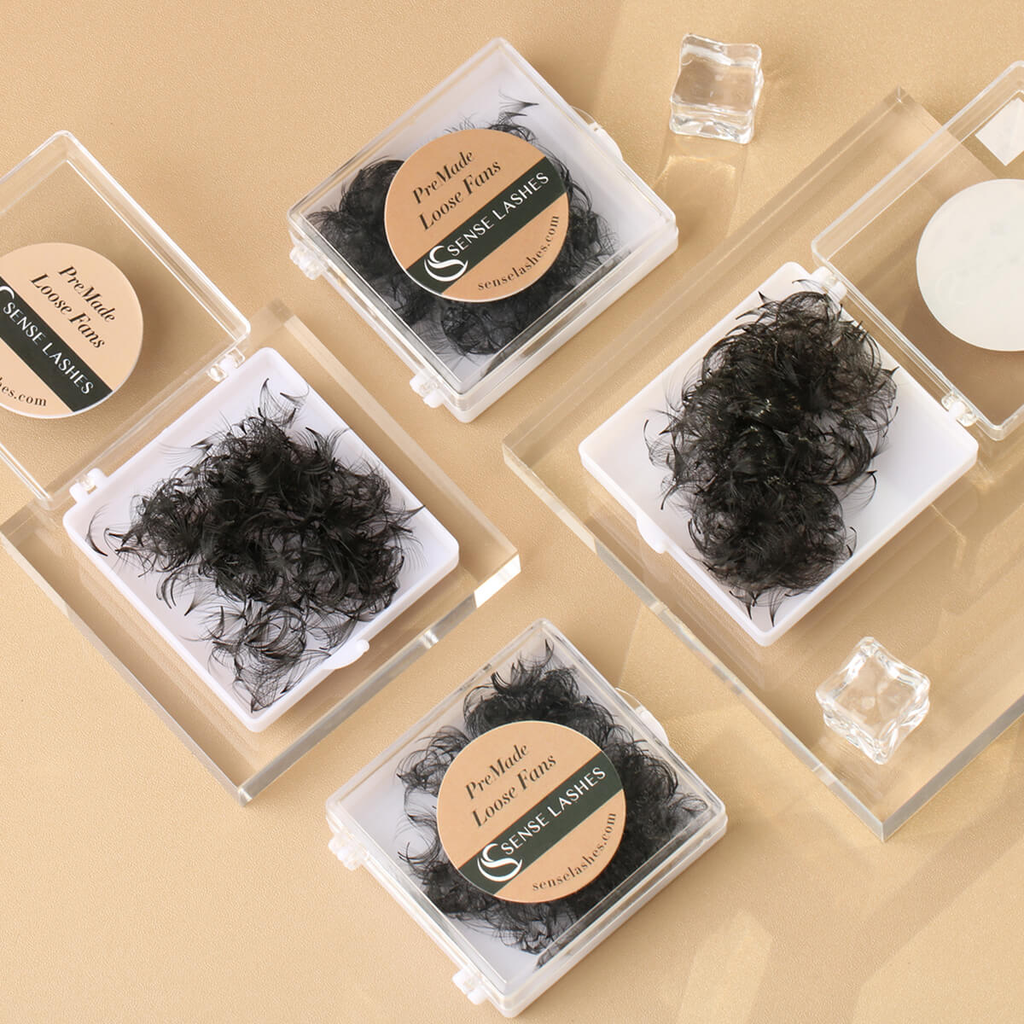
For high-volume salons, the time spent troubleshooting fan collapse can be the difference between seeing five clients a day or eight. This is why many studios are transitioning to "Promade" or premade fans. Products like the 10D Handmade Loose Premade Fans Pointy Base(500 Fans) or the 12D Handmade Loose Premade Fans Pointy Base(500 Fans) offer the consistency of handmade fans without the risk of collapse during the "making" phase.
These fans are heat-bonded at the base, ensuring they stay "open and fluffy" regardless of humidity fluctuations. However, even premade fans require proper handling.
The Silica Gel Storage Hack
A frequent but overlooked cause of premade fans falling apart is ambient moisture in the storage container. If the open box is exposed to high humidity, the heat-bonded bases can slightly soften or attract microscopic moisture that interferes with the adhesive bond.
Pro Tip: Store your open premade fan boxes with a small silica gel packet. This maintains a "dry micro-climate" that preserves the integrity of the fans from the first to the 500th in the box.

Mechanical Precision and the "Art of Isolation"
Finally, fan collapse can be a result of mechanical interference. If the isolation of the natural lash is not perfect, the fan may brush against neighboring lashes before the adhesive has fully polymerized. This "mechanical rubbing" can cause the fan to close or, worse, cause a corneal abrasion if the fan base is forced into the eye during the client's involuntary movements.
A case report in PMC regarding Corneal Abrasion notes that mechanical trauma is a significant risk during the application and removal process. To prevent this, artists should prioritize high-quality gel patches and tape to secure the lower lashes and provide a stable working surface.
The How Fiber Texture Influences Handmade Volume Fan Creation guide further explains how the "grip" of the tweezers and the texture of the lash fiber work in tandem to prevent the mechanical failures that lead to collapsed sets.
Key Takeaways for the Professional
To solve the retention speed gap and eliminate fan collapse, focus on these three pillars:
- Environmental Control: Use a hygrometer and match your adhesive speed to your actual humidity. If the room is dry, switch to a medium-dry glue like the 1-2 Second Gold Eyelash Extension Glue.
- Technique Refinement: Implement the "pinch-and-hold" method and use the Jade Stone Test to verify adhesive workability throughout the day.
- Hygiene Advocacy: Treat lash cleaning as a technical requirement for retention. Use medical insights from the Mayo Clinic and CDC to educate clients on why a clean lash line is the foundation of a beautiful set.
By moving away from "guesswork" and toward an evidence-based troubleshooting workflow, you position your salon as a leader in both aesthetic excellence and client safety.
Disclaimer: This article is for informational purposes only and does not constitute professional medical, legal, or financial advice. Eyelash extensions involve chemical adhesives and proximity to the ocular surface; practitioners should consult local health regulations and medical professionals regarding specific client conditions.
Sources:
- Centers for Disease Control and Prevention (CDC) - Conjunctivitis Prevention
- Mayo Clinic - Blepharitis Symptoms and Causes
- American Academy of Ophthalmology (AAO) - Eyelash Extension Safety
- Health Canada - Cosmetic Regulations Enforcement Summary
- PubMed - Allergic contact dermatitis caused by Ethyl Cyanoacrylate
- PMC - Demodex Mite Infestation and Ocular Hygiene
- PMC - Corneal Abrasion Case Report