


Accueil Eyelash Extension Supplies Guide
Short vs. Long Tapering: Which Profile Suits Your Technique?

The Engineering of Elegance: Understanding Lash Tapering Ratios
In the high-precision world of professional eyelash extensions, the difference between a mediocre set and a masterpiece often lies in specifications that are invisible to the untrained eye. While most technicians focus on curl, length, and diameter, the tapering ratio—the specific length from the base where the fiber begins to narrow to its tip—is the silent architect of texture, weight distribution, and bond integrity.
As a professional lash artist or salon owner, your reputation is built on the consistency of your results. Understanding the mechanical differences between short-tapered and long-tapered fibers allows you to move beyond "guessing" and start "engineering" lash sets tailored to your client's unique ocular health and aesthetic desires. This guide explores the technical nuances of fiber tapering, grounded in manufacturing reality and clinical safety standards.
The Physics of Tapering: Short vs. Long Profiles
Tapering is not merely an aesthetic choice; it is a structural one. In manufacturing, synthetic PBT (Polybutylene Terephthalate) fibers are chemically treated to create a point. The "taper" determines how much of the lash remains at its full diameter before narrowing.
The Short-Tapered Profile (The 1:3 Ratio)
A short-tapered fiber typically maintains its full diameter for approximately two-thirds of its length, with the narrowing occurring only in the final third (a 1:3 ratio).
- Mechanical Advantage: Because more of the fiber remains at its maximum thickness, the lash has a sturdier base. This is particularly beneficial for 0.05mm and 0.07mm diameters used in handmade volume fans.
- Bonding Surface: The shorter taper provides a larger surface area at the base for the adhesive to wrap around, which we often observe leads to superior retention when fanning techniques are executed correctly.
- Visual Outcome: These lashes produce a denser, "darker" lash line. However, if not fanned expertly, the tips can appear blunt or heavy.
The Long-Tapered Profile (The 1:2 Ratio)
Long-tapered fibers begin narrowing much earlier, often around the midpoint of the lash (a 1:2 ratio).
- Mechanical Advantage: These fibers are significantly lighter than their short-tapered counterparts of the same diameter. This reduction in mass is critical for maintaining natural lash health, especially when creating mega-volume sets.
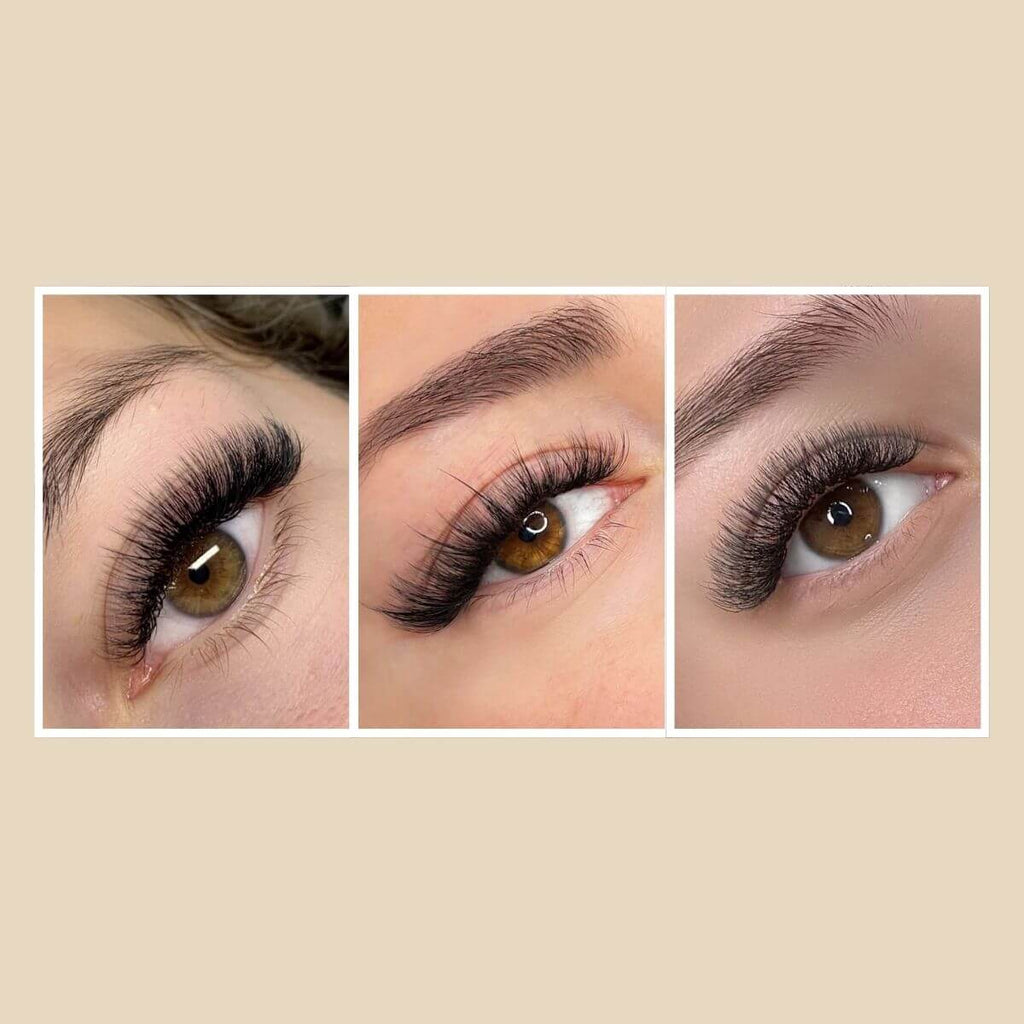
- Visual Outcome: Long tapering is the secret behind the "wispy," "feathery," or "soft" finish. The fine tips mimic the natural growth pattern of human lashes more closely than any other profile.
- Handling: These require a more delicate touch. The fine tips are prone to bending if the artist applies too much pressure during pickup or placement.
Logic Summary: Our analysis of tapering performance assumes a standard PBT fiber density. Short-tapered fibers (~1:3) prioritize base stability and visual density, while long-tapered fibers (~1:2) prioritize tip softness and weight reduction. These heuristics are based on common patterns from manufacturing quality control and professional application feedback (not a controlled lab study).
Short Tapering: The Powerhouse for Mega Volume and Stability
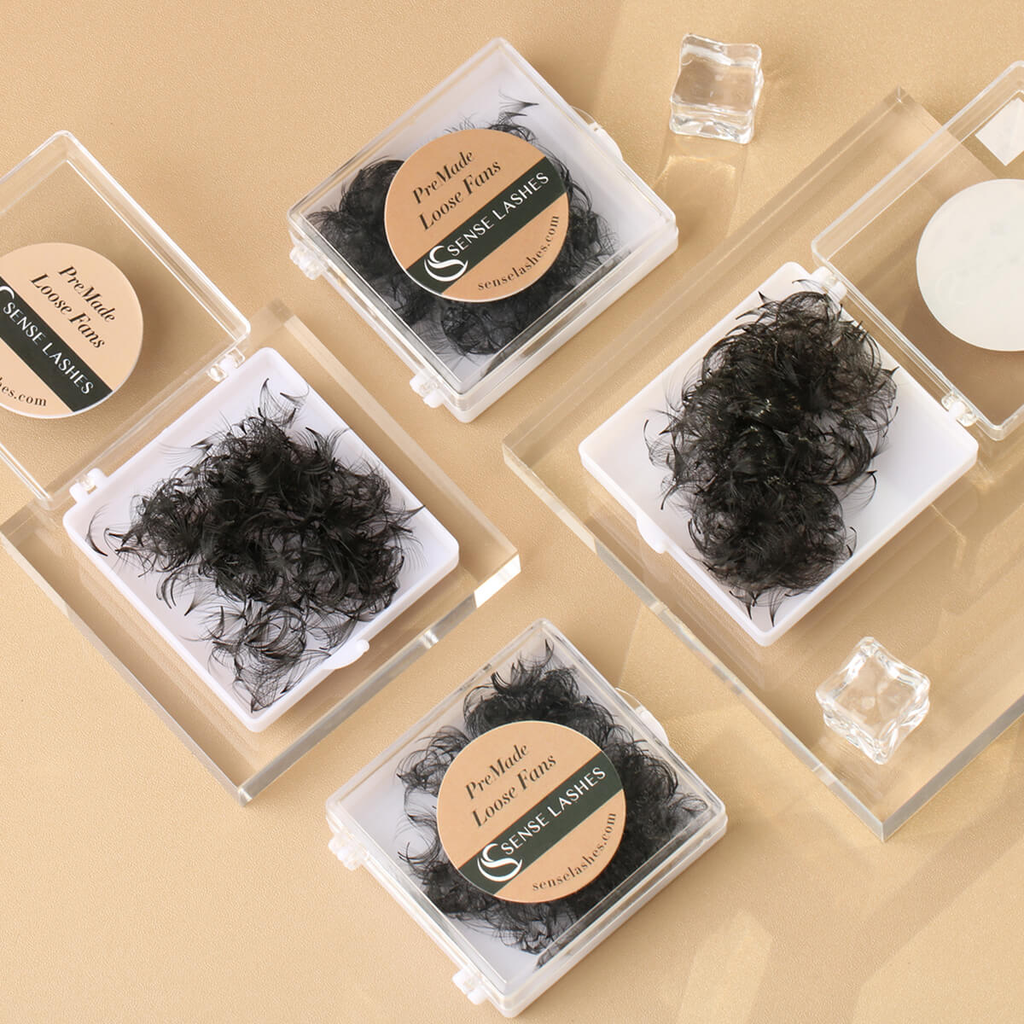
For technicians who specialize in dark, dense volume sets, short-tapered fibers are the industry standard. Products like the 0.07MM Easy Fanning Eyelash Extensions utilize this structural stability to assist artists who are transitioning into volume techniques.

Why Short Tapering Works for Fanning
When you "pinch" or "wiggle" a fan on the strip, the resistance of the fiber determines how easily the fan blooms. A short taper provides the necessary "backbone" to prevent the fan from collapsing. In our experience with high-volume salon environments, short-tapered lashes are more forgiving for handmade mega-volume fans (up to 15D) because the sturdier base resists the inward pressure of the adhesive's surface tension.
The "Sparse Lash" Gotcha: A common mistake in the industry is using a long-tapered lash for a client with sparse natural lashes. Without "neighboring" extensions to provide lateral support, a long, fine tip can droop or lose its curl faster under the weight of environmental factors (like steam or sleep pressure). For these clients, a short-tapered fiber provides the structural integrity needed to maintain the design's shape over a 3-4 week fill cycle.
Long Tapering: The Secret to Wispy and Hybrid Textures
If short tapering is about power, long tapering is about poetry. The 0.03MM Cashmere Premium Mega Volume Eyelash Extensions represent the pinnacle of long-tapered engineering. These fibers are prized for their "butter-like" feel and extreme flexibility.
Aesthetic Engineering: The "Feather" Effect
Long-tapered fibers are essential for creating "Kim K" or "Manga" styles where texture and varied heights are required. Because the tips are so fine, they create a soft, diffused finish on the outer corners of the eye, preventing the "heavy" look that can sometimes occur with shorter tapers.
Weight Distribution and Natural Lash Health
According to a 2024 study published in PubMed (Ocular Disorders), mechanical damage to the natural lash follicle is a primary risk of long-term extension wear. Long-tapered fibers mitigate this risk by shifting the center of gravity closer to the base.
- Heuristic for Weight Safety: A 0.07mm long-tapered lash may carry up to 20% less weight at the tip than a 0.07mm short-tapered lash (estimated range based on common manufacturing volume calculations). This allows for fuller sets without exceeding the "safe load" of the natural lash.
Technical Comparison: Selecting the Right Profile
To help you decide which fiber to stock for your specific technique, we have modeled the performance characteristics of both profiles.
| Parameter | Short Taper (1:3) | Long Taper (1:2) | Rationale |
|---|---|---|---|
| Visual Density | High (Darker Lash Line) | Medium (Soft/Natural) | Fiber mass at the tip |
| Fanning Ease | High (Resists Collapsing) | Medium (Needs Delicate Touch) | Structural backbone |
| Retention Potential | High (Larger Bond Area) | High (Lower Weight/Leverage) | Mechanical stability |
| Best For | Mega Volume, Sparse Lashes | Wispy, Hybrid, Sensitive Eyes | Application style |
| Diameter Range | 0.05mm - 0.15mm | 0.03mm - 0.07mm | Manufacturing limits |
Methodology Note: This comparison is a scenario model based on standard PBT fiber physics and professional feedback. Individual results may vary based on adhesive viscosity and room humidity.
Strategic Styling: The "Pro-Mix" Technique
Experienced artists rarely stick to one tapering profile for an entire set. Instead, they leverage the strengths of both to create a customized look.
- The Core Volume (Mid-Lid): Use short-tapered lashes to create a dense, dark base in the middle of the eye. This provides the "eyeliner effect" clients love.
- The Outer Corner (Transition): Switch to long-tapered fibers like the 0.05MM Cashmere Premium Mega Volume Eyelash Extensions for the outer corners. This prevents the lashes from looking too "blocky" and allows for a soft, cat-eye flare that doesn't weigh down the delicate outer natural lashes.
- The Inner Corner: Always use long-tapered, lightweight fibers for the inner corners to minimize irritation and ensure the lashes don't tickle the bridge of the nose.
Consistency is King: A major quality differentiator in professional supplies is the consistency of the taper from batch to batch. Inconsistent tapering within a single tray leads to uneven fan shapes and unpredictable final looks, wasting valuable application time. This is why sourcing from factory-direct suppliers like SenseLashes is critical for maintaining salon standards.
Health, Safety, and Ocular Hygiene
As a lash professional, your responsibility extends beyond aesthetics to the long-term health of your client's eyes. Tapering profiles play a role here, too.
Preventing Blepharitis and Infection
Poor lash hygiene is the leading cause of Blepharitis (eyelid inflammation). According to the Mayo Clinic, bacteria and oil buildup at the base of the lashes can trigger chronic inflammation.
Short-tapered lashes, due to their density, can sometimes trap more debris if the client is not diligent with aftercare. This makes the use of a professional lash shampoo non-negotiable. We recommend educating clients that "water is not enough" to penetrate the dense base of a volume set. Daily washing is essential to prevent Demodex mite infestation, a risk highlighted in PMC Research (Demodex Studies).
Chemical Safety and Allergic Reactions
The adhesive used to bond these fibers is equally important. In 2012, a landmark study by Amano et al. identified that older glue formulas could release formaldehyde and cause keratoconjunctivitis due to acidic pH levels.
Modern professional adhesives have evolved to be pH-neutral and low-fume. However, the American Academy of Ophthalmology (AAO) warns that allergic contact dermatitis to cyanoacrylate remains a risk. For clients with sensitive eyes, choosing a long-tapered, lightweight fiber reduces the amount of adhesive required (due to lower lash mass), potentially minimizing exposure to fumes.
Protecting the Ocular Surface
Recent 2024 investigations into Ocular Surface Disease (PMC) suggest that long-term extension wear can alter the tear film stability. Utilizing high-quality, lightweight fibers and ensuring a 0.5mm - 1mm gap from the eyelid is vital for protecting the meibomian glands.

Business Insight: Investing in Private Label Quality
For salon owners looking to scale, the choice of tapering profile is also a business decision. The global false eyelashes market is seeing a high CAGR, as noted by Grand View Research, with a significant shift toward individual extensions over strip lashes.
If you are considering starting a private label brand, consistency in fiber tapering is your strongest selling point. "Don't let your inventory get destroyed at the border," is a common warning for distributors. Adhering to strict chemical safety standards, such as those detailed in the Health Canada Compliance Report, ensures your products are not only beautiful but legally compliant for international sale.
Inventory Strategy for 2025
- The 70/30 Rule (Heuristic): For most salons, we recommend stocking 70% short-tapered fibers for your "bread and butter" volume sets and 30% long-tapered fibers (like the 5D Dark Brown Multi Layer Camellia Lashes) for specialty styling and texture.
- The Compliance Check: Ensure your supplier provides FDA-compliant pigments. According to the FDA (Eye Cosmetic Safety), color additives must be strictly regulated to prevent ocular injury.
Summary of Professional Outcomes
Choosing between short and long tapering is a decision that impacts every aspect of your service—from the speed of your application to the long-term health of your client’s natural lashes.
- Choose Short Tapering (1:3) when you need structural stability, maximum density at the lash line, and a "forgiving" fiber for manual fanning.
- Choose Long Tapering (1:2) when you are aiming for a feathery, wispy finish, or when working with clients who have fragile natural lashes and require the lightest weight possible.
By mastering the science of tapering, you elevate your practice from a beauty service to a technical craft. Your clients will notice the difference in the "feel" of their lashes, and your business will benefit from the superior retention and professional-grade results that only high-quality, engineered fibers can provide.
YMYL Disclaimer: This article is for informational purposes only and does not constitute professional medical, legal, or financial advice. Eyelash extensions should only be applied by certified professionals. If you or a client experience symptoms of eye infection or allergic reaction, consult an ophthalmologist immediately.
References & Authoritative Sources
- CDC - Conjunctivitis Prevention and Hygiene
- Mayo Clinic - Blepharitis Symptoms and Causes
- American Academy of Ophthalmology - Eyelash Extension Safety
- Health Canada - Cosmetic Regulations Enforcement Summary
- FDA - Eye Cosmetic Safety Guidelines
- PubMed - Ocular Disorders and Eyelash Extensions (2024)
- PMC - Ocular Surface Disease and Tear Stability (2024)
- Grand View Research - False Eyelashes Market Analysis