


Accueil Eyelash Extension Supplies Guide
High-Sensitivity Clients: Advanced Multi-Product Testing StrategiesBase

High-Sensitivity Clients: Advanced Multi-Product Testing Strategies
For the professional lash artist, the "sensitive client" represents both a significant risk and a profound opportunity. While many practitioners avoid high-risk individuals to minimize liability, mastering the art of the advanced patch test can transform your salon into a sanctuary for those previously told they "can't wear lashes."
When a client presents with a history of cosmetic sensitivity, a standard five-lash patch test is often insufficient. To provide a truly professional-grade service, we must move beyond basic protocols and adopt a multi-product, staggered testing strategy grounded in dermatological science and material chemistry. This approach doesn't just protect the client; it builds an unbreakable bond of trust and positions your business as a technical authority in a crowded market.
The Science of Sensitivity: Irritation vs. Allergy
Understanding the physiological mechanism behind adverse reactions is the first step in risk mitigation. Professional artists must distinguish between Irritant Contact Dermatitis (ICD) and Allergic Contact Dermatitis (ACD).
- Irritant Contact Dermatitis (ICD): This is a non-immunologic reaction caused by direct damage to the skin or ocular surface. In lashing, this is frequently caused by adhesive fumes (cyanoacrylate monomers) or improper pH balance. According to the American Academy of Ophthalmology (AAO), chemical irritation can lead to redness and discomfort without a true immune response.
- Allergic Contact Dermatitis (ACD): This is a Type IV hypersensitivity reaction. It is a delayed immune response where the body’s T-cells recognize a specific ingredient—most often Ethyl Cyanoacrylate—as a threat. A key study published in PubMed highlights that these reactions can be cumulative; a client may be fine for years before suddenly developing a severe allergy.
Logic Summary: Our classification of sensitivity types is based on the standard dermatological distinction between immediate chemical irritation and delayed-type hypersensitivity (Type IV). This distinction is critical because while irritation can be managed with better ventilation, a true allergy requires a total change in product chemistry or cessation of service.
Advanced Pre-Service Screening: Identifying Red Flags
Before a single lash is applied, a comprehensive ocular health screening is mandatory. We often see artists overlook underlying conditions that mimic lash-related allergies.
- Blepharitis: This chronic inflammation of the eyelids is often caused by an overgrowth of bacteria or Demodex mites. The Mayo Clinic notes that blepharitis can cause symptoms nearly identical to a lash glue allergy, including crusting, itching, and redness.
- Dry Eye Syndrome: Clients with compromised tear films are more susceptible to adhesive fumes. As detailed by WebMD, dry eyes lack the protective moisture barrier needed to buffer the eyes from the exothermic reaction of glue polymerization.
- Microbiome Shifts: Recent research in PMC suggests that long-term extension wear can alter the ocular surface microbiome. For high-sensitivity clients, any existing imbalance can exacerbate the risk of a reaction.

The Multi-Product Staggered Testing Protocol
For clients with a high "Sensitivity Index," we recommend a 7-day staggered testing model. This protocol isolates variables, ensuring that if a reaction occurs, you know exactly which product caused it.
Step 1: The Adhesive "Inner Arm" Test (Day 1-2)
Many artists assume reactions are caused by the lash fibers, but they are almost always caused by the adhesive or primers. Apply a small drop of your chosen adhesive—such as the 1-2 Second Gold Eyelash Extension Glue—to the inner arm or behind the ear.
Why 1-2 Second Glue? In our professional experience, ultra-fast adhesives (0.5s) polymerize so quickly that they create a sharp "fume spike" and more intense exothermic heat. A slightly slower-drying adhesive like the 1-2 Second Gold Eyelash Extension Glue allows for a more controlled polymerization process, which is often better tolerated by sensitive individuals.
Step 2: The Fiber & Primer Test (Day 3-4)
If the adhesive test is clear after 48 hours, proceed to testing the auxiliary products. Apply a small amount of primer and a single lash fiber to a different area of the skin.
For the fiber, we recommend using a matte, uncoated PBT (Polybutylene Terephthalate) like the 0.07MM Cashmere Premium Mega Volume Eyelash Extensions. Cashmere fibers are engineered to be extremely lightweight and are less likely to contain residual industrial dyes or coatings that can trigger contact dermatitis.
Step 3: The "Mini-Set" Trial (Day 5-7)
If both skin tests are negative, apply 5-10 extensions per eye using the full procedure (isolation, priming, and lashing). Wait a full 48-72 hours. This duration is vital because, as noted in recent PubMed studies on eyelid dermatitis, acrylate-related reactions are frequently delayed.
| Testing Phase | Location | Duration | Purpose |
|---|---|---|---|
| Phase 1: Adhesive | Inner Arm / Behind Ear | 48 Hours | Isolate Cyanoacrylate allergy |
| Phase 2: Primers/Fibers | Inner Arm | 48 Hours | Isolate chemical/dye sensitivity |
| Phase 3: Mini-Set | Outer Corner Lashes | 72 Hours | Test ocular surface & fume tolerance |
Methodology Note: This 3-phase model is a heuristic developed for high-risk screening. It assumes a linear progression where the most common allergen (adhesive) is tested first. This is not a controlled clinical trial but a shop-level risk management framework.
Product Selection for Risk Mitigation
When working with sensitive clients, your inventory choice is your primary line of defense.
1. Adhesive Chemistry and Viscosity
The 1-2 Second Gold Eyelash Extension Glue is optimized for a balance of retention and stability. Its syrup-like consistency ensures that the adhesive stays exactly where you place it, reducing the risk of "wicking" into the eye—a common cause of chemical burns and corneal abrasions as documented in PMC case reports.
2. Fiber Weight and Surface Area
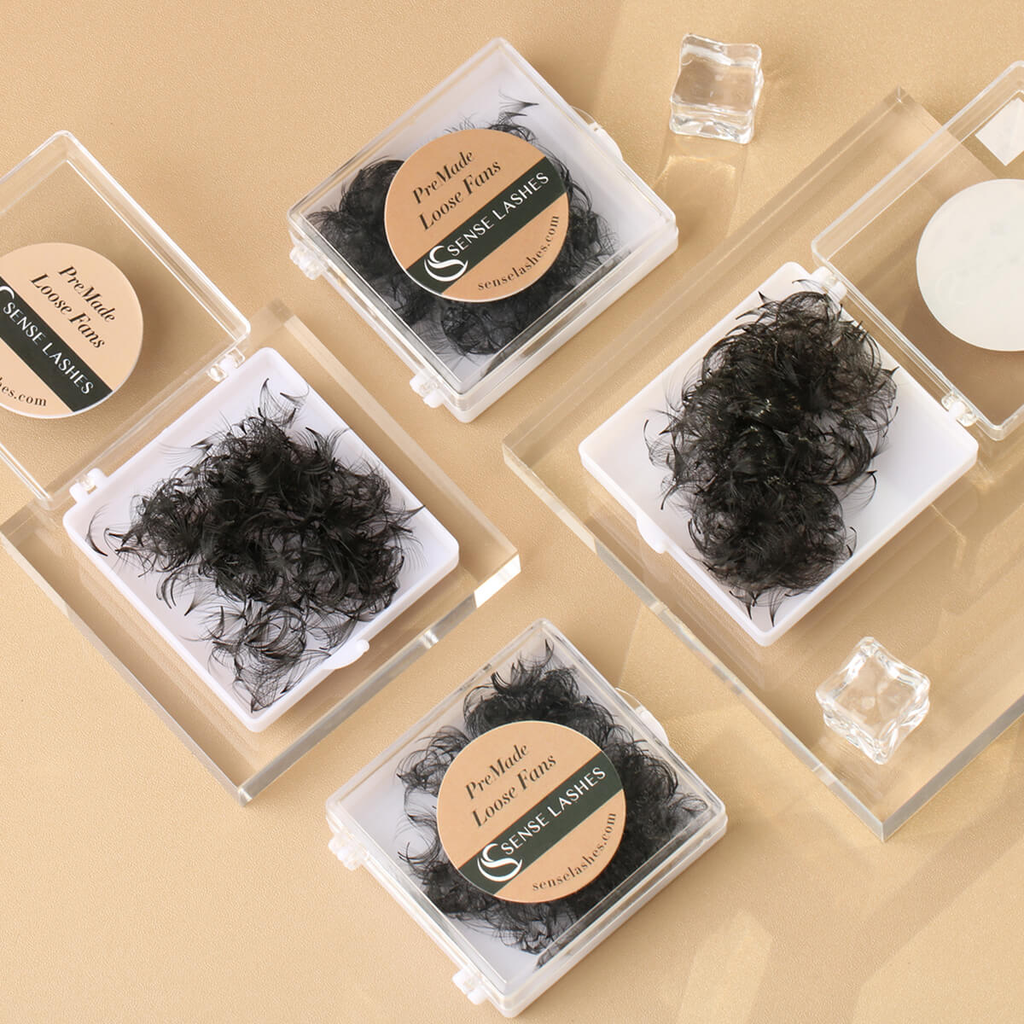
Mechanical stress can be mistaken for an allergic reaction. If a lash is too heavy, it causes traction on the hair follicle, leading to inflammation. Using lightweight options like 0.07MM Easy Fanning Eyelash Extensions or 10D Handmade Loose Premade Fans Pointy Base allows you to achieve a full look without the weight of traditional 0.15mm or 0.20mm lashes.
The 10D Handmade Loose Premade Fans Pointy Base are particularly useful because their heat-bonded, ultra-slim bases require less adhesive to create a secure bond, effectively lowering the total chemical load on the lash line.

Salon Sanitation SOP: The Professional Standard
Safety is not just about the products you apply; it's about the environment in which you apply them. To prevent the spread of infections like pink eye, you must adhere to strict hygiene standards. The CDC (Centers for Disease Control) emphasizes that hand hygiene and the disinfection of shared surfaces are the most effective ways to prevent conjunctivitis.
- Disposable Consumables: Always use single-use wands and eye patches.
- Sterilization: Use medical-grade autoclaves or high-level disinfectants for all tweezers.
- Ventilation: Use a specialized lash fan or air purifier with a HEPA and carbon filter to actively pull cyanoacrylate fumes away from the client's breathing zone and eyes.
Troubleshooting: When a Reaction Occurs
If a client calls with symptoms, your role shifts from artist to investigator. Refer to our guide on Pre-Service Screening to help differentiate between a minor irritation and a medical emergency.
- Ask for Photos: Is the redness on the eyeball (conjunctiva) or the eyelid skin? Redness on the skin usually indicates an allergy; redness on the eyeball often indicates a chemical burn from fumes or poor eye-pad placement.
- Assess the Timing: Did it happen immediately (irritation) or 24 hours later (allergy)?
- Do Not Advise Medication: As a professional, you can suggest they see a doctor, but you must never recommend specific antihistamines or steroid creams.
For more on managing expectations when a test fails, see our article on Patch Test Limitations.
Building a "Safety-First" Brand
In the lash industry, reputation is built on consistency and reliability. By implementing advanced testing strategies and using high-quality materials like 0.07MM Cashmere Premium Mega Volume Eyelash Extensions and 1-2 Second Gold Eyelash Extension Glue, you demonstrate a level of expertise that justifies premium pricing.
High-sensitivity clients are often the most loyal. Once they find a technician who takes their safety seriously and provides a reaction-free experience, they will not only return but will become your most vocal brand advocates.
Key Takeaways for the Professional:
- Isolate Variables: Never test multiple new products at once.
- Prioritize Material Science: Choose matte, uncoated PBT fibers and adhesives with controlled polymerization speeds.
- Screen for Underlying Conditions: Conditions like blepharitis or dry eye are often the true culprits behind "lash sensitivity."
- Educate the Client: Use the 7-day testing protocol as a tool to demonstrate your professional authority.
Disclaimer: This article is for informational purposes only and does not constitute professional medical or legal advice. Always consult with a healthcare professional regarding ocular health or allergic reactions. Lash artists should operate within the scope of their local licensing and regulations.
References
- American Academy of Ophthalmology (AAO) - Eyelash Extension Safety
- CDC - Conjunctivitis Prevention
- Mayo Clinic - Blepharitis Symptoms and Causes
- PubMed - Allergic Contact Dermatitis from Cyanoacrylate
- PMC - Ocular Surface Microbiome and Extensions
- Health Canada - Cosmetic Regulations and Cyanoacrylate