


Accueil Eyelash Extension Supplies Guide
Fixing Visual 'Steps' in Asymmetrical Length Transitions

Fixing Visual 'Steps' in Asymmetrical Length Transitions
For the advanced lash artist, the challenge of corrective aesthetics often lies in the subtle nuances of ocular depth. While standard mapping addresses basic eye shapes, correcting for deep-set eyes or significant asymmetry requires a sophisticated understanding of visual weight and transitional mechanics. One of the most frequent frustrations in these corrective sets is the appearance of visual "steps"—jagged, unnatural transitions where the lash line should be a seamless, fluid curve.
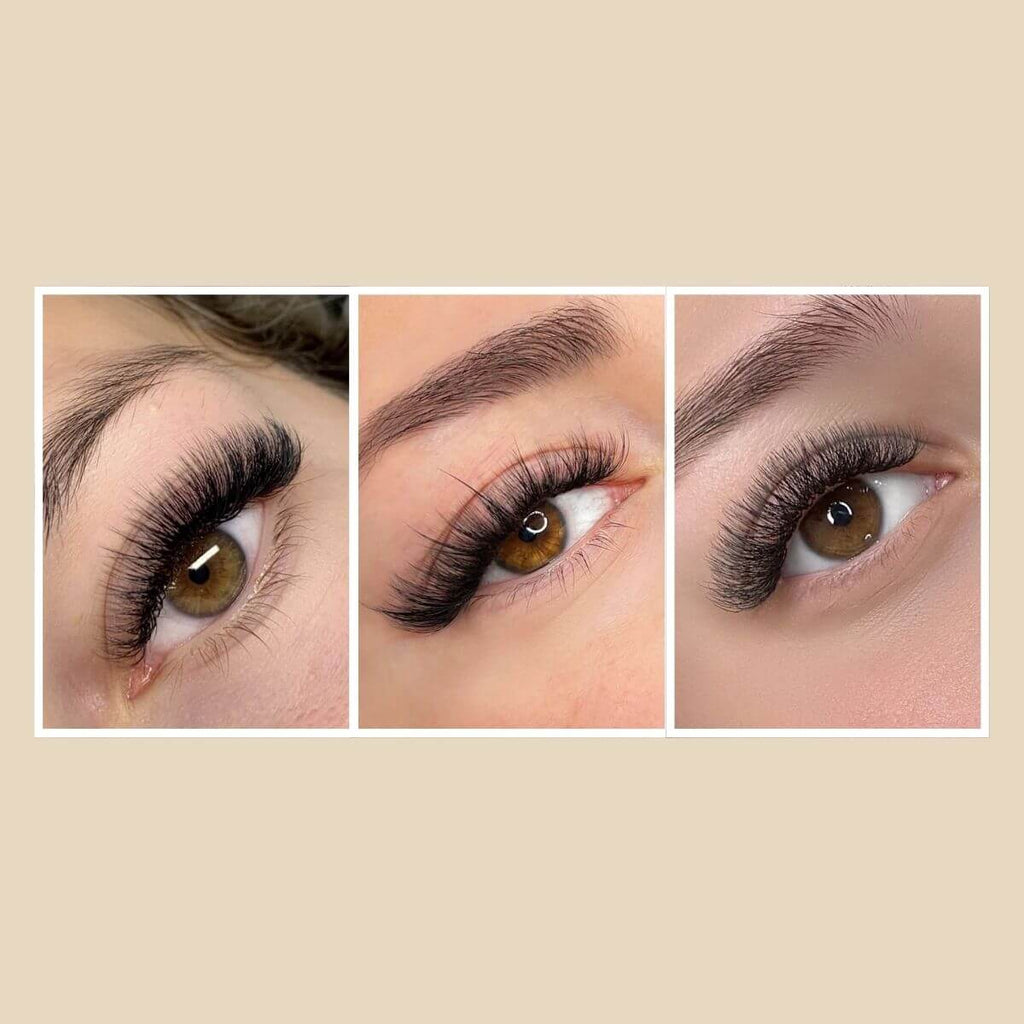
These "steps" are particularly prominent when a technician attempts to balance eyes with different socket depths. If you apply the same diameter and length sequence to both eyes, the deeper-set eye will often appear "swallowed" or visually heavier, leading to a disconnected side profile. Achieving a natural flow requires moving beyond the standard 1mm increment rule and embracing technical precision in diameter selection, adhesive control, and mapping transitions.
The Science of Ocular Asymmetry: Understanding Depth and Protrusion
Ocular asymmetry is rarely just about the eyelid; it is a complex interaction of bone structure, fat distribution, and muscle tone. According to research published in PMC regarding ocular surface changes, the mechanical presence of extensions can alter tear film stability. When eyes have varying depths, the airflow and mechanical friction against the extensions differ, which can exacerbate irritation if the mapping is not perfectly balanced.
In cases of asymmetrical depth, the "deeper" eye requires more length to achieve the same visual protrusion as the "shallower" eye. However, simply increasing length often leads to a "clunky" appearance. This is because longer lashes naturally carry more weight and surface area, which can disrupt the visual line.
Logic Summary: Our corrective modeling assumes that visual weight is a product of both diameter and length. To maintain symmetry across asymmetrical sockets, the artist must manipulate the density-to-length ratio rather than just the length alone.
Strategy 1: Diameter Calibration for Visual Weight Balancing
A common mistake in corrective lash artistry is using a uniform diameter, such as 0.07mm, across both eyes regardless of depth. In our experience with advanced corrective sets, we have observed that using a slightly finer diameter on the deeper eye—such as 0.05mm or 0.03mm—allows the artist to use the necessary longer lengths without creating an overbearing visual weight.
For instance, the 0.03MM Cashmere Premium Mega Volume Eyelash Extensions provide the ideal solution for this. Because these lashes are extremely lightweight and soft, you can build the necessary length to "pull" a deep-set eye forward without the lashes appearing thick or "stepped" against the natural lash line.
| Parameter | Standard Eye | Deep-Set Eye (Corrective) | Rationale |
|---|---|---|---|
| Primary Diameter | 0.07mm | 0.03mm - 0.05mm | Reduces visual bulk at longer lengths |
| Base Length | 10mm | 11mm - 12mm | Compensates for socket depth |
| Volume Ratio | 4D - 5D | 8D - 12D | Maintains density while using finer fibers |
| Visual Weight | Balanced | Balanced | Heuristic: Finer diameter = Lower visual gravity |

Strategy 2: The 0.5mm Incremental Rule in Transition Zones
While the 1mm rule is a standard heuristic for length transitions, it often fails in the "transition zone"—the 2 to 3 lashes at the center where you move between different lengths. In these high-visibility areas, a 1mm jump can create a visible "staircase effect."
To fix this, we recommend a 0.5mm incremental approach. By mixing lengths within a single fan or using specific 0.5mm increments in the transition zone, you create a truly invisible blend. This is critical when correcting for ptosis or varying growth angles, as discussed in our guide on Fixing the Staircase Effect in Multi-Curl Lash Mapping.
Implementation Tip: If transitioning from 11mm to 12mm, place two fans of 11.5mm (achieved by mixing 11mm and 12mm fibers in a handmade fan) in the center of the transition. This rounds out the "corner" of the mapping.
Strategy 3: Leveraging Premade Fans for Structural Uniformity
Consistency is the enemy of the "step." When hand-making fans, slight variations in base width or fan symmetry can disrupt the visual flow, especially in corrective sets where every millimeter counts.
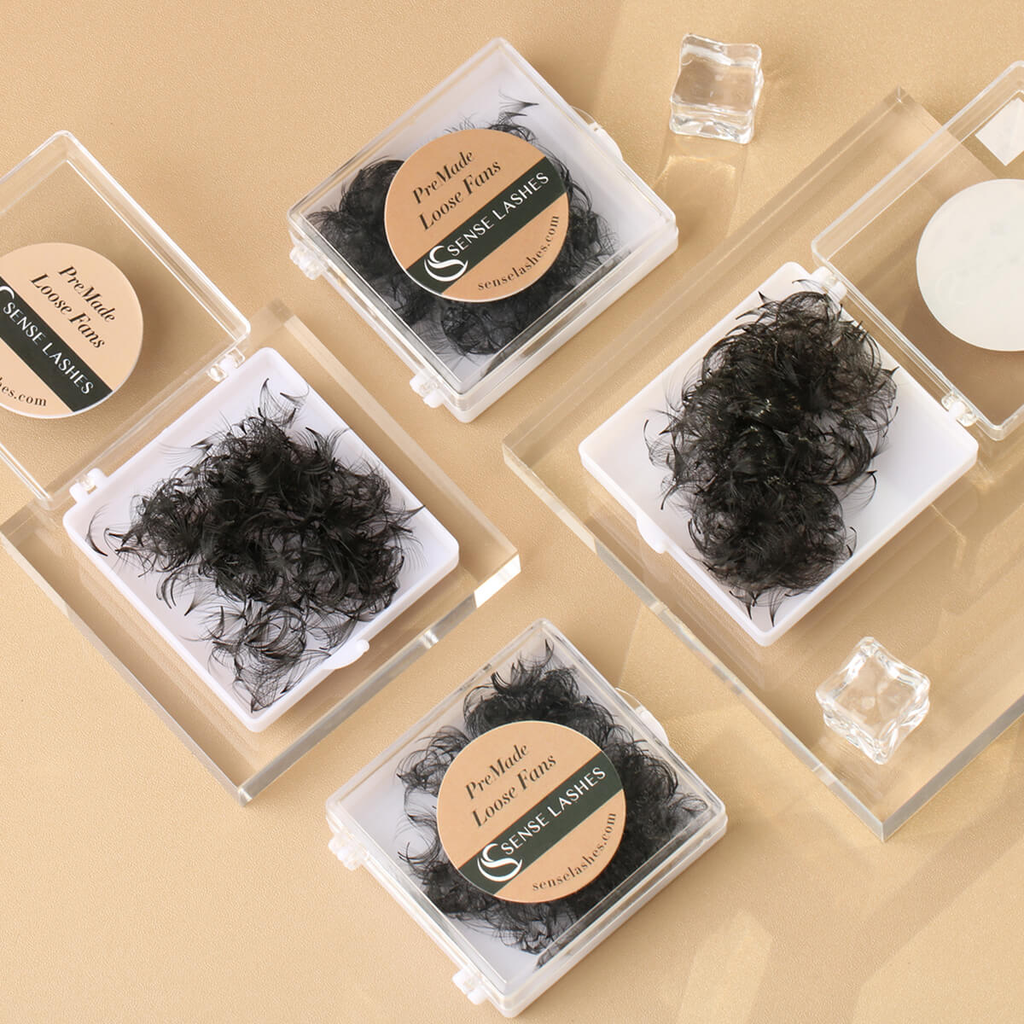
Premade fans, such as the 12D Handmade Loose Premade Fans Pointy Base(500 Fans), offer a level of structural uniformity that is difficult to replicate consistently by hand during a long corrective session. The ultra-slim, pointy base of these fans ensures a seamless bond to the natural lash, preventing the "bulky base" issue that often contributes to a jagged lash line.
Methodology Note: The use of premade fans for transition "spikes" is a professional heuristic based on the observation that factory-consistent bases provide a more predictable pivot point when adjusting the direction of the extension to match asymmetrical growth cycles.

Strategy 4: Adhesive Dynamics and Placement Precision
The choice of adhesive is a critical, yet often overlooked, factor in preventing visual steps. In corrective work, you are often working against difficult angles or trying to "steer" the extension to correct a natural lash's direction.
If you use an ultra-fast glue like the 0.5-1 Second Diamond Eyelash Extension Glue, you must be extremely precise. While this adhesive is excellent for experienced artists working in high-humidity environments (50-70%), it can lead to "flash curing" if the placement isn't instant. For the transitional lashes where you are meticulously smoothing out a "step," a slightly slower 1-2 second drying glue can provide the necessary time to adjust the angle before the bond sets.
However, for the bulk of the set, the Diamond Bond's thin viscosity ensures that you don't add unnecessary weight to the base, which helps maintain the "Perfect Line" effect. For more on achieving this, see our technical breakdown on Achieving Top-Row Uniformity.
Clinical Considerations: Protecting the Ocular Surface Microbiome
Corrective aesthetics must never come at the cost of ocular health. Recent studies published in PMC (2024) suggest that long-term extension wear can alter the ocular surface microbiome and tear stability. When we manipulate lengths and diameters to fix visual steps, we must ensure we aren't creating a mechanical environment that traps bacteria.
Proper hygiene is non-negotiable. According to the Mayo Clinic, Blepharitis (eyelid inflammation) is frequently caused by poor lash hygiene. As a professional, you should educate your clients that "water is not enough." A dedicated lash shampoo is essential to prevent the buildup of biofilm that can lead to irritation or infection.
Salon Sanitation SOP and Client Safety Protocols
To maintain the highest professional standards and mitigate risks, every salon should follow a strict Sanitation SOP. The CDC (Centers for Disease Control) provides authoritative guidelines on preventing the spread of conjunctivitis, which include:
- Using disposable consumables (wands, micro-brushes) for every client.
- Strict sterilization of tweezers between every service.
- Avoiding cross-contamination by never double-dipping into adhesive or primer.
Furthermore, the American Academy of Ophthalmology (AAO) emphasizes the risks of allergic reactions to acrylates and formaldehyde. While modern professional glues, like our Diamond Bond, are formulated to be formaldehyde-free, the byproduct of cyanoacrylate curing can still cause sensitivity.
Logic Summary: We recommend using a "Client Safety Consent Form" that outlines these risks and the importance of aftercare. This positions you as a responsible practitioner and protects your business from liability.
Troubleshooting: Differentiating Irritation from Pathology
When a client complains of burning or redness after a corrective set, it is vital to diagnose the cause accurately. Is it the product, or the client's underlying condition?
According to WebMD, dry eye syndrome can often be confused with an allergic reaction to lash fumes. If the client has pre-existing dry eyes, the use of a nano-mister or an aftercare sealant can help cure the adhesive faster, reducing the duration of fume exposure.
If the redness is localized to the eyelid margin, it may be allergic contact dermatitis. A PubMed study notes that Ethyl Cyanoacrylate is a known sensitizer. If a reaction occurs, it is often an immune response rather than a product fault. In these cases, a full removal using a non-drip cream remover is the safest course of action to prevent further corneal abrasion.

Advanced Mapping: The "Kim K" Influence on Transitions
For clients seeking a more textured, "wispy" look while still correcting for asymmetry, the 0.07mm Cashmere Volume Wispy Eyelash Extensions are highly effective. These pre-made spikes allow you to add "peaks" that draw the eye upward, effectively masking minor "steps" in the foundation layer.
By mixing these wispy clusters with your standard fans, you create a multi-dimensional set that distracts from ocular depth issues. This technique is particularly useful when transitioning from the inner corners, where mapping from B to C curls is often required to follow the natural lash growth angle.
Summary of Best Practices for Corrective Transitions
- Assess Ocular Depth: Use longer lengths and finer diameters (0.03mm) on the deeper-set eye to balance visual weight.
- Smooth the Flow: Implement 0.5mm increments in the transition zones of your mapping to eliminate the staircase effect.
- Ensure Uniformity: Use high-quality premade fans with pointy bases for consistent structural integrity.
- Control the Bond: Match your adhesive drying time to your placement speed, especially in technical transition areas.
- Prioritize Health: Follow CDC and AAO guidelines for sanitation and client screening to ensure long-term retention and safety.
By mastering these technical adjustments, you transform a standard lash set into a bespoke corrective treatment. Fixing visual steps is not just about the lashes you choose; it's about the precision with which you apply the science of aesthetics to the unique canvas of every client's eyes.
Disclaimer: This article is for informational purposes only and does not constitute professional medical or legal advice. Always consult with a qualified health professional regarding ocular health concerns and ensure compliance with local cosmetic regulations.
References
- Centers for Disease Control (CDC) - Conjunctivitis Prevention
- Mayo Clinic - Blepharitis Symptoms & Causes
- American Academy of Ophthalmology (AAO) - Eyelash Extension Safety
- Health Canada - Cosmetic Regulations & Cyanoacrylate Enforcement
- PubMed - Allergic Contact Dermatitis from Cyanoacrylate (Study 35674514)
- PMC - Ocular Surface Changes and Extension Wear (Article 11173262)