


Accueil Eyelash Extension Supplies Guide
Camouflaging Gaps: Length Strategies for Sparse Lash Cycles

Camouflaging Gaps: Length Strategies for Sparse Lash Cycles
For professional lash artists, the "sparse lash line" is one of the most demanding technical challenges. Whether caused by natural aging, medical history, or an asynchronous growth cycle, gaps in the natural fringe can make a standard set look unfinished or "spiky." The traditional approach—applying uniform lengths across the eye—often backfires in these cases, inadvertently highlighting the very voids we aim to conceal.
To master the art of camouflaging, we must move beyond simple application and into the realm of optical engineering and trichology. This guide outlines specialized mapping techniques, weight management protocols, and adhesive selection strategies designed to create cohesive, high-density results for clients with inconsistent natural lash density.
The Science of the Sparse Lash Cycle
Understanding why gaps occur is the first step in solving them. In mature clients or those with thinning lashes, the natural lash cycle often becomes asynchronous. This means a higher percentage of lashes may be in the telogen (resting) or exogen (shedding) phases at any given time, leaving physical "holes" in the lash line.
According to a 2024 study published in PubMed, eyelash extensions can cause mechanical damage if the weight-to-strength ratio is miscalculated. For sparse lash lines, this risk is amplified. If we overload the few healthy anagen (growth) lashes available, we risk premature shedding, which further thins the lash line over time. This creates a "vicious cycle" of lash loss that professional artists must proactively prevent.
Logic Summary: Our approach to sparse lashes assumes a "Conservation of Health" model. We prioritize the longevity of the natural hair follicle over immediate dramatic volume, using lightweight fibers to ensure the next growth cycle is not compromised.
The 60-30-10 Heuristic for Length Distribution
When dealing with a sparse set, a uniform map is your enemy. Instead, we utilize the 60-30-10 Rule, a practical shop heuristic we have developed to create an optical illusion of density.
| Component | Percentage of Set | Function | Technical Specification |
|---|---|---|---|
| Base Length | 60% | Provides the foundational "darkness" | Match natural lash length (e.g., 8-9mm) |
| Bridging Length | 30% | "Feathers" over physical gaps | Base length + 1-2mm |
| Accent Length | 10% | Adds depth and texture | Bridging length + 1mm (sparingly) |
Implementing the Feathering Technique
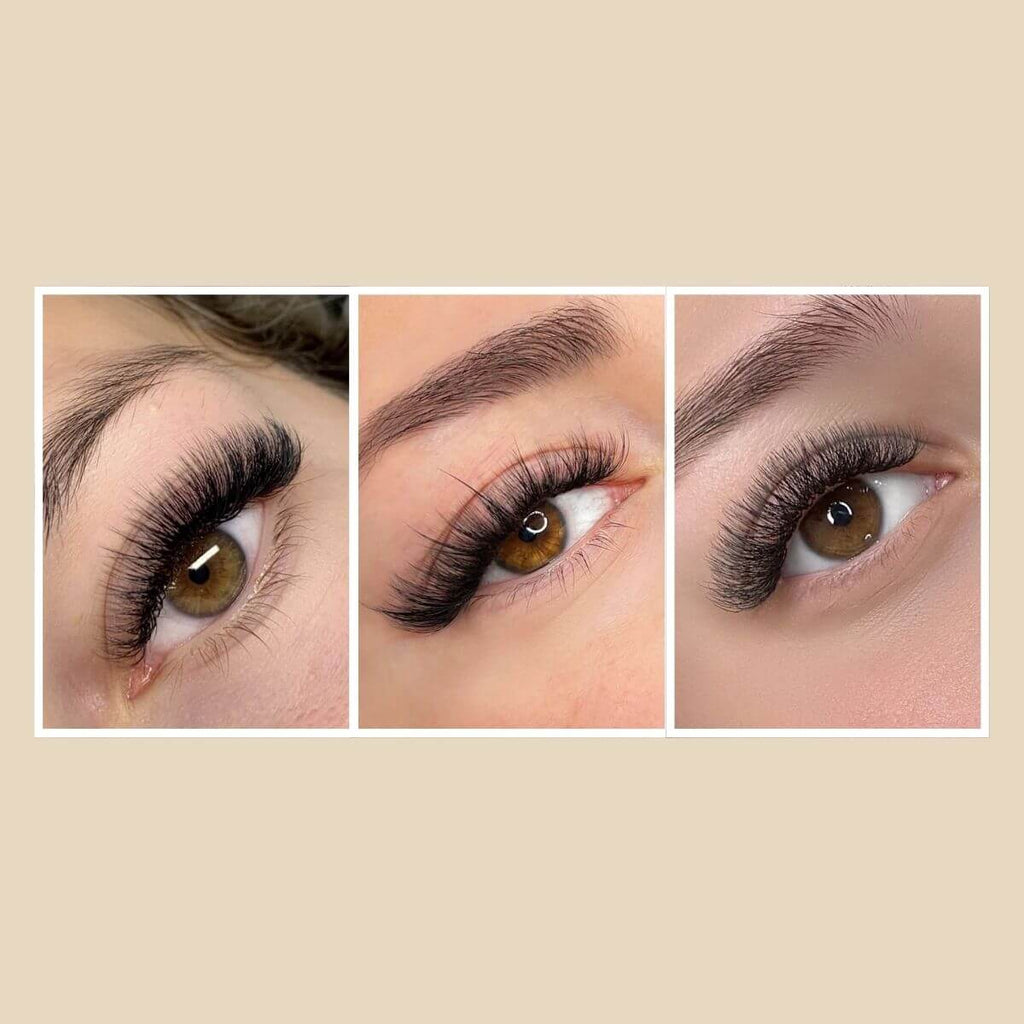
The "feathering" technique involves strategically placing the Bridging Length extensions on the natural lashes immediately adjacent to a gap. By using slightly longer (1-2mm) extensions and angling them slightly toward the void, you create a "canopy" effect. This covers the skin gap without requiring a natural lash to be present in the center of the void.
To achieve this without causing strain, you must use ultra-lightweight diameters. The 0.05MM Cashmere Premium Mega Volume Eyelash Extensions are ideal for this purpose. Their "Fan Like Butter" texture allows for the creation of wide, airy fans that cover more surface area with minimal weight.

Weight Management: The 0.03mm and 0.05mm Advantage
In a sparse lash line, every natural lash is a "load-bearing" pillar. Overloading an isolated lash with a heavy 0.15mm classic extension is a common mistake that leads to drooping and traction alopecia.
Recent research into ocular surface changes (PMC 11173262) suggests that maintaining tear film stability is crucial for long-term lash health. Heavy extensions can interfere with the blink reflex, leading to dry eye symptoms. By switching to mega-volume diameters like 0.03mm or 0.05mm, you reduce the mechanical load.
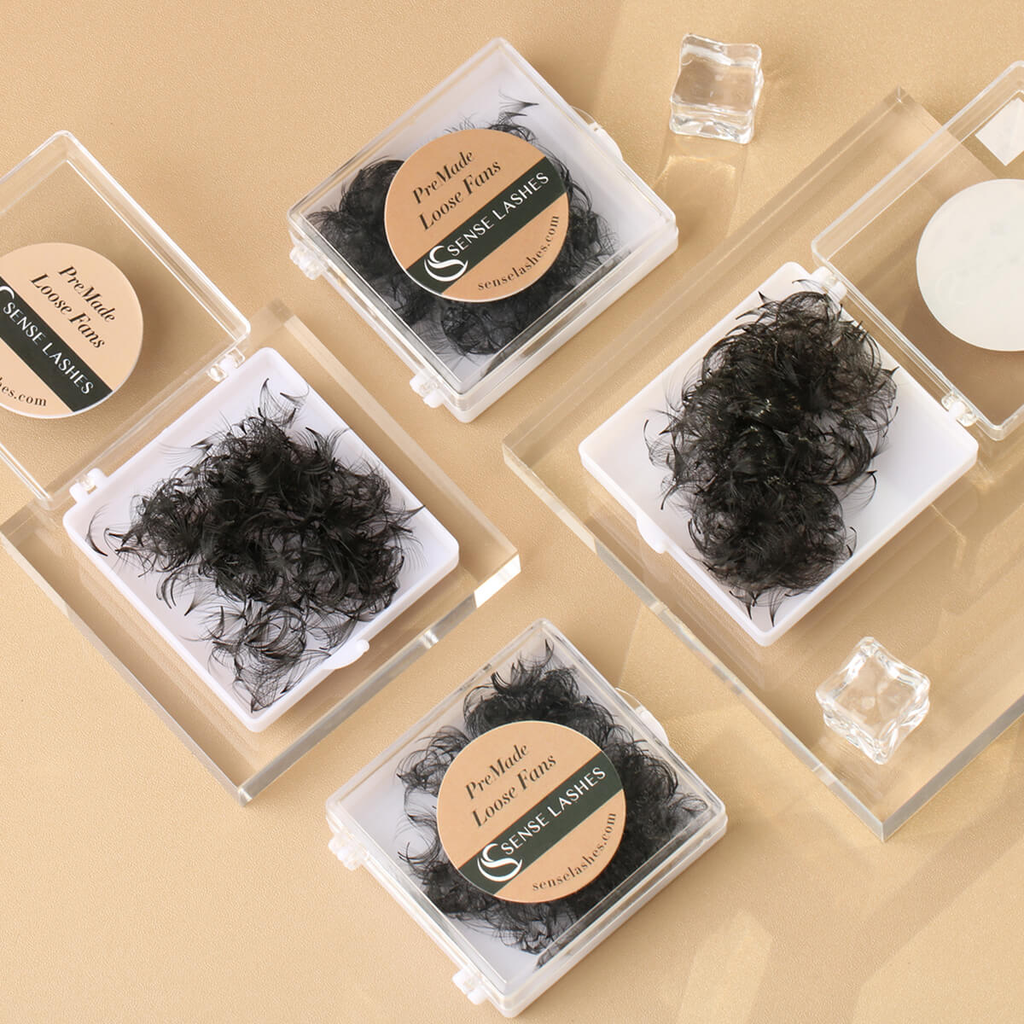
For clients who desire a "full" look despite their sparsity, we recommend using 14D Handmade Loose Premade Fans Pointy Base(500 Fans). These fans are heat-bonded for an ultra-slim base, ensuring that the attachment point remains lightweight and flexible. If the gap is particularly large, moving to 20D Handmade Loose Premade Fans Pointy Base(500 Fans) allows for maximum coverage, provided the natural lash can support the 0.03mm fiber weight.
Methodology Note (Weight Modeling):
- Model Type: Deterministic load-bearing analysis.
- Assumption: A healthy natural lash can typically support 1.5x to 2x its own weight without premature shedding.
- Comparison: One 0.15mm classic lash (~0.25mg) vs. a 14D fan of 0.03mm (~0.07mg).
- Conclusion: Multi-fiber volume sets using ultra-thin diameters are theoretically 3x safer for sparse natural lashes than traditional thick classics.
Adhesive Dynamics: Ensuring a Robust Bond
Retention in sparse areas often fails because the artist is working with "lonely" lashes that lack the structural support of neighboring extensions. When there are gaps, the adhesive bond must be flawless.
We have observed that in low-density sets, a slightly higher adhesive viscosity or a controlled drying time is beneficial. The 0.5-1 Second Diamond Eyelash Extension Glue is optimized for this. Its syrup-like consistency (in the "syrup" variant) allows for a "wrap" around the natural lash, creating a 360-degree bond that is more resilient to mechanical friction.
However, the chemistry of the adhesive is just as important as its physical properties. A 2012 study by Amano et al. highlighted that early lash glues often released high levels of formaldehyde and had acidic pH levels, causing keratoconjunctivitis. Modern professional formulas, like our Diamond Bond, are engineered to be pH-neutral and formaldehyde-free (within detectable limits), which is essential for the sensitive, often drier eyes of an aging demographic.

Safety and Hygiene: Preventing "The Ugly Truth"
For clients with sparse lashes, maintaining the health of the remaining fringe is non-negotiable. Poor hygiene leads to the buildup of biofilm and bacteria, which can cause Blepharitis—a leading cause of lash loss.
As noted by the Mayo Clinic, blepharitis is often caused by clogged oil glands at the base of the lashes. When extensions are applied, many clients become afraid to wash their eyes, fearing they will lose the lashes they just paid for. This is where professional education becomes a retention tool.
We recommend implementing a "Salon Sanitation SOP" based on CDC guidelines for conjunctivitis prevention. This includes:
- Mandatory Lash Shampooing: Explain to the client that "water is not enough."
- Disposable Consumables: Use fresh wands and patches for every service to prevent cross-contamination.
- Microbiome Protection: A 2024 investigation (PMC 11397841) found that long-term extension wear can alter the ocular surface microbiome. Using a pH-balancing primer before application helps restore the lash environment.
Troubleshooting: Irritation vs. Allergy
When a client with sparse lashes experiences redness, it is often misdiagnosed. Is it the product, or the client's underlying condition?
According to WebMD, dry eye syndrome is common in older adults and can be exacerbated by the fumes of cyanoacrylate. This is often "Irritation." Conversely, a case study in PubMed details true allergic contact dermatitis caused by Ethyl Cyanoacrylate.
How to Distinguish:
- Irritation: Occurs during or immediately after the set; usually clears within 24 hours. Often linked to "fume trap" in sparse sets where there is less hair to dissipate the gas.
- Allergy: Swelling and itching that typically peaks 48–72 hours after application. This is an immune response.
To protect your business and your client, always use a Client Safety Consent Form that outlines these risks, as recommended by the American Academy of Ophthalmology.
The 2025 Professional Landscape: Compliance and Quality
As the lash industry grows—with a significant CAGR projected by Grand View Research—so does regulatory scrutiny. Health Canada's 2023-2024 Enforcement Report recently highlighted high non-compliance rates in lash adhesive labeling and chemical safety.
For salon owners, sourcing from a factory-direct supplier that prioritizes compliance is the best way to avoid inventory seizures and liability. When you choose professional-grade fibers and glues, you aren't just buying supplies; you are buying a safety margin for your clients' eyes.
Key Takeaways for the Professional Artist
- Adapt Your Mapping: Use the 60-30-10 rule and feathering to bridge gaps without overloading lashes.
- Prioritize Lightness: Use 0.03mm or 0.05mm diameters like 0.05MM Cashmere Premium Mega Volume Eyelash Extensions to protect natural lash health.
- Master the Bond: Use high-performance adhesives like 0.5-1 Second Diamond Eyelash Extension Glue to ensure retention in challenging sets.
- Educate on Hygiene: Prevent Blepharitis and Demodex infestations by making lash shampoo a mandatory part of aftercare.
- Stay Compliant: Only use products that meet international safety standards to mitigate professional risk.
For more advanced mapping strategies, consider exploring our guides on Strategic Gapping with Curls or Mapping for Mature Eyes to further refine your technical repertoire.
Disclaimer: This article is for informational purposes only and does not constitute professional medical or legal advice. Always perform a patch test according to the latest contact dermatitis patterns (PubMed 39569302) and consult with a medical professional if a client exhibits signs of severe ocular distress.
References
- Centers for Disease Control and Prevention (CDC) - Conjunctivitis Prevention
- Mayo Clinic - Blepharitis Symptoms and Causes
- American Academy of Ophthalmology (AAO) - Eyelash Extension Safety
- Health Canada - Cosmetic Regulations Enforcement Summary 2023-2024
- PubMed - Allergic Contact Dermatitis from Ethyl Cyanoacrylate (35674514)
- PubMed - Spectrum of Disorders Caed by Extensions (38171996)
- PMC - Ocular Surface Microbiome and Extension Wear (11397841)