


Accueil Eyelash Extension Supplies Guide
Client Consultation: Justifying Asymmetrical Length Selection

Mastering the Consultation: The Science of Asymmetrical Lash Mapping
In the high-stakes environment of professional lash artistry, the quest for "perfection" often leads clients to demand mathematical symmetry. However, biological reality is rarely symmetrical. As a premier technician, your role is to pivot the conversation from "matching lengths" to "visual balance." When a client notices you are applying a 12mm lash to their left eye and a 14mm lash to their right, it can trigger immediate concern. Without a technical justification, this perceived inconsistency can erode the trust-sensitive relationship you have built.
Justifying asymmetrical length selection is not merely a stylistic choice; it is a corrective necessity rooted in ocular anatomy. Whether addressing mild ptosis (eyelid drooping), varying orbital depths, or uneven lash line heights, strategic length manipulation is the only way to achieve a harmonious final look. This guide provides the technical framework, scripts, and scientific backing needed to explain these decisions confidently to your clients.
The Biological Basis for Asymmetry
True facial symmetry is a rarity. According to the American Academy of Ophthalmology (AAO), various factors—including infection, trauma, and natural aging—can lead to differences in how the eyes sit within the orbital socket. For a lash artist, two primary anatomical factors dictate the need for asymmetrical mapping:
- Orbital Depth (Enophthalmos vs. Exophthalmos): One eye may sit deeper in the socket than the other. A recessed eye "swallows" the length of the extensions, making a 12mm lash look like a 10mm.
- Palpebral Fissure Height and Ptosis: Differences in the opening of the eyelid or the strength of the levator muscle can make one eye appear smaller or more "closed."
Recent research published in PubMed (2024) emphasizes that mechanical damage and chemical toxicity can be exacerbated if extensions are not properly weighted and balanced according to the individual's ocular surface health. If we apply the same length to an eye with a more recessed lid, we risk the extensions rubbing against the brow bone or eyelid skin, potentially leading to contact dermatitis—a condition studied extensively in recent dermatitis reports (2024).

Technical Heuristics: The Squint Test and Depth Analysis
To justify your mapping to a client, you must first perform a visible, professional assessment. We recommend the "Squint Test" as a primary diagnostic tool.
The Squint Test Heuristic: Have the client gently squint while looking in a mirror. If the perceived asymmetry in their eye shape disappears or lessens during the squint, it indicates that the issue is primarily related to muscle tension or lid laxity rather than bone structure. This allows you to explain: "When your muscles are relaxed, your left eye sits slightly deeper. I am adding 2mm of extra length there to 'pull' the eye forward visually so that when you are looking naturally, both eyes appear identical."
Logic Summary: Ocular Adjustment Modeling Our corrective mapping approach assumes that visual "projection" is the goal. We use a non-linear adjustment model based on common industry heuristics:
Anatomical Feature Degree of Asymmetry Length Adjustment Rationale Mild Ptosis < 1mm lid drop +1mm in Outer Corner Creates a lateral lift Moderate Depth 1-2mm recession +2mm at the Apex Compensates for "hidden" base Significant Ptosis > 2mm lid drop +3-4mm Graduated Balances the vertical opening Brow Bone Protrusion Variable Mixed Curls (C/D) Prevents mechanical rubbing Note: These are shop-level practical baselines, not clinical measurements. Adjustments must be validated against the client's natural lash health.
When dealing with significant depth issues, we often utilize 0.03MM Cashmere Premium Mega Volume Eyelash Extensions. Their extreme lightness allows us to use longer lengths (up to 14 or 15mm) on a recessed eye without increasing the mechanical load on the natural lash, which PubMed studies identify as a key risk factor for traction alopecia.
Managing Retention and Adhesive Physics in Asymmetrical Sets
A non-obvious "gotcha" in asymmetrical mapping is the difference in retention between the two eyes. A more recessed eye or a hooded lid often experiences increased oil exposure. The eyelid skin may come into frequent contact with the lash extensions, transferring sebum that can break down the adhesive bond.
Furthermore, research in PMC (2024) suggests that long-term extension wear can alter the ocular surface microbiome and tear film stability. On a deeper-set eye, the "micro-climate" near the lash line is often more humid and oil-prone.
To counteract this, we recommend using a high-performance adhesive with a degree of flexibility. The 1-2 Second Gold Eyelash Extension Glue is optimized for these environments. Its 1-2 second dry time is fast enough for professional speed but allows for a slight "satin" wrap around the natural lash, providing the durability needed for eyes that face higher oil contact.

Communication Scripts: Explaining the "Why"
When a client asks, "Why is this side longer?" use these scripts to reinforce your expertise and build trust:
- The "Depth" Script: "Your right eye sits just a fraction deeper in the orbital socket. If I used the same length on both sides, the right side would actually look shorter and 'sunken' in photos. By adding 2mm of length here, I’m making sure the final look is perfectly balanced."
- The "Ptosis" Script: "We have a slight difference in the lid lift on the left side. To give you that 'open-eye' look you want, I’m using a more graduated map here. It’s like tailoring a suit—we’re adjusting the fit to your specific anatomy for the most flattering result."
- The "Retention" Script: "Because this eye has a slightly more hooded lid, it may be more prone to natural oils. I’m using a specific application technique and our 1-2 Second Gold Eyelash Extension Glue to ensure this side stays just as full as the other."
By framing the asymmetry as "custom tailoring," you transform a potential complaint into a premium service feature. This aligns with the principles of Selecting Curls Based on Natural Lash Growth Angles, where we acknowledge that every eye requires a unique technical blueprint.
Safety, Sanitation, and Long-Term Health
Professionalism extends beyond the map; it includes the environment in which you work. The CDC guidelines on conjunctivitis prevention highlight the necessity of strict salon sanitation. When you explain asymmetrical mapping, it is the perfect time to reinforce your commitment to their health.
If a client has significant asymmetry caused by eyelid inflammation, you must be able to distinguish between a mapping need and a medical contraindication. Poor hygiene can lead to Blepharitis, as detailed by the Mayo Clinic. If you notice redness or crusting, your "asymmetry correction" should be a referral to an optometrist rather than a longer lash.
For healthy clients, using the right tools is paramount. We often use 0.07MM Easy Fanning Eyelash Extensions for the "balancing" eye because they allow for quick, symmetrical fan creation even when working with different lengths across the two eyes. This ensures that while the lengths are asymmetrical, the density remains consistent.

The Documentation Protocol
To ensure consistency during fills, you must document your asymmetrical maps with precision. A common mistake is assuming you will remember the 2mm differential three weeks later.
Documentation Checklist:
- Eye A vs. Eye B: Record the specific lengths, curls, and diameters for each eye separately.
- The "Apex" Marker: Note exactly which lash number (from the inner corner) marks the start of the length increase.
- Adhesive Performance: Note if the recessed eye had more "fallout" to adjust your primer or adhesive choice next time.
- Client Consent: Use a form aligned with AAO safety standards to document that the client understands and agrees to the corrective mapping plan.
This level of detail is what separates a "transactional" service from a "professional-grade" partnership. It mirrors the compliance standards found in the Health Canada 2023-2024 Report, which emphasizes the importance of precise labeling and ingredient transparency.
Visualizing the Outcome
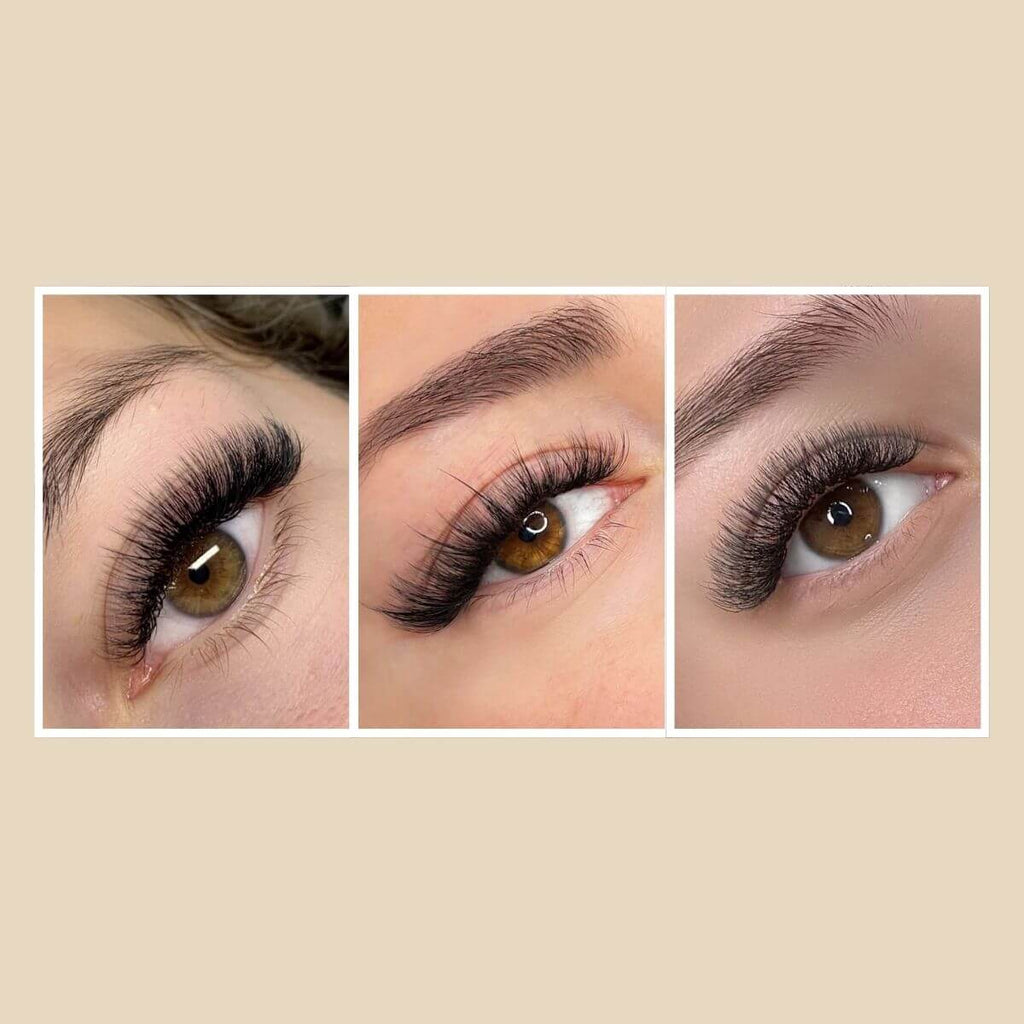
When the set is complete, the "mirror reveal" is your final opportunity to justify your technical choices. If you have mapped correctly, the client shouldn't see "different lengths"—they should see two eyes that finally look symmetrical.
For clients with very fine natural lashes who require significant length correction, we prefer 0.05MM Cashmere Premium Mega Volume Eyelash Extensions. These provide the "blackout" look of a mega volume set but remain flexible enough to move with the natural lash, reducing the risk of corneal abrasion—a mechanical injury noted in PMC case reports as a risk of improper extension removal or application.
Achieving this level of artistry requires a deep understanding of Mastering Row Identification. By visualizing the natural lash layers, you can place your corrective lengths in the middle or bottom row to "push" the set forward, further masking any underlying anatomical asymmetry.
Key Takeaways for the Professional
- Anatomy over Equality: Biological eyes are rarely identical. Use orbital depth and ptosis as your guide for length selection.
- The 2-4mm Rule: Significant asymmetry often requires non-linear adjustments; a simple 1mm difference is frequently insufficient to correct deep-set eyes.
- Weight Management: Use ultra-light fibers like 0.03MM Cashmere Premium Mega Volume Eyelash Extensions when adding significant length to avoid mechanical lash damage.
- Retention Awareness: Be proactive about oil exposure on hooded lids by using flexible, high-retention adhesives like the 1-2 Second Gold Eyelash Extension Glue.
- Professional Dialogue: Use technical terminology and medical references to justify your artistry, turning a design choice into a corrective solution.
By mastering the art of the asymmetrical consultation, you don't just apply lashes—you sculpt faces. This expertise is what builds long-term client loyalty and establishes your reputation as a technician who prioritizes both aesthetics and eye health.
YMYL Disclaimer: This article is for informational and educational purposes only and does not constitute professional medical advice, diagnosis, or treatment. Always seek the advice of an ophthalmologist or other qualified health provider with any questions you may have regarding a medical condition or eye health. Eyelash extensions should only be applied by certified professionals following local health and safety regulations.
References
- American Academy of Ophthalmology (AAO) - Eyelash Extension Safety
- Centers for Disease Control (CDC) - Conjunctivitis Prevention
- Mayo Clinic - Blepharitis Overview
- PubMed - Ocular Disorders and Eyelash Extensions (2024)
- Health Canada - Cosmetic Regulations and Cyanoacrylate Report
- PMC - Ocular Surface Microbiome and Extension Wear (2024)