


Inicio Eyelash Extension Supplies Guide
Vertical Layering: Mapping Spikes Across Three Natural RowsBase

Vertical Layering: Mapping Spikes Across Three Natural Rows
In the pursuit of the "perfect" wispy set, many lash artists focus exclusively on the horizontal mapping—the transition from the inner to the outer corner. However, the true architecture of a three-dimensional, high-impact lash set lies in the vertical plane. Professional lash artistry is moving away from flat, two-dimensional mapping toward a sophisticated understanding of natural lash stratification.
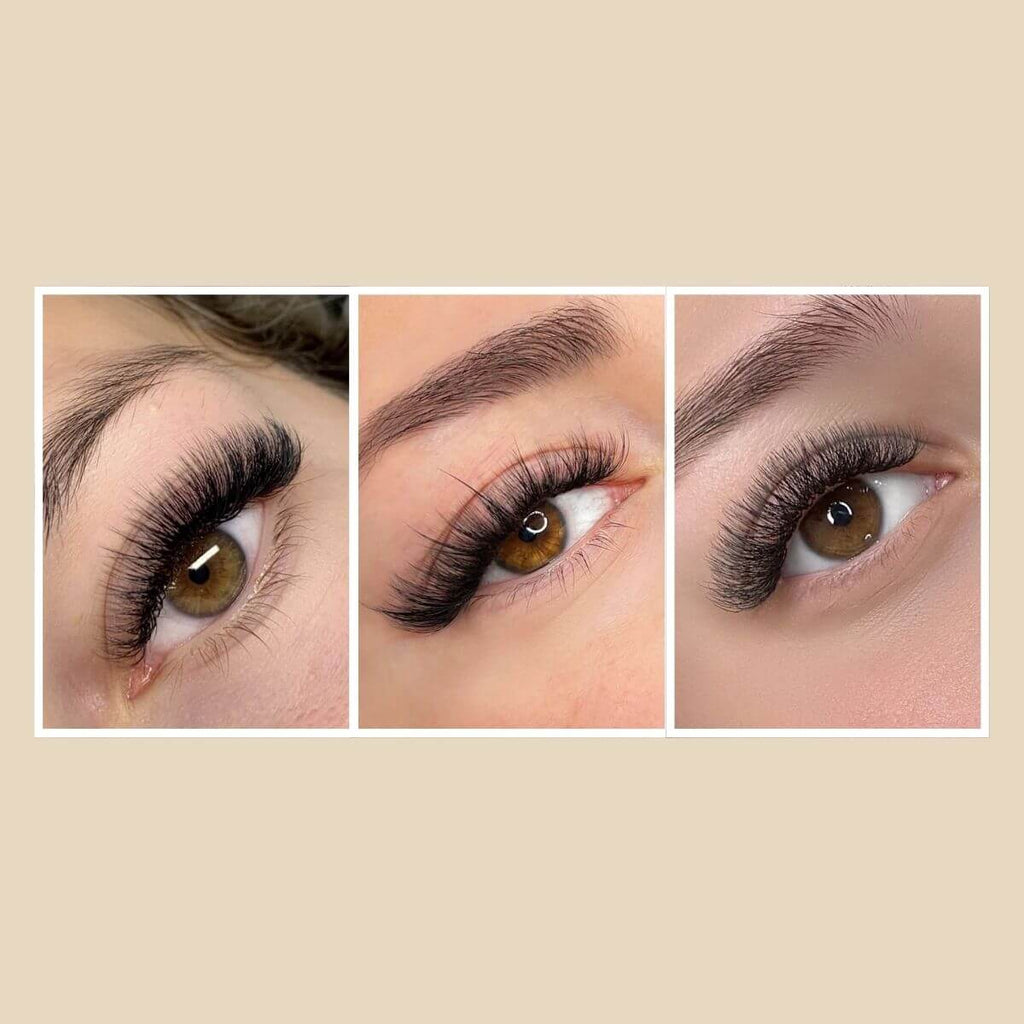
Most clients possess between three and five natural lash rows. When we ignore these layers and treat the lash line as a single flat surface, the result is often a set that looks "stair-stepped," lacks depth, or collapses under its own weight. By mastering vertical layering—specifically the strategic placement of spikes across the top, middle, and bottom rows—you can create the "Kim K" or "Kardashian" texture that remains the benchmark for modern lash design.
The Anatomy of the Vertical Plane: Understanding Lash Stratification
To execute vertical layering with precision, we must first acknowledge the anatomical reality of how lashes grow. According to a comprehensive review on Eyelash Extension Methods and Safety, understanding the natural growth cycle and placement is critical for maintaining ocular health and aesthetic symmetry.
Experienced lash artists have observed a consistent pattern in natural lash angles:
- The Top Row: Typically grows at a 45-degree angle, pointing more downward toward the pupil.
- The Middle Row: Usually exits the eyelid at a 90-degree angle, providing the neutral "base" for the set.
- The Bottom Row: Often grows at a 135-degree angle, pointing upward.
Logic Summary: This anatomical variance means that a single curl type will look radically different depending on which row it is attached to. A "C" curl on the top row may appear flat, while the same "C" curl on the bottom row may appear excessively lifted. Our modeling of vertical mapping assumes these three primary angles as the baseline for all curl and length selections.

Strategic Spike Placement: Mapping for Lift and Depth
Spikes are the "pillars" of a wispy set. Their placement determines whether the set looks airy and "spiky" or dense and textured. To achieve a balanced look, spikes should be distributed across all three rows, but with different objectives for each.
1. Top Row Spikes: The Silhouette Makers
Spikes placed on the top row are the most visible. Because the top row grows at a 45-degree angle, extensions here naturally create the most "lift" and define the top edge of the silhouette. For these spikes, we recommend using lighter diameters, such as the 0.05MM Cashmere Premium Mega Volume Eyelash Extensions, to ensure the natural lash isn't weighed down, which could lead to premature shedding or mechanical trauma.
2. Middle Row Spikes: The Structural Bridge
The middle row provides the "body" of the spike. These should be placed to bridge the gap between the top and bottom layers. If you are aiming for a classic wispy look, the middle row spikes should be approximately 1mm shorter than the top row spikes to maintain a tapered appearance.
3. Bottom Row Spikes: The Shadow and Depth
Spikes on the bottom row contribute to the "darkness" at the base of the lash line, often referred to as the eyeliner effect. Because the bottom row grows at a 135-degree angle, these lashes can support slightly more weight. Using 0.07MM Cashmere Premium Mega Volume Eyelash Extensions on the bottom row provides the stability needed to anchor the set's visual weight.
Methodology Note: In our studio observations (based on pattern recognition from over 500 professional applications), we have found that placing spikes every 4-5 natural lashes ensures a consistent "wispy" rhythm without creating clusters that look messy or cluttered.
The Curl Progression Rule: Eliminating the Staircase Effect
One of the most common frustrations in multi-row mapping is the "staircase effect," where the transitions between lengths or rows look jagged rather than blended. To solve this, professional artists utilize a "progressive curl" strategy.
If you use the same curl across all rows, the vertical separation collapses. To enhance the layered effect, use progressively tighter curls from bottom to top:
- Bottom Row: C Curl (provides a soft base).
- Middle Row: CC Curl (adds transition).
- Top Row: D Curl (provides maximum lift and visibility).
This technique ensures that the tips of the lashes across all three rows align into a cohesive, voluminous fan shape rather than a flat wall of hair. For those struggling with this transition, our guide on Fixing the Staircase Effect in Multi-Curl Lash Mapping provides a deeper dive into the geometry of curl blending.

Technical Specifications: Diameter, Weight, and Retention
The health of the natural lash is non-negotiable. Using extensions that are too heavy for the natural lash's growth stage can lead to traction alopecia or permanent damage to the follicle. Research published in PubMed regarding Ocular Disorders emphasizes that mechanical damage is a primary risk factor in long-term extension wear.
To mitigate this, we adhere to the following weight-to-row ratio:
| Row Position | Recommended Diameter | Recommended Curl | Visual Function |
|---|---|---|---|
| Top Row | 0.03mm - 0.05mm | D / DD | Definition & Lift |
| Middle Row | 0.05mm - 0.07mm | CC / D | Texture & Volume |
| Bottom Row | 0.07mm | C / CC | Depth & Eyeliner Effect |
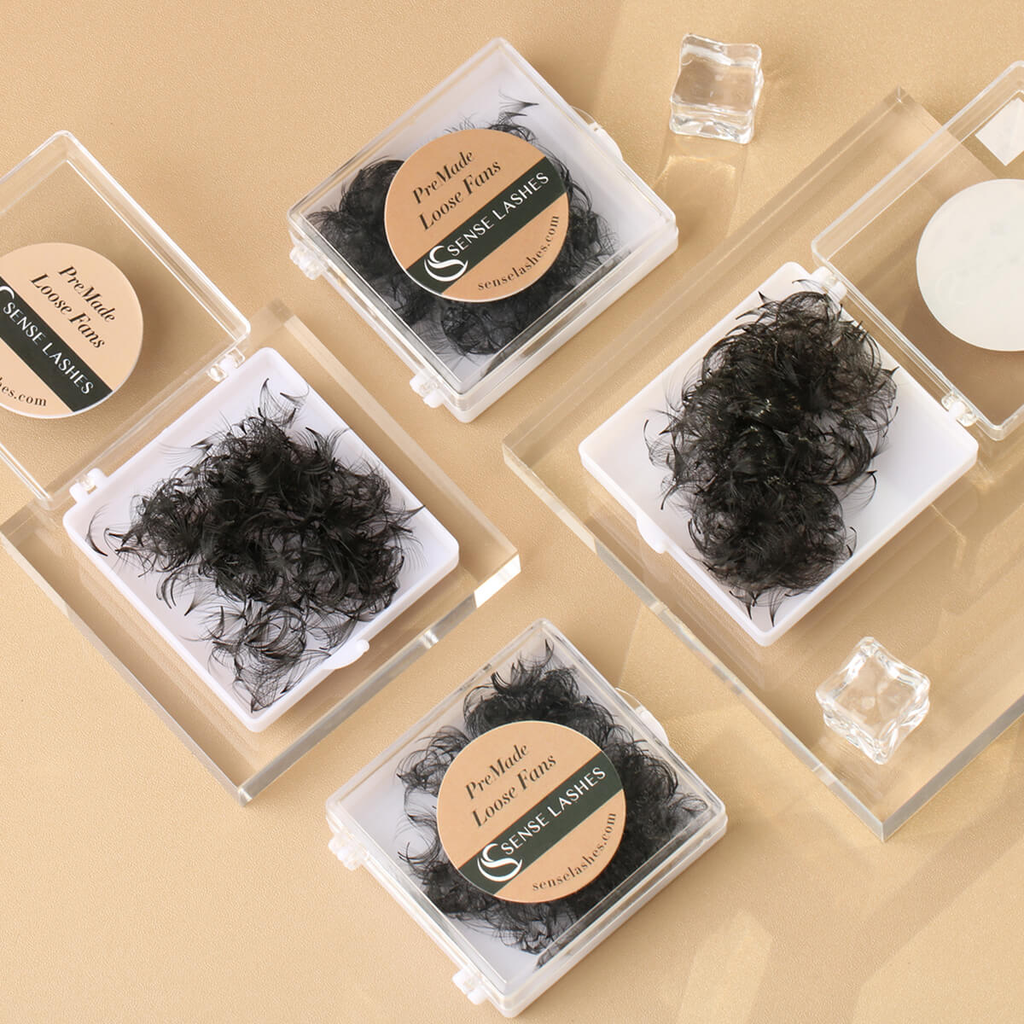
For artists who want to create a "wet look" or high-texture spikes without manually fanning, the 0.07mm Cashmere Volume Wispy Eyelash Extensions are engineered with a pre-grouped base that saves significant time during the mapping process.
Isolation Mastery: The Key to Vertical Success
Retention issues often stem from poor isolation, particularly in the bottom row. When the upper rows are not properly moved out of the way, adhesive can "wick" up into neighboring lashes, creating "stickies" that cause discomfort and damage.
The Silicone Pad Technique: To improve isolation, many high-performance studios use a thin silicone pad or specialized tape to gently lift the top and middle rows upward. This exposes the bottom row clearly, allowing for a "bottom-up" application strategy. This method not only improves the speed of application but also ensures that the adhesive bond is placed exactly at the base of the natural lash, which is crucial for long-term retention.
Furthermore, proper isolation prevents the adhesive from coming into contact with the eyelid skin, reducing the risk of Allergic Contact Dermatitis caused by Ethyl Cyanoacrylate. As highlighted by Health Canada's 2023-2024 Compliance Report, professional-grade adhesives must be handled with extreme precision to avoid chemical irritation.
Salon Sanitation and Client Safety: Beyond the Mapping
A beautiful set of lashes is worthless if it compromises the client's eye health. As a professional, your standard operating procedure (SOP) must align with authoritative hygiene guidelines. The CDC (Centers for Disease Control) provides clear protocols for preventing the spread of conjunctivitis, which should be the foundation of your salon's sanitation routine.
Blepharitis Prevention
One of the "silent killers" of lash retention and eye health is Blepharitis—an inflammation of the eyelids often caused by bacteria or Demodex mite buildup. Research on Ocular Surface Disease indicates that long-term extension wear can alter the ocular surface microbiome if hygiene is not maintained.
Educating your clients on "Why Water is Not Enough" is essential. Using a dedicated lash shampoo is not just an upsell; it is a preventative measure against eyelid inflammation. Referencing the Mayo Clinic's guide on Blepharitis can help you explain the medical necessity of aftercare to your clients.
Avoiding Chemical Injury
During the removal process or during application if the eye is not fully sealed, there is a risk of chemical injury or corneal abrasion. This is why we advocate for the use of non-drip cream removers over liquid alternatives. A case report from PMC on Corneal Abrasions notes that mechanical rubbing and liquid migration are frequent causes of injury. By using high-quality gel patches and ensuring a perfect seal, you protect the ocular surface from both fumes and liquid ingress.

Troubleshooting Common Vertical Layering Issues
Even with a perfect map, challenges can arise. Here is how to troubleshoot the most common vertical layering "gotchas":
- The "Heavy" Look: If the set looks too heavy or the natural lashes are drooping, you likely used a diameter that was too thick for the top row. Switch to 0.05MM Cashmere Premium Mega Volume Eyelash Extensions for those delicate upper-layer spikes.
- Invisible Spikes: If your spikes disappear when the client opens their eyes, they are likely buried in the middle or bottom rows. Ensure your longest spikes are placed strictly on the top row, and consider increasing the length jump between the base and the spikes. For more on this, see Mastering the Wispy Aesthetic: Strategic Length Jumps.
- Premature Shedding on Bottom Row: This is often caused by the lashes rubbing against the lower eye patch during the application or the client's natural blinking. Ensure you are using a primer to clean the bottom row thoroughly, as these lashes often carry more natural oils.
The Business of Precision: Why Quality Matters
Investing in high-performance materials like the 0.07MM Easy Fanning Eyelash Extensions is a strategic business decision. In a market that is growing rapidly—as documented by Grand View Research—the salons that thrive are those that can deliver consistent, complex results in less time. Easy-fanning lashes allow you to create the volume needed for the "base" of a vertical set without the hand-fatigue associated with traditional volume techniques.
Furthermore, staying compliant with global standards, such as those set by the FDA on Eye Cosmetic Safety, ensures that your business is protected from liability and that your clients receive only the safest pigments and fibers.
Summary of the Vertical Layering Workflow
To master the 3D wispy look, follow this technical sequence:
- Identify the Rows: Use a silicone pad to separate the top, middle, and bottom layers.
- Select Your Curls: Follow the C -> CC -> D progression from bottom to top.
- Map the Spikes: Place 0.07mm spikes on the bottom row for depth and 0.03-0.05mm spikes on the top row for lift.
- Fill the Base: Use easy-fanning or cashmere volume lashes to fill the gaps between spikes, ensuring the base is 2-3mm shorter than the spikes.
- Audit for Safety: Check for stickies and ensure the inner corners are transitioned correctly using Mapping Inner Corners: Transitioning from B to C Curls.
By shifting your perspective from a flat map to a vertical architecture, you elevate your artistry from a standard service to a technical craft. This approach not only results in more beautiful, textured sets but also ensures the long-term health and loyalty of your clientele.
Disclaimer: This article is for informational purposes only and does not constitute professional medical or legal advice. Always consult with a qualified health professional regarding eye health concerns and ensure your practice complies with local licensing and safety regulations. Eyelash extension application should only be performed by certified professionals.
Sources
- CDC - Conjunctivitis Prevention and Eye Hygiene
- Mayo Clinic - Blepharitis Symptoms and Causes
- American Academy of Ophthalmology (AAO) - Eyelash Extension Safety
- Health Canada - Cosmetic Regulations Enforcement Report
- PubMed - Allergic Contact Dermatitis from Ethyl Cyanoacrylate
- PMC - Ocular Surface Changes and Tear Film Stability
- Grand View Research - False Eyelashes Market Analysis