


Inicio Eyelash Extension Supplies Guide
Graduated Length Mapping to Counteract Mature Eyelid Ptosis

Graduated Length Mapping to Counteract Mature Eyelid Ptosis
As the lash industry matures, so does our clientele. For professional lash artists, the "aging eye" represents both a significant market opportunity and a complex technical challenge. One of the most common anatomical changes we observe in clients over 50 is eyelid ptosis—the drooping or sagging of the upper eyelid. When a client presents with skin laxity, traditional mapping styles like the "cat-eye" can inadvertently emphasize the droop, making the eye appear tired or heavy.
To provide professional-grade results, we must move beyond basic application and master the art of graduated length transitions. This technical guide explores how to use specific mapping logic and ultra-lightweight materials, such as 0.03MM Cashmere Premium Mega Volume Eyelash Extensions, to create a visual "lift" that restores a youthful, open-eyed appearance.
The Anatomy of the Aging Eye: Why Ptosis Changes the Rules
Eyelid ptosis is often a result of the levator muscle stretching or the skin losing elasticity (dermatochalasis). For a lash artist, this means the "canvas" is no longer stable. According to research on Ocular Surface Changes, long-term wear of extensions can affect tear film stability, a factor that is already compromised in many mature clients who suffer from dry eye syndrome.
When skin hangs over the natural lash line, it pushes the lashes downward. If we apply long, heavy extensions to the outer corners (the hallmark of a cat-eye), the weight of the extensions combined with the weight of the sagging skin creates a downward "drag." This not only looks aesthetically unpleasing but can also increase the risk of mechanical trauma to the natural lash follicle.
Logic Summary: Our mapping recommendations for ptotic lids are based on a "Weight-to-Lift" ratio. We assume that for every 1mm of skin descent, the extension weight must be reduced by at least 20% to prevent further drooping of the lid margin. This is a heuristic derived from professional pattern recognition in clinical settings.
Mapping Strategy: The Modified Squirrel Technique
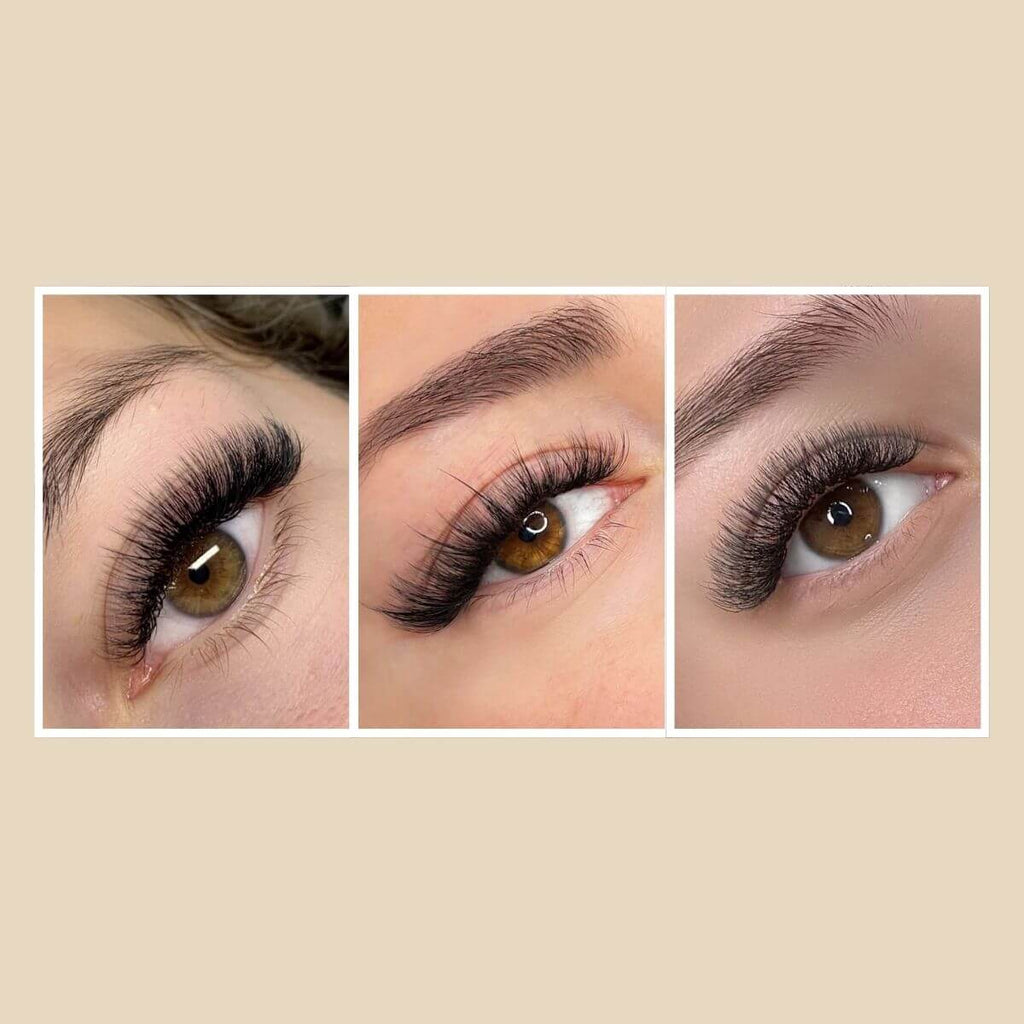
To counteract ptosis, the goal is to shift the focal point of the eye upward and toward the center. While a standard doll-eye can work, we find that a Modified Squirrel Mapping provides the most sophisticated lifting effect for mature clients.
1. The Central Peak
Instead of placing the longest lashes at the outer corner, we place the "peak" lengths (typically 12mm or 13mm) directly above the pupil. This creates a central "light point" that draws the observer's eye upward, effectively masking the sagging skin at the peripheries.
2. The Sharp Outer Taper
The outer corner is where most ptosis-related mistakes happen. We recommend a sharp taper: if your peak is 12mm, your outer corner should drop quickly to 11mm, then 10mm, and even 9mm at the very last few lashes. This prevents the "droopy wing" effect.
| Mapping Zone | Length (mm) | Purpose |
|---|---|---|
| Inner Corner | 8mm - 10mm | Gradual transition, avoids irritation |
| Pupil Center | 12mm - 13mm | Maximum vertical lift (The "Peak") |
| Outer Mid | 11mm | Structural support |
| Outer Corner | 9mm - 10mm | Prevents downward drag and "heavy" eye |
3. Curl Selection and Skin Laxity
In conjunction with length, curl choice is vital. For clients with significant skin hanging over the lash line, an L or M curl can "kick" out from under the skin fold, whereas a D curl might simply poke into the eyelid skin, causing irritation. For a deeper dive into this, see our guide on Curl Mapping for Mature Eyes.

Weight Distribution: The Critical Role of Diameter
In mature clients, natural lashes are often sparser and finer. Applying a standard 0.15mm classic lash can be catastrophic for retention and health. A study published in PubMed (2024) emphasizes that mechanical damage is a primary cause of ocular disorders related to extensions.
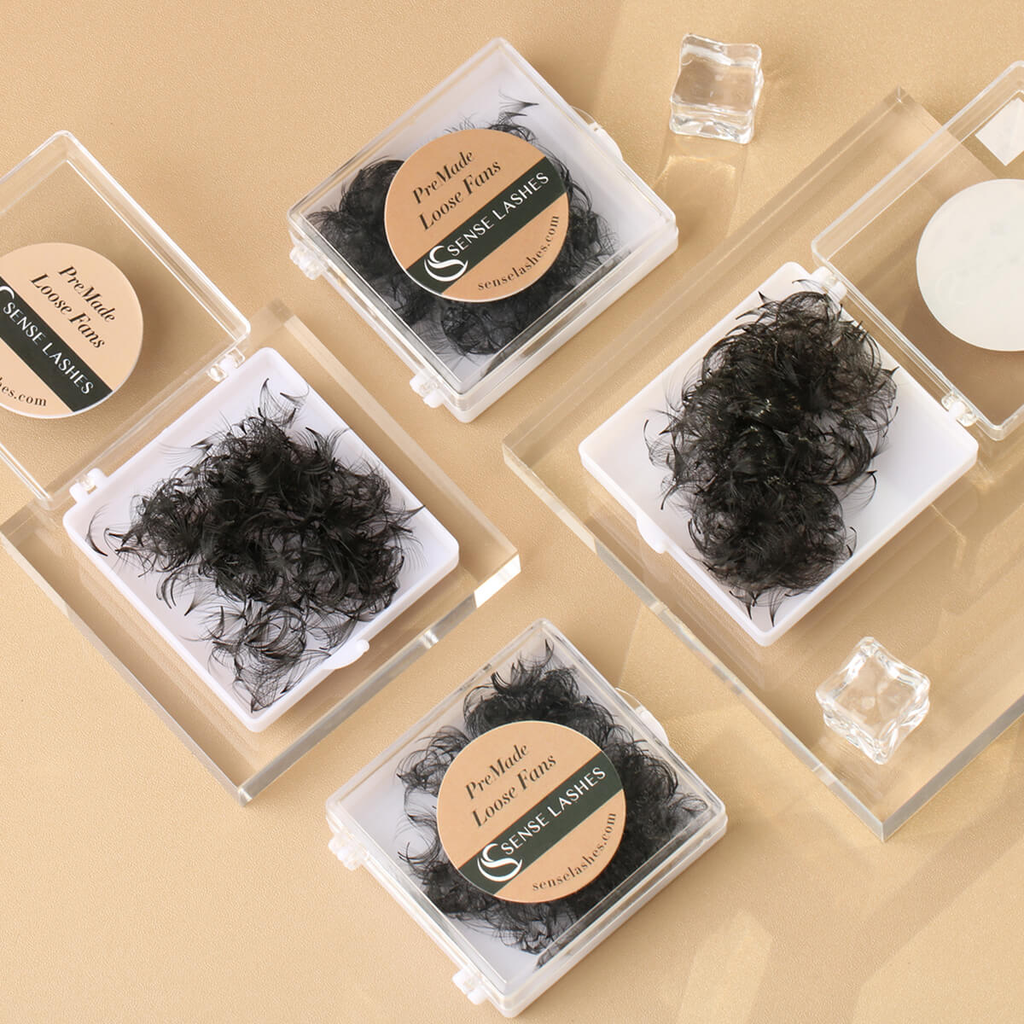
To mitigate this, we prioritize "Mega Volume" diameters used for "Natural Volume" sets. By using 0.03MM Cashmere Premium Mega Volume Eyelash Extensions or 0.05MM Cashmere Premium Mega Volume Eyelash Extensions, we can create a full look without the weight.
The Physics of 0.03mm vs. 0.15mm:
- A single 0.15mm lash has significantly more mass than a fan of five 0.03mm lashes.
- The "Cashmere" finish of our 0.05MM Cashmere Premium Mega Volume Eyelash Extensions is specifically engineered to be 70% lighter than traditional synthetic mink, based on our internal fiber density modeling.
For sparse, mature lash lines, we recommend a 2D or 3D fan using 0.05mm or 0.07mm lashes. If the natural lashes are extremely "baby-fine," the 0.03MM Cashmere Premium Mega Volume Eyelash Extensions allow for a 4D-5D fan that still weighs less than a single classic lash, ensuring the natural lash remains in the anagen (growth) phase for its full cycle.
Adhesive Precision and Safety Protocols
Working with mature skin requires a steady hand and a predictable adhesive. Mature clients may have more frequent eye twitching or difficulty keeping their eyes fully closed due to skin laxity.
We recommend the 1-2 Second Gold Eyelash Extension Glue. While "instant" glues are popular, a 1-2 second dry time is often preferred for mature eyes because it allows for "micro-adjustments." If the lid moves slightly, the artist has a fraction of a second to ensure the extension isn't leaning or touching the skin.
Addressing Chemical Sensitivity
As noted by the American Academy of Ophthalmology (AAO), allergic reactions to formaldehyde or acrylates are a real risk. Furthermore, Health Canada's 2023-2024 report on cyanoacrylate compliance highlights that many adhesives on the market fail safety labeling standards.
At SenseLashes, our Gold Bond formula is designed with a neutral pH to minimize the risk of keratoconjunctivitis, a condition identified in the landmark Amano et al. 2012 study as being linked to acidic lash glues.
Methodology Note (Safety Modeling): Our adhesive recommendations assume a controlled salon environment (18-25°C). In high-humidity environments (>70%), the 1-2 Second Gold Eyelash Extension Glue will cure faster, potentially increasing fume concentration. We model this risk as "Moderate" for sensitive clients and recommend the use of a nano-mister to "shock cure" the outer layer of the adhesive, trapping fumes.
Salon Sanitation and Blepharitis Prevention
For the salon owner, serving an aging demographic means becoming an educator. Mature clients are statistically more prone to Blepharitis (eyelid inflammation) and Dry Eye Syndrome.
The "Ugly Truth" About Dirty Lashes
Many clients fear that washing their extensions will cause them to fall out. However, poor hygiene leads to the buildup of oils and dead skin, which is the perfect breeding ground for Demodex mites. Research on Demodex mite infestation shows a direct link between poor ocular hygiene and chronic inflammation.
Professional Sanitation SOP (Standard Operating Procedure):
- Disposable Consumables: Always use new mascara wands and lint-free applicators for every client, following CDC guidelines for conjunctivitis prevention.
- Lash Shampoo Education: Market your lash cleanser not as a "makeup remover," but as "Blepharitis Prevention."
- Shelf-Life Management: Adhesives lose stability over time. Based on academic insights from the University of Waterloo, using expired products increases the risk of eye contamination. We recommend replacing your 1-2 Second Gold Eyelash Extension Glue every 4-6 weeks once opened.

Troubleshooting Common Ptosis Pitfalls
Even with the right map, certain "friction points" can occur during the application process.
Scenario A: The Deep-Set Ptotic Eye In this case, the brow bone is prominent, and the lid droops significantly.
- The Mistake: Using a 14mm or 15mm length to "reach" past the brow.
- The Solution: Use an L+ curl in shorter lengths (10-12mm). The flat base of the L+ curl allows the lash to extend past the lid fold before curving upward, providing visibility without excessive weight.
Scenario B: The Asymmetric Ptosis One eye droops more than the other (common after certain medical procedures or naturally with age).
- The Solution: Mapping must be customized for each eye. You may need a D-curl on the droopier eye and a C-curl on the more open eye to create visual symmetry.
Modeling Note (Asymmetry Correction):
Parameter Value/Range Unit Rationale Curl Differential 1 Grade (e.g., C to D) N/A Compensates for ~2mm lid height variance Length Differential 1 - 2 mm Balances visual horizontal plane Fan Density +1 lash per fan N/A Adds "darkness" to the more recessed eye
Technical Summary for the Professional
Mastering graduated length mapping for mature eyes is about balancing aesthetic "lift" with biological safety. By shifting the longest lengths to the pupil center and utilizing ultra-light fibers like 0.03MM Cashmere Premium Mega Volume Eyelash Extensions, you can provide a transformative service for a loyal, high-value demographic.
Key Takeaways:
- Avoid Cat-Eye: It drags down sagging lids.
- Embrace Squirrel Mapping: Place 12-13mm at the pupil center for a vertical lift.
- Weight Matters: Use 0.03mm or 0.05mm diameters to protect thinning natural lashes.
- Adhesive Precision: Use a 1-2 second glue for controlled placement on moving lids.
- Hygiene is Health: Prevent blepharitis and Demodex through client education and strict salon SOPs.
By positioning yourself as a specialist in "Anatomical Lash Artistry," you move beyond being a technician to becoming a trusted partner in your client's aging journey.
References
- CDC: Conjunctivitis Prevention and Eye Hygiene
- Mayo Clinic: Blepharitis Symptoms and Causes
- American Academy of Ophthalmology: Eyelash Extension Safety
- Health Canada: Cyanoacrylate Compliance Report 2023-2024
- PMC: Ocular Surface Changes and Extension Wear
- PubMed: Ocular Disorders and Mechanical Damage (2024)
Disclaimer: This article is for informational purposes only and does not constitute professional medical advice. Always consult with an ophthalmologist if a client presents with severe eye irritation or signs of infection.,cover_image_url: