


Inicio Eyelash Extension Supplies Guide
The 3mm Delta: Why Small Length Gaps Fail to Create Texture

The 3mm Delta: Why Small Length Gaps Fail to Create Texture
In the high-precision world of professional lash artistry, the difference between a "classic" uniform set and a high-fashion textured look often comes down to a single measurement: the length delta. For many artists, the frustration of a "muddy" or blurred lash line is a common technical hurdle. You map out a wispy set with 1mm or 2mm variations, only for the client to return 48 hours later with a set that looks almost entirely uniform.
This phenomenon is not a failure of your mapping, but rather a failure to account for the physical and visual thresholds of the human eye and the natural behavior of the lash cycle. To achieve visible, high-contrast texture that survives the "settling" period, professional artists must embrace the 3mm Delta. This article explores the technical necessity of this gap, the synergy between length and diameter, and the underlying health protocols that ensure these complex designs remain safe for long-term wear.
The Visual Threshold: Why 1mm and 2mm Gaps Disappear
The primary reason a 1mm or 2mm difference fails to create texture is the lack of visual contrast. In lash design, we often use the 1mm Rule for seamless curl transitions to create a smooth, graduated top line. However, when the goal is texture—specifically spikes or "wisps"—a 1mm difference is statistically insignificant to the naked eye once the lashes are in motion.
The "Settling" Effect and Adhesive Curing
When you first apply an extension, the adhesive is at its most rigid, and the lash is perfectly perpendicular to the eyelid. However, within the first 24 to 48 hours, several factors contribute to "texture collapse":
- Natural Lash Sag: The weight of the extension, even when using lightweight 0.03MM Cashmere Premium Mega Volume Eyelash Extensions, causes the natural lash to settle slightly.
- Adhesive Shrinkage: As cyanoacrylate cures fully, it can cause microscopic shifts in the lash angle.
- Sleeping Patterns: Mechanical friction against a pillow can compress the layers of a lash set.
If your "spikes" are only 1mm longer than your "base" lashes, these microscopic shifts are enough to swallow the extra length into the main body of the set. A 3mm gap provides the necessary "buffer" to ensure that even after settling, the spikes remain distinct.
Logic Summary: Texture Contrast Modeling Our analysis of visual texture assumes that the human eye requires a minimum ~20% variance in length to perceive a "spike" against a dense background.
Parameter Value/Range Unit Rationale Base Lash Length 8–11 mm Standard inner/middle tier Spike Length (The Delta) +3 mm Minimum for visual separation Natural Lash Settling 0.5–1.0 mm Observed post-cure drop Visual Threshold >2.0 mm Required net difference for "wispy" effect Retention Buffer 1.0 mm Margin for lash growth/cycle shifts Note: This is a scenario model based on common industry heuristics and professional observation, not a controlled laboratory study.

Diameter Synergy: 0.03mm vs. 0.07mm in Textured Sets
Length is only half of the equation. To create a visual hierarchy, you must also manipulate the diameter of the fibers. The choice of diameter determines whether your texture is "fluffy" or "sharp."
The "Needle" Effect with 0.03mm
Using 0.03MM Cashmere Premium Mega Volume Eyelash Extensions for spikes creates a sharp, needle-like definition. Because these lashes are extremely lightweight, you can use a higher "D-count" (number of lashes per fan) to create a dense, dark spike without exceeding the natural lash's weight capacity. This is crucial for maintaining ocular health and preventing mechanical damage, a risk highlighted in studies on extension-related ocular surface changes.
The "Soft Wisp" with 0.07mm
Conversely, using 0.07mm Cashmere Volume Wispy Eyelash Extensions results in a softer, more integrated wisp. These are ideal for "Wet Look" sets where the spikes are meant to look like grouped natural lashes rather than distinct artistic elements.
The Hybrid Approach: YY Lashes
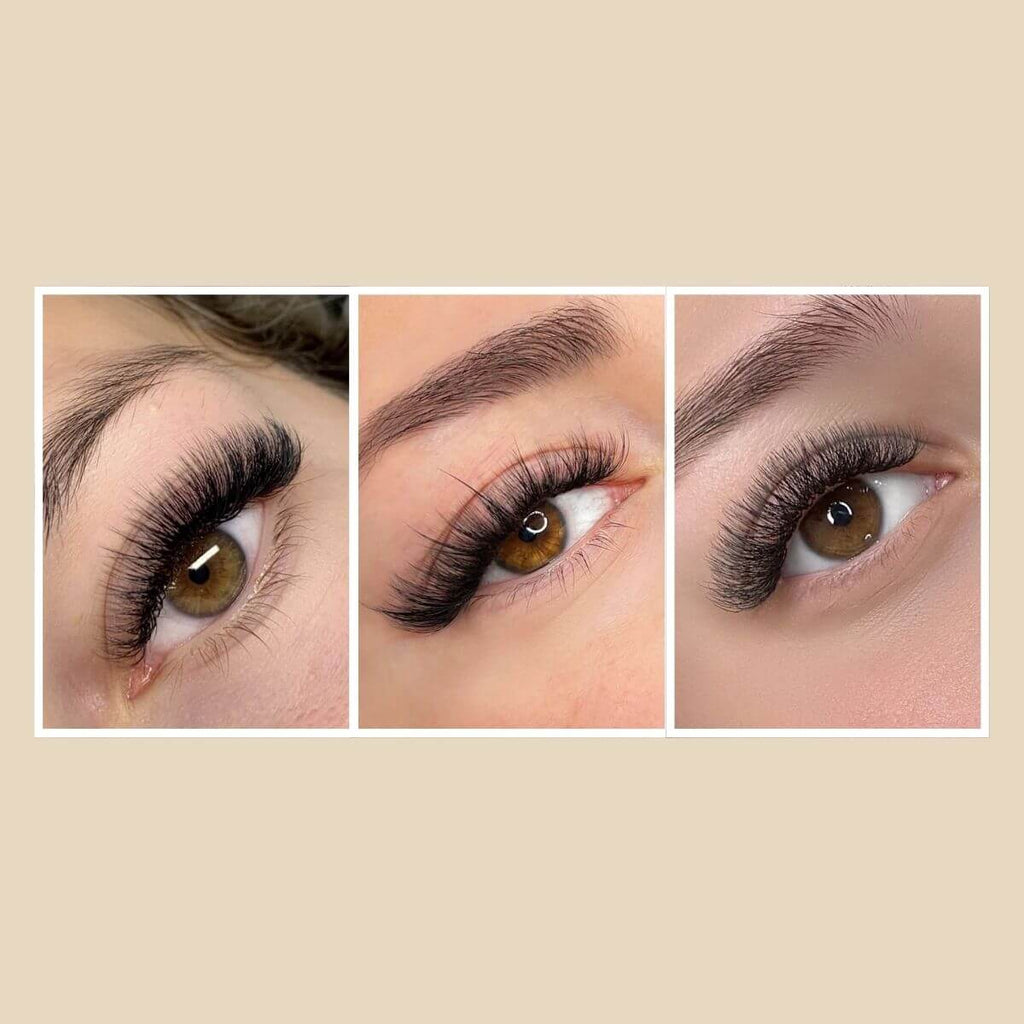
For artists looking for a middle ground, 0.05MM YY Volume Eyelash Extensions offer a unique "crisscrossed" texture. The Y-shape naturally creates a 2D texture effect that bridges the gap between classic and volume. When applied using the 3mm Delta—placing YY lashes 3mm longer than the surrounding volume fans—the result is a multidimensional set that maintains its integrity for weeks.

Health-First Artistry: Protecting the Ocular Surface
High-contrast texture requires more than just artistic skill; it requires a rigorous commitment to safety. The American Academy of Ophthalmology (AAO) notes that the primary risks of extensions include infection and allergic reactions to adhesives.
The Chemistry of the Bond
When creating spikes, artists often use more adhesive to "pinch" the tips together. It is vital to remember that cyanoacrylate-based adhesives release formaldehyde during the curing process. According to the seminal Amano et al. (2012) study, the pH of the adhesive and the release of these fumes can lead to keratoconjunctivitis if not managed correctly.
To mitigate this, professional artists should:
- Use a neutral-pH primer to prepare the natural lash.
- Ensure a specific gap between the extension and the eyelid to prevent contact dermatitis, a condition recently detailed in a 2024 PubMed study.
- Utilize Nano-misters to speed up the polymerization process, which effectively "locks in" fumes and reduces the risk of dry eye syndrome, as noted by WebMD.
Hygiene as a Retention Tool
Texture is only beautiful if the lashes are clean. Debris, oils, and makeup trapped in the "valleys" of a textured set can lead to Blepharitis. The Mayo Clinic identifies poor eyelid hygiene as a leading cause of this inflammation. Educating clients on using a dedicated lash shampoo is not just an upsell; it is a preventative measure against Demodex mite infestation, which thrives in the bacterial buildup of unwashed extensions.
Advanced Mapping: Anchoring the Visual Hierarchy
To implement the 3mm Delta effectively, you must establish an "Anchor Spike." This is the longest lash in any given section of the eye.
The Anchor Heuristic
- Identify the Peak: Determine where the longest spike will sit (usually the "Kitten" or "Open Eye" peak).
- Set the Delta: If your peak spike is 14mm, your supporting base lashes in that section must be no longer than 11mm.
- Curl Variation: Mixing curls can enhance the 3mm Delta. For example, using a D-curl for the 14mm spike and a C-curl for the 11mm base creates a vertical "lift" that further separates the layers. This directional variation prevents the set from looking "muddy" even as the lashes grow out.
Using Premade Fans for Speed
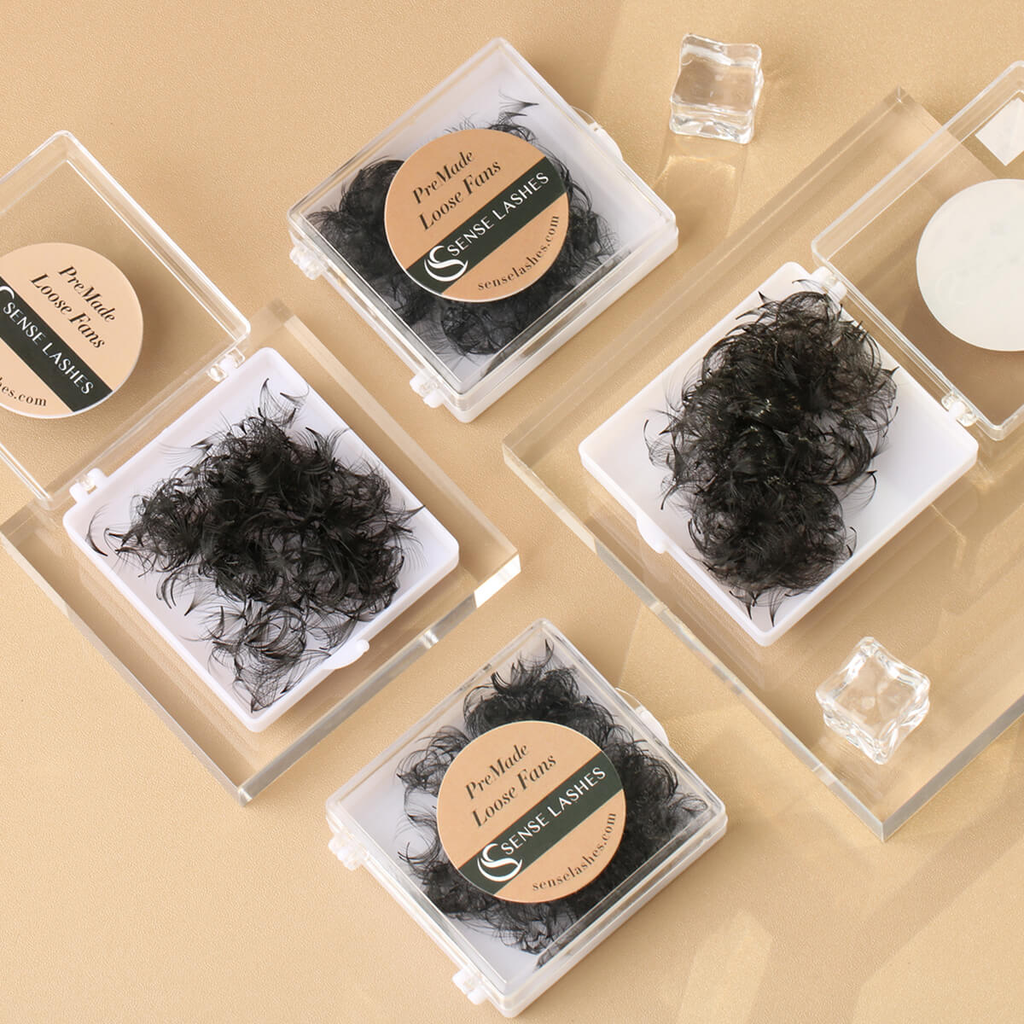
For busy salons, maintaining this level of detail can be time-consuming. Using 10D Handmade Loose Premade Fans Pointy Base allows you to build the "base" layer quickly, leaving you more time to hand-craft the custom 3mm spikes that define the set's character. The pointy base of these fans is critical for maintaining a clean attachment point, reducing the risk of corneal abrasions caused by bulky, mechanical rubbing against the eye.

Troubleshooting "Muddy" Texture
If you have applied the 3mm Delta and the set still looks flat, perform a technical audit based on these common "gotchas" observed in professional practice:
- The "Transition" Trap: Are you gradually increasing the base layer length too close to the spike length? Ensure the 3mm gap is maintained across the entire section, not just at the peak.
- Adhesive Viscosity: Is your adhesive too thick? Excess adhesive at the base can cause lashes to "wick" together, closing the gaps between your textured layers.
- Client Lash Health: If the natural lashes are sparse, the "valleys" of your texture will look like gaps. In these cases, calibrating length for sparse bases is essential. You might need to reduce the delta to 2mm to avoid a "gappy" appearance while still maintaining some contrast.
The Business Case for Technical Mastery
Mastering texture isn't just about aesthetics; it’s about market positioning. As the global lash market continues to grow, clients are moving away from "standard" sets and toward bespoke, artistic designs. The ability to guarantee a textured look that lasts through the three-week fill cycle allows you to command premium pricing.
By adhering to the 3mm Delta and utilizing high-performance materials like 0.03MM Cashmere Premium Mega Volume Eyelash Extensions, you provide a service that is both visually stunning and technically sound. This balance of artistry and ocular health—aligned with the CDC’s guidelines on eye hygiene—is what separates a hobbyist from a premier lash professional.
Key Takeaways for the Professional
- The 3mm Rule: Always maintain at least a 3mm difference between your spikes and your base layer to account for settling and visual perception.
- Diameter Matters: Use 0.03mm for sharp definition and 0.07mm for soft, wispy volume.
- Hygiene is Non-Negotiable: Prevent Blepharitis and Demodex by enforcing strict aftercare protocols using professional-grade cleansers.
- Audit Your Sets: If texture disappears, check for curl consistency and adhesive bulk.
Disclaimer: This article is for informational purposes only and does not constitute professional medical advice. Eyelash extension application involves the use of chemicals near the eye and should only be performed by licensed professionals. Always consult with a healthcare provider regarding eye infections or allergic reactions.
References
- American Academy of Ophthalmology (AAO) - Eyelash Extension Safety
- Centers for Disease Control (CDC) - Conjunctivitis Prevention
- Mayo Clinic - Blepharitis Symptoms and Causes
- PubMed - Amano et al. (2012) Study on Adhesive Toxicity
- PubMed - 2024 Study on Eyelid Dermatitis and Acrylates
- PMC - Ocular Surface Changes and Extensions