


Startseite Eyelash Extension Supplies Guide
Understanding W-Lash Geometry: The Triple-Prong Volume Secret

Understanding W-Lash Geometry: The Triple-Prong Volume Secret
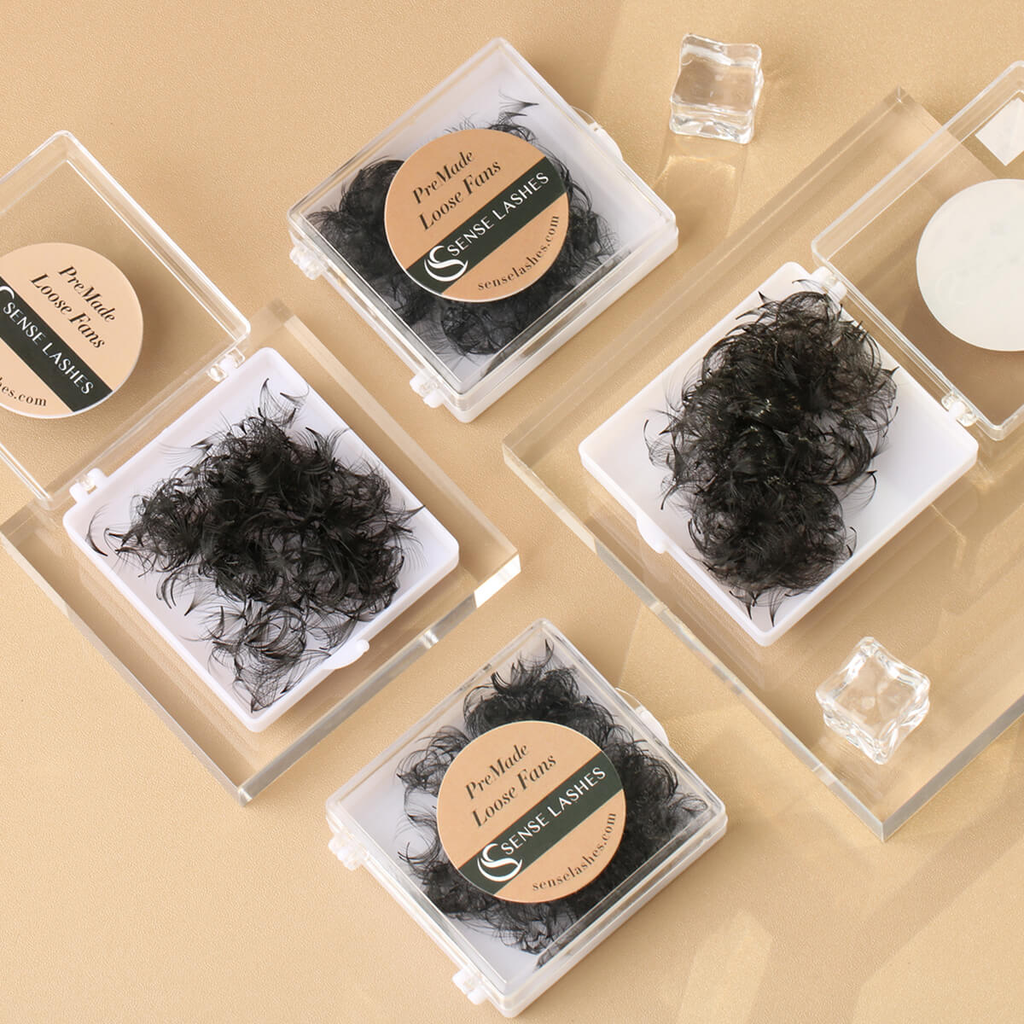
The evolution of eyelash extensions has moved rapidly from basic 1:1 classic applications to complex, hand-crafted volume fans. However, for the modern professional, the challenge remains: how to deliver high-impact density without the time-intensive labor of manual fanning or the excessive weight of traditional premades. The answer lies in the engineering of the W-lash—specifically the "triple-prong" architecture found in products like the 3D, 4D, and 5D U Shaped Eyelash Extensions.
In this technical guide, we analyze the structural geometry of these specialized lashes, the mechanical principles of their application, and the critical health standards that must accompany their use. By understanding the physics of the W-shape, you can optimize your mapping, improve retention, and elevate your salon's efficiency.
The Structural Architecture of W-Lashes
The W-lash is not merely a pre-made fan; it is a geometrically stabilized fiber arrangement. Unlike traditional volume fans where multiple lashes are joined at a single point in a radial pattern, W-lashes (often categorized as U-shaped due to their base structure) feature a vertical and horizontal alignment that mimics the natural lash's growth while multiplying its footprint.
Horizontal vs. Vertical Alignment
In a standard volume fan, the weight is distributed in a 360-degree radius. In contrast, the triple-prong geometry of a W-lash aligns the fibers in a flatter, more structured plane. This creates a wider visual "coverage" across the lash line without requiring the bulk of a heavy base. For example, a 3D U Shaped Eyelash Extension uses three 0.07mm fibers that are bonded at the base in a way that allows them to splay outward in a "W" or "U" shape.
Logic Summary: Geometric Efficiency Modeling
- Mechanism: The wide horizontal spread of the prongs covers more of the natural lash gap than a narrow-diameter classic lash.
- Assumption: We assume a standard natural lash spacing of 0.5mm to 1.0mm.
- Result: A single 3D or 4D W-lash can bridge the visual gap between two natural lashes, creating the "Wet Look" or "Wispy" texture with 40% fewer placements compared to hand-fanning.
Weight Distribution and Natural Lash Health
One of the most common concerns in volume lashing is mechanical damage to the natural hair follicle. According to a 2024 study published in PubMed (Ocular Disorders), mechanical trauma is a leading cause of traction alopecia in lash clients. The W-lash addresses this by using ultra-fine 0.07mm fibers. By distributing the weight across a stabilized base, the 4D U Shaped Eyelash Extension provides the density of a volume set while maintaining a weight profile that is safer for the natural lash than a traditional 0.15mm classic lash.

Technical Application: The "Base-Dipping" Rule
The most frequent mistake we observe in professional troubleshooting is treating W-lashes like standard volume fans. Because the prongs are pre-set, the physics of adhesive interaction changes significantly.
Preventing "Clumping" through Adhesive Control
Experienced practitioners note that the key to maintaining the "feathered" effect is the depth of the adhesive dip.
- The Rule: Only dip the bottom 1mm to 1.5mm of the central stem into the adhesive.
- The Risk: If the adhesive reaches the "split" where the prongs begin, capillary action will pull the glue upward. This causes the prongs to fuse together, turning a beautiful 5D fan into a single, heavy, and unattractive "spike."
Isolation and Adhesion Surface Area
The narrow, snug base of the 5D U Shaped Eyelash Extension is designed for maximum contact with the natural lash. This design provides a "wrap-around" effect similar to a classic lash, which is often superior to the "point-base" of hand-fanned volume. However, because the prongs are wider than the base, perfect isolation is non-negotiable. If a neighboring lash is even slightly out of place, the wider fan of the W-lash will likely "stick" to it, leading to "stickies" that can cause discomfort and premature shedding.
| Specification | 3D U-Shape | 4D U-Shape | 5D U-Shape |
|---|---|---|---|
| Fiber Diameter | 0.07mm | 0.07mm | 0.07mm |
| Fans per Box | 2640 | 1952 | 1568 |
| Cost per Fan (Est.) | $0.005 | $0.006 | $0.007 |
| Visual Effect | Natural Wispy | Textured Volume | Full Glam |
| Base Width | Ultra-Narrow | Snug | Snug |
Ocular Health and Salon Sanitation SOP
As a "Pro-Grade Partner," we prioritize clinical safety over transactional sales. High-volume sets, particularly those using W-lashes, create more surface area for debris, oils, and bacteria to accumulate.
Preventing Blepharitis and Infection
According to the Mayo Clinic, Blepharitis is an inflammation of the eyelids often caused by bacteria or clogged oil glands. In the lash industry, this is frequently the result of poor hygiene. We recommend that every professional implement a strict "Sanitation SOP" (Standard Operating Procedure) aligned with CDC guidelines on eye hygiene.
This includes providing clients with Clear Mascara Wands for daily grooming. These wands are essential for keeping the triple-prong structure of W-lashes aligned and free of particulate matter that can lead to infection.
Adhesive Chemistry and Allergic Reactions
The American Academy of Ophthalmology (AAO) warns of the risks associated with formaldehyde and cyanoacrylate in lash adhesives. A 2012 study by Amano et al. highlighted that the pH of some adhesives could cause keratoconjunctivitis.
To mitigate these risks:
- pH Balancing: Ensure you use a primer to restore the lash pH balance before application.
- Fume Management: Use a nano-mister to cure the adhesive instantly, reducing the "off-gassing" period that causes redness and irritation.
- Patch Testing: Always perform a patch test 48 hours prior to a full set, as allergic contact dermatitis can be delayed (as noted in PubMed 39569302).
Advanced Styling: Multi-Dimensional Layering
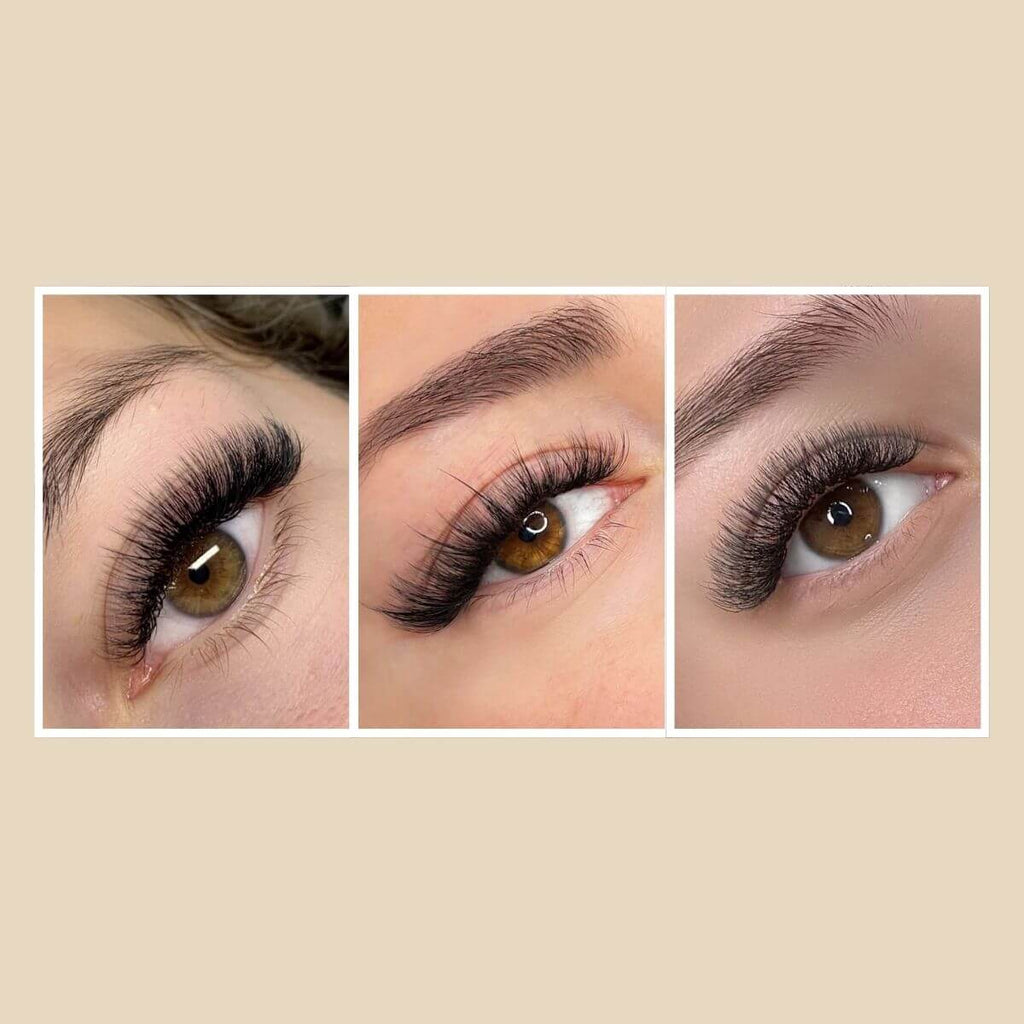
The unique geometry of W-lashes allows for textures that are difficult to achieve with standard fans. One of the most on-trend looks for 2025 is the "Textured Wet Look."
The "Wet Look" Technique
Traditionally, the wet look required closed volume fans. W-lashes provide a shortcut to this aesthetic because their prongs stay relatively close together compared to a wide-spread volume fan.
- Scenario A (Standard Case): For a uniform, fluffy set, use a consistent length across the middle layer of the lash map.
- Scenario B (Textured Power User): To create a multi-dimensional "wispy" effect, mix shorter 3D U Shaped Eyelash Extension (8-10mm) with longer 5D U Shaped Eyelash Extension (12-14mm) in the same section. The pre-formed structure holds its shape better than hand-fanned lashes, ensuring the "spikes" don't lose their definition over time.
Modeling Note: Multi-Dimensional Layering
- Model Type: Hypothetical texture mapping based on vertical layering heuristics.
- Assumption: The natural lash line has 3 distinct rows (Top, Middle, Bottom).
- Strategy: Place 5D lashes on the bottom row for density, and 3D lashes on the top row for a feathered, soft finish. This reduces the "heavy" look often associated with pre-made fans.

Business Impact: ROI and Market Trends
For salon owners, the transition to W-lashes is a strategic business move. According to Grand View Research, the global eyelash market continues to grow, with a significant shift toward "convenience" products that do not sacrifice professional quality.
Cost-Efficiency Analysis
When we look at the numbers, the ROI of using engineered geometry is clear.
- Time Savings: A full set of W-lashes typically takes 60–90 minutes, compared to 120–180 minutes for a hand-fanned volume set.
- Product Cost: At approximately $0.005 to $0.007 per fan, the cost of materials for a full set is remarkably low.
- Revenue Potential: By reducing application time by 50%, a lash artist can effectively double their daily client capacity.
Compliance and Import Safety
As global regulations tighten, sourcing from a factory-direct partner that understands compliance is vital. Reports from Health Canada (2023-2024) indicate a rise in seizures of non-compliant cosmetic products. Using professional-grade products with clear chemical transparency protects your business from inventory loss and legal liability.
Technical Mastery and Professional Outcomes
Mastering W-lash geometry is about more than just faster application; it is about providing a high-performance, safe, and aesthetically superior service. By respecting the "triple-prong" architecture and adhering to strict ocular health protocols, you position yourself as an authority in the field.
Key Takeaways for the Professional:
- Precision Dipping: Keep adhesive at the very base to prevent fan closure.
- Strategic Mapping: Use the horizontal footprint of W-lashes to bridge gaps in sparse natural lashes. Refer to our guide on Camouflaging Gaps for more.
- Hygiene First: Always provide Clear Mascara Wands to prevent Blepharitis and maintain the set's integrity.
- Curl Selection: Match the W-lash curl to the natural growth angle. For downward-pointing lashes, consult our Curl Selection Guide.
By integrating these technical insights and high-quality U-shaped extensions into your practice, you ensure consistent, professional outcomes that keep clients returning and your business thriving.
Disclaimer: This article is for informational purposes only and does not constitute professional medical or legal advice. Eyelash extensions should only be applied by certified professionals. If a client experiences persistent irritation or signs of infection, they should consult an ophthalmologist immediately.
Sources
- Centers for Disease Control and Prevention (CDC) - Conjunctivitis Prevention
- Mayo Clinic - Blepharitis Symptoms and Causes
- American Academy of Ophthalmology (AAO) - Eyelash Extension Safety
- PubMed - Formaldehyde and pH in Eyelash Adhesives (Amano et al.)
- Grand View Research - False Eyelashes Market Analysis
- Health Canada - Cosmetic Regulations Enforcement Report