


Startseite Eyelash Extension Supplies Guide
Refilling Wispy Architecture: Preserving the Original Map

Refilling Wispy Architecture: Preserving the Original MapBase
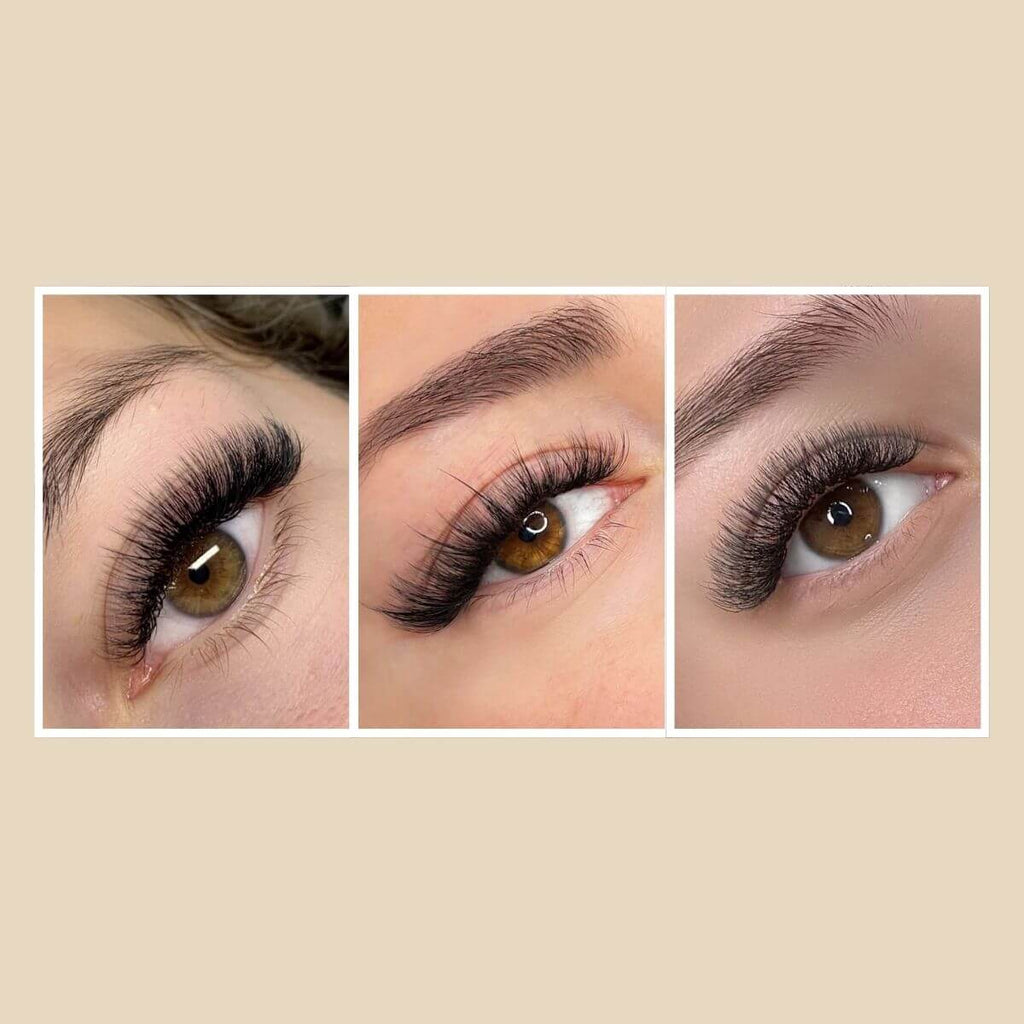
Refilling a wispy set is widely regarded by industry veterans as one of the most technically demanding tasks in lash artistry. Unlike a standard volume set where the goal is uniform density, a wispy or "Kim K" style relies on a delicate, staggered architecture. When these sets return after three weeks, the spikes have often grown out at varying rates, the base layer has thinned, and the original mapping—the "MapBase"—can feel lost in a sea of tangled extensions.
The frustration is real: if you replace too many spikes, the set looks blocky and heavy. If you replace too few, the design loses its "spiky" character. In this guide, we provide a definitive professional workflow for refilling wispy architecture, grounded in mechanical logic and ocular health, to ensure your clients leave with the same editorial precision they received at their initial appointment.
The Structural Logic of Wispy Sets
The foundation of a successful wispy refill is understanding that you are managing two distinct structural layers: the Base Layer (usually shorter, softer fans) and the Spike Layer (longer, more defined peaks). The "MapBase" is the blueprint that dictates the spacing and height jumps between these layers.
As we discussed in our guide on Wispy Lash Length Jumps, the visual impact of a wispy set comes from the contrast. During a refill, the most common mistake is losing this contrast by over-filling the base or using spikes that are too heavy. We often observe that when artists lose the original map, they default to a "standard" fill, which effectively destroys the textured aesthetic the client paid for.

The 70/30 Rule: A Heuristic for Spike Maintenance
To maintain the feathery, staggered texture of a wispy set, we utilize what we call the 70/30 Rule. This is a heuristic derived from observing the natural lash growth cycle and its impact on extension placement.
Based on common patterns from customer support and studio feedback, we have identified that at the 21-day mark, approximately 30% of the original spikes have grown out more than 2mm from the lash line. These are the "danger zones." A spike that has moved 2mm or more away from the lid becomes top-heavy, causing it to lean or twist, which disrupts the entire visual line.
The Workflow:
- Identify the 30%: Focus your removal efforts exclusively on spikes that have exceeded the 2mm growth threshold.
- Preserve the 70%: If a spike is still within 1-1.5mm of the lash line and remains upright, leave it. Over-filling beyond this 30% replacement typically distorts the staggered pattern and creates visual "blocks."
- The Blending Secret: For replacements, practitioners note that a 0.07mm diameter in a C curl is the most forgiving and blendable choice. It mimics natural lash flexibility while providing enough "body" to stand out as a spike.
Modeling Note (Refill Logic): This 70/30 model assumes a standard natural lash growth rate of ~0.14mm per day. The 2mm threshold represents the point where the mechanical torque of the extension begins to compromise the follicle's stability and the design's symmetry.
| Parameter | Value/Range | Unit | Rationale |
|---|---|---|---|
| Growth Threshold | 2 | mm | Prevents lash twisting/mechanical strain |
| Replacement Ratio | ~30 | % | Maintains original staggered spacing |
| Spike Diameter | 0.07 | mm | Optimal balance of visibility and weight |
| Base Layer Diameter | 0.03 - 0.05 | mm | Provides soft, "shadow" density |
| Refill Interval | 18 - 24 | days | Aligns with Anagen-to-Catagen transition |
The Technical Chemistry of Refill Adhesion
In a refill scenario, you are often working around existing extensions, which makes precision even more critical. The adhesive you choose must have a viscosity that allows for instant "grab" without wicking into the surrounding base fans.
For advanced artists working in a fast-paced studio environment, we recommend the 0.5-1 Second Diamond Eyelash Extension Glue. Its extremely fast drying time (0.5-1 second) is essential for wispy refills because it prevents the "wicking" effect—where liquid adhesive travels down the lash and fuses multiple fans together. This is especially important when you are placing spikes into a dense base layer.
Furthermore, the chemical integrity of your adhesive is a matter of professional compliance. According to the Health Canada 2023-2024 Compliance Report, many cyanoacrylate-based products fail to meet strict labeling and safety standards. Using a manufacturer-led supplier like SenseLashes ensures your inventory is compliant with global safety standards, reducing the risk of customs seizures or, more importantly, client adverse reactions.
Ocular Health SOP: The Professional Priority
A refill is not just an aesthetic update; it is a critical window for hygiene maintenance. Because wispy sets often involve dense base layers, they are prone to trapping debris, makeup, and natural oils.
Blepharitis Prevention
Poor lash hygiene is a primary cause of Blepharitis (eyelid inflammation). According to the Mayo Clinic, this condition is often caused by bacteria buildup at the base of the eyelashes. In our professional SOP, we advocate for "Blepharitis Prevention" rather than just "cleaning."
We recommend a mandatory lash shampoo service during every refill. If the client's lashes are not pristinely clean, the adhesive bond will be compromised. Furthermore, research published in PMC (2024) suggests that long-term extension wear can alter the ocular surface microbiome. A professional-grade cleanser helps restore the lash pH balance and protects the delicate tear film.
Sanitation Standards
In alignment with CDC guidelines on conjunctivitis prevention, every refill must utilize disposable consumables. This includes wands and patches. To prevent chemical burns or irritation from adhesive fumes—which can sometimes be confused with Dry Eye Syndrome—ensure you are using high-quality gel patches that seal the lower lashes effectively.

The Toolkit: Precision in Dense Architecture
When refilling a wispy set, isolation is the greatest challenge. The staggered lengths of the existing set can make it difficult to see the natural lash line clearly.
Tool Selection:
- Reverse-Action Tweezers: For dense sets, we prefer reverse-action tweezers over standard straight tips. They allow you to "clamp and lift" the target natural lash without applying downward pressure on the surrounding fans. This prevents the misalignment of the existing MapBase.
- Spike Material: For the spikes themselves, we recommend 0.07MM Cashmere Premium Mega Volume Eyelash Extensions. These lashes are engineered for a "matte black" finish that provides the deep contrast required for a spiky look without the excessive weight of traditional synthetic fibers.
- Base Layer Density: If the base layer has become sparse, 5D U Shaped Eyelash Extension fans can be used to quickly restore density. Their narrow base ensures they tuck neatly between existing lashes without creating a "chunky" appearance.
Troubleshooting the "Grown-Out" Look
A common client complaint during the refill cycle is that the lashes feel "heavy" or "pokey." This is rarely a product fault; it is usually a sign of mechanical damage or poor isolation from the previous set.
According to a study on Ocular Disorders and Eyelash Extensions (PubMed 2024), mechanical damage to the natural lash is often caused by using extensions that are too heavy for the natural lash's current growth phase. This is why we advocate for lightweight volume. Using our 0.03mm or 0.05mm cashmere lashes for the base layer significantly reduces the mechanical load compared to traditional 0.15mm classic lashes.
Addressing Irritation vs. Allergy: If a client experiences redness, it is vital to distinguish between irritation (often caused by adhesive fumes or dry eyes) and a true allergic reaction. Research on Allergic Contact Dermatitis (PubMed) shows that ethyl cyanoacrylate can trigger immune responses in sensitive individuals. We recommend a strict patch test protocol, explaining to clients that reactions can be delayed by 48 hours or more. For clients with known sensitivities, the 1-2 Second Gold Eyelash Extension Glue offers a slightly slower drying time which can, in some environments, reduce the intensity of fume emission during the curing process.
Maintaining the Aesthetic Integrity
The goal of a refill is to restore the "just-lushed" look. To do this, you must resist the urge to simply "fill the gaps." You must re-map.
- Map on the Patches: Even if you think you remember the map, draw it out on the eye patches. This ensures your spikes are placed at the exact intervals (e.g., every 3-4mm) required by the original design.
- Check for Symmetry: Wispy sets are notoriously prone to looking asymmetrical if one eye has more natural lash growth than the other. Use a lash mirror to check the "peaks" from the client's perspective.
- The "Spike" Anchor: When placing a new spike, ensure it is anchored to a healthy natural lash in the middle or upper layer of the natural lash row. Anchoring spikes to the bottom row often causes them to "droop," ruining the wispy effect. For more on this, see our technical guide on Mastering Row Identification.
Summary of Professional Outcomes
Refilling wispy architecture is a test of an artist's patience and technical precision. By adhering to the 70/30 rule, prioritizing ocular health through proper sanitation SOPs, and using high-performance materials like the 0.07MM Cashmere Premium Mega Volume Eyelash Extensions, you can provide results that are both beautiful and sustainable.
Remember that the "MapBase" is your guide. By preserving the original staggered logic and avoiding the temptation to over-fill, you maintain the feathery, editorial texture that defines the wispy aesthetic. Consistency in your refill technique not only improves client retention but also establishes your reputation as a master of complex lash architecture.
YMYL Disclaimer: This article is for informational purposes only and does not constitute professional medical or health advice. Eyelash extensions involve the use of chemicals and tools near the eyes; always consult with a qualified health professional if you experience persistent irritation, pain, or vision changes. Ensure all products are used according to the manufacturer's safety data sheets (SDS) and local licensing regulations.