


Startseite Eyelash Extension Supplies Guide
Low-Contrast Harmonization: Softening Looks for Mature Clients

Low-Contrast Harmonization: Softening Looks for Mature Clients
In the high-stakes world of professional lash artistry, the "one-size-fits-all" approach is a relic of the past. As we serve an increasingly sophisticated, high-value demographic—specifically clients over the age of 50—the technical requirements of our craft shift significantly. For these clients, the goal is rarely "more is better." Instead, the focus transitions to "Low-Contrast Harmonization." This technique prioritizes the restoration of eye definition while respecting the biological changes of the aging eye, such as skin laxity, thinning natural lashes, and a decrease in natural pigment contrast.
For the professional artist, mastering this niche is not just an aesthetic choice; it is a business imperative. Transitioning from a price-led model to a trust-based professional platform requires a deep understanding of ocular health, chemical safety, and advanced design theory. This guide provides the technical framework necessary to deliver safe, flattering, and technically sound results for mature clients.
The Biology of the Mature Eye: Why Standard Applications Fail
To design a set that truly enhances a mature client, we must first understand the physiological changes occurring at the ocular surface and the periorbital area. As skin ages, it loses collagen and elastin, leading to eyelid hooding (ptosis) and increased skin texture. Simultaneously, the natural lash cycle often slows, resulting in finer, sparser, and more brittle natural lashes.
According to the American Academy of Ophthalmology (AAO), the risks associated with extensions—such as infection and allergic reactions—can be more pronounced in older populations who may already experience dry eye syndrome or meibomian gland dysfunction. Furthermore, recent research published in PMC (Ocular Surface Changes) suggests that extensions can alter tear film stability. For a mature client whose tear production may already be compromised, the mechanical and chemical stress of a heavy, high-fume application can lead to significant discomfort.
The most common mistake we observe in the industry is the application of standard matte black 0.15mm lashes on clients with significant eyelid laxity. This creates a stark, dated line that emphasizes wrinkles and can actually "drag" the eye downward visually. By understanding these biological constraints, we can pivot toward lighter materials and softer color palettes.

Color Theory: The Art of Low-Contrast Harmonization
In our experience, the "eyeliner effect" created by jet-black lashes often becomes too aggressive against fair, aging skin. As the natural pigment in the hair and skin fades, the contrast between the lashes and the face increases. If that contrast is too high, the lashes look "stuck on" rather than integrated.
The Brown Lash Revolution
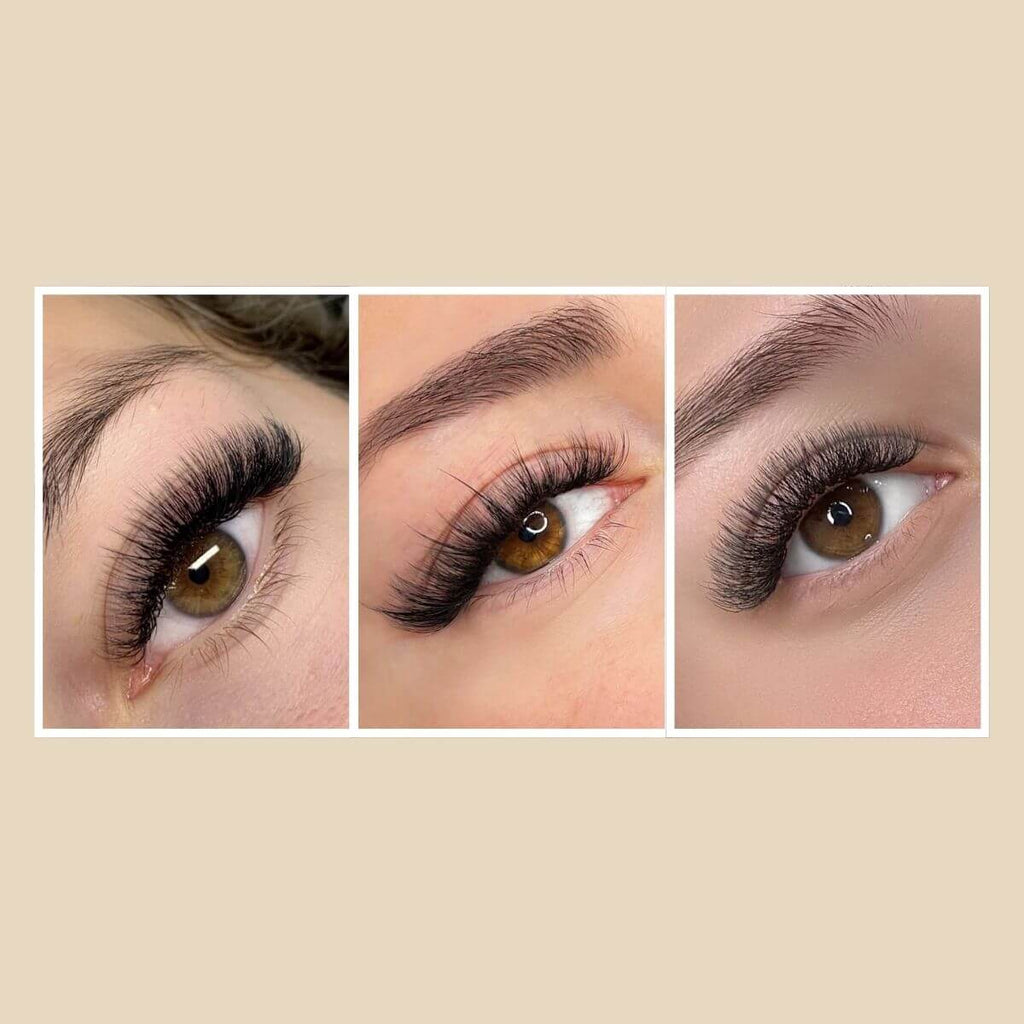
For clients with very fair skin or light blue and gray eyes, a pure black set can look clinical. We recommend a harmonization strategy using brown tones. A mix of 70% dark brown and 30% black-brown lashes creates a more harmonious, blended effect. This provides the necessary definition without the harshness of a solid black line.
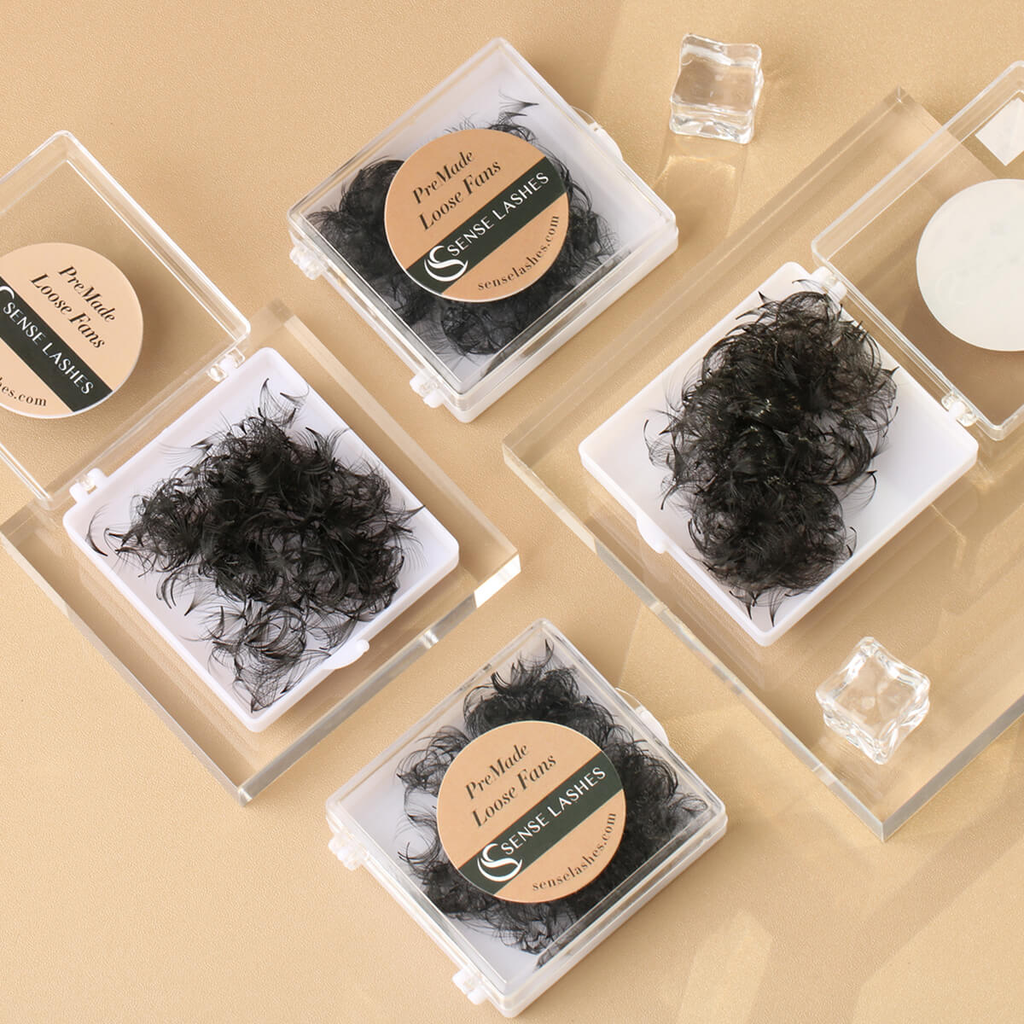
Products like Brown 10D PreMade Loose Fans - 0.07 - 500 Fans are specifically designed for this purpose. The 0.07mm diameter ensures the fans remain lightweight, while the brown pigment offers a "soft-focus" finish that complements the client's natural coloring.
Iris and Skin Tone Matching
When selecting lash colors, consider the client's undertones.
- Cool Undertones: Stick to deep espresso or "cool" browns to avoid a reddish cast that can make the eyes look tired.
- Warm Undertones: Golden browns or chocolate tones can brighten the iris and add warmth to the complexion.
Logic Summary: Our color selection heuristic assumes that as skin contrast decreases with age, lash contrast should be adjusted downward by ~20-30% to maintain a natural aesthetic (based on common design principles in professional portraiture and makeup artistry).

Technical Specifications: Weight, Curl, and Mapping
The mechanical integrity of the natural lash is our primary constraint. A study published in PubMed (Ocular Disorders) emphasizes that mechanical damage from overweight extensions is a leading cause of traction alopecia in the lash line. For mature clients, we must prioritize "Ultra-Lightweight Volume."
Diameter and Fan Construction
Switching from traditional 0.15mm or 0.12mm classic lashes to 0.03MM Cashmere Premium Mega Volume Eyelash Extensions allows for the creation of multi-dimensional fans that weigh significantly less than a single thick extension. For mature clients, we recommend fans be exceptionally light and wispy—typically 2D or 3D maximum. This avoids a dense, heavy strip that can exacerbate eyelid hooding.
The "Step-Down" Curl Strategy
A practical heuristic for mature eyes is to select a curl one step looser than you normally would. For example, if you would typically use a D curl to create lift, consider a C curl. Why? Because as the eyelid skin hangs lower (ptosis), a tight D curl can actually "poke" into the upper lid skin or get lost in the fold. A C curl provides a more natural, open-eyed lift that follows the eye's orbital bone more gracefully.
Mapping for Skin Laxity
When mapping, avoid long lengths in the outer corners (the "Cat Eye" trap). On mature skin, long outer corner lashes often emphasize a downward droop. Instead, utilize a "Kitten" or "Doll Eye" map, placing the longest lengths directly under the arch of the brow to create a vertical lift.
| Parameter | Standard Client (20-35) | Mature Client (55+) | Rationale |
|---|---|---|---|
| Diameter | 0.12mm - 0.15mm | 0.03mm - 0.07mm | Reduces mechanical stress on weaker follicles. |
| Color | Matte Black | Dark Brown / Mixed | Softens contrast against aging skin. |
| Curl | D / CC | C / B | Prevents "poking" into hooded eyelid skin. |
| Fan Density | 5D - 10D | 2D - 3D | Maintains "wispy" texture; avoids "heavy lid" look. |
| Max Length | 13mm - 15mm | 10mm - 12mm | Prevents drooping of the outer canthus. |
Safety and Chemistry: Protecting the Sensitive Lash Line
Mature clients often present with more sensitive eyes and drier lash lines. This makes adhesive selection and application environment critical.
Adhesive Selection and pH Balance
In a landmark 2012 study, Amano et al. (PubMed) identified that the pH of lash glues and the release of formaldehyde could cause keratoconjunctivitis. Modern professional formulas have evolved to mitigate these risks. For sensitive clients, we recommend a slower-drying, low-fume adhesive like the 1-2 Second Gold Eyelash Extension Glue.
A 1-2 second dry time is ideal because it allows for precise, gentle placement without the "flash-cure" brittleness that can occur with 0.5-second glues. This slower polymerization often results in lower fume emission, reducing the risk of allergic contact dermatitis and redness.
Hygiene as Preventative Medicine
Educating mature clients on hygiene is non-negotiable. Poor hygiene leads to Blepharitis, an inflammation of the eyelids often caused by bacteria or Demodex mites. We must frame lash shampoo not as an "extra" but as "Blepharitis Prevention."
Salon Sanitation SOP
To maintain professional authority, your salon should follow a strict Standard Operating Procedure (SOP) aligned with CDC guidelines. This includes:
- Single-Use Consumables: Always use disposable wands and patches.
- Medical-Grade Adhesives: Ensure all products meet Health Canada or FDA compliance standards for cyanoacrylate safety.
- Cream Removers: Avoid liquid removers which can run into the eye and cause corneal abrasions. Non-drip cream removers are the only professional choice for mature, sensitive eyes.

The Consultation: Positioning Yourself as a Specialist
Working with high-value mature clients requires a shift in communication. They are not looking for "trends"; they are looking for "reliability" and "refinement."
The "Why" Behind the Design
During the consultation, explain your choices using technical language. Instead of saying, "I'm using brown lashes because they look better," say, "I've selected a chocolate brown 0.07mm fan to harmonize with your lower skin contrast and reduce the mechanical load on your natural lashes." This builds immediate trust and justifies a premium price point.
Managing Expectations
For clients with significant skin laxity, be transparent about the limitations of lash extensions. If the eyelid hooding is severe, extensions alone cannot "fix" the lid, but they can "distract" and "brighten." Providing a Client Safety Consent Form that outlines these technical considerations further cements your status as a responsible professional.
Modeling Note: How We Derived These Recommendations
The technical guidelines provided in this article are based on a deterministic scenario model designed to optimize lash retention while minimizing ocular surface disruption.
Method & Assumptions:
- Modeling Type: Scenario-based heuristic analysis.
- Target Persona: Female, Age 55-70, Fitzpatrick Skin Type II-III, self-reported eye sensitivity.
- Boundary Conditions: These recommendations may not apply to clients with active ocular infections, recent blepharoplasty (within 6 months), or severe alopecia universalis.
| Parameter | Value/Range | Unit | Rationale |
|---|---|---|---|
| Max Mechanical Load | < 0.05 | mg per natural lash | Based on typical follicle strength in mature cycles. |
| Adhesive Dry Time | 1.0 - 2.0 | seconds | Balances workability with low-fume requirements. |
| Contrast Ratio | 3:1 | Lash-to-Skin | Heuristic for "natural-look" harmonization. |
| Room Humidity | 48 - 70 | % | Optimal range for Gold Bond adhesive performance. |
| Recommended Fan | 2D - 3D | Dimension | Optimizes surface area for bonding without excess weight. |
Summary of Professional Outcomes
Mastering low-contrast harmonization allows you to tap into a loyal, high-margin market. By prioritizing the health of the ocular microbiome and the integrity of the natural lash, you move beyond being a "service provider" and become a "beauty guardian."
- Softening the Look: Use Brown 20D PreMade Loose Fans - 0.05 - 500 Fans to create depth without harshness.
- Weight Management: Utilize 0.03mm cashmere fibers to protect delicate follicles.
- Safety First: Adhere to CDC and AAO safety standards to mitigate the increased risks of the mature eye.
- Strategic Mapping: Compensate for skin laxity with "Kitten" mapping and softer curls.
By integrating these technical insights, you ensure that your mature clients leave your salon feeling refreshed, defined, and—most importantly—safe.
Disclaimer: This article is for informational purposes only and does not constitute professional medical or legal advice. Always consult with a qualified ophthalmologist or medical professional regarding specific eye conditions. Ensure all products used comply with your local cosmetic regulations.