


Startseite Eyelash Extension Supplies Guide
Mapping for Brow Bone Interference in Deep-Set Eyes

The Technical Challenge of Deep-Set Eyes
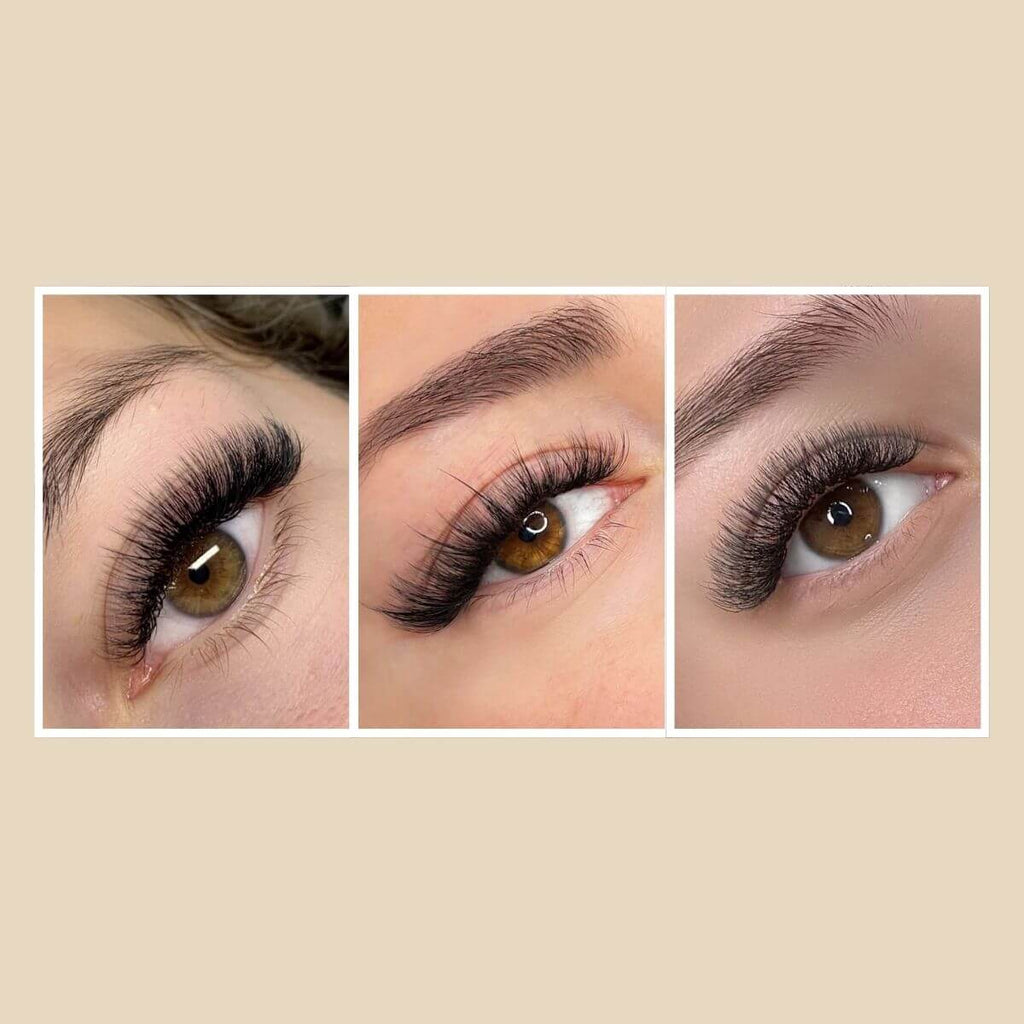
For professional lash artists, the deep-set eye shape presents a unique mechanical challenge that goes beyond simple aesthetics. In these clients—frequently seen in Caucasian or mature demographics—the eyes are recessed further back into the orbital socket, making the brow bone appear more prominent. While the goal is often to provide depth correction and a "lifted" appearance, standard mapping often results in a significant comfort issue: brow bone interference.
When extensions are too long or have a curl that is too aggressive for the available space, the tips of the lashes physically brush against the brow bone or the upper eyelid fold. This "tickling" sensation is more than a nuisance; it can lead to mechanical irritation, premature shedding due to constant friction, and a poor client experience. To solve this, we must move away from generic "Cat Eye" or "Doll Eye" templates and adopt a precision-based "Depth Gradient" mapping strategy.
Anatomy and Biomechanics: Why Standard Mapping Fails
The primary reason standard mapping fails for deep-set eyes is the failure to account for the Orbital Rim Curve. In a standard eye shape, the distance from the lash line to the brow bone remains relatively consistent across the horizontal plane. However, in deep-set eyes, the orbital rim often curves closer to the lash line at the center and outer thirds.
According to the American Academy of Ophthalmology (AAO), extensions must be applied with careful consideration of the ocular surface and surrounding structures to avoid trauma. When lashes constantly strike the brow bone, the mechanical stress is transferred to the natural lash follicle. This can lead to traction-related issues or even contribute to ocular surface changes, as detailed in recent research by PMC regarding tear film stability.
The Brow Bone Clearance Test
Before selecting your lengths, perform a dynamic assessment. With the client’s eyes open and looking straight ahead, use a micro-brush or a lash ruler to measure the vertical distance from the lash line to the brow bone at three points: the inner corner, the pupil (center), and the outer tail. In deep-set eyes, you will often find that the "clearance zone" at the center is significantly shallower than it appears when the eyes are closed.
Logic Summary: Our mapping recommendations are based on a "Clearance Heuristic." This assumes a minimum 2mm safety buffer between the extension tip and the brow bone during a full blink cycle. This model applies to recessed orbital sockets where the brow ridge overhangs the lash line by 5mm or more.
The Depth Gradient Mapping Protocol
To achieve depth correction without interference, we utilize a Depth Gradient. Instead of using a single "safe" length globally, we taper lengths aggressively where the orbital rim is most prominent.
1. Strategic Length Selection
For most deep-set Caucasian eyes, the "longest at the arch" rule is a recipe for discomfort. Instead, focus the length on the transition zones—between the inner corner and the center, and between the center and the outer corner.
- Inner Corners: Use 7mm–9mm to avoid hitting the bridge of the nose or the inner brow.
- The "Peak" (Center): If the brow bone is low, cap your length at 10mm or 11mm, even if the natural lashes could support more.
- The Depth Correction Zone: Use your longest lengths (e.g., 12mm) only in the areas where the brow bone recedes the most, typically the mid-outer quadrant.
2. Diameter and Weight Management
Weight is a critical factor in how an extension behaves during movement. For deep-set eyes, we prioritize featherlight diameters. The 0.03MM Cashmere Premium Mega Volume Eyelash Extensions are ideal here. Because they are so soft, even if minor contact with the brow bone occurs, the client is unlikely to feel the "brushing" sensation that would be obvious with a 0.15mm classic lash.

Product Selection for Corrective Work
When performing complex corrective mapping, the tools you choose dictate the consistency of your results.
The Hybrid Solution: YY Lashes
For clients who want volume but have limited clearance, 0.07MM YY Volume Eyelash Extensions offer a perfect middle ground. The "Y" shape provides immediate horizontal coverage (filling gaps) without requiring excessive vertical length. The flat, long base of the YY lash also ensures superior retention, which is vital when lashes are subjected to the friction of a prominent brow bone.
Efficiency with Premade Fans
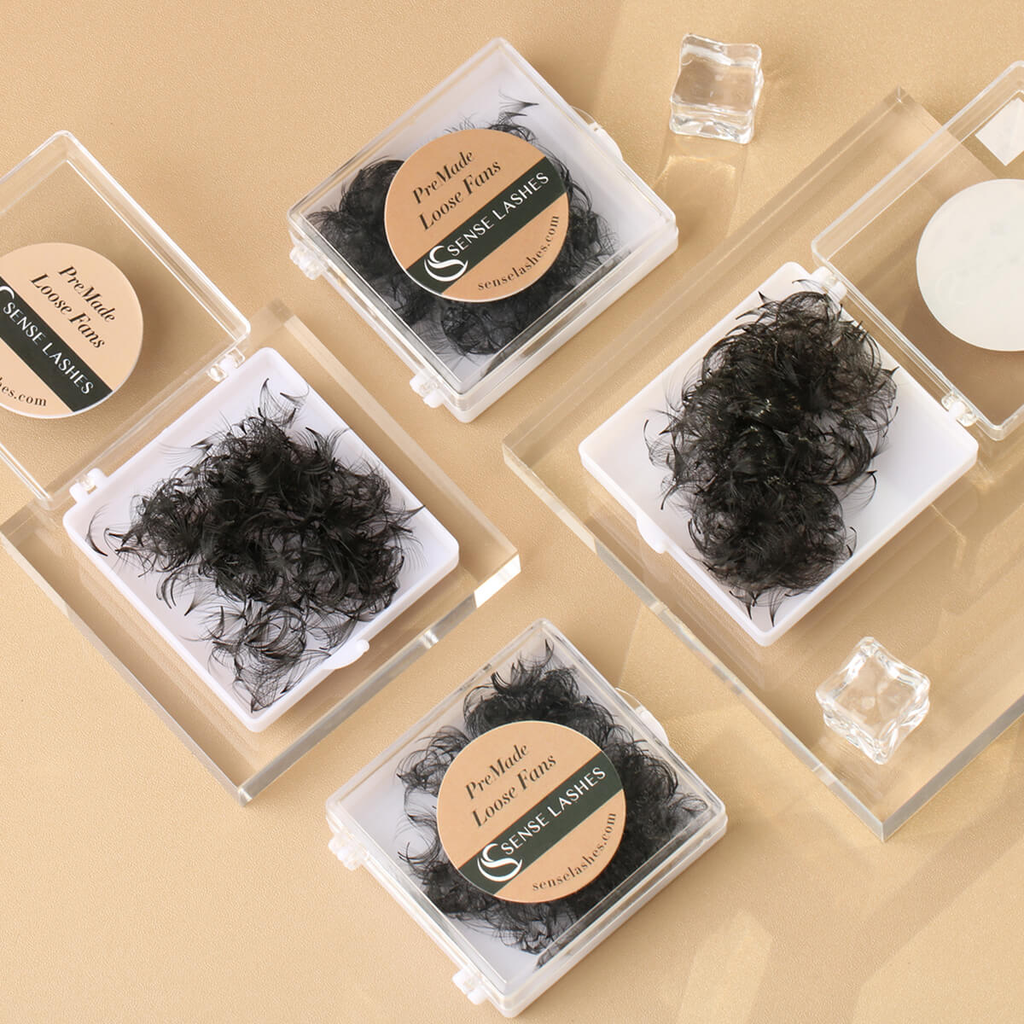
In mature clients with deep-set eyes, the skin may be more lax, making long appointments uncomfortable. Using 6D Handmade Loose Premade Fans Pointy Base(500 Fans) allows you to achieve a full, dark lash line quickly. The pointy base is especially useful for deep-set eyes as it allows for a cleaner attachment on the natural lash, reducing the risk of "bulky" bases that can catch on the eyelid fold.
| Parameter | Recommended Value | Unit | Rationale |
|---|---|---|---|
| Max Length (Center) | 10–11 | mm | Prevents brow bone contact |
| Preferred Diameter | 0.03 – 0.07 | mm | Minimizes mechanical sensation |
| Safety Buffer | 2 | mm | Distance from tip to bone at full gaze |
| Curl Type | C or CC | N/A | Balanced lift without "looping" back |
| Adhesive Speed | 0.5 – 1 | sec | Secures placement before blinking |
Risk Management: Hygiene and Safety Protocols
Working with deep-set eyes requires heightened attention to sanitation. Because the eye is recessed, sweat, oils, and debris can more easily accumulate in the "pocket" created by the brow bone and the extensions.
Preventing Blepharitis and Infection
According to the Mayo Clinic, Blepharitis is often caused by bacteria buildup or clogged oil glands at the base of the lashes. For deep-set eyes, this risk is amplified. We advocate for a strict "Lash Shampoo" regimen. Educating clients that "water is not enough" is essential; a dedicated foam cleanser is required to reach the base of the recessed lash line.
Furthermore, following CDC guidelines on conjunctivitis prevention is mandatory. This includes using disposable consumables for every client. In our professional experience, using high-quality 0.07MM Cashmere Premium Mega Volume Eyelash Extensions ensures that the lashes remain porous enough to be cleaned effectively without trapping excessive debris.
Chemical Safety and Adhesive Choice
The Health Canada 2023-2024 Enforcement Report highlights the importance of using compliant, high-purity cyanoacrylate adhesives. For deep-set eyes, fumes can sometimes linger in the recessed orbital area.
A critical study by Amano et al. (2012) identified that older glue formulas often released higher levels of formaldehyde and had acidic pH levels, leading to keratoconjunctivitis. Modern, professional-grade adhesives have moved toward pH-neutral, low-fume formulas. When working with deep-set eyes, always ensure your room humidity is controlled to allow the adhesive to cure instantly, preventing "fume pockets" from irritating the eye.

Troubleshooting Common Friction Points
Even with perfect mapping, you may encounter "friction points." These are non-obvious mechanical issues that occur during real-world wear.
- The "Blink Strike": If the client has a strong blink reflex, the lashes may flick upward. If you notice the lashes are "crunchy" at the tips after two weeks, it’s a sign they are hitting the brow bone. Reduce the length by 1mm at the next fill.
- Lateral Interference: In some deep-set eyes, the outer orbital bone is very narrow. Extensions that are too long in the outer corner can "poke" the skin when the client smiles or squints. Use shorter lengths (8mm-9mm) for the last 5–10 lashes of the outer corner to prevent this.
- Adhesive Irritation: Because the lashes sit closer to the skin in deep-set eyes, any excess adhesive or a "too-close" placement (less than 0.5mm from the lid) will cause immediate discomfort. Refer to our guide on The Gap Rule: How Placement Proximity Mimics Allergic Reactions for more on this.
Expert Insight: For mature clients with skin laxity, the "Tape Up" method is your best friend. Gently lifting the brow skin with medical tape during application allows you to see the lash base clearly, but remember to check the clearance again once the tape is removed and the skin returns to its natural position.
Managing Client Expectations
Clients with deep-set eyes often bring in photos of "Mega Volume" sets with 15mm lashes. It is our job as professionals to explain why those lengths will be counter-productive.
Instead of focusing on what they can't have, focus on the "Depth Correction" benefit. Explain that by using strategic curls (like C or CC) and a "Depth Gradient," you are bringing their eyes "forward" visually, making them appear larger and more open without the discomfort of lashes hitting their brows. You may also find that Why Deep-Set Eyes Require Straighter Curl Bases provides excellent talking points for these consultations.
Summary of Best Practices
Mapping for deep-set eyes is a balancing act between aesthetic "lift" and mechanical clearance. By prioritizing the orbital rim anatomy over standard templates, you ensure a set that is as comfortable as it is beautiful.
- Measure first: Use the Brow Bone Clearance Test to find your "ceiling" lengths.
- Prioritize lightness: Use 0.03mm or 0.05mm Cashmere lashes to reduce the sensation of contact.
- Taper aggressively: Use shorter lengths at the center if the brow bone is low.
- Educate on hygiene: Deep-set eyes are more prone to buildup; insist on daily lash washing.
- Safety first: Use compliant, low-fume adhesives to prevent irritation in the recessed eye area.
By mastering these technical nuances, you position yourself as a specialist capable of handling the most complex eye shapes, building long-term trust and loyalty with your most discerning clients.
Disclaimer: This article is for informational purposes only and does not constitute professional medical advice. Always consult with a qualified eye care professional regarding ocular health concerns. If a client experiences persistent redness, pain, or swelling, refer them to an ophthalmologist immediately.
References
- American Academy of Ophthalmology (AAO) - Eyelash Extension Safety
- Mayo Clinic - Blepharitis Symptoms and Causes
- CDC - Conjunctivitis (Pink Eye) Prevention
- Health Canada - Cosmetic Regulations Enforcement Summary
- PubMed - Amano et al. (2012) on Eyelash Glue Toxicity
- PMC - Ocular Surface Changes and Extensions