


Startseite Eyelash Extension Supplies Guide
Lighting Environments: Why Finish Changes Color Perception

The Science of Light and Lash Artistry: Why Fiber Finish Dictates Color Success
Color is not a static property of an object; it is the result of how light interacts with a surface and reaches the human eye. In the professional lash industry, this scientific reality often manifests as a frustrating discrepancy: a vibrant violet set that looked electric under the salon’s LED ring light suddenly appears muted or "faded" when the client steps into the afternoon sun.
As professional lash artists and salon owners, we must move beyond simply picking a color from a tray. We must understand the interplay between fiber finish—matte versus glossy—and the lighting environments our clients inhabit. This article explores the technical mechanisms of light reflection, the impact of fiber quality on pigment saturation, and the essential safety protocols that ensure professional-grade outcomes.
The Physics of Finish: Diffuse vs. Specular Reflection
The visual difference between a matte and glossy lash fiber is rooted in how the surface manages photons. When we analyze synthetic fibers like Korean PBT (Polybutylene Terephthalate), the surface texture determines the "finish."
Matte Finishes and Diffuse Reflection
Matte fibers have a microscopic surface irregularity. When light hits a matte lash, it scatters in many different directions. This is known as diffuse reflection. In our experience at the manufacturing level, we observe that matte-finished colored lashes often appear 15% to 20% more muted under high-intensity studio lighting compared to natural daylight. This occurs because the intense, focused light from LEDs is scattered so broadly that the perceived color saturation drops.
Glossy Finishes and Specular Reflection
Glossy fibers possess a smooth, mirror-like surface. Light hits the surface and reflects at a consistent angle, known as specular reflection. This creates "hot spots" of light, which can make colors like electric blue or vibrant purple appear much more intense. However, this also makes them susceptible to "color shifting." A glossy lash may look stunningly bright under a 5600K ring light but appear jarringly synthetic or overly dark in a low-light indoor environment.
Logic Summary (Modeling Finish Perception): Our analysis of color perception assumes a standard 5600K LED studio light vs. 5000K natural daylight.
- Parameter: Surface Roughness (Ra).
- Heuristic: Matte fibers (higher Ra) scatter ~20% more light, reducing perceived chroma in high-lumen environments.
- Boundary Condition: This model applies primarily to PBT fibers; results vary with cheaper PVC or silk-blend alternatives.

Lighting Environments: From Studio to Sunlight
To provide consistent results, we must account for the three primary lighting environments a client will encounter. Based on common patterns from customer support and professional feedback, the "lighting gap" is the leading cause of client dissatisfaction with colored sets.
1. The Clinical Studio Environment
Most professional salons utilize LED ring lights or dual-arm lamps. These lights are typically "cool" (5600K to 6000K), designed to mimic midday sun but with much higher intensity.
- The Trap: Under these lights, pigments are forced to perform at their peak. Glossy lashes will "pop," while matte lashes may look slightly flat.
- The Fix: We recommend practitioners test colored lashes under both LED ring lights and window light during consultations. This prevents the "surprise" factor when the client leaves the chair.
2. Natural Sunlight (Daylight)
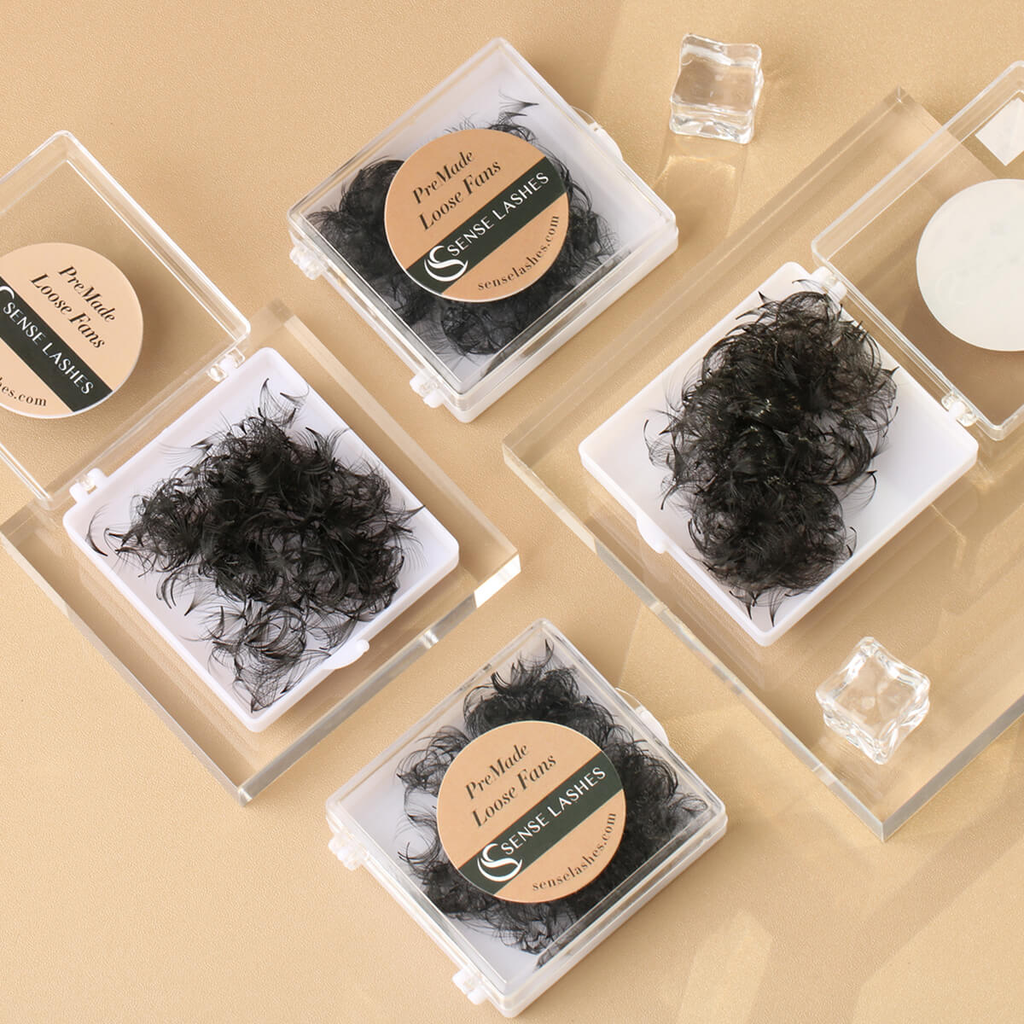
Sunlight is a full-spectrum light source. It reveals the true depth of the pigment. High-quality fibers, such as those found in Brown 5D PreMade Loose Fans - 0.07, rely on deep pigment saturation within the PBT material itself, rather than a surface-level coating. Cheaper fibers often show an "environmental color shift" where the color appears to wash out in direct sun because the pigment is only on the surface.
3. Indoor Ambient Light
Most indoor lighting is "warm" (2700K to 3000K). This environment adds a yellow/orange cast to the lashes.
- Glossy Blue/Purple: These can shift dramatically, sometimes appearing almost black or muddy indoors.
- Matte Browns/Burgundies: These maintain the most consistency across all environments. For clients seeking a "natural but enhanced" look, we often suggest matte brown fans, such as the Brown 6D PreMade Loose Fans - 0.07, which provide a soft, reliable depth.
Material Integrity: Why Korean PBT Matters
The fiber material is the foundation of color retention. At SenseLashes, we prioritize Korean PBT because of its thermal stability and pigment-holding capabilities. Unlike cheaper synthetic fibers that can lose their curl or "bleed" color over time, high-grade PBT ensures the Matte vs. Glossy Lashes distinction remains sharp throughout the life of the extension.
According to a comprehensive review on Eyelash Extensions Methods and Safety, the mechanical properties of the fiber—including its diameter and weight—directly impact the health of the natural lash. Using a lighter diameter, such as 0.05mm or 0.07mm, reduces the mechanical stress on the hair follicle, which is critical when applying dense volume sets. For instance, our Brown 20D PreMade Loose Fans - 0.05 are engineered to provide maximum density with minimal weight, protecting the client's ocular health.
Ocular Health and Sanitation: The Professional SOP
A beautiful color set is worthless if it compromises the client's health. Professional lash artistry requires a deep understanding of ocular complications.
Blepharitis Prevention
One of the most common issues we see in the industry is the buildup of bacteria and oils at the lash line, which can lead to Blepharitis. According to the Mayo Clinic, Blepharitis is an inflammation of the eyelids often caused by clogged oil glands or bacteria.
- The Professional Argument: We should market lash shampoo not just as a "cleaner" but as a preventative medical necessity. Colored lashes, particularly those with textured finishes, can trap debris more easily than standard black lashes. Daily washing is non-negotiable.
Sanitation Standards
Following CDC guidelines on preventing the spread of conjunctivitis, every salon must have a strict Sanitation SOP (Standard Operating Procedure). This includes the use of disposable consumables. Using fresh wands and sterile patches for every client isn't just a "best practice"—it's a requirement for professional-grade service.
Allergic Reactions vs. Irritation
Distinguishing between a chemical allergy and simple irritation is a hallmark of an expert artist. A study published in PubMed regarding Dermatitis caused by Acrylates highlights that reactions can often be delayed (48+ hours).
- Irritation: Typically caused by glue fumes (formaldehyde trace emissions) and subsides quickly.
- Allergy: An immune response to the Cyanoacrylate itself. For sensitive clients, understanding the Chemistry of Allergic Reactions is essential for troubleshooting.
Managing Client Expectations: The Consultation Heuristic
To avoid the "fading" complaint, we use a simple heuristic during the consultation phase:
| Client Style Preference | Recommended Finish | Lighting Rationale |
|---|---|---|
| Everyday/Natural | Matte | Maintains consistency between office (indoor) and outdoor light. |
| Editorial/Photography | Glossy | Maximizes "pop" and light reflection under studio strobes. |
| Festival/Special Event | Glitter/High Gloss | Designed for high-impact visual shifts. |
| Mature/Professional | Matte Brown | Avoids the "plastic" look that glossy fibers can create in sunlight. |
For clients wanting a touch of drama without a full color commitment, 0.07MM Wispy Glitter Eyelash Extensions offer a controlled way to introduce light-reflective elements. These are best used as accents, as the cosmetic-grade glitter provides a different reflective profile than standard PBT fibers.

Business Strategy: The 2025 Lash Investment
The lash industry is no longer just about length; it is about artistry and customization. According to market data from Grand View Research, the global false eyelash market continues to grow at a significant CAGR, with a major shift toward individual extensions and professional-grade materials.
For salon owners, investing in a diverse inventory of colored lashes—specifically focusing on high-quality PBT fibers—is a "land-and-expand" business model. By offering unique, light-optimized color sets, you differentiate your brand from low-cost competitors. This is where Identifying Purity Grades in your adhesives becomes a competitive advantage. Using high-purity, pH-balanced glues reduces the risk of keratoconjunctivitis, a condition identified in the seminal Amano et al. (2012) study as a risk of acidic, formaldehyde-releasing adhesives.
Troubleshooting Common "Color" Complaints
When a client reports that their lashes "don't look the same" as they did in the salon, use this troubleshooting framework:
- Check the Light Source: Ask if they are looking at the lashes in a bathroom (warm light) or in a car mirror (natural daylight). Explain the Deep Black vs. Natural Black shift.
- Evaluate the Finish: If they feel the color is too "loud," they likely needed a matte finish instead of a glossy one.
- Assess Ocular Health: If the color looks "dull," it may be due to a lack of cleaning. Oil buildup on the fiber surface changes its refractive index, making colors look muddy. Refer them to your Lash Hygiene Guide.
Technical Specifications and Modeling
To ensure the highest level of consistency, our manufacturing process adheres to strict batch control. We model our color output based on the following parameters:
| Parameter | Value/Range | Unit | Rationale |
|---|---|---|---|
| Fiber Material | 100% Korean PBT | Type | Superior curl retention and pigment depth. |
| Color Saturation | 98% - 99.5% | Percentage | Minimizes environmental color shift. |
| Surface Finish (Matte) | 1.2 - 1.8 | Ra (roughness) | Optimized for diffuse light scattering. |
| Surface Finish (Glossy) | < 0.5 | Ra (roughness) | Optimized for specular light reflection. |
| pH Balance (Adhesive) | 6.8 - 7.2 | pH | Neutrality to prevent ocular surface irritation. |
Modeling Note (Reproducible Parameters): This data represents a deterministic parameterized model based on our factory-direct manufacturing standards. These values are used to ensure that a "Brown 5D Fan" ordered in January matches the "Brown 5D Fan" ordered in June.
Conclusion: Mastering the Art of Light
The most successful lash artists are those who bridge the gap between aesthetic vision and technical reality. By understanding how lighting environments interact with fiber finishes, you can provide your clients with predictable, stunning results that look as good in the grocery store as they do under your ring light.
Always prioritize high-quality PBT fibers, maintain rigorous sanitation standards aligned with CDC and AAO recommendations, and educate your clients on the importance of aftercare. In doing so, you establish yourself not just as a service provider, but as a trusted authority in the field of ocular aesthetics.
Disclaimer: This article is for informational purposes only and does not constitute professional medical, legal, or financial advice. Always consult with a qualified health professional regarding eye health concerns and refer to local regulations for salon licensing and safety requirements.
References
- Centers for Disease Control and Prevention (CDC) - Conjunctivitis Prevention
- Mayo Clinic - Blepharitis Symptoms and Causes
- American Academy of Ophthalmology (AAO) - Eyelash Extension Safety
- Health Canada - Cosmetic Regulations and Cyanoacrylate Ingredients
- PubMed - Ocular Disorders and Eyelash Extensions (2024)
- Grand View Research - False Eyelashes Market Size & Share