


Startseite Eyelash Extension Supplies Guide
The Impact of Base Width on Natural Lash Stress and Follicle Health

The Follicle-First Philosophy: Why Base Width is the Metric of Modern Lash Health
Disclosure: This technical guide is published by SenseLashes. Quantitative data regarding retention gains and specific thresholds are derived from our internal manufacturing standards and qualitative feedback from our professional salon network. This information is intended for educational purposes and should not replace professional medical advice.
In the evolving landscape of professional eyelash extensions, the focus has shifted from mere aesthetics to a rigorous commitment to ocular health and follicle longevity. As lash artists, we are managing a delicate biological ecosystem. A critical technical specification in this management is the base width of the extension fan.
Executive Summary: The Technical "Sweet Spot"
For professionals seeking a quick decision framework:
- Safety Threshold: Aim for a base width under 0.5mm to minimize mechanical torque.
- Retention Heuristic: Internal salon tracking suggests a 0.1mm reduction in base width is associated with a 10–15% improvement in retention for fine-lash clients.
- Adhesive Match: Use low-viscosity, fast-drying glues (0.5–1.0s) for "pointy base" fans to prevent wicking and maintain a slim profile.
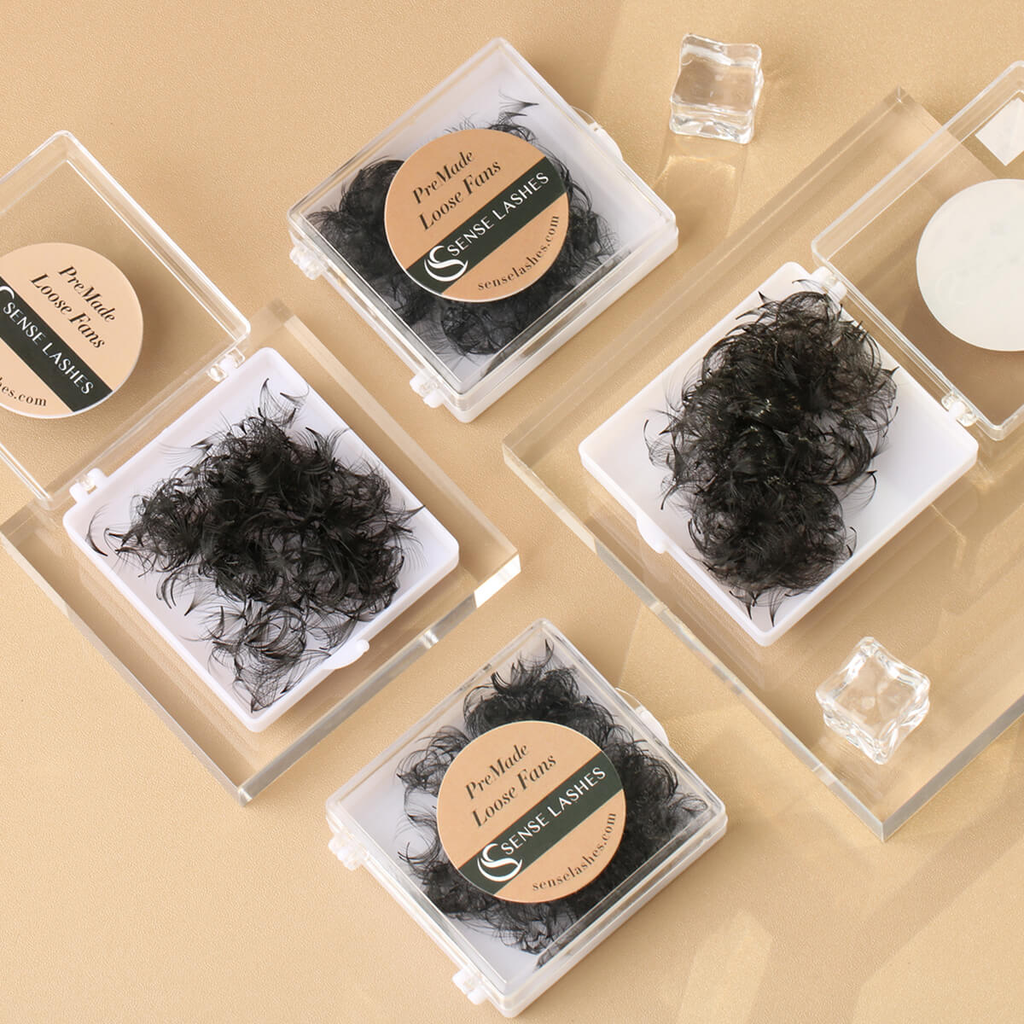
The width of a premade or promade fan base influences how weight is distributed across the natural lash (NL). A base that is excessively wide can create localized pressure points, potentially leading to premature shedding and, in chronic cases, traction alopecia. Conversely, a refined, ultra-slim base more closely mimics the natural lash's anatomy. At SenseLashes, our factory-direct engineering focuses on the "Pointy Base" architecture, a design choice intended to optimize weight distribution and adhesive interaction.
The Physics of the Base: Mechanical Stress and the "Lever Effect"
To understand why base width matters, the natural lash can be modeled as a cantilever beam. When an extension is bonded to the NL, it introduces a load. The distribution of this load is determined by the contact area—the base.
The 0.5mm Heuristic
In our technical observations and feedback from high-volume salons, a base width exceeding 0.5mm is often associated with an increased risk of creating a "pressure point." When the base is wider than the natural lash's diameter, the edges of the extension base lack a biological anchor. This can create a "lever effect" where movement of the extension—through brushing, sleeping, or natural growth—exerts a disproportionate amount of torque on the follicle.
The 0.1mm Retention Gain
Based on qualitative patterns observed in our partner salons, even a 0.1mm reduction in base width can contribute to an estimated 10–15% improvement in retention on clients with sparse or fine lashes. This is likely because a slimmer base allows for a more centered, balanced bond. When the weight is concentrated over the strongest part of the NL, the hair follicle is less likely to enter the telogen (shedding) phase prematurely due to mechanical stress.
Modeling Assumptions: Our analysis of lash stress assumes a standard natural lash diameter of 0.08mm. The "lever effect" is modeled based on the distance between the center of the natural lash and the outer edge of the extension base. These figures are illustrative heuristics intended to guide professional selection rather than absolute physical constants.

Clinical Implications: From Irritation to Ocular Surface Disease
The impact of base width extends beyond mechanical stress; it can influence the hygiene and microbiome of the eye. According to the Mayo Clinic, Blepharitis (eyelid inflammation) is often associated with bacteria buildup at the base of the lashes.
The Hygiene Trap
Wide, bulky bases—particularly those created with excess adhesive or older "glue-bonded" methods—may create micro-crevices where dead skin cells, oils, and environmental debris accumulate. This environment can be conducive to Demodex mite proliferation. Research published in PMC emphasizes that poor ocular hygiene is a significant driver of mite infestation, which can lead to itching, redness, and lash loss.
A slim, "pointy" base, such as those found in our 8D Handmade Loose Premade Fans Pointy Base(500 Fans), minimizes the surface area for debris accumulation. This potentially makes daily cleansing with a professional foam cleanser more effective, as the surfactant can more easily reach the eyelid margin.
Ocular Surface Stability
Recent 2024 studies in PMC highlight how extensions can alter tear film stability. A bulky base may interfere with the Meibomian glands, which secrete the oil necessary to prevent tear evaporation. If the base of the extension is too wide or placed too close to the lid, it can cause mechanical irritation to the ocular surface, potentially leading to chronic dry eye symptoms.
Premade Fan Architecture: Heat-Bonded vs. Glue-Bonded
The method used to fuse individual fibers into a fan dictates the base's final width and its behavior during application.
| Feature | Heat-Bonded Fans | Glue-Bonded Fans |
|---|---|---|
| Base Width | Ultra-slim (often <0.3mm) | Typically wider (>0.5mm) |
| Weight | Minimal (no extra adhesive) | Heavier due to factory glue |
| Adhesive Interaction | Requires fast-drying, thin viscosity | Can handle slightly higher viscosity |
| Flexibility | High (moves with NL) | Lower (more rigid bond) |
| Risk of Wicking | High (if not careful) | Low |
The Case for Heat-Bonded Pointy Bases
Heat-bonded fans, like the 20D Handmade Loose Premade Fans Pointy Base(500 Fans), are engineered by fusing the PBT fibers at the base using heat. This results in a "pointy" base that is effectively weightless. For high-density sets, such as those using 40D Handmade Loose Premade Fans Pointy Base(500 Fans), a heat-bonded base is highly recommended for safety. A glue-bonded 40D fan could introduce an unsafe amount of weight to the natural lash, increasing the risk of drooping and long-term follicle damage.
Adhesive Synergy: Matching Viscosity to Base Porosity
Using a high-viscosity ("syrup-like") adhesive with a wide-base fan often results in a bulky bond line that acts as a lever, exacerbating stress. To achieve professional outcomes, we recommend matching the adhesive's physical properties to the fan's architecture.
The Rule of Viscosity
- Ultra-slim, Heat-Bonded Bases: These generally require a thinner, faster-drying adhesive to penetrate the micro-gaps between fibers without "wicking" up the fan.
- Recommended Match: The 0.5-1 Second Diamond Eyelash Extension Glue (a SenseLashes product) is specifically formulated for this. Its thin viscosity allows for a "wrap" effect, where the adhesive encapsulates the pointy base and the natural lash together in a seamless, lightweight bond.
Preventing "Wicking"
Wicking occurs when the adhesive travels up the fan, closing the "bloom." This is often caused by using too much adhesive or an adhesive that dries too slowly. By using a 0.5-1 second glue, the bond typically sets before the adhesive has time to travel, preserving the fan's geometry.
For more on managing adhesive behavior, see our guide on Solvent Sensitivity: Is the Remover the Real Cause of Irritation?.

The "Sore Lid" Syndrome: Troubleshooting Client Feedback
Clients who complain of "sore lids" or a "heavy feeling" 2–3 days after an appointment are often experiencing the physical effects of poor base width. When a wide base is applied, it creates a rigid structure that may not move fluidly with the natural lash's growth. As the lash grows (averaging 0.12mm to 0.14mm per day), a wide base can begin to twist.
Artists frequently report that clients who previously experienced discomfort see improvement when switched to a system using sub-0.4mm base width fans. This is a direct result of reducing the mechanical load on the follicle.
Troubleshooting Guide: Is it the Glue or the Base?
- Burning during application: Often a reaction to fumes or high pH. According to Amano et al. (2012), older formulas were associated with higher formaldehyde release. Modern formulas like our Diamond Bond are pH-balanced to minimize this risk.
- Itching/Swelling after 48 hours: Potential allergic contact dermatitis to Cyanoacrylate. Refer to our technical guide on allergic reactions for more.
- Tenderness at the lid margin: Frequently a mechanical issue. Check for bases that are too wide, "stickies" (lashes stuck together), or extensions placed too close to the skin.
Salon SOP: Sanitation and Client Safety
Maintaining a high standard of sanitation is essential for professional liability and client trust. The CDC (Centers for Disease Control) provides clear guidelines on preventing the spread of conjunctivitis.
Standard Operating Procedure (SOP) for Lash Artists:
- Disposable Consumables: Use fresh wands and patches for every client.
- Sterilization: Ensure all tweezers are medical-grade and sterilized between uses.
- Client Consent: Use a formal consent form that outlines the risks of extensions, including potential reactions to acrylates. This aligns with American Academy of Ophthalmology (AAO) recommendations.
- Patch Testing: While not definitive for all allergies, a patch test can help identify immediate sensitivities. For more on managing expectations, see our article on Curl Mapping for Mature Eyes.
Modeling Lash Stress: A Technical Reference
This table provides a model for visualizing the impact of different configurations based on internal heuristics.
| Fan Type | Fiber Diameter | Base Width (est.) | Stress Level (NL) | Retention Outlook |
|---|---|---|---|---|
| 3D Classic | 0.07mm | 0.25mm | Low | Excellent |
| 8D Pointy Base | 0.05mm | 0.35mm | Moderate | High |
| 10D Wide Base | 0.05mm | 0.60mm | High | Poor/Early Shedding |
| 40D Mega Vol | 0.03mm | 0.40mm | Moderate-High | Requires Precision |
Method & Assumptions:
- Model Type: Deterministic parameterized model of mechanical torque for illustrative purposes.
- NL Diameter: 0.08mm (average).
- Placement: 0.5mm from the eyelid.
- Boundary Condition: Model assumes the natural lash is in the anagen or catagen phase; telogen lashes will shed regardless of extension type.
The Path to Professional Mastery
The transition from a "lash tech" to a "lash specialist" involves mastering the nuances of lash architecture. By prioritizing a slim base width, you are taking steps to protect the biological future of your client's lashes.
When selecting supplies, evaluate the technical details: Is the base heat-bonded? What is the measured width? Choosing precision-engineered products like the 8D Handmade Loose Premade Fans Pointy Base and pairing them with a high-performance adhesive like the 0.5-1 Second Diamond Glue is a reliable way to seek consistent, safe results.
As the industry moves toward 2025, the focus on import compliance and chemical safety will only increase. By aligning your practice with authoritative guidelines from the FDA and Health Canada, you position your salon as a leader in safety and expertise.
Disclaimer: This article is for informational purposes only and does not constitute professional medical or legal advice. Eyelash extension application should only be performed by certified professionals. If a client experiences severe irritation, swelling, or vision changes, they should consult a qualified ophthalmologist immediately.
References
- Centers for Disease Control (CDC) - Conjunctivitis Prevention
- Mayo Clinic - Blepharitis Symptoms & Causes
- American Academy of Ophthalmology (AAO) - Eyelash Extension Safety
- PubMed - Ocular Disorders and Eyelash Extensions (2024)
- PMC - Demodex Mite Infestation and Ocular Hygiene
- Health Canada - Cyanoacrylate Compliance Report 2023-2024