


Home Eyelash Extension Supplies Guide
Weight Distribution: Managing Length on Fragile Mature Lashes

Weight Distribution: Managing Length on Fragile Mature Lashes
As the global demographic shifts, professional lash artists are increasingly presented with a unique challenge: the aging eye. Unlike younger clients with robust follicles, mature clients often present with thinning natural lashes, skin laxity, and a decreased tolerance for mechanical stress. In our experience working with thousands of salon owners, the most common cause of premature shedding in this demographic is not poor adhesive application, but rather a fundamental failure in weight distribution and length management.
When we apply extensions that exceed the load-bearing capacity of a mature follicle, we risk more than just poor retention. We risk traction alopecia and permanent damage to the lash cycle. This article establishes a technical framework for managing length on fragile mature lashes, prioritizing follicular health and long-term ocular safety through evidence-based protocols.
The Biological Reality of the Aging Lash Line
To serve mature clients effectively, we must first understand the physiological changes occurring at the ocular surface. Research published in PubMed (2024) highlights that long-term extension wear can exacerbate mechanical damage and chemical toxicity, particularly when the natural lash is already compromised by age.
As we age, the anagen (growth) phase of the lash cycle typically shortens, while the telogen (resting) phase lengthens. This results in lashes that are naturally finer and shorter. Furthermore, aging is often accompanied by changes in the tear film and meibomian gland function. According to the American Academy of Ophthalmology (AAO), extensions can increase the risk of infection and trauma if safety protocols are ignored.
For the professional artist, this means the "standard" 1:1 or 3D volume rules must be recalibrated. We are no longer just designing an aesthetic; we are managing a delicate biological ecosystem.

The Weight Distribution Framework: 0.07mm vs. 0.10mm
One of the most impactful heuristics we have developed for mature clients is the "Fan-to-Weight Ratio." A common mistake in the industry is the assumption that fewer lashes automatically equal less weight. However, the diameter of the extension plays a far more significant role in the total load than the count.
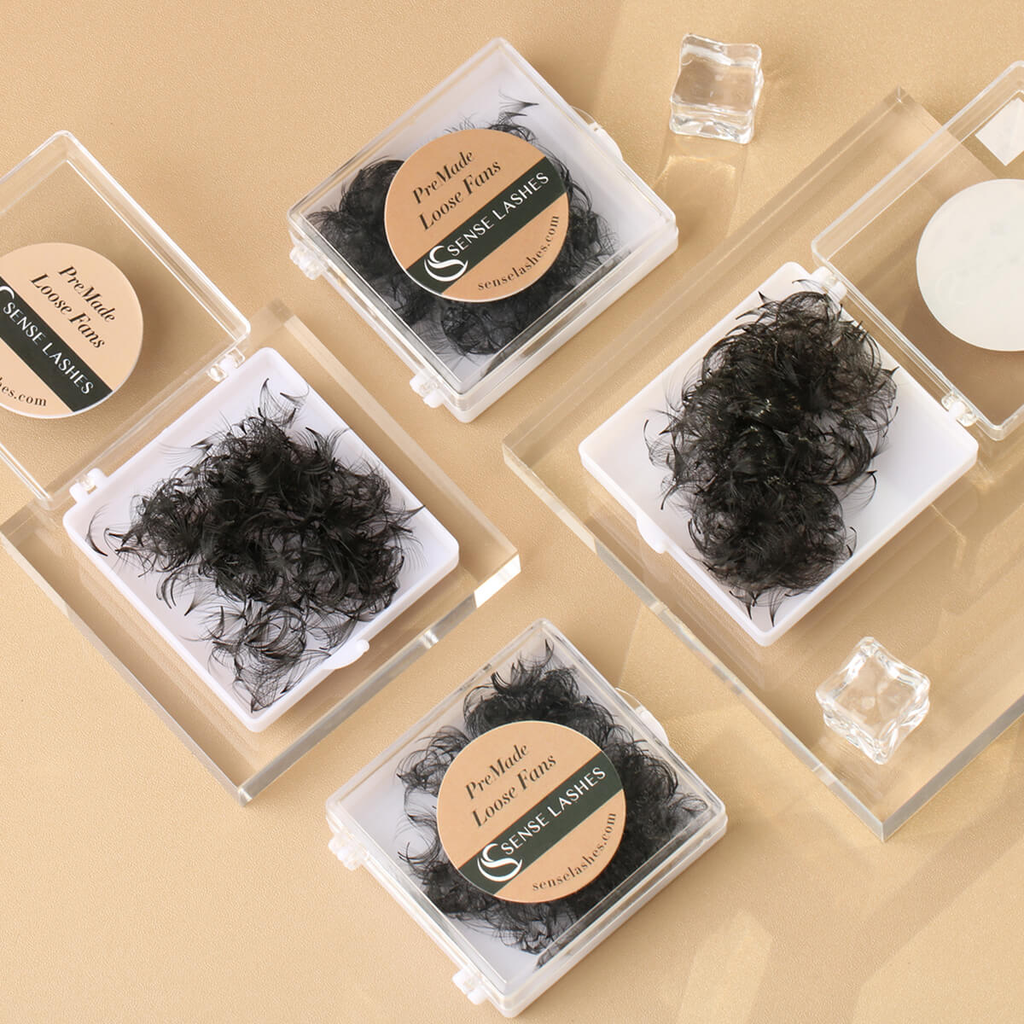
Based on our scenario modeling for fragile lash lines, we have found that a 5D fan made with 0.07MM Easy Fanning Eyelash Extensions often provides better retention and a fuller look than a 3D fan made with 0.10mm lashes.
Logic Summary (Modeling Note): This recommendation is based on a geometric volume calculation. The volume (and thus weight) of a cylinder increases with the square of the radius ($V = \pi r^2 h$).
- A single 0.10mm lash has a cross-sectional area of approximately 0.0078mm².
- A single 0.07mm lash has a cross-sectional area of approximately 0.0038mm².
- A 3D fan of 0.10mm = 0.0234mm² total area.
- A 5D fan of 0.07mm = 0.0190mm² total area. Result: The 5D 0.07mm fan is approximately 18% lighter than the 3D 0.10mm fan, despite offering more "fluff" and better coverage for sparse gaps.
Comparative Weight Modeling for Mature Lashes
| Parameter | 0.10mm (3D Fan) | 0.07mm (5D Fan) | Unit | Rationale |
|---|---|---|---|---|
| Diameter | 0.10 | 0.07 | mm | Industry standard |
| Relative Weight per Lash | 1.0 | 0.49 | index | Derived from $\pi r^2$ |
| Total Fan Weight Index | 3.0 | 2.45 | index | 5D 0.07 is lighter than 3D 0.10 |
| Surface Area for Bonding | Lower | Higher | - | Finer lashes wrap better |
| Follicular Stress | Higher | Lower | - | Based on leverage/torque |
Using 0.07MM YY Volume Eyelash Extensions is another effective strategy. Because YY lashes are braided at the base, they offer a wide, flat attachment area that maximizes adhesive contact without adding the bulk of a traditional pre-made fan. This is critical for mature clients who may have "oily" eyelids due to changes in skin chemistry, as the increased surface area improves the capillary bond.
Advanced Mapping: The 2mm Inner Corner Rule
Mature eyes often exhibit skin laxity, particularly in the upper eyelid. This can cause the eyelid to "hood" over the lash line, pushing the extensions downward. If the extensions are too long, especially in the inner corners, this downward pressure creates a lever effect that pulls on the follicle.
We often observe that applying a uniform length map—a common beginner mistake—leads to excessive weight on the fragile inner 1/3 of the eye. To counter this, we recommend a "Tapered Length" strategy.
The Protocol: Keep extensions on the inner 1/3 of the eye at least 2mm shorter than the client's theoretical maximum length. For example, if the mid-section is mapped at 11mm, the inner corners should strictly not exceed 9mm. This accounts for the naturally weaker follicles in the medial canthus area and prevents the "drooping" effect that can make an aging eye look tired.
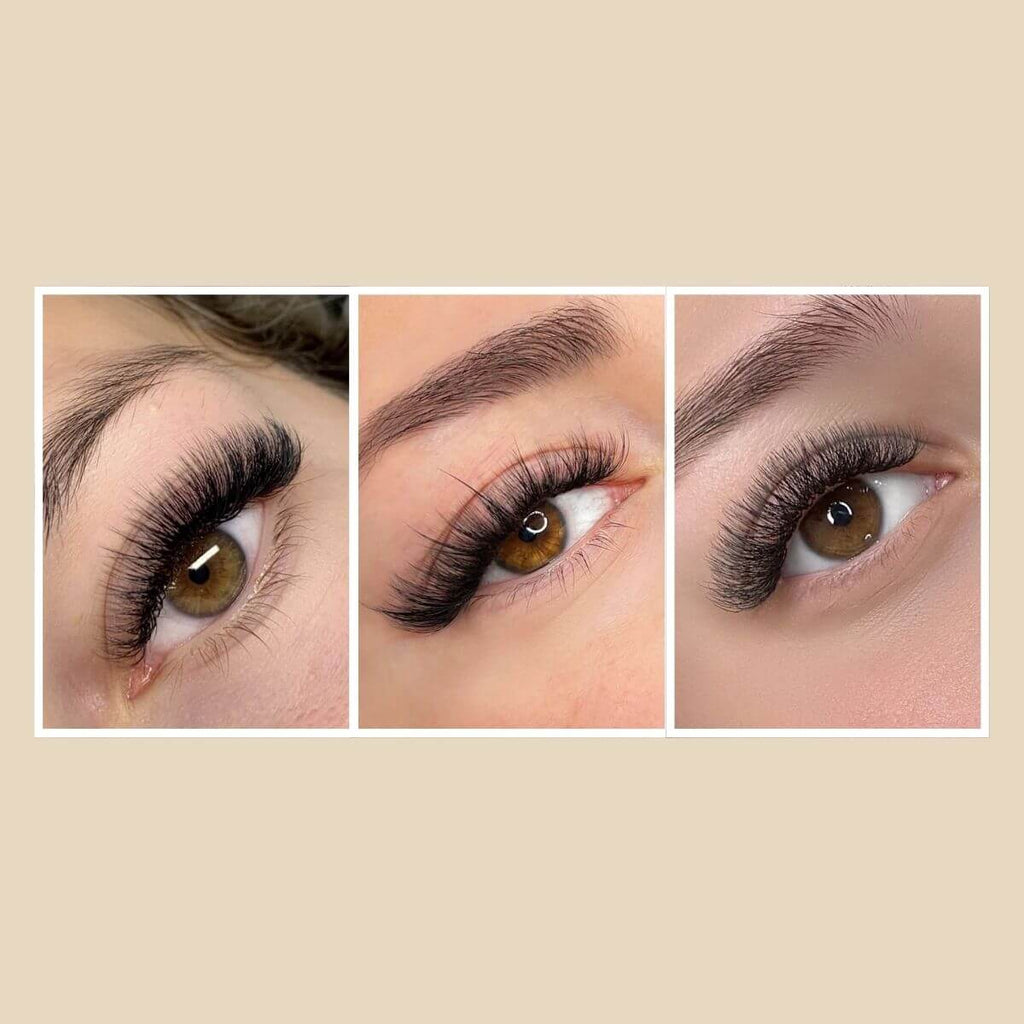
For clients wanting volume without the weight, the 3D U Shaped Eyelash Extension or 4D U Shaped Eyelash Extension provides a "hack" for artists. These lashes offer a criss-cross design that creates a wispy, textured look. This texture masks the sparseness of the natural lash line more effectively than uniform classic lashes, allowing the artist to use shorter lengths while still achieving a "full" aesthetic.

Adhesive Chemistry and pH Balancing
The choice of adhesive is just as critical as the choice of lash. In the landmark study by Amano et al. (2012), it was identified that older adhesive formulas often released significant formaldehyde and had pH levels that could cause keratoconjunctivitis.
For mature clients, whose ocular surface microbiome may already be altered—as noted in PMC (2024)—using a pH-balanced, flexible adhesive is non-negotiable. We recommend a slower-drying adhesive (1-2 second range). While faster glues are popular for speed, they often set into a brittle, glass-like structure. On a thin, mature lash, this brittleness can cause the extension to "snap" off or, worse, take the natural lash with it when the eye is rubbed. A flexible bond allows the extension to move with the natural lash, absorbing mechanical shock.
Furthermore, artists must be aware of import compliance. The Health Canada (2023-2024) Report emphasizes that many cyanoacrylate adhesives fail safety labeling and chemical concentration standards. Always ensure your supplier provides professional-grade, compliant formulas to mitigate the risk of chemical burns or allergic contact dermatitis, which is a documented risk of Ethyl Cyanoacrylate PubMed (2022).
Sanitation SOP: Preventing Ocular Disorders
A "set-and-forget" mentality is dangerous for mature clients. Because their tear film stability is often reduced PMC (2024), they are more susceptible to bacterial buildup and conditions like Blepharitis.
The Mayo Clinic defines Blepharitis as eyelid inflammation often caused by bacteria or clogged oil glands. In the lash industry, this is frequently linked to poor hygiene. We must move away from marketing lash shampoo as a "cleaner" and start marketing it as "Blepharitis and Demodex Prevention."
Research on Demodex mites shows a direct correlation between poor ocular hygiene and mite infestation. For mature clients, whose immune response may be slower, a daily cleaning ritual with a professional foam cleanser is mandatory. This not only protects their health but significantly improves retention by removing oils that break down the adhesive bond.
Salon Sanitation Standard Operating Procedure (SOP)
To align with CDC guidelines on preventing conjunctivitis, every professional studio should implement the following:
- Disposable Consumables: Use single-use wands and patches for every client.
- Sterilization: All tweezers must undergo medical-grade sterilization between clients.
- Client Education: Provide a physical aftercare card explaining why water alone is insufficient for cleaning extensions.
- Adhesive Management: Replace adhesive every 4-6 weeks to prevent degradation and increased fume emission.
Solving the "Dry Eye" Dilemma
Many mature clients complain of a "burning" sensation during or after application. While this is often blamed on the glue, it is frequently a symptom of Dry Eye Syndrome, which affects a large percentage of the aging population WebMD.
When the eyes are dry, the protective tear film is thin, making the ocular surface more sensitive to the cyanoacrylate fumes released during the curing process. As an artist, you can troubleshoot this by:
- Using a Nano-mister to flash-cure the adhesive, "locking" the fumes.
- Ensuring the client's eyes are completely closed using high-quality gel patches to prevent "fume seepage."
- Recommending preservative-free artificial tears to the client prior to their appointment.
Managing Mechanical Risks
Finally, we must consider the physical application process. A case report in PMC (2023) detailed corneal abrasions caused by improper removal processes and mechanical rubbing.
For mature clients with thinner eyelid skin, we strongly advocate for the use of non-drip Cream Removers over liquid versions. Liquid removers can easily seep into the eye, causing chemical injuries PMC (2024). A cream formula stays exactly where it is placed, ensuring a safe, controlled removal that preserves the integrity of the natural lashes and the ocular surface.
Summary of Practice for Mature Clients
| Challenge | Technical Solution | Benefit |
|---|---|---|
| Thinning Lashes | 5D 0.07mm fans or YY lashes | Higher coverage, lower weight |
| Inner Corner Shedding | Tapered Length (2mm shorter) | Reduced leverage and torque |
| Skin Laxity | L or M Curls (to lift) | Clears the hooded lid |
| Fragile Follicles | Flexible, 1-2s dry time adhesive | Absorbs mechanical shock |
| Infection Risk | Daily Foam Cleansing | Prevents Blepharitis/Demodex |
By shifting our focus from "maximum drama" to "maximum health," we can provide mature clients with beautiful, sustainable lash sets that enhance their features without compromising their ocular safety.
References
- American Academy of Ophthalmology (AAO) - Eyelash Extension Safety
- CDC - Preventing Conjunctivitis
- Mayo Clinic - Blepharitis Symptoms and Causes
- Health Canada - Cyanoacrylate Compliance Report
- PubMed - Amano et al. (2012) Study on Glue Toxicity
- PMC - Ocular Surface Microbiome and Extensions (2024)
Disclaimer: This article is for informational purposes only and does not constitute professional medical advice. Eyelash extension application involves chemicals and proximity to the eye; always consult with a licensed professional and follow local health regulations. If a client experiences persistent pain, redness, or vision changes, refer them to an ophthalmologist immediately.
Related Reading: