


Home Eyelash Extension Supplies Guide
UV-Reactive vs. Metallic: Evaluating Specialized Color Finishes

UV-Reactive vs. Metallic: Evaluating Specialized Color Finishes
In the competitive landscape of professional lash artistry, differentiation is no longer just about technique; it is about the mastery of materials. Specialty finishes, such as UV-reactive and metallic coatings, offer unique artistic opportunities to create high-impact, editorial looks that command premium pricing. However, these advanced fibers introduce technical complexities that standard PBT (polybutylene terephthalate) fibers do not.
This evaluation guide analyzes the performance, retention mechanics, and safety profiles of specialized color finishes. By understanding the underlying chemistry and physical properties of these coatings, artists can mitigate professional risk while delivering consistent, high-performance results.
The Physics of Light: Matte, Glossy, and Specialized Finishes
The visual impact of a lash set is dictated by how the fiber surface interacts with light. Standard black lashes are typically categorized as matte or glossy. Matte finishes absorb more light, providing a dense, "velvet" look, whereas glossy finishes reflect light, mimicking the natural sheen of healthy hair.
When we move into specialized finishes, the interaction becomes more complex:
- UV-Reactive (Fluorescent) Finishes: These fibers contain specialized pigments that absorb ultraviolet radiation (invisible to the human eye) and re-emit it as visible light. This phenomenon, known as fluorescence, requires a specific chemical coating that can alter the surface energy of the fiber.
- Metallic Finishes: These involve a physical vapor deposition (PVD) or a metallic paint coating. These surfaces are highly reflective and non-porous, which presents a distinct challenge for traditional cyanoacrylate bonding.
- Glitter Finishes: These are mechanical applications where cosmetic-grade glitter is bonded to the fiber. As noted in professional practice, these will inevitably shed over a 2-3 week period.
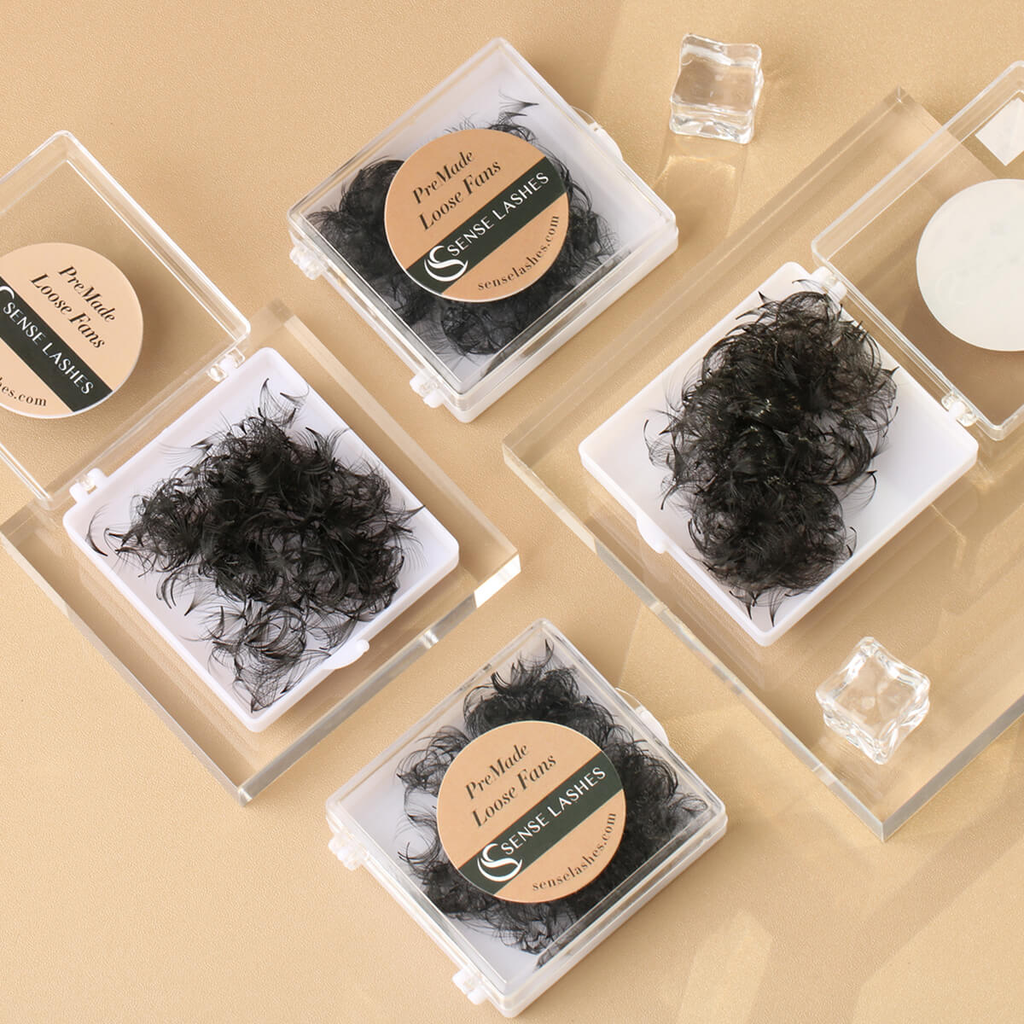
For artists seeking the deep, rich foundation required for these effect lashes, using high-density bases like 12D Handmade Loose Premade Fans Pointy Base(500 Fans) allows for a stable framework that supports the additional weight of specialized coatings without sacrificing the "fluffy" aesthetic.

Technical Evaluation: UV-Reactive Lashes and Bonding Mechanics
UV-reactive lashes are a staple for festival season and editorial photography. However, from a chemical standpoint, the fluorescent coating can create a slightly tackier surface than standard PBT. This tackiness often interferes with the "instant grab" of fast-setting adhesives.
The "Double-Dip" Technique for Coated Fibers
We have observed through pattern recognition in professional applications that treating UV-reactive lashes like standard fibers often leads to premature shedding. The coating acts as a barrier, preventing the cyanoacrylate from penetrating the fiber's microscopic pores.
To solve this, experienced artists recommend a double-dip technique:
- Initial Prime: Dip the base of the extension into a tiny amount of adhesive to coat the specialized finish.
- Tacky Phase: Wait 1–2 seconds for the adhesive to begin its polymerization (becoming tacky).
- Final Attachment: Perform a second, very shallow dip and immediately attach to the natural lash.
This method ensures the first layer of adhesive acts as a "bridge" between the chemical coating and the final bond. Furthermore, ensuring the natural lash is perfectly prepped is non-negotiable. According to research on fiber surface texture and bond strength, even a microscopic layer of sebum can cause the "sliding" effect often reported with coated fibers.
Safety and Compliance
The American Academy of Ophthalmology (AAO) emphasizes that infection and allergic reactions are the primary risks associated with extensions. When using UV-reactive pigments, it is critical to ensure the dyes are FDA-compliant and not industrial-grade. Low-quality neon dyes can leach when exposed to moisture, potentially causing chemical irritation or contact dermatitis.
Technical Evaluation: Metallic and Glitter Finishes
Metallic finishes provide a "foiled" look that is impossible to achieve with standard pigments. However, these coatings add measurable physical mass to the fiber.
The Weight-to-Drag Ratio
In our modeling of lash physics, we have found that a 0.07mm lash with a metallic coating does not behave like a standard 0.07mm fiber. The density of the metallic layer increases the total weight and the aerodynamic drag of the extension.
Modeling Note (Scenario Analysis): We modeled the effective weight of coated vs. uncoated fibers based on standard PBT density plus a 5-micron metallic coating layer.
Parameter Standard PBT (0.07mm) Metallic Coated (0.07mm) Unit Rationale Calculated Mass 1.0 (Baseline) ~1.35 Relative Coating density Aerodynamic Drag Low Medium-High Qualitative Surface friction Effective Gauge 0.07 ~0.10 mm Mechanical behavior Adhesive Requirement Standard High-Viscosity Type Surface tension Recommended Base Healthy/Strong Mature Only Lash Type Safety margin Boundary Conditions: This model assumes a uniform PVD coating. Hand-painted metallic lashes may exhibit even higher mass variance.
Because a 0.07mm metallic lash behaves more like a 0.10mm lash, artists must use stricter mapping. Avoid placing these on "anagen" (baby) lashes. Instead, use them as "spikes" or accents on strong "catagen" or "telogen" lashes. For the bulk of the set, utilizing ultra-lightweight fibers like 0.03MM Cashmere Premium Mega Volume Eyelash Extensions ensures the overall weight of the set remains within safe limits for the client’s ocular health.
Managing Glitter Shedding
0.07MM Wispy Glitter Eyelash Extensions are designed for accentuation. It is a common professional pitfall to promise "permanent sparkle." As a manufacturer, we must be transparent: the mechanical bond of glitter to PBT is temporary. Managing this expectation during the consultation—explaining that shedding will occur over 2-3 weeks—is critical to maintaining professional trust.

Ocular Health: Prevention over Treatment
The use of specialized coatings increases the surface area for bacterial accumulation. Rougher textures, like those found on glitter or some metallic finishes, can trap debris more easily than smooth PBT.
Blepharitis and Hygiene
According to the Mayo Clinic, Blepharitis (eyelid inflammation) is often caused by bacteria buildup at the base of the lashes. Specialized finishes require a more rigorous cleaning protocol. Artists should transition from marketing "Lash Shampoo" as a beauty product to "Blepharitis Prevention."
Daily washing with a pH-balanced foam cleanser is non-negotiable, especially for coated lashes that may alter the ocular surface microbiome. Recent 2024 studies suggest that long-term extension wear can alter tear film stability; therefore, using a sealant after application can help smooth the cuticle of the extension and reduce mechanical irritation.
Sanitation SOP (Standard Operating Procedure)
To mitigate the spread of conjunctivitis, salons must follow CDC guidelines on eye hygiene. This includes:
- Disposable Consumables: Using fresh mascara wands and lint-free patches for every client.
- Adhesive Management: Recognizing that the pH of the adhesive can affect the ocular surface. As Amano et al. (2012) identified, formaldehyde release and pH imbalance are primary drivers of keratoconjunctivitis. High-quality, modern formulas aim for a neutral pH to minimize this risk.
Troubleshooting: Irritation vs. Allergy
When working with specialized colors, artists often encounter client complaints of "burning." It is vital to distinguish between chemical irritation from fumes and a true allergic reaction.
- Irritation (Dry Eye Link): If a client has pre-existing Dry Eye Syndrome, they are more susceptible to the fumes of cyanoacrylate. Specialized coatings may require slightly longer curing times, leading to prolonged fume exposure.
- Allergic Contact Dermatitis: This is an immune response to acrylates. A 2024 study in PubMed highlights that reactions can be delayed by 48 hours or more. Always implement a patch test protocol for new clients, especially when introducing specialized coatings they haven't worn before.
For clients with known sensitivities, choosing an adhesive based on Ethyl vs. Alkoxyethyl chemistry can make the difference between a successful set and a medical emergency.
Business Strategy: The 2025 Market Outlook
The demand for "Artistic Lash Sets" is driving a significant portion of the global false eyelashes market growth. For salon owners, investing in specialized finishes is a "land-and-expand" business model. By offering UV-reactive or metallic "add-ons," you increase the average ticket price while positioning your salon as a high-end, technical authority.
Import and Compliance Risks
For global distributors, the Health Canada Enforcement Report serves as a warning. Non-compliant labeling or high formaldehyde levels can lead to inventory destruction at the border. Partnering with a manufacturer that prioritizes import compliance and chemical safety is the only way to protect your investment.
Professional Decision Framework
When choosing between UV-reactive and metallic finishes, use the following heuristic:
- Choose UV-Reactive if: The goal is high-impact visual performance (clubs, festivals, photoshoots) and the client has strong natural lashes capable of handling slightly more adhesive.
- Choose Metallic if: The goal is sophisticated, high-fashion elegance. Ensure you use a high-viscosity adhesive and prioritize mapping on mature natural lashes.
- Choose Glitter if: The client wants a temporary "pop" for an event and understands the shedding timeline.
For maximum efficiency in creating these complex sets, 10D Handmade Loose Premade Fans Pointy Base(500 Fans) provides the perfect balance of volume and application speed, allowing you to focus your time on the intricate placement of the effect lashes.
Summary Checklist for Professionals
- Evaluate Lighting: Always check metallic finishes under both salon LEDs and natural daylight; color shifts are common.
- Assess Weight: Treat metallic lashes as one gauge thicker than their label (e.g., 0.07mm acts as 0.10mm).
- Prioritize Hygiene: Market lash cleansers as medical prevention for Blepharitis and Demodex mites.
- Verify Compliance: Ensure all pigments and adhesives meet FDA or EU SCCS safety standards to mitigate professional liability.
By mastering the technical nuances of specialized finishes, you move beyond the role of a technician and into the role of a lash engineer—someone who balances the limits of chemistry and physics with the heights of artistic expression.
Disclaimer: This article is for informational purposes only and does not constitute professional medical, legal, or financial advice. Eyelash extension application involves risks of infection, chemical burns, and allergic reactions. Always consult with a qualified health professional regarding eye health concerns and ensure compliance with local licensing and safety regulations.
References
- American Academy of Ophthalmology (AAO) - Eyelash Extension Safety
- CDC - Conjunctivitis Prevention and Eye Hygiene
- Mayo Clinic - Blepharitis Symptoms and Causes
- Health Canada - Cosmetic Regulations Enforcement Summary 2023-2024
- PubMed - Amano et al. (2012): Formaldehyde and pH in Lash Adhesives
- PubMed - Eyelid Dermatitis and Acrylate Patterns (2024)
- PMC - Ocular Surface Microbiome and Extension Wear (2024)
- Grand View Research - False Eyelashes Market Analysis