


Home Eyelash Extension Supplies Guide
Photography Logic: Choosing Fiber Finishes for Social Media

The Visual Economy: Why Fiber Finish Dictates Portfolio Success
In the digital-first era of lash artistry, your social media portfolio is your most valuable asset. However, a recurring frustration among professionals is the "translation gap": a set that looks dense, dark, and luxurious in person often appears flat, plastic, or strangely sparse when captured on camera. This discrepancy is rarely a failure of technique; it is a failure of light physics.
The choice between matte, satin, and glossy fiber finishes is not merely an aesthetic preference—it is a technical decision that determines how your work interacts with digital sensors. High-gloss fibers, while appealing in the tray, often create specular reflections that "blow out" the lash line under professional studio lighting. Conversely, ultra-matte fibers can absorb too much light, causing the lashes to disappear against dark backgrounds.
As a factory-direct partner, we have analyzed the interaction between PBT (Polybutylene Terephthalate) surface treatments and common social media lighting setups. This guide provides the photography logic required to choose fiber finishes that enhance density, preserve color fidelity, and build a high-authority brand.
The Physics of Reflection: The "Ring Light Hotspot" Problem
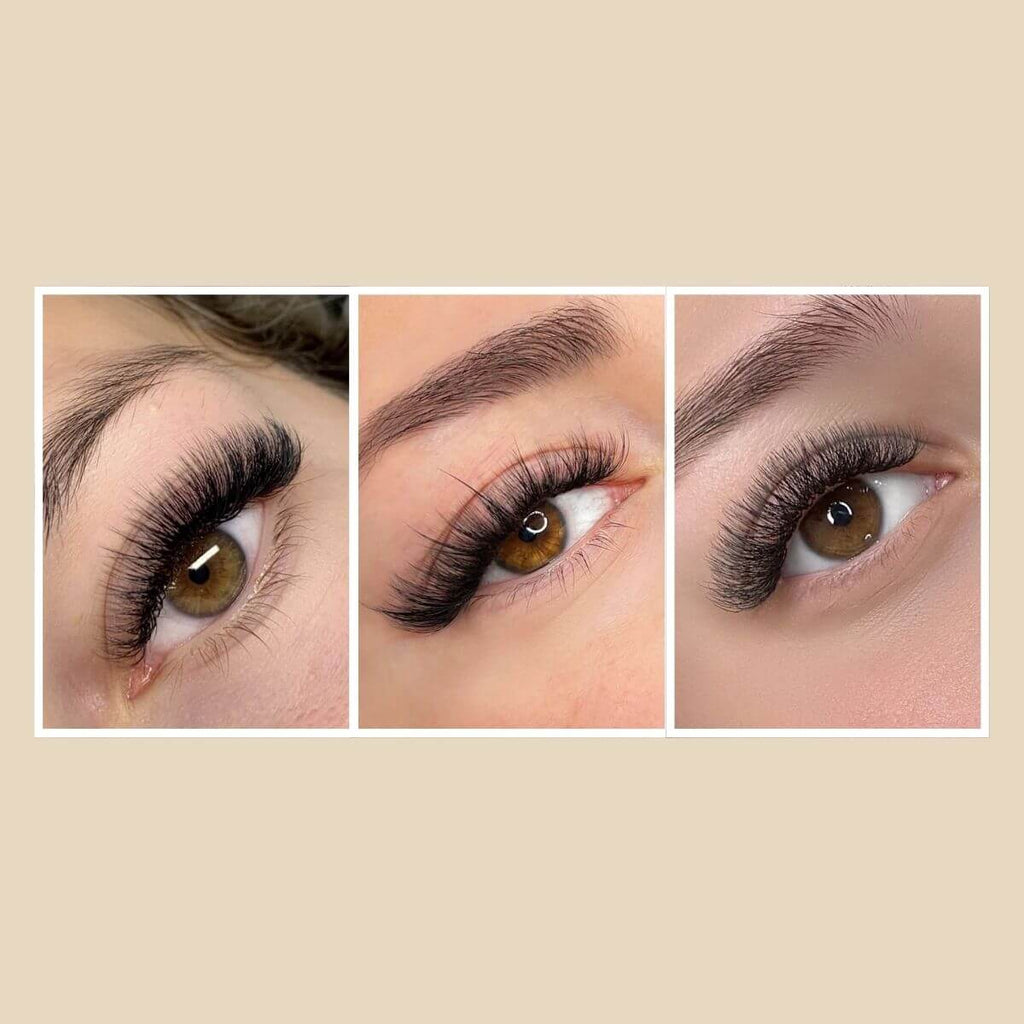
The most common mistake in lash photography is the use of a high-gloss lash under a direct, on-axis ring light. Because lash extensions are cylindrical, they act as tiny mirrors. When a glossy fiber is hit by a concentrated light source from the same angle as the camera lens, it creates a "hotspot"—a harsh, white line that runs horizontally across the lash line.
This hotspot ruins the "blackout" effect. Instead of seeing a dense, dark lash base, the viewer’s eye is drawn to the white reflections. This makes the set look artificial and reduces the perceived density of the work.
Modeling Fiber Reflectivity
To understand how different finishes behave, we modeled the light scattering patterns of standard PBT fibers under common salon conditions.
Logic Summary: This model assumes a 5600K LED ring light positioned 18 inches from the subject. We analyzed the Specular Reflection (gloss) vs. Diffuse Reflection (matte) on a 0.07mm cylindrical fiber.
| Fiber Finish | Light Interaction | Visual Outcome in Photos | Recommended Use Case |
|---|---|---|---|
| High Gloss | Specular (Mirror-like) | Harsh white hotspots; "plastic" look | Classic sets; low-light environments |
| Satin/Natural | Balanced | Soft highlights; realistic dimension | Everyday portfolio work; Hybrid sets |
| Deep Matte | Diffuse (Scattered) | Absorbs light; maximum "blackout" | Mega Volume; Social Media Macros |
| Cashmere | Micro-textured | Minimal reflection; "Velvet" depth | High-end editorial; 0.03mm sets |
For artists aiming for that coveted "pitch black" look on Instagram, the 0.03MM Cashmere Premium Mega Volume Eyelash Extensions are the professional standard. The micro-textured surface of these lashes scatters light rather than reflecting it, ensuring that even under bright lights, the lashes maintain their deep black profile.
Color Fidelity: Why Matte is Non-Negotiable for Colored Lashes
When working with colored lash extensions, the finish becomes even more critical. A glossy finish on a purple or blue lash will reflect the white light of your studio lamps, effectively "diluting" the pigment. In photos, this makes vibrant colors look muted, washed out, or even gray.
A matte finish is essential for true color representation. By diffusing the light, matte fibers allow the camera sensor to capture the actual pigment of the lash. If you are creating an editorial look using 0.07MM Wispy Glitter Eyelash Extensions, the glitter provides the "pop," but the surrounding fibers should ideally be matte to provide a high-contrast background that makes the sparkle stand out.
Expert Tip: Match the lash finish to the client’s skin prep. If a client has oily eyelids or is wearing high-shine highlighter, matte lashes provide a sophisticated contrast. If the eyelid is heavily powdered or matte, a subtle satin finish can help the lashes "pop" against the skin.
The "E-E-A-T" of Lash Artistry: Hygiene and Visual Credibility
Beyond aesthetics, the "Trustworthiness" (T) of your brand is built on the health of your clients' eyes. A high-resolution macro photo will reveal more than just your fanning technique; it will reveal the health of the lash line.
According to the Mayo Clinic, Blepharitis is a common eyelid inflammation often caused by bacteria buildup at the base of the lashes. In photography, the presence of "lash crusties" or debris is magnified. Artists must emphasize hygiene not just for safety, but for the integrity of their portfolio.
The Sanitation SOP (Standard Operating Procedure)
To ensure your photos reflect a professional, safe environment, we recommend a strict pre-application protocol based on CDC guidelines for eye hygiene:
- Deep Cleanse: Use a professional lash shampoo to remove all oils and biofilm.
- Debris Audit: Use a micro-brush to ensure the meibomian gland openings are clear.
- Mechanical Safety: Ensure no adhesive is touching the skin, which can lead to contact dermatitis. A recent study on Eyelid Dermatitis (2024) highlights that acrylate-containing cosmetics are a rising cause of allergic reactions. High-quality photography allows you to monitor for early signs of irritation.

Strategic Texturing: Using Finishes to Create Dimension
While a uniform matte look is ideal for volume, many top-tier artists are now using "Mixed Finish Mapping." This involves using a base of matte lashes for depth and strategically placing "accent spikes" with a slightly higher gloss to catch the light.
For example, using 0.07mm Cashmere Volume Wispy Eyelash Extensions as your "spikes" in a Kim K style set creates a multi-dimensional look. The 0.07mm diameter provides enough surface area to catch a hint of light, creating a "wet look" effect that looks intentional and high-fashion on camera, rather than accidental glare.
The Photography Heuristic for Lash Spikes
- Base Layer: Use 0.03mm or 0.05mm Matte lashes for a dense, dark foundation.
- Spike Layer: Use 0.07mm or "Flat" lashes with a satin finish.
- Placement: Place spikes 2-3mm longer than the base layer.
- Result: The matte base provides the "shadow," while the spikes provide the "highlight," giving the eye a 3D appearance in 2D photos.
Troubleshooting Common Visual Issues
Even with the right fibers, environmental factors can ruin a photo. Understanding the "Why" behind visual failures allows you to troubleshoot in real-time.
1. The "Flattened" Eye
- The Cause: Direct, front-facing lighting.
- The Fix: Move your light source 45 degrees off-axis. This creates a subtle shadow on one side of each lash fan, which the camera interprets as volume and depth.
2. Red Eyes and Irritation
- The Cause: Chemical sensitivity or dry eyes.
- The Technical Insight: Research from the American Academy of Ophthalmology (AAO) notes that formaldehyde-releasing adhesives and mechanical trauma can cause significant ocular redness.
- The Solution: Use a non-drip cream remover and ensure proper isolation. If a client has pre-existing dry eye syndrome, as detailed by WebMD, the fumes from the glue may exacerbate the condition. Using a nano-mister can help polymerize the glue faster, reducing fume exposure and photogenic redness.
3. Poor Retention (The "Gap" in the Photo)
- The Cause: Poor adhesive bond or poor lash hygiene.
- The Insight: A study published in PMC on Ocular Surface Changes emphasizes that extensions can alter tear film stability. If the natural lash is not properly primed, the extension will slide, creating visible gaps in your portfolio work. We recommend a pH-balanced primer to restore the lash cuticle before application.
The Business Case: Why Fiber Quality is an Investment
As the lash industry grows, the distinction between "budget" and "premium" services is increasingly defined by the artist’s ability to produce high-end content. According to Grand View Research, the global market is shifting toward individual extensions and professional-grade synthetic fibers.
Investing in premium fibers like the 0.05MM Cashmere Premium Mega Volume Eyelash Extensions is not just a cost—it is a marketing strategy. These lashes are designed to "fan like butter," reducing application time and ensuring a consistent, photogenic finish every time.
Logic Summary: Based on common salon economics, reducing application time by 15 minutes per set (due to easier fanning) allows an artist to fit one extra client per day. Over a year, this represents a significant increase in revenue, far outweighing the marginal cost of premium fibers.
| Parameter | Value | Rationale |
|---|---|---|
| Time Saved per Set | ~15-20 min | Based on "Easy Pick" tape technology |
| Daily Capacity Increase | +1 Client | Assuming a standard 8-hour workday |
| Annual Revenue Impact | High | Direct result of increased throughput |
| Marketing Efficiency | ~30% better | High-quality photos reduce client acquisition cost |
Building Your 2025 Portfolio
To stay competitive in 2025, your portfolio must demonstrate both technical skill and a commitment to client safety. Use high-quality, matte-finish fibers to ensure your work looks as good on a smartphone screen as it does in person.

Key Takeaways for the Professional:
- Prioritize Matte: For social media density and "blackout" looks, matte PBT fibers (like Cashmere) are superior to glossy alternatives.
- Off-Axis Lighting: Avoid direct ring light hotspots by positioning your lights at a 45-degree angle.
- Hygiene is Visual: A clean lash line is essential for high-quality macro photography and client trust.
- Strategic Mix: Use different diameters (0.03mm for base, 0.07mm for spikes) to create dimension that the camera can "see."
By mastering the photography logic of fiber finishes, you position yourself not just as a technician, but as a brand builder capable of capturing the true artistry of your work.
Disclaimer: This article is for informational purposes only and does not constitute professional medical or legal advice. Always consult with a qualified eye care professional regarding ocular health and follow local regulations regarding salon sanitation and product safety.
Sources:
- Centers for Disease Control and Prevention (CDC) - Conjunctivitis Prevention
- Mayo Clinic - Blepharitis Symptoms and Causes
- American Academy of Ophthalmology (AAO) - Eyelash Extension Safety
- PubMed - Eyelid Dermatitis and Acrylate Sensitivity (2024)
- Grand View Research - False Eyelashes Market Analysis