


Home Eyelash Extension Supplies Guide
Heat-Bonded vs. Glue-Bonded: Choosing the Lightest Base Architecture

The Architecture of Professional Volume: Heat-Bonded vs. Glue-Bonded Fans
In the pursuit of the "perfect" mega-volume set, professional lash artists often find themselves at a technical crossroads: the choice between heat-bonded and glue-bonded premade fans. While both architectures aim to streamline studio workflow, their structural differences dictate the total chemical load, mechanical stress on the natural lash, and long-term ocular health of the client.
For the studio owner, this is not merely an aesthetic choice. It is a decision involving total cost of ownership, risk mitigation, and retention consistency. Understanding how these bases interact with professional-grade adhesives—and how they influence the ocular surface microbiome—is what separates a technician from a master artist.
1. The Anatomy of the Base: Manufacturing and Porosity
To choose the right architecture, we must first understand the physics of the bond.
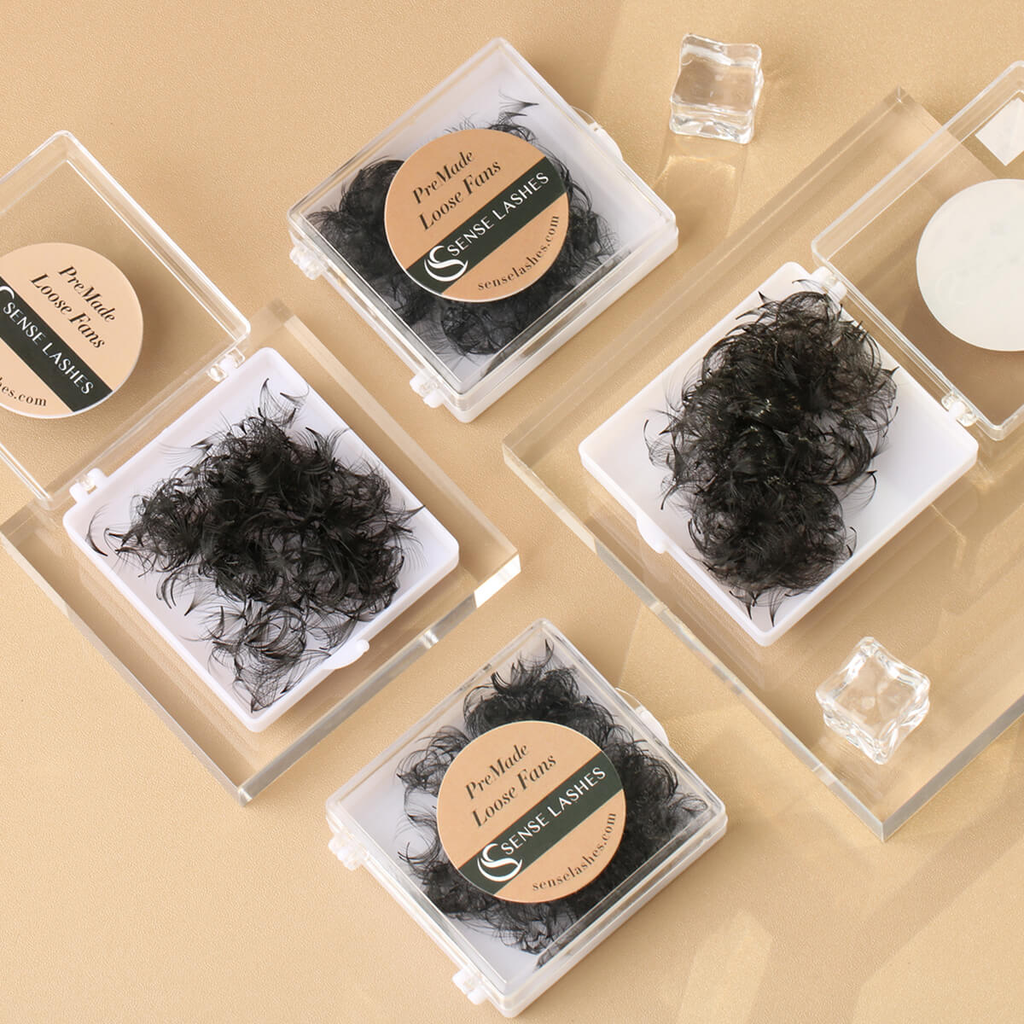
Heat-Bonded (Fused) Bases Heat-bonded fans, such as the 30D Handmade Loose Premade Fans Pointy Base(500 Fans), are created by applying precise thermal energy to the roots of the PBT (Polybutylene Terephthalate) fibers. This process fuses the individual strands into a singular, ultra-slim, and non-porous point. Because no external adhesive is used during the manufacturing of the fan itself, the base remains exceptionally lightweight and "pointy."
Glue-Bonded (Adhesive) Bases Glue-bonded fans use a microscopic amount of cyanoacrylate at the factory level to hold the fan's shape. While modern manufacturing has minimized this "factory bond," it inherently adds a layer of cured adhesive to the base before the artist even touches it. These bases tend to be slightly wider and more porous than their heat-bonded counterparts.
Logic Summary: Our structural analysis of PBT fiber interaction assumes that heat-fusing creates a monolithic base structure, whereas glue-bonding creates a composite structure. This fundamental difference determines how the fan will "wick" or absorb the artist's adhesive during application.
2. The Weight of the Matter: Calculating Total Chemical Load
A primary concern in modern lash artistry is the mechanical damage caused by excessive weight. According to a 2024 study published in PubMed, the spectrum of disorders caused by extensions is often linked to mechanical trauma and chemical toxicity.
When an artist uses a glue-bonded fan, they are applying "glue on top of glue." This creates a double-dose of cyanoacrylate. In contrast, heat-bonded fans allow for a "micro-dip" technique. Because the fused base is non-porous, it requires only a minimal coating of adhesive to create a secure bond.
Modeling the Lash Load (Heuristic Estimate)
Based on common industry heuristics and studio observations (not a controlled lab study), we can model the weight difference as follows:
| Parameter | Heat-Bonded (e.g., 12D 0.03) | Glue-Bonded (e.g., 12D 0.03) | Unit | Rationale |
|---|---|---|---|---|
| Fiber Weight | ~0.36 | ~0.36 | mg | 12 strands of 0.03 PBT |
| Factory Adhesive | 0.00 | ~0.04 - 0.08 | mg | Estimated factory bond load |
| Application Adhesive | ~0.05 | ~0.10 | mg | "Micro-dip" vs. "Wicking" absorption |
| Total Weight | ~0.41 | ~0.50 - 0.54 | mg | Cumulative load on natural lash |
Note: This model assumes a standard 2mm dip depth. Actual values vary by artist technique and adhesive viscosity.
Using a heat-bonded architecture like the 12D Handmade Loose Premade Fans Pointy Base(500 Fans) can reduce the total weight of a mega-volume fan by an estimated 20-25%. This reduction is critical for clients with fine or recovering natural lashes, as it minimizes the risk of premature shedding.

3. Adhesive Interaction: Matching Viscosity to Architecture
The "stickiness" of the base and its interaction with your adhesive determines your retention. A common mistake is using the same dipping technique for both architectures.
For Heat-Bonded Fans: The Micro-Dip
Because the base is non-porous and fused, the adhesive sits on the surface. We recommend a high-speed, thin-viscosity adhesive like the 0.5-1 Second Diamond Eyelash Extension Glue.
- Why: The fast drying time (0.5-1s) prevents the adhesive from traveling up the fan (wicking), which can cause the fan to close.
- Technique: Use a vertical "micro-dip" (1-2mm). You only need enough to coat the very tip.
For Glue-Bonded Fans: The Medium Viscosity Match
Glue-bonded bases are slightly more absorbent. A medium-viscosity adhesive, such as the 1-2 Second Gold Eyelash Extension Glue, is often more effective here.
- Why: The slightly thicker "syrup-like" consistency fills the microscopic gaps in the glue-bonded base, creating a more seamless "wrap" around the natural lash.
- Technique: A slightly deeper dip (2-3mm) ensures the new adhesive fully integrates with the factory bond.
For more on managing these interactions, see our guide on Troubleshooting Glue Wick: Why Mega Fans Close on Application.
4. Ocular Health: Blepharitis Prevention and Hygiene
The architecture of the fan base directly impacts the client's ability to maintain hygiene. A "bulky" or wide base creates a shelf where sebum, dead skin cells, and cosmetic residue can accumulate.
According to the Mayo Clinic, Blepharitis (eyelid inflammation) is frequently caused by bacteria buildup at the base of the lashes. Heat-bonded "pointy" bases minimize this surface area, making it easier for lash shampoo to penetrate and cleanse the eyelid margin.
Furthermore, a 2024 investigation into the ocular surface microbiome suggests that long-term extension wear can alter tear film stability. By choosing lightweight, heat-bonded fans, artists reduce the mechanical "dragging" on the eyelid, which helps maintain the health of the Meibomian glands.
Professional Insight: We often observe that clients wearing heat-bonded sets report less "heaviness" and fewer instances of "itchy lids"—common early symptoms of poor hygiene or mild irritation. This is likely due to the reduced chemical load and improved airflow at the lash line.
5. Safety, Compliance, and Risk Mitigation
In an increasingly regulated global market, the chemical composition of your supplies is a business liability. Health Canada’s 2023-2024 Enforcement Report recently highlighted high non-compliance rates regarding cyanoacrylate labeling and chemical safety.
As a professional, using heat-bonded fans simplifies your compliance profile. Because there is no "mystery" factory glue involved in the fan's structure, you have total control over the chemicals touching your client's eyes. When paired with a high-quality adhesive like the 0.5-1 Second Diamond Eyelash Extension Glue—which contains no latex or formaldehyde—you significantly reduce the risk of allergic contact dermatitis.
The "pH Balance" Factor
Historical data from Amano et al. (2012) identified that the pH of some adhesives could cause keratoconjunctivitis. Modern, professional-grade systems focus on neutralizing these risks. By minimizing the amount of adhesive used (via heat-bonded fans), you further protect the delicate pH balance of the ocular surface.

6. Practical Studio Implementation: The Selection Framework
How do you decide which to use for a specific client? We suggest the following decision framework based on studio patterns and return rates:
Scenario A: The Mega-Volume Power User
- Client Profile: Healthy natural lashes, seeks maximum density (10D-30D).
- Recommendation: Heat-bonded pointy bases (e.g., 30D Handmade Loose Premade Fans).
- Logic: The "pointy" base allows for seamless stacking and "wrapping" without adding bulk. Use with a fast-drying glue to maintain fan "fluffiness." Reference our article on Master the Wrap: Enhancing Adhesive Surface in Large Fans for advanced placement techniques.
Scenario B: The "Hybrid" or Beginner Artist
- Client Profile: Standard volume, seeks longevity.
- Recommendation: Glue-bonded or heat-bonded 12D fans.
- Logic: If the artist is still mastering speed, a glue-bonded fan paired with a 1-2 Second Gold Eyelash Extension Glue provides a more forgiving "grab" time.
7. Maximizing Retention and Profitability
Ultimately, the choice of base architecture is an investment in your reputation.
- Heat-Bonded Fans: Offer the highest "safety-to-density" ratio. They allow you to charge premium prices for mega-volume sets while ensuring the client's natural lashes remain healthy for years of continuous wear.
- Glue-Bonded Fans: Provide a cost-effective entry point but require more vigilance regarding weight and hygiene.
To ensure long-term success, always educate your clients on aftercare. As noted by the CDC, hygiene is the first line of defense against eye infections. A daily cleanse with a professional lash shampoo is non-negotiable, especially for volume sets where the density of the fans can trap more debris.
By mastering the technical nuances of base architecture and adhesive chemistry, you position yourself as a "Pro-Grade Partner" in your client's beauty journey—prioritizing their safety as much as their aesthetic.
Summary of Key Takeaways
- Weight Efficiency: Heat-bonded fans are typically 20-25% lighter than glue-bonded fans due to the absence of factory adhesive.
- Viscosity Matching: Pair heat-bonded fans with thin, fast-drying glues (Diamond Bond) and glue-bonded fans with medium-viscosity glues (Gold Bond).
- Hygiene Advantage: The slim, "pointy" base of heat-bonded fans reduces the risk of Blepharitis by allowing better access for cleansing.
- Compliance: Using heat-bonded fans reduces the "chemical mystery" and aligns with safety standards from Health Canada and the AAO.
Disclaimer: This article is for informational purposes only and does not constitute professional medical or legal advice. Always consult with a qualified ophthalmologist for eye health concerns and refer to your local regulatory body for licensing and safety compliance.
References
- American Academy of Ophthalmology (AAO) - Eyelash Extension Safety
- Mayo Clinic - Blepharitis Symptoms & Causes
- Health Canada - 2023-2024 Cosmetic Regulations Enforcement Report
- PubMed - Mechanical Damage and Chemical Toxicity of Eyelash Extensions (2024)
- PMC - Ocular Surface Microbiome and Tear Stability (2024)
- Centers for Disease Control (CDC) - Conjunctivitis Prevention