


Home Eyelash Extension Supplies Guide
Undertone Mastery: Selecting Lash Colors for Cool vs. Warm Skin

Undertone Mastery: The Professional’s Guide to Lash Color Harmonization
In the high-precision world of eyelash extensions, the transition from a technician to a master artist is marked by the ability to move beyond "jet black." While black lashes offer universal drama, they can occasionally appear harsh or artificial against certain complexions. Modern clients—particularly those investing in premium, custom sets—increasingly demand a look that harmonizes with their natural biology. This requires a deep understanding of skin undertones, iris pigmentation, and the technical chemistry of the products we apply.
Selecting the correct lash pigment is not merely an aesthetic choice; it is a risk management strategy. A color mismatch can lead to client dissatisfaction, where the lashes look "off" or make the skin appear sallow, even if the application technique is flawless. By mastering undertone theory, professional lash artists can deliver results that enhance the client's facial aesthetic while maintaining the highest standards of safety and technical integrity.
The Science of Skin Undertones and Visual Perception
Skin tone refers to the surface color (fair, medium, deep), but the undertone is the subtle hue beneath the surface that remains constant regardless of sun exposure. Identifying these undertones is the first step in selecting the appropriate lash pigment.
Identifying the Three Categories
- Cool Undertones: Hints of blue, pink, or red. These clients often have veins that appear bluish or purple and suit silver jewelry.
- Warm Undertones: Hints of yellow, peach, or golden. These clients typically have greenish-appearing veins and are complemented by gold jewelry.
- Neutral Undertones: A balanced mix of warm and cool. These clients can often wear both gold and silver and may have veins that appear teal or are difficult to distinguish.
Methodology Note (Visual Assessment): Our professional heuristic for undertone assessment requires consultation in natural, north-facing light. Artificial lighting, particularly standard salon LEDs, can skew perceptions of yellow or pink bases, leading to inaccurate pigment selection. North-facing light provides the most consistent, neutral spectrum for color matching.
The "Sallow Skin" Trap
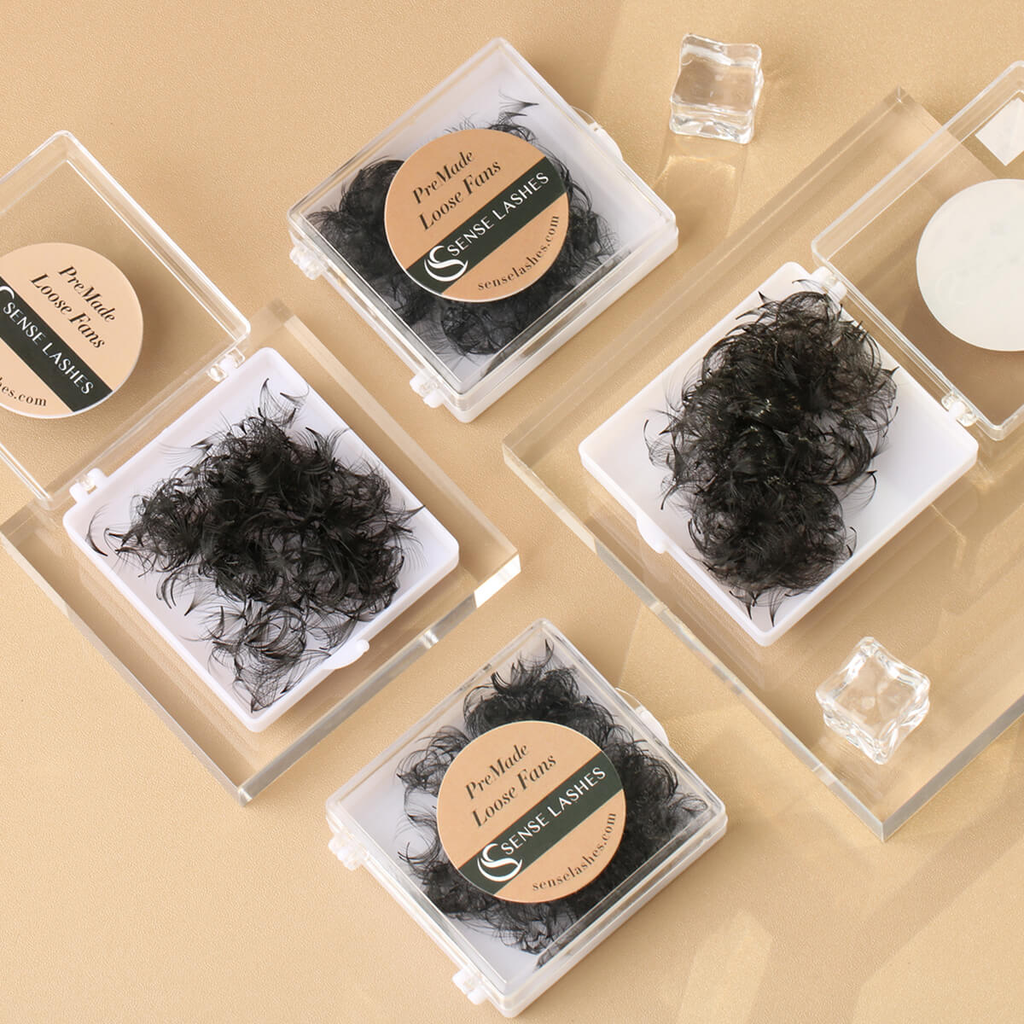
A common mistake in professional artistry is selecting a lash brown that is too ashy for a client with warm golden undertones. In these cases, the cool grey or blue base of the lash pigment absorbs the warm light reflecting from the skin, making the complexion look sallow and the lashes appear dull or fatigued. Conversely, for warm-toned clients, using a rich, coffee-toned brown like the Brown 16D PreMade Loose Fans - 0.05 - 500 Fans provides the necessary warmth to brighten the eye area.

Lash Pigment Selection for Cool vs. Warm Skin
Once the undertone is identified, the artist must select a lash color that either complements or strategically contrasts the skin.
Pigment Recommendations for Cool Skin
For clients with cool undertones, the goal is to avoid red-leaning browns that can make the eyes look irritated or "tired."
- Preferred Shades: Deep espresso, charcoal, or "ash" browns.
- Why it Works: These shades contain blue or violet bases that align with the cool pigments in the skin, creating a crisp, clean look.
- Technical Tip: When using black lashes on very fair, cool-toned clients, consider a "Soft Black" or a very dark brown to prevent the "shadow effect" where the lashes look like a solid, heavy bar.
Pigment Recommendations for Warm Skin
Warm-toned clients thrive with lashes that have a golden or reddish-brown base.
- Preferred Shades: Mocha, caramel, or chocolate browns.
- Why it Works: These pigments pick up the golden flecks in the skin and iris, creating a sun-kissed, harmonious glow.
- Product Selection: Using Brown 8D PreMade Loose Fans - 0.07 - 500 Fans allows for a dense, voluminous look that still feels natural because the color temperature matches the skin's biological baseline.
The Neutral Zone: Iris-Led Selection
When a client has a neutral undertone, the skin provides a "blank canvas." In this scenario, the iris color becomes the decisive factor. For example, choosing a lash shade that picks up the amber flecks in a hazel eye creates a more striking effect than strictly following skin tone alone.
| Client Profile | Skin Undertone | Iris Color | Recommended Lash Color |
|---|---|---|---|
| Profile A | Cool | Blue/Grey | Ash Brown / Espresso |
| Profile B | Warm | Brown/Amber | Golden Brown / Mocha |
| Profile C | Neutral | Hazel | Warm Brown with Green Accents |
| Profile D | Deep/Warm | Dark Brown | Rich Dark Chocolate |
Technical Integrity: Beyond the Color
While color theory elevates the artistry, technical safety remains the foundation of a professional practice. Every pigment and adhesive used must meet rigorous safety standards to prevent ocular complications.
Pigment Quality and Safety
The Food and Drug Administration (FDA) emphasizes the importance of using color additives that are specifically approved for use in the eye area. Industrial dyes found in low-grade lashes can cause severe allergic contact dermatitis. Professional-grade lashes, such as those made from Korean PBT (Polybutylene Terephthalate), ensure that the pigments are stable and non-leaching.
The Role of Adhesive Chemistry
The interaction between the lash fiber and the adhesive is critical. According to a landmark study by Amano et al. (2012), many traditional adhesives were found to release formaldehyde and have pH levels that could cause keratoconjunctivitis. Modern formulations have evolved to be pH-neutral, reducing the risk of chemical injury to the ocular surface.
Logic Summary (Adhesive Selection): For clients with sensitive skin or those prone to reactions, we recommend a sensitive-eye formula. Understanding the difference between a fume-based irritation and a true cyanoacrylate allergy is vital. For a deeper dive into this, refer to our guide on Decoding Cyanoacrylate Fumes.

Advanced Artistry: Colored Accents and Glitter
For clients seeking a more creative look, colored or glitter accents can be integrated. However, these must be applied with a strategic heuristic to maintain professional elegance.
The 10-15% Heuristic
When using colored accent lashes, a practical rule of thumb is to limit them to 10-15% of the total lash count. Placing them strategically in the outer corners or mid-lid enhances the eye shape without overwhelming the client's natural coloring.
- Cool Skin Accents: Purple, silver, or blue.
- Warm Skin Accents: Green, copper, or gold.
For special occasions, 0.07MM Wispy Glitter Eyelash Extensions can be used as a highlight. Because glitter lashes are slightly heavier and have a different texture, they should be applied as accents rather than full sets to protect the health of the natural lash.
Weight and Mechanical Safety
A recent 2024 study published in PubMed highlights that mechanical damage is a leading cause of traction alopecia in lash extensions. Using lightweight options, such as Brown 14D PreMade Loose Fans - 0.05 - 500 Fans, minimizes the load on the natural follicle, ensuring long-term lash health even with high-volume styling.
Salon Sanitation and Risk Mitigation
A professional lash artist is also a guardian of ocular health. The Centers for Disease Control and Prevention (CDC) provides clear guidelines on preventing the spread of conjunctivitis, which every salon must incorporate into a Standard Operating Procedure (SOP).
Preventing Blepharitis
Poor lash hygiene is the primary cause of Blepharitis, an inflammation of the eyelids often caused by bacteria or Demodex mite buildup. Research on Demodex mites confirms that daily washing with a dedicated lash cleanser is non-negotiable.
- Professional Advice: Educate your clients that "water is not enough." A pH-balanced lash shampoo is essential to maintain the health of the meibomian glands and the stability of the tear film.
Managing Allergic Reactions
A 2024 study on Eyelid Dermatitis emphasizes that contact dermatitis patterns from acrylates can be delayed, often appearing 48 hours or more after application.
- Patch Test Protocol: Always conduct a patch test for new clients, applying 3-5 lashes per eye and monitoring for 48 hours. This protects the artist from liability and ensures client safety.
Strategic Consultation: The Path to Retention
Technical skill is only half the battle; the other half is communication. Using a Client Safety Consent Form based on AAO recommendations positions you as a responsible professional who prioritizes eye health over a quick sale.
The Consultation Checklist:
- Assess Undertone: Conducted in natural, north-facing light.
- Iris Analysis: Identify secondary flecks for accent matching.
- Health Screening: Check for signs of dry eye or existing inflammation (referencing WebMD Dry Eye guidelines).
- Style Selection: Match the curl and weight to the natural lash growth angle. (See our guide on Lash Curl Selection).

Summary of Professional Color Selection
Mastering color is about more than just picking a tray. It is about understanding the interplay between light, biology, and chemistry. By selecting pigments that respect the client's undertone and iris color, and by adhering to the latest medical safety guidelines, you elevate your service from a beauty treatment to a high-end aesthetic procedure.
Modeling Note (Investment Strategy): According to Grand View Research, the lash industry continues to grow at a significant CAGR. For salon owners, investing in a diverse inventory of high-quality brown and colored fans is a proven method to differentiate your brand in a crowded market.
Disclaimer: This article is for informational purposes only and does not constitute professional medical advice. Eyelash extensions should only be applied by certified professionals. If a client experiences persistent redness, pain, or vision changes, they should consult an ophthalmologist immediately.
References
- Centers for Disease Control and Prevention (CDC) - Preventing Pink Eye
- American Academy of Ophthalmology (AAO) - Eyelash Extension Safety
- PubMed - Ocular Disorders and Eyelash Extensions (2024)
- FDA - Eye Cosmetic Safety
- Mayo Clinic - Blepharitis Symptoms and Causes
- Health Canada - Cosmetic Regulations and Cyanoacrylate