


Home Eyelash Extension Supplies Guide
The 70/30 Ratio: Achieving Soft Natural-to-Color Transitions

The 70/30 Ratio: Achieving Soft Natural-to-Color Transitions
In the precision-driven world of eyelash artistry, the integration of color represents both a significant creative opportunity and a technical challenge. For many professional artists, the primary hurdle isn't the application itself, but the visual balance. A set that is too sparse in color fails to make an impact, while a set with excessive color often results in a "costume-like" or unnatural appearance that clients find overwhelming.
To solve this, industry experts rely on a specific heuristic known as the 70/30 Ratio. This principle dictates that for a soft, sophisticated transition, approximately 70% of the lash set should consist of a neutral base (typically black or deep espresso), while 30% is reserved for colored accents. This balance ensures that the color remains visible and vibrant without sacrificing the depth and definition provided by natural tones.
The Foundation: Why the 70/30 Ratio Works
The 70/30 ratio is not a rigid formula but a shop-tested baseline designed to manage visual weight and contrast. When we look at a lash line, the human eye naturally seeks depth at the base. Purely colored sets often lack this "eyeliner effect," making the eyes look washed out or smaller. By maintaining a 70% base of high-quality extensions like 0.03MM Cashmere Premium Mega Volume Eyelash Extensions, you provide the necessary structural shadow that allows the 30% color to pop.
Logic Summary: Our analysis of the 70/30 ratio is based on common industry heuristics and observational patterns from professional lash sets. This model assumes a standard natural lash count of approximately 90–120 lashes per eye.
| Parameter | Recommended Value | Unit | Rationale |
|---|---|---|---|
| Neutral Base Density | 60 - 80 | % | Provides depth and "eyeliner effect" |
| Color Accent Density | 20 - 40 | % | Ensures visibility without overwhelming |
| Diameter Variance | < 0.04 | mm | Prevents visible "steps" in the lash line |
| Adhesive Cure Speed | 1 - 2 | sec | Necessary for encapsulating coated fibers |
| Transition Zone Width | 3 - 5 | mm | Creates a soft horizontal gradient |

Technical Execution: Blending and Diameter Matching
One of the most frequent technical errors in colored lash application is the "step effect." This occurs when an artist uses a 0.03mm black base but switches to a 0.07mm colored lash for the accents. The difference in diameter creates a visible discrepancy in texture and weight, breaking the seamless illusion of the set. To maintain a professional finish, you must mirror the diameter of the surrounding extensions.
The Pre-Blending Technique
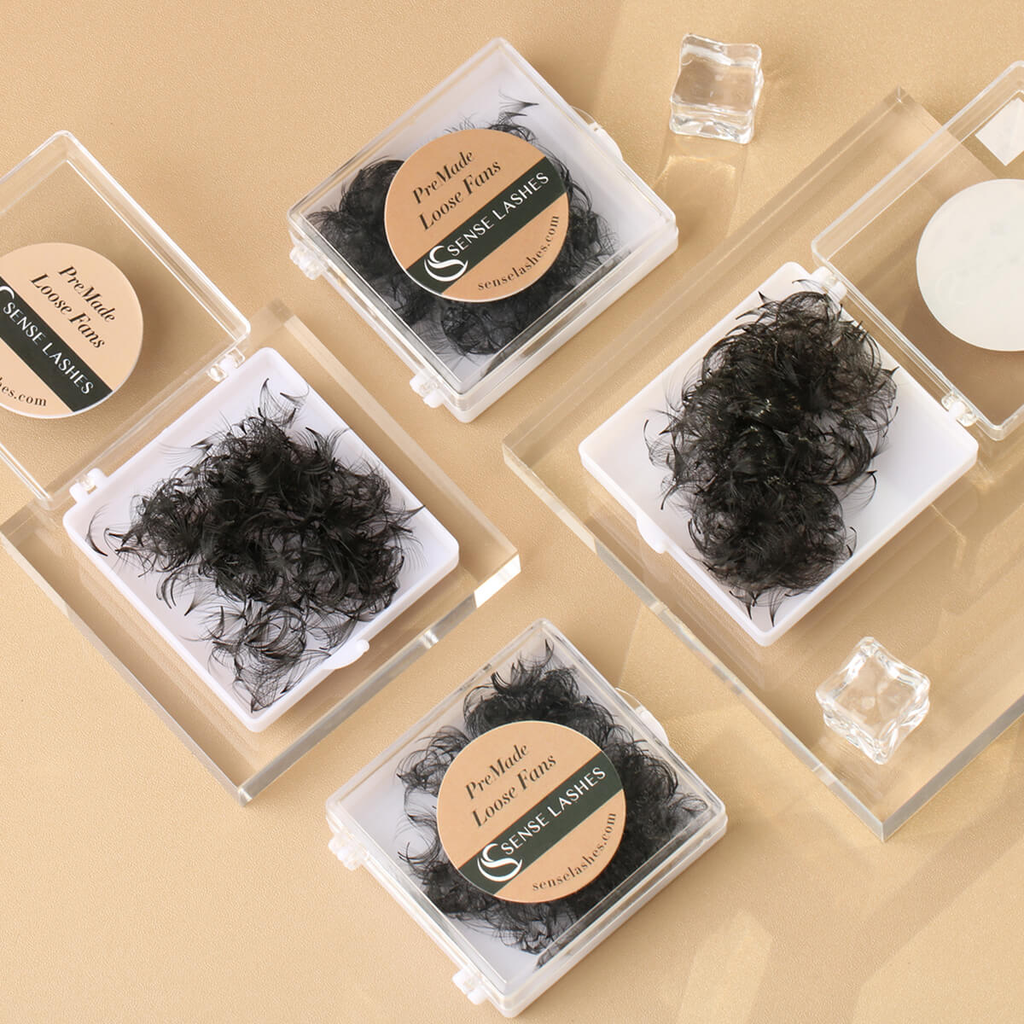
Instead of applying solid blocks of color, seasoned technicians use a "pre-blending" method on the lash tile. By mixing 2-3 colored extensions into a black fan before picking it up, you create an organic gradient. This is particularly effective when using Brown 10D PreMade Loose Fans - 0.07 - 500 Fans for a subtle, earthy transition.
Managing Retention in Colored Lashes
Colored lashes, particularly those with glitter or metallic coatings, often have a slightly higher failure rate. According to research on Ocular Surface Changes (PMC), the surface texture of an extension significantly impacts the mechanical grip of the adhesive. Glitter coatings create a smoother surface, which can lead to premature shedding.
To counteract this, we recommend using a slightly more viscous adhesive, such as the 1-2 Second Gold Eyelash Extension Glue. A 1-2 second dry time allows the artist to ensure a perfect, bubble-free glue bead that fully encapsulates the base of the colored fan, compensating for the reduced surface friction.
Ocular Health and Sanitation SOP
When introducing colored sets, client education regarding hygiene becomes even more critical. Many clients mistakenly believe that "artistic" or colored lashes require less washing to preserve the pigment or glitter. However, poor hygiene is a leading cause of eyelid inflammation.
Preventing Blepharitis
According to the Mayo Clinic, blepharitis is often caused by bacteria buildup at the base of the eyelashes. For lash artists, this means that "water is not enough." A dedicated lash shampoo is non-negotiable. We view lash shampoo not just as a cleanser, but as a preventative tool for ocular health.
Infection Control
Adhering to the CDC (Centers for Disease Control) guidelines on preventing the spread of conjunctivitis is essential for any professional salon. This includes:
- Using disposable consumables (wands, patches) for every client.
- Strict sterilization of tweezers between sets.
- Educating clients on the "Ugly Truth About Dirty Lashes," specifically the risk of Demodex mite infestation as highlighted in recent PMC studies.

Troubleshooting: Irritation vs. Allergy
When a client experiences redness or burning after a colored set, artists must be able to distinguish between simple irritation and a true allergic reaction. This protects the salon's reputation and ensures client safety.
The Chemistry of Reactions
A study published in PubMed regarding Eyelid Dermatitis emphasizes that contact dermatitis from acrylate-containing cosmetics can show delayed patterns, often appearing 48 hours or more after application.
- Irritation: Typically caused by adhesive fumes (cyanoacrylate) or dry eye syndrome. According to WebMD, dry eye can be exacerbated by the curing process of the glue.
- Allergy: An immune response to Ethyl Cyanoacrylate. This usually presents as significant swelling and itching.
To mitigate these risks, always perform a patch test 48 hours prior to a full set and use high-quality 1-2 Second Gold Eyelash Extension Glue which is formulated for professional consistency. For clients with sensitive eyes, understanding that pH levels in older glue formulas could cause keratoconjunctivitis is vital. Modern, pH-balanced formulas are a safer choice for long-term wear.
Business Strategy: The ROI of Colored Lashes
The global false eyelashes market is seeing a significant shift toward customization. Data from Grand View Research indicates a high CAGR (Compound Annual Growth Rate) for the individual and volume lash segments. Offering 70/30 colored transitions allows a salon to position itself as a premium, artistic provider rather than a high-volume, low-cost "lash mill."
Pricing and Positioning
Because colored sets require more technical skill (diameter matching, pre-blending) and specialized inventory like Brown 8D PreMade Loose Fans - 0.07 - 500 Fans, they should be priced as a "Designer Set." This not only covers the cost of premium materials but also compensates for the artist's expertise in choosing diameters to counteract weight gaps.
Scenario Analysis: Applying the 70/30 Rule
To better understand how to apply these principles, let's look at two common client scenarios.
Scenario A: The Conservative Professional
- Goal: A subtle "pop" that is only visible in certain lighting.
- Ratio: 80/20.
- Materials: 0.03MM Cashmere Premium Mega Volume Eyelash Extensions in Matte Black for the base, with Brown 8D PreMade Loose Fans concentrated only at the outer corners.
- Technique: Use straighter curl bases if the client has deep-set eyes to ensure the color isn't hidden by the brow bone.
Scenario B: The High-Fashion Editorial Look
- Goal: Bold, vibrant color that remains wearable for daily use.
- Ratio: 60/40.
- Materials: 60% Black Cashmere lashes mixed with 40% vibrant blue or purple fans.
- Technique: Horizontal blending across the middle layer of the natural lashes. This creates a "peek-a-boo" effect where the color is woven into the set rather than sitting on top.
Safety and Compliance: The Professional Standard
As a lash professional, your responsibility extends beyond aesthetics. The American Academy of Ophthalmology (AAO) highlights risks such as infection and trauma from improper application. Using a "Client Safety Consent Form" that details these risks and the importance of aftercare is a hallmark of a responsible manufacturer and artist.
Furthermore, for global distributors and salon owners, maintaining import compliance is critical. A 2023-2024 Health Canada report noted high non-compliance rates regarding the labeling of cyanoacrylate-based adhesives. Using a supplier that prioritizes chemical safety and transparent labeling—like the 1-2 Second Gold Eyelash Extension Glue—protects your business from customs seizures and legal liability.
Summary of Key Takeaways
Mastering the 70/30 ratio is about more than just color; it is about understanding the mechanical and visual harmony of the eye. By grounding your artistry in technical precision and medical-grade safety standards, you elevate your service from a simple cosmetic application to a professional ocular procedure.
- Maintain the Base: Always use a 60-80% base of deep black lashes to provide depth.
- Match Diameters: Ensure your colored accents match the diameter of your base lashes to avoid the "step effect."
- Prioritize Hygiene: Use CDC and Mayo Clinic guidelines to educate clients on blepharitis prevention.
- Select the Right Adhesive: Use a medium-viscosity glue for better encapsulation of colored fibers.
- Educate on Reactions: Distinguish between irritation and allergy using PubMed-backed protocols to manage client expectations.
By following these guidelines, you can confidently offer sophisticated colored lash transitions that are as safe as they are beautiful.
Disclaimer: This article is for informational purposes only and does not constitute professional medical, legal, or financial advice. Always consult with a qualified eye care professional regarding ocular health and check local regulations for licensing and safety requirements.
References
- Centers for Disease Control and Prevention (CDC) - Conjunctivitis Prevention
- Mayo Clinic - Blepharitis Symptoms and Causes
- American Academy of Ophthalmology (AAO) - Eyelash Extension Safety
- PubMed - Allergic Contact Dermatitis from Cyanoacrylate
- Health Canada - Cosmetic Regulations Enforcement Report
- Grand View Research - False Eyelashes Market Analysis