


Home Eyelash Extension Supplies Guide
Long vs. Short Bases: Matching Anatomy to Fan Architecture for Retention

The Physics of Retention: Why Base Architecture Matters
In the high-stakes world of professional lash artistry, retention is the ultimate currency. We often look to adhesive humidity, client aftercare, or primer pH as the primary culprits for premature shedding. However, a frequently overlooked variable is the mechanical relationship between the extension’s base architecture and the client’s natural lash anatomy.
When we transition from classic applications to volume or mega-volume using premade fans, the physics of the bond changes. It is no longer just about a single point of contact; it is about managing weight distribution and torque. If the fan base is mismatched to the natural lash, you create a "lever effect" that can cause the natural lash to twist, droop, or shed weeks before its natural cycle ends. This guide explores the technical selection logic required to match anatomy to fan architecture, ensuring professional outcomes that prioritize long-term lash health.

The 'Lever Effect' and the 70% Heuristic
One of the most common technical failures in volume sets occurs when a technician defaults to long-base premade fans for the sake of speed or a "darker" lash line. While a longer base provides more surface area for the adhesive, it also creates a rigid segment on the natural lash. On fine (0.10mm or less) or sparse natural lashes, this rigidity acts as a lever.
When the client blinks or cleans their lashes, the weight at the tip of the fan exerts force on the root. A long, stiff base prevents the natural lash from flexing, concentrating all that stress at the follicle. This often leads to "mechanical shedding"—a failure mode where the lash falls out not because the glue failed, but because the follicle was overstressed.
To mitigate this, we recommend the 70% Rule. This is a practical heuristic derived from pattern recognition in high-volume studios: the fan base length (the bonded portion) should not exceed 70% of the natural lash's total length from root to tip.
Logic Summary (The 70% Rule): This heuristic assumes a standard natural lash tensile strength and average growth cycle timing. By leaving at least 30% of the natural lash tip free and flexible, you reduce the torque exerted on the follicle during mechanical movement.
| Natural Lash Length | Recommended Max Base Length | Unit | Rationale |
|---|---|---|---|
| 8mm | 5.6mm | mm | Maintain flexibility |
| 10mm | 7.0mm | mm | Prevent torque |
| 12mm | 8.4mm | mm | Balance weight |
| 14mm | 9.8mm | mm | Support mega-volume |
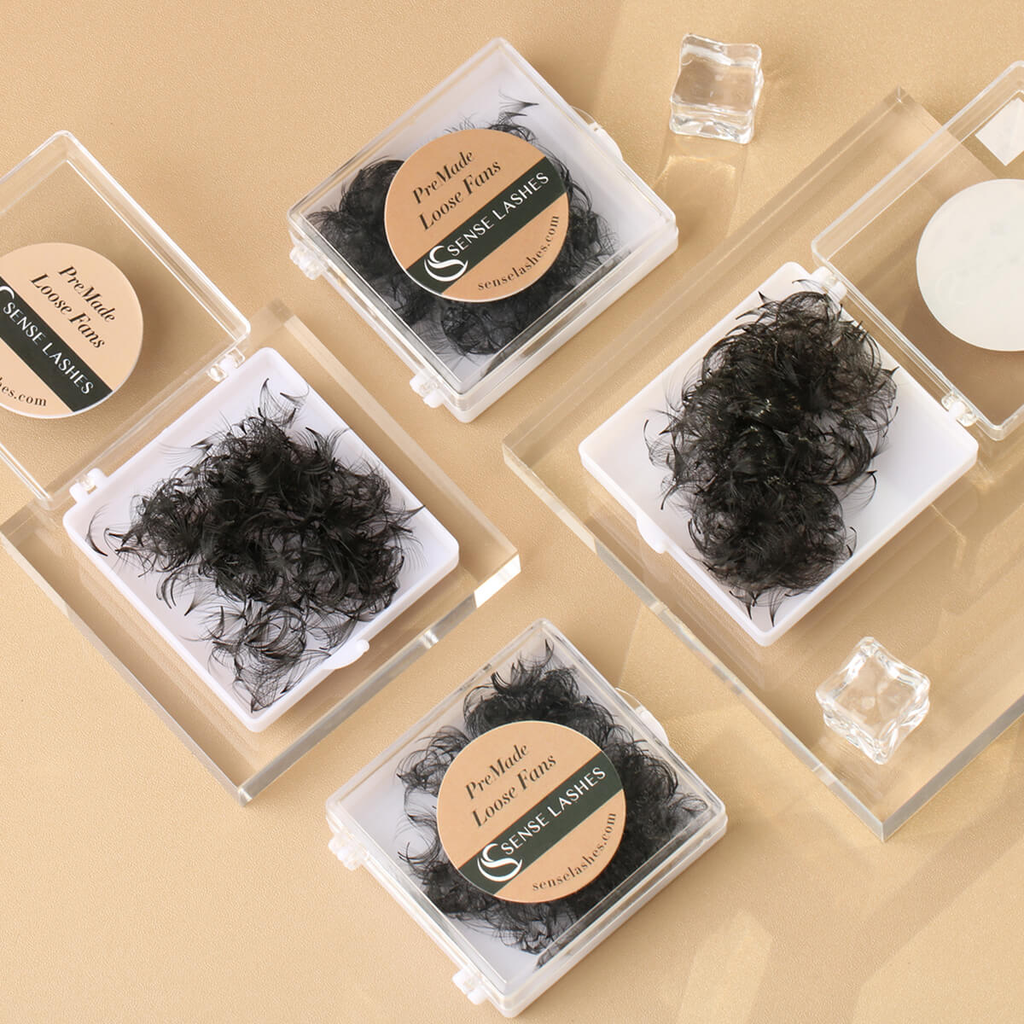
For clients with shorter or weaker natural lashes, utilizing ultra-slim, heat-bonded options like the 30D Handmade Loose Premade Fans Pointy Base(500 Fans) is essential. These fans feature a tapered, pointy base that minimizes the rigid surface area while providing a seamless bond.
Anatomy and Ocular Health: Beyond the Aesthetic
Choosing the right fan architecture isn't just about aesthetics; it is a clinical necessity. According to the American Academy of Ophthalmology (AAO), the risks associated with extensions include infection, trauma, and allergic reactions. Many of these issues are exacerbated by poor fan selection.
When a fan base is too thick or too long, it creates "pockets" where debris, oils, and bacteria can accumulate. This is a primary precursor to Blepharitis. As noted by the Mayo Clinic, Blepharitis is an inflammation of the eyelids often caused by bacteria or clogged oil glands. In the context of lash extensions, "water is not enough." If the fan architecture makes it difficult for the client to clean the lash line effectively, you are inviting complications.
Furthermore, research published in PMC (Ocular Surface Changes) highlights how extensions can alter tear film stability. A heavy, improperly balanced fan can cause the eyelid to droop slightly, affecting the meibomian glands' ability to secrete essential oils. This can lead to dry eye symptoms, which are often misdiagnosed by clients as an "allergic reaction" to the glue.

Bonding Chemistry: Matching Bases to Adhesive Viscosity
The architecture of the fan base dictates the type of adhesive you should use. There are two primary types of premade bases: Heat-Bonded and Glue-Bonded.
- Heat-Bonded Bases (Pointy/Slim): These are created by melting the PBT fibers together at the base. They are ultra-light and have a very small surface area. Because the base is so fine, you need a low-viscosity, fast-drying adhesive (0.5–1 second). A thinner glue will "wick" into the tiny crevices of the heat-bonded base instantly. If you use a slow, thick glue, it will "skin over" before it can penetrate the base, leading to a brittle bond that pops off during brushing.
- Glue-Bonded Bases (Traditional/Flat): These use a tiny amount of adhesive to hold the fan together before you even dip it. These bases are slightly wider and have more surface area. They benefit from a medium-viscosity adhesive (1–2 seconds). The slightly thicker consistency helps fill the gaps in the wider base, creating a more robust "wrap" around the natural lash.
For artists working with mega-volume sets, using 12D Handmade Loose Premade Fans Pointy Base(500 Fans) allows for a much cleaner application. The pointy base ensures that even with 12 fibers, the contact point remains no wider than a single classic lash, preserving the natural lash's health.
Methodology Note (Adhesive Matching): Our recommendations for adhesive viscosity are based on fluid dynamics modeling of cyanoacrylate "wicking" behaviors on PBT surfaces (not a controlled lab study). These are shop-standard baselines for professional environments.
Troubleshooting Premature Shedding: Chemical vs. Mechanical
When a client returns with poor retention, you must be able to diagnose the cause accurately. Is it a chemical failure (the glue) or a mechanical failure (the fan architecture)?
- Chemical Failure: If the extension falls off and the natural lash is still there, and the glue on the extension looks "frosty" or white, it is likely a polymerization issue (shock curing) or a pH imbalance. According to a study by Amano et al. (2012), the pH of some adhesives can cause ocular irritation. If the natural lash surface is too acidic or too alkaline, the bond will fail.
- Mechanical Failure: If the extension falls off and the natural lash is attached to it, but it isn't in the telogen (shedding) phase, you likely have a weight/architecture issue. This is where the 10D Handmade Loose Premade Fans Pointy Base(500 Fans) excels. By using 0.03mm or 0.05mm diameters, you keep the total weight of the 10D fan lower than a single 0.15mm classic lash, drastically reducing mechanical stress.
For clients who prefer a softer, more natural look but still want volume, the Brown 10D PreMade Loose Fans - 0.07 - 500 Fans provide an excellent alternative. The 0.07 diameter offers a slightly "fuller" base, which is ideal for clients with naturally thick, healthy lashes (0.12mm+), but it should be avoided on clients with very fine or damaged lashes to prevent the lever effect.
The Professional Salon SOP: Sanitation and Safety
To build a high-trust brand, your technical skills must be matched by rigorous safety protocols. The Centers for Disease Control (CDC) provides clear guidelines on preventing the spread of conjunctivitis (pink eye). In a lash studio, this means every consumable—from the eye patches to the lash wands—must be disposable or medical-grade sterilized.
We recommend implementing a "Client Safety Consent Form" that references the AAO's safety facts. This positions you as a responsible professional who prioritizes eye health over a quick sale.
Standard Operating Procedure (SOP) for Fan Application:
- Anatomy Assessment: Measure the natural lash length and diameter.
- Architecture Selection: Apply the 70% Rule to choose the base length.
- Adhesive Calibration: Select viscosity based on whether the fan is heat-bonded or glue-bonded.
- Isolation Check: Ensure zero "stickies." Use high-quality gel patches to prevent chemical burns from fumes, as outlined in PMC (Chemical Injury).
- Post-Application Hygiene: Educate the client on using a dedicated lash shampoo to prevent Demodex mite infestation.
Strategic Growth in the 2025 Lash Market
The lash industry is no longer a niche market. According to Grand View Research, the global market continues to grow at a significant CAGR, with a shift toward individual and volume extensions over strip lashes. For salon owners, this means that investing in high-quality, technically superior products is a business necessity, not a luxury.
By mastering the nuances of fan architecture—understanding when to use a pointy base versus a traditional base—you differentiate yourself from low-cost "lash mills." You aren't just applying lashes; you are performing a technical service that preserves the client's ocular health and ensures long-term retention.
For more advanced mapping techniques, consider exploring how to correct downward-facing lashes with spike placement or how to manage skin laxity in mature eyes.
Summary of Technical Selection
| Client Lash Type | Recommended Fan | Base Type | Adhesive Speed |
|---|---|---|---|
| Fine/Weak (<0.07mm) | 10D 0.03mm | Pointy (Heat-Bonded) | 0.5 - 1.0s |
| Normal (0.10mm) | 12D 0.03mm | Pointy (Heat-Bonded) | 1.0s |
| Strong/Thick (0.12mm+) | 10D 0.07mm | Traditional (Glue-Bonded) | 1.0 - 2.0s |
| Mega Volume Sets | 30D 0.03mm | Ultra-Slim Pointy | 0.5s |
Disclaimer: This article is for informational purposes only and does not constitute professional medical or financial advice. Eyelash extension application involves chemicals and proximity to the eye; always follow local licensing regulations and consult with a medical professional regarding eye health concerns.
References
- Centers for Disease Control (CDC) - Conjunctivitis Prevention
- Mayo Clinic - Blepharitis Symptoms and Causes
- American Academy of Ophthalmology (AAO) - Eyelash Extension Safety
- Grand View Research - Eyelash Market Analysis
- PubMed - pH and Formaldehyde in Lash Adhesives (Amano et al.)
- PMC - Ocular Surface Changes and Extensions
- PMC - Demodex and Ocular Hygiene