


Home Eyelash Extension Supplies Guide
Fixing Overlap: Aligning YY Tips for a Clean, Uniform Set

Fixing Overlap: Aligning YY Tips for a Clean, Uniform Set
In the professional lash industry, the YY-lash has transitioned from a niche trend to a foundational service. Its unique geometry—a flat base that splits into four fine tips—offers a multidimensional 'clover' effect that provides instant volume and texture. However, the very structure that makes YY lashes desirable also presents a significant technical challenge: tip overlap. When the split fibers of a YY fan criss-cross haphazardly, the result is a messy, cluttered appearance that lacks the sophisticated 'airiness' high-end clients expect.
Achieving a clean, uniform set requires more than just steady hands; it demands an understanding of the physics of adhesive viscosity, the biology of the ocular surface, and the geometric principles of lash mapping. This article provides a comprehensive technical guide to mastering YY-lash alignment, ensuring your sets remain crisp, healthy, and durable.
The Geometry of YY-Lash Dimensionality
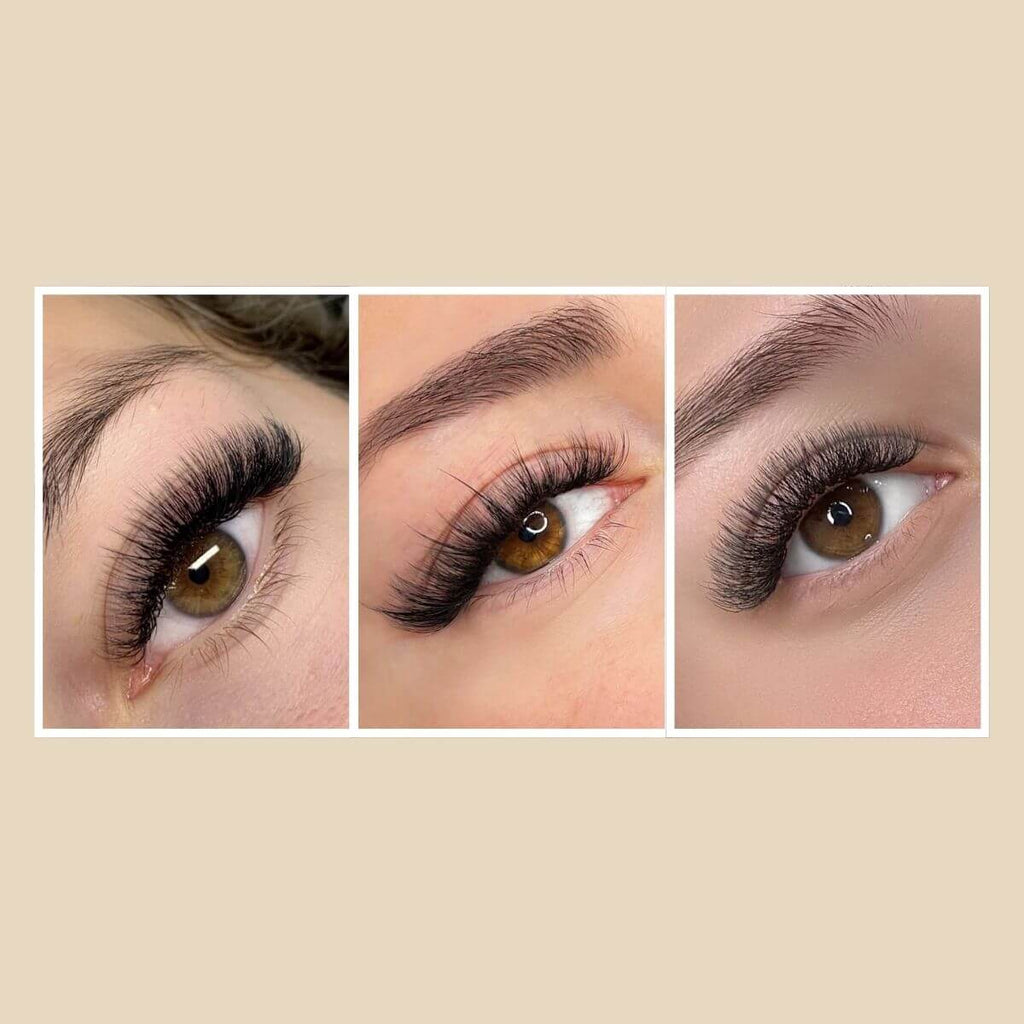
The YY-lash is engineered to fill gaps in sparse lash lines more efficiently than classic extensions. Unlike traditional premade fans, the YY-lash is woven in a way that creates a cross-sectional density. This means that as the tips fan out, they occupy space in multiple planes.
When applied correctly, these lashes create a soft, wispy texture. However, if the tips are not aligned during the placement phase, they can permanently fuse in a 'criss-cross' pattern that looks tangled. This is often caused by 'wicking'—where adhesive travels up the lash shaft—or by poor isolation.
For clients who desire the volume of a YY-lash but struggle with the maintenance of the split tips, the 3D U Shaped Eyelash Extension offers a compelling alternative. These U-shaped lashes provide a similar criss-cross design but are structured to maintain a narrow fan, offering a neater, more precise finish for those who find traditional YY-lashes too prone to twisting.
Logic Summary: Our analysis of YY-lash geometry assumes that the 'clover' effect is dependent on the separation of the upper fibers. If adhesive wicks beyond the bottom 1/3 of the base, surface tension will pull the tips together, negating the multidimensional volume.

Adhesive Viscosity and the 'Bridge' Mechanism
A common technical error in YY-lash application is selecting an adhesive with a viscosity that is too low. While thin, 'watery' glues are excellent for classic 1:1 sets because they wrap around the natural lash instantly, they often fail to support the structural needs of a YY fan.
A thin adhesive lacks the surface tension required to hold the split tips in their intended position during the critical 1-2 seconds of curing. Instead, experienced artists prioritize a slightly thicker, syrup-like adhesive. This 'syrup' consistency acts as a light physical bridge between the fan base and the natural lash, providing enough 'grab' to keep the tips from collapsing or overlapping during placement.
The 1-2 Second Gold Eyelash Extension Glue is specifically formulated with this medium-syrup viscosity. Its 1-2 second dry time provides the necessary window to adjust the direction of the YY fan before the bond polymerizes.
| Parameter | 1-2s Gold Glue | 0.5-1s Diamond Glue |
|---|---|---|
| Viscosity | Syrup-like (Medium) | Thin-Medium |
| Drying Time | 1-2 Seconds | 0.5-1 Second |
| Ideal Humidity | 48-70% | 50-70% |
| Best For | YY & Russian Volume | Advanced Speed/Classic |
| Retention | 6-8 Weeks | 6-8 Weeks |
For artists working in high-humidity environments where glue cures almost instantly, the 0.5-1 Second Diamond Eyelash Extension Glue may be necessary. However, caution is advised: if the glue sets too quickly before you can align the YY tips, you risk 'ghost' bonds or misaligned fans that cannot be corrected.
The Technical Dip: Preventing Adhesive Wicking
The most critical moment in preventing tip overlap occurs at the glue stone. To maintain the integrity of the YY shape, you must master the 'Precise Dip' method.
- The 1/3 Rule: Only the bottom one-third of the YY-lash base should contact the adhesive bead.
- Vertical Withdrawal: Pull the lash fan out of the glue bead slowly and vertically. Pulling sideways or too quickly can cause the adhesive to 'wick' up the fibers, permanently fusing the split tips together.
- The Bead Check: Ensure there is a tiny, visible bead of adhesive at the base. If the base looks 'painted' rather than 'beaded,' you likely have insufficient adhesive for a strong mechanical bond.
If you observe the glue wicking toward the tips, do not apply the fan. Fused tips not only ruin the aesthetic but also increase the weight on the natural lash, potentially leading to premature shedding or mechanical damage, as noted in studies on ocular disorders caused by extensions (PubMed).

Environmental Control and Chemical Safety
Adhesive behavior is not static; it is heavily influenced by your salon's environment. According to the American Academy of Ophthalmology (AAO), allergic reactions to formaldehyde and cyanoacrylate are significant risks in the lash industry. Proper curing is essential not just for retention, but for client safety.
In low humidity (below 40%), the adhesive may take too long to cure, allowing the YY tips to lean or overlap after you have moved on to the next lash. Conversely, in high humidity, the adhesive may cure so fast that it creates a brittle bond.
Furthermore, the Centers for Disease Control (CDC) emphasizes the importance of hygiene in preventing the spread of eye infections. Every tool that touches the client, including the Clear Mascara Wands 50pcs/pack used for post-application grooming, must be disposable or sterilized to avoid cross-contamination.
Managing Allergic Reactions and Irritation
A professional lash artist must distinguish between simple irritation and a true allergic reaction. Research published in PubMed regarding Ethyl Cyanoacrylate highlights that contact dermatitis is a known risk.
- Irritation: Often caused by fumes (formaldehyde byproduct) during the curing process. This usually subsides within 24 hours and can be mitigated by using a nano-mister or ensuring proper ventilation.
- Allergic Reaction: An immune response characterized by swelling, redness, and itching that often persists or worsens after 48 hours.
When a client experiences burning, it may also be related to Dry Eye Syndrome (WebMD), which can be exacerbated by the adhesive fumes. Using high-quality, low-fume adhesives like the Diamond Bond series helps minimize these risks.
Troubleshooting Overlap: Scenario Analysis
To further refine your technique, consider these two common application scenarios:
Scenario A: The "Sticky" Overlap (High Humidity)
In environments with humidity above 65%, the adhesive on the YY base may start to polymerize before it even touches the natural lash. This causes the fan to "grab" neighboring lashes or its own tips.
- Fix: Switch to a slightly slower-drying adhesive or use a dehumidifier. Ensure you are using a fresh glue drop every 20 minutes to maintain optimal viscosity.
Scenario B: The "Leaning" Tip (Low Humidity)
In dry environments, the adhesive stays liquid for too long. As you release the YY fan, the weight of the split tips causes the fan to tilt or the tips to cross over.
- Fix: Hold the fan in place for an extra second with your tweezers. Use a primer to slightly speed up the attachment, but be careful not to over-dry the natural lash.
Post-Application Refinement: The Isolation Tweezer Trick
Even with perfect technique, a few tips may still overlap. Many artists reach for a lash brush immediately, but this can actually displace the fan if the bond isn't fully cured.
Instead, use a fine-tip isolation tweezer. While the adhesive is in its 'tacky' phase (usually 5-10 seconds after placement), gently use the tips of the tweezers to nudge the crossed fibers apart. This surgical precision ensures that the base bond remains undisturbed while the tips are perfectly aligned.
Once the set is complete and the adhesive has fully polymerized, use Clear Mascara Wands 50pcs/pack to gently fluff the lashes. These dense, fluffy bristles are specifically designed to keep each extension in place without snagging the delicate YY cross-weave.

Long-Term Health: The "Blepharitis Prevention" Protocol
A clean set isn't just about how it looks on day one; it’s about how it affects the client's eye health over three weeks. The Mayo Clinic identifies Blepharitis (eyelid inflammation) as a common result of bacteria buildup at the lash base.
YY lashes, with their wider bases and cross-woven tips, can trap more debris than classic lashes. It is your professional responsibility to educate clients on the "Why Water is Not Enough" philosophy. Recommend a dedicated lash shampoo to ensure the ocular microbiome remains balanced, as suggested by recent investigations into ocular surface microbiome stability (PMC).
Summary of Technical Mastery
Mastering YY-lash alignment is a hallmark of an advanced technician. By controlling the variables of viscosity, environmental humidity, and dipping depth, you can eliminate the messy overlap that plagues beginner sets.
- Prioritize Viscosity: Use a syrup-like adhesive like the 1-2 Second Gold Eyelash Extension Glue for better structural support.
- Master the Dip: Stick to the 1/3 base rule to prevent wicking.
- Correct with Precision: Use isolation tweezers for minor adjustments rather than aggressive brushing.
- Educate on Hygiene: Prevent Blepharitis and Demodex infestation by mandating daily cleansing.
By following these professional protocols, you not only improve the aesthetic quality of your work but also safeguard the long-term health of your clients' natural lashes.
Disclaimer: This article is for informational purposes only and does not constitute professional medical or legal advice. Always consult with a qualified healthcare provider regarding eye health concerns and adhere to local licensing regulations for lash application.
References: