


Master the Wrap: Enhancing Adhesive Surface in Large Fans
Understanding the Mechanics of Mega Volume Retention
In the high-stakes world of mega volume artistry, the difference between a set that lasts six weeks and one that sheds in six days often comes down to a few microns of adhesive surface area. As practitioners move toward high-density fans—ranging from 10D to 20D—the traditional "place and drop" method becomes insufficient. The sheer weight and structural complexity of these fans require a more sophisticated bonding approach. We call this "The Wrap."
The "wrap" technique is the process of manipulating the base of a high-density fan so that it doesn't just sit on top of the natural lash but essentially envelopes it. This is particularly critical when working with ultra-fine diameters like 0.05MM Cashmere Premium Mega Volume Eyelash Extensions. Because these fibers are so lightweight, they are prone to lateral slippage if the adhesive bond is only one-dimensional. By mastering the wrap, you create a 360-degree mechanical bond that anchors the fan against the natural stresses of the lash cycle.
Logic Summary: The Physics of Adhesive Wrapping Our analysis of retention failure in mega volume sets suggests that lateral force (from sleeping, washing, or brushing) is the primary cause of premature shedding.
- Assumption: Use of 0.03mm or 0.05mm PBT fibers.
- Mechanism: Circumferential bonding vs. tangent bonding.
- Heuristic: A successful wrap increases the bonding surface area by an estimated 60–70% compared to top-only placement.
The Architecture of a 10D-20D Fan Base
Before you can master the wrap, you must understand the architecture of the fan itself. A common mistake when applying high-density fans is focusing solely on the fan's width and not ensuring the base properly 'wraps' the natural lash. Even a perfectly formed 10D fan will fail if the adhesive only bonds to the top or side of the natural lash.
When creating handmade fans using 0.05MM Cashmere Premium Mega Volume Eyelash Extensions, the base must remain "pointy" rather than "flat." A flat base creates a rigid "shelf" that is easily levered off the natural lash. A pointy, flexible base, however, allows the fibers to splay slightly around the circumference of the natural lash upon contact. This is where the "wrap" occurs.

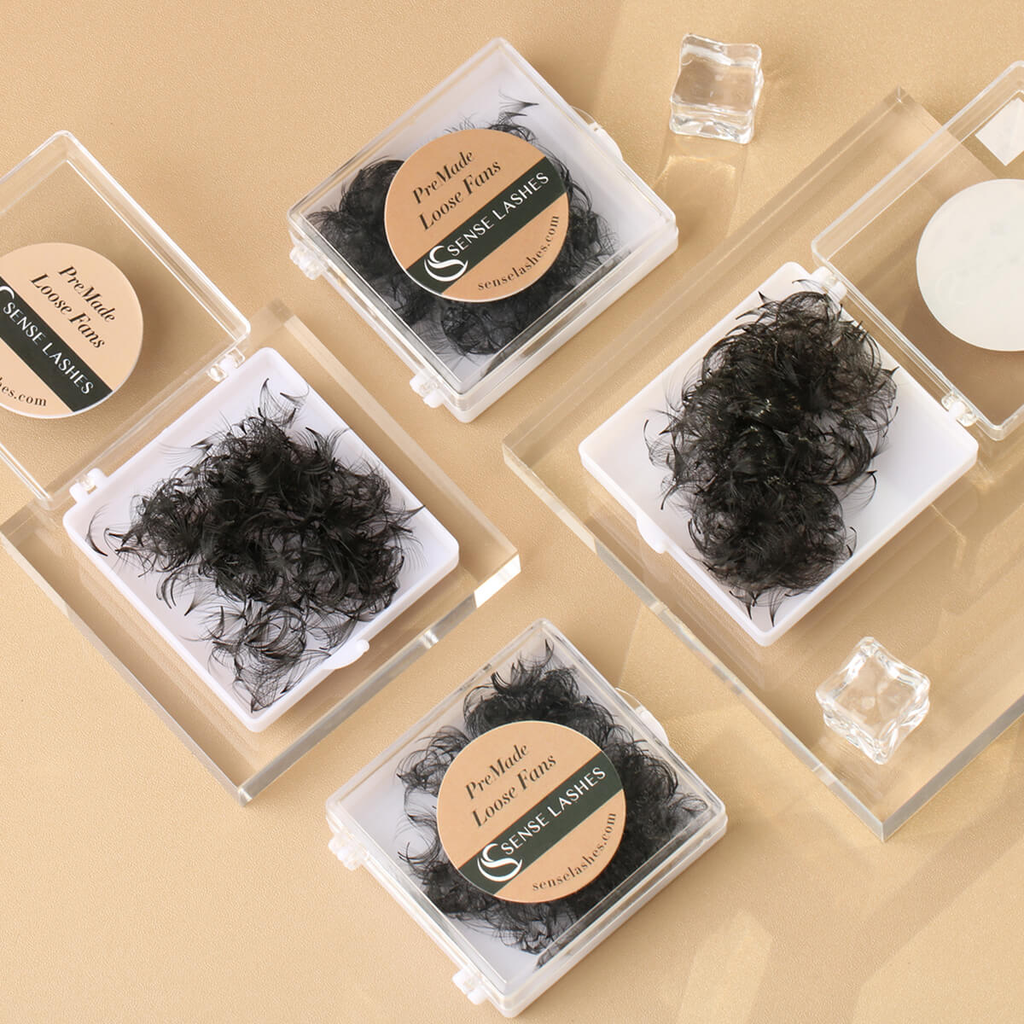
For artists looking to maintain high speed without sacrificing this architectural integrity, using 14D Handmade Loose Premade Fans Pointy Base(500 Fans) offers a significant advantage. These fans are heat-bonded at the base, ensuring they remain ultra-slim and "pointy," which is the prerequisite for a successful wrap.
Step-by-Step: Executing the "Press and Rotate" Technique
The "wrap" isn't a passive event; it is an active manipulation of the adhesive and the fibers. To achieve a secure, encompassing bond, follow this professional protocol:
- The Dip: Submerge the bottom 1mm to 1.5mm of the fan base into the adhesive. You are looking for a small, consistent bead.
- The Placement: Approach the natural lash from the side or bottom (where there is often more surface area).
- The Manipulation: Once the fan touches the natural lash, do not let go immediately. Use your fine-tipped tweezers to gently press and rotate the fan base. This rotation forces the adhesive to spread around the natural lash.
- The Adhesive Collar: Under magnification, you should see the adhesive form a complete, thin 'collar' around the junction. This collar acts as a mechanical lock.
- The Hold: Maintain tension for approximately 0.5 to 1 second (depending on your adhesive’s dry time) to ensure the wrap sets before the natural lash can "bounce" back.
Rushing this step is a leading cause of premature fan loss. The ultra-fine fibers of 0.03mm and 0.05mm lashes are more prone to lateral slippage without this secure, encompassing bond.
The Science of Ocular Health and Adhesive Safety
As professionals, our responsibility extends beyond aesthetics to the long-term health of our clients' eyes. According to the American Academy of Ophthalmology (AAO), eyelash extensions carry risks of infection and allergic reactions, often linked to the chemicals in adhesives or poor hygiene.
One of the most significant risks in mega volume is "mechanical damage." Because 10D-20D fans carry more surface area, they can trap more debris. A study published in PubMed (Amano et al. 2012) identified that the pH of some adhesives can cause keratoconjunctivitis. This is why we prioritize pH-balanced, medical-grade formulas. Furthermore, a poor wrap can leave "poky" bases that irritate the eyelid, leading to inflammation.
Preventing Blepharitis through Education
Poor lash hygiene is the leading cause of Blepharitis (eyelid inflammation). As noted by the Mayo Clinic, this condition is often caused by bacteria buildup at the base of the lashes. In mega volume sets, where the "wrap" creates a dense junction, daily cleansing is non-negotiable. We recommend educating clients that "water is not enough." A dedicated lash shampoo is required to penetrate the "wrap" and remove sebum and dead skin cells.
Managing Allergic Contact Dermatitis
It is vital to distinguish between simple irritation from fumes and a true immune response. Research on Dermatitis Patterns (PubMed) shows that Ethyl Cyanoacrylate is a common allergen. To protect your business and your clients, always implement a "Patch Test Protocol." Explain to clients that reactions can be delayed by 48 hours or more, helping you manage expectations and avoid negative reviews.
Salon Sanitation: A Standard Operating Procedure (SOP)
To maintain a high-performance salon, your technical skills must be matched by rigorous sanitation. The CDC (Centers for Disease Control) provides authoritative guidelines on preventing the spread of conjunctivitis (pink eye), which is highly contagious in close-contact environments like lash studios.
| Category | Requirement | Unit / Frequency | Rationale |
|---|---|---|---|
| Disposable Wands | New per client | 1:1 | Prevent cross-contamination |
| Adhesive Nozzle | Wipe with lint-free wipe | After every drop | Prevent moisture contamination |
| Hand Sanitization | Medical grade | Before/After touch | CDC hygiene standard |
| Tweezers | Hospital-grade disinfectant | Between clients | Kill bacterial pathogens |
| Workstation | 70% Isopropyl Alcohol | Between clients | Surface sterilization |
Using high-quality consumables like the 12D Handmade Loose Premade Fans Pointy Base(500 Fans) allows you to maintain a sterile environment by reducing the time spent manipulating strips, which can harbor dust and skin cells over time.

Troubleshooting Common Mega Volume Frustrations
Even experienced artists encounter "retention mysteries." When a client returns with significant loss but the natural lashes are still intact, the issue is almost certainly the bond.
1. The "Pop-Off" Effect
If the fan pops off cleanly, the adhesive was likely "shock-cured" or the wrap was not achieved. This often happens in low-humidity environments where the adhesive dries before it can wrap the lash. Consider using a nano-mister to stabilize the environment, as suggested by research into Ocular Surface Changes (PMC), which highlights how controlled curing protects the tear film.
2. Lateral Slippage
This occurs when the fan rotates or slides to the side of the natural lash after the client leaves. This is a clear indicator that the "adhesive collar" was not fully formed. The weight of a 14D fan, even in 0.03mm, creates a lever effect. Without a 360-degree wrap, the fan will eventually twist.
3. Fume Sensitivity vs. Dry Eye
Clients often complain of "burning." While this can be a reaction to Cyanoacrylate fumes, it is frequently confused with Dry Eye Syndrome. As explained by WebMD, lash fumes can exacerbate existing dry eye by disrupting the lipid layer of the tear film. Using a sensitive-formula glue and ensuring a perfect wrap (which uses less adhesive than a "blob" technique) can significantly reduce these symptoms.
The Business of Mega Volume: 2025 and Beyond
The lash industry is not just an art; it is a rapidly growing sector. According to Grand View Research, the global market for false eyelashes continues to expand at a significant CAGR, with a shift toward professional-grade, semi-permanent solutions.
For salon owners, this presents a "land-and-expand" opportunity. By mastering technical skills like the "wrap," you position yourself in the high-value "Mega Volume" segment. This allows for higher service fees and better client retention. Furthermore, transitioning to a private label model with a factory-direct supplier like SenseLashes can drastically improve your unit economics.
Modeling Note: Private Label ROI
- Assumption: Transitioning from retail-branded fans to factory-direct private label.
- Estimated Savings: 30–50% reduction in supply costs based on bulk procurement heuristics.
- Impact: This capital can be reinvested into advanced training or marketing, further solidifying your authority in the local market.
Final Professional Takeaways
Mastering the "wrap" is the bridge between being a good lash artist and a premier mega volume specialist. It requires patience, the right tools, and a deep understanding of adhesive chemistry.
- Prioritize the Base: Always use "pointy base" fans, whether handmade or premade like our 14D Handmade Loose Premade Fans.
- Active Manipulation: Don't just place; press and rotate to create the adhesive collar.
- Health First: Use authoritative resources like the AAO and CDC to build your salon's safety protocols.
- Continuous Education: Stay updated on Synthetic Fiber Elasticity and Fume Management to troubleshoot complex cases.
By grounding your practice in these technical and scientific principles, you ensure not only beautiful results but also the safety and loyalty of your high-value clientele.
References
- American Academy of Ophthalmology (AAO) - Eyelash Extension Safety
- Centers for Disease Control (CDC) - Conjunctivitis Prevention
- Mayo Clinic - Blepharitis Symptoms and Causes
- PubMed - Ocular Disorders and Eyelash Extensions (Amano et al.)
- Health Canada - Cyanoacrylate Compliance Report
- Grand View Research - Eyelash Market Analysis
Disclaimer: This article is for informational purposes only and does not constitute professional medical or legal advice. Always consult with a qualified healthcare provider regarding eye health concerns and check local regulations for licensing and sanitation requirements in your jurisdiction. Individuals with pre-existing ocular conditions should seek medical clearance before receiving lash extensions.