


Mastering the Wispy Aesthetic: Strategic Length Jumps
Mastering the Wispy Aesthetic: Strategic Length Jumps
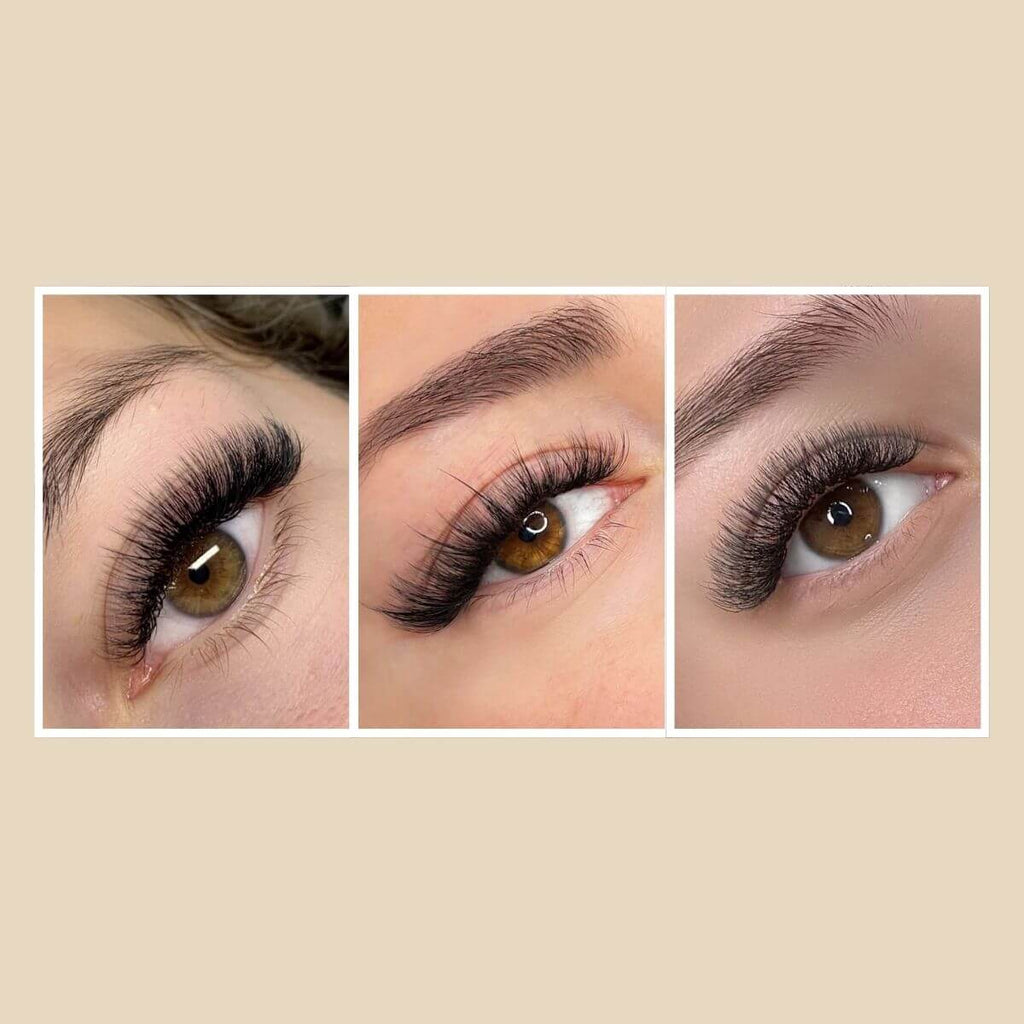
The "Wispy" or "Kim K" aesthetic has transitioned from a niche celebrity trend to a foundational requirement for any high-performance lash studio. Characterized by a jagged, high-fashion lash line and textured depth, this style demands more than just artistic flair; it requires a rigorous understanding of length jumps, diameter variance, and adhesive chemistry. For the professional lash artist, mastering this look is a strategic move to capture a market segment that values customized, high-contrast artistry over uniform volume.
In this technical guide, we will analyze the structural mechanics of the wispy set, the biological constraints of the ocular surface, and the professional standards required to deliver these looks safely and sustainably.
The Design Logic of High-Contrast Sets
The essence of a wispy set lies in the intentional "staircase" effect, where spikes of significant length protrude from a shorter, fluffier base. Achieving this without creating a clumpy or uneven texture requires precise mapping.
The Spike-to-Base Ratio
A common pitfall in textured sets is the over-saturation of spikes. When spikes are placed too close together, the visual definition is lost, resulting in a messy appearance rather than a feathered gradient. Based on common patterns from professional practice and client feedback, the recommended heuristic is a ratio of one pronounced length spike for every 5-7 base volume fans in any given zone.
This spacing ensures that each spike has "breathing room," allowing the contrast between the spike and the base to remain sharp. If you find the set looks too dense, you are likely ignoring the Mastering Row Identification principles, which are essential for layering spikes on the top row while keeping the base on the middle and bottom rows.
Mapping Strategic Length Jumps
To create the "jagged" look, the jumps between the base and the spikes should typically be 2mm to 4mm. For example, if your base layer follows a 9mm-10mm-11mm progression, your spikes should be 12mm-13mm-14mm.
Logic Summary: Our mapping analysis assumes a 3-layer natural lash structure. Spikes are placed on the top layer (closest to the eyelid) to maximize visibility and "lift," while volume fans occupy the lower layers to provide density.

Technical Specifications: Length, Diameter, and Weight
The visual weight of a wispy set is a delicate balance of diameter and length. Using the wrong diameter for your spikes can lead to two issues: the spikes getting lost in the fluff (if too thin) or causing mechanical damage to the natural lash (if too heavy).
Diameter Selection for Visibility
Experienced practitioners note that using a slightly thicker diameter, such as 0.10mm Flat Lashes or 0.07mm volume clusters, for the spiking lashes provides the necessary structural support. The 0.10MM Ellipse Flat Classic Eyelash Extensions are particularly effective here; their flat base offers a larger bonding area and a bolder appearance with roughly half the weight of a traditional round fiber.
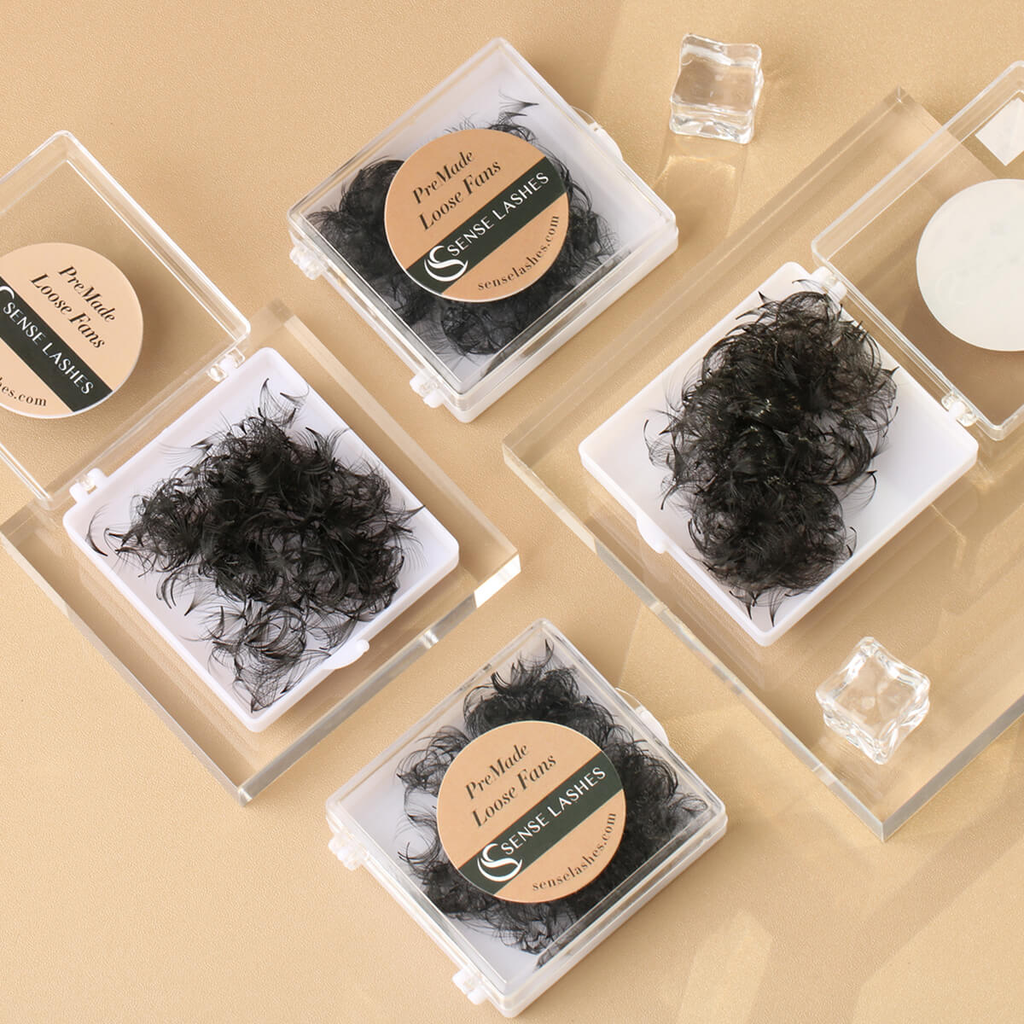
Conversely, for the base, using ultra-lightweight fans like 14D Handmade Loose Premade Fans Pointy Base or 16D Handmade Loose Premade Fans Pointy Base (typically in 0.03mm) creates the "cloud" effect that makes the spikes pop.
| Component | Recommended Diameter | Rationale |
|---|---|---|
| Spikes | 0.07mm (Volume) or 0.10mm (Flat) | Provides visual weight and contrast. |
| Base Fans | 0.03mm or 0.05mm | Creates a soft, "fluffy" background texture. |
| Transition | 0.05mm | Smooths the gap between the base and spikes. |
Estimated ranges based on common professional practice.
Avoiding the "Staircase Effect"
While we want a jagged line, we must avoid an accidental "staircase" where the lengths look mismatched rather than intentional. To prevent this, refer to our guide on Fixing the Staircase Effect in Multi-Curl Lash Mapping. The key is ensuring that the transition between different lengths is supported by consistent curl selection.
The Science of Adhesion and Retention
Retention is the primary driver of client loyalty. In a wispy set, because there are fewer spikes, losing even one or two can significantly alter the look. Therefore, the bond must be impeccable.
Adhesive Viscosity and Working Time
For textured clusters, a medium-viscosity adhesive is often preferred. A "syrup-like" consistency, such as that found in the 1-2 Second Gold Eyelash Extension Glue, offers the ideal working time. The 1-2 second drying window allows the artist to precisely place and "wrap" the base of the wispy cluster around the natural lash before the glue sets.
pH Balance and Chemical Stability
According to a landmark study by Amano et al. (2012), older generations of lash adhesives were often acidic and released significant amounts of formaldehyde, which could cause keratoconjunctivitis (eye inflammation). Modern professional formulations, like the Gold Bond adhesive, are engineered to balance pH levels and minimize formaldehyde emission.
However, even with high-quality adhesives, the Health Canada (2023-2024 Report) highlights that many products on the market still fail labeling and safety standards. Using a compliant, professionally-vetted adhesive is not just a performance choice; it is a legal and safety necessity.
Methodology Note: Our recommendation for a 1-2 second adhesive is based on a deterministic model of application speed. For an artist placing 60-80 fans per hour, a 1-2 second dry time provides the necessary buffer to ensure a wrap-around bond without the "shock curing" risks associated with 0.5-second glues in low humidity.
Ocular Health: The Professional’s Responsibility
The longevity of a lash artist's career depends on their reputation for safety. High-fashion looks like the Kim K style involve placing more weight and length on the lashes, which can exacerbate underlying ocular conditions.
Preventing Blepharitis and Infection
Poor hygiene is the leading cause of Blepharitis (eyelid inflammation). As noted by the Mayo Clinic, this condition is often caused by bacteria buildup at the base of the lashes. In wispy sets, the dense base fans can trap more debris than classic sets.
Educating clients that "water is not enough" is critical. Daily washing with a professional lash shampoo is non-negotiable to prevent Demodex mite infestation, a common issue highlighted in PMC research on ocular hygiene.
Managing Fumes and Dry Eyes
Clients often confuse the "burning" sensation of adhesive fumes with an allergic reaction. According to WebMD, dry eye syndrome can be exacerbated by the cyanoacrylate fumes released during the curing process.
To mitigate this:
- Isolation: Ensure the eye is completely closed.
- Ventilation: Use a small fan or nano-mister to disperse fumes.
- Tape Technique: Use high-quality gel patches to prevent the lower lashes from interfering and to protect the delicate under-eye skin from chemical irritation, as suggested by PMC studies on chemical injury prevention.

Troubleshooting and Client Management
Not every client is a candidate for a high-contrast wispy set. Professionalism involves knowing when to say "no" or how to adjust the design for the client's health.
The Patch Test Protocol
Allergic contact dermatitis from acrylates is a real risk. A 2024 study in PubMed emphasizes that these reactions can be delayed, often appearing 48 to 72 hours after exposure. Implementing a mandatory patch test for new clients—especially those requesting high-density volume sets—protects both the client and the salon from liability.
Mechanical Damage vs. Aesthetic Goals
Research published in PubMed (2024) notes that long-term extension wear can alter the ocular surface microbiome. To minimize mechanical damage, always ensure the weight of the extension does not exceed what the natural lash can support. If a client has fine, weak lashes, opt for 0.03mm base fans rather than 0.05mm to reduce the load on the follicle.
Business Growth: The Economics of the Wispy Trend
From a business perspective, the wispy look is a high-yield service. According to Grand View Research, the global lash market continues to grow, with a significant shift toward "individual" and "volume" segments over traditional strips.
By mastering "Strategic Length Jumps," you are positioning your salon as a high-end provider. Wispy sets typically command a 20-30% higher price point than standard volume sets due to the increased technical skill and mapping time required.
2025 Import and Compliance Checklist
For salon owners looking to scale, ensuring your supply chain is compliant is vital. The American Academy of Ophthalmology (AAO) provides medical advisories that should be integrated into your "Client Safety Consent Form." This positions your brand as a responsible leader in the industry.
Summary of Next Steps for the Professional
- Audit Your Inventory: Ensure you have a range of diameters (0.03mm for base, 0.07mm/0.10mm for spikes) to create the necessary contrast.
- Refine Your Mapping: Practice the 1:5-7 spike-to-fan ratio on a mannequin to master the jagged line without losing definition.
- Update Your Safety Protocols: Integrate the CDC guidelines on sanitation into your daily routine and provide clients with a "Blepharitis Prevention" educational card.
- Optimize Adhesion: Use a medium-viscosity glue like the 1-2 Second Gold Eyelash Extension Glue to ensure secure bonding of textured clusters.
By combining technical artistry with a rigorous commitment to ocular health and chemical safety, you can master the wispy aesthetic and build a sustainable, high-growth lash business.
Appendix: Modeling and Assumptions Our technical recommendations are based on a scenario model for a professional application environment.
| Parameter | Value or Range | Unit | Rationale / Source Category |
|---|---|---|---|
| Room Humidity | 48–70% | % RH | Ideal range for cyanoacrylate polymerization. |
| Room Temperature | 18–25 | °C | Stability range for adhesive viscosity. |
| Adhesive Refresh Rate | 20–30 | Minutes | Prevents "skinning" of the adhesive drop. |
| Spike Ratio | 1:5 to 1:7 | Ratio | Heuristic for visual contrast and spacing. |
| Weight Limit | < 2x Natural | Multiple | General safety heuristic for follicle health. |
This model assumes a standard 3-layer lash row structure and may not apply to clients with significant lash gaps or medical conditions affecting the eyelid.
Disclaimer: This article is for informational purposes only and does not constitute professional medical, legal, or financial advice. Always consult with a qualified healthcare professional regarding eye health and follow local regulations concerning cosmetic applications.