


Selecting Tweezers Based on Your Handmade Fan Technique
Selecting Tweezers Based on Your Handmade Fan Technique
In the professional lash industry, the transition from classic application to volume artistry represents a significant leap in technical complexity. While the quality of the lash fiber and the chemistry of the adhesive are critical, the tweezer serves as the primary interface between the artist’s intent and the physical execution. Selecting the wrong tool is not merely an inconvenience; it is a primary driver of hand fatigue, poor fan symmetry, and mechanical damage to ultra-fine fibers.
As the global market for false eyelashes continues to expand—projected by Grand View Research to maintain a robust compound annual growth rate through 2030—the demand for precision in handmade volume has never been higher. For the professional, optimizing your kit means matching the mechanical properties of your tweezers to your specific fan-making method. Whether you employ the "pinching" technique, the "lonely fan" (on-tape) method, or the "wiggle," your tool must provide the specific tension and grip profile required for that motion.

The Anatomy of a Volume Tweezer: Precision Engineering
Before selecting a tool for a specific technique, it is essential to understand the three mechanical variables that dictate performance: tip alignment, the "sweet spot," and tension.
1. Tip Alignment and Closure
For volume work, especially when using 0.03MM Cashmere Premium Mega Volume Eyelash Extensions, the tips must meet with absolute flushness. Even a microscopic gap (less than 0.01mm) can cause the ultra-fine PBT fibers to slip or "criss-cross" within the fan base. High-performance volume tweezers often undergo a manual alignment process to ensure that the entire surface area of the tip—not just the point—makes contact simultaneously.
2. The "Sweet Spot"
Every pair of tweezers has a specific zone along the tip where the grip is most secure. In "L-type" or "Boot" tweezers, this sweet spot may be near the middle or closer to the tip. Identifying this zone is critical for the "Lonely Fan" technique, where the artist pulls lashes across the strip to bloom them. If you attempt to pull from outside the sweet spot, the fan will likely collapse or become uneven.
3. Tension and Ergonomics
Tension refers to the amount of force required to close the tips. We often observe that technicians transitioning to mega-volume struggle with "hand cramping" because they use tweezers with a tension profile that is too firm for repetitive work.
Methodology Note: The following technical recommendations are derived from a qualitative analysis of professional application sessions and common failure patterns identified in customer support logs. The "Click Test" is a professional heuristic, not a laboratory standard.
| Parameter | Recommended Value | Unit | Rationale / Source |
|---|---|---|---|
| Closing Force | 150 - 250 | grams | Ergonomic range to prevent carpal tunnel strain |
| Tip Length | 3 - 7 | mm | Variance based on "Lonely Fan" vs. "Pinching" |
| Alignment Tolerance | < 0.01 | mm | Required to hold 0.03mm - 0.05mm fibers |
| Surface Finish | Matte / Plasma | N/A | Reduces glare and improves adhesive resistance |
| Material | Medical Grade Steel | N/A | Resistance to sterilization-induced corrosion |
Matching Tweezers to Your Technique
There is no "universal" volume tweezer. Instead, the tool must act as a mechanical extension of the specific finger movements used to create the fan.
The Pinching Technique
The pinching technique involves picking up a bundle of lashes from the strip and using the thumb and index finger to "roll" the base into a point. This method requires a tweezer with a short, sturdy tip and medium-to-firm tension.
When working with 0.03MM Cashmere Premium Mega Volume Eyelash Extensions, a common mistake is using a tweezer with tips that are too sharp or pointed. Because these lashes are exceptionally soft and fine, over-sharpened tips can pierce or shred the lash base during the pinch, ruining the fan. We recommend a "Volume L" or "90-degree" tweezer with a slightly broader foot to distribute pressure evenly across the bundle.
The "Lonely Fan" (On-Tape) Method
This method involves isolating a group of lashes on the sticky strip and using the tweezer tip to "fan" them out before picking them up. This technique relies heavily on the friction between the tweezer tip and the lash fiber.
Practitioners find that for the "lonely fan" technique, a tweezer with micro-serrated or finely textured tips provides just enough grip to hold the lash bundle without squeezing too hard. If the tension is too high, you risk "clicking" the tips together with too much force, which can bounce the lashes off the strip. For those still mastering this grip, using 0.05MM Easy Fanning Eyelash Extensions can provide a helpful bridge, as the sticky base assists in fan formation while you refine your tool control.

The "Wiggle" or "Rolling" Method
In this technique, the artist uses a side-to-side wiggling motion while the lashes are still on the strip to create the bloom. This requires a tweezer with a very large sweet spot and low tension. Because the wiggling motion is repetitive and fast, high-tension tweezers will lead to rapid muscle fatigue in the thenar eminence (the muscle at the base of the thumb).
Diameter-Specific Tooling: Why One Pair Isn't Enough
Experienced artists often dedicate specific tweezers to specific lash diameters. This is not just a matter of preference; it is a necessity for maintaining tool longevity and application precision.
- Mega Volume (0.02mm - 0.03mm): These require the highest precision. Any adhesive residue or slight misalignment will make it impossible to pick up a 15D or 20D fan. Use a dedicated "Mega" tweezer and never use it for thicker lashes, which can "spring" the tips (slightly over-extending the metal).
- Standard Volume (0.05mm - 0.07mm): For 0.05MM Cashmere Premium Mega Volume Eyelash Extensions, a firmer tension is often preferred. This prevents the tool from flexing when manipulating the slightly heavier bases of these fibers.
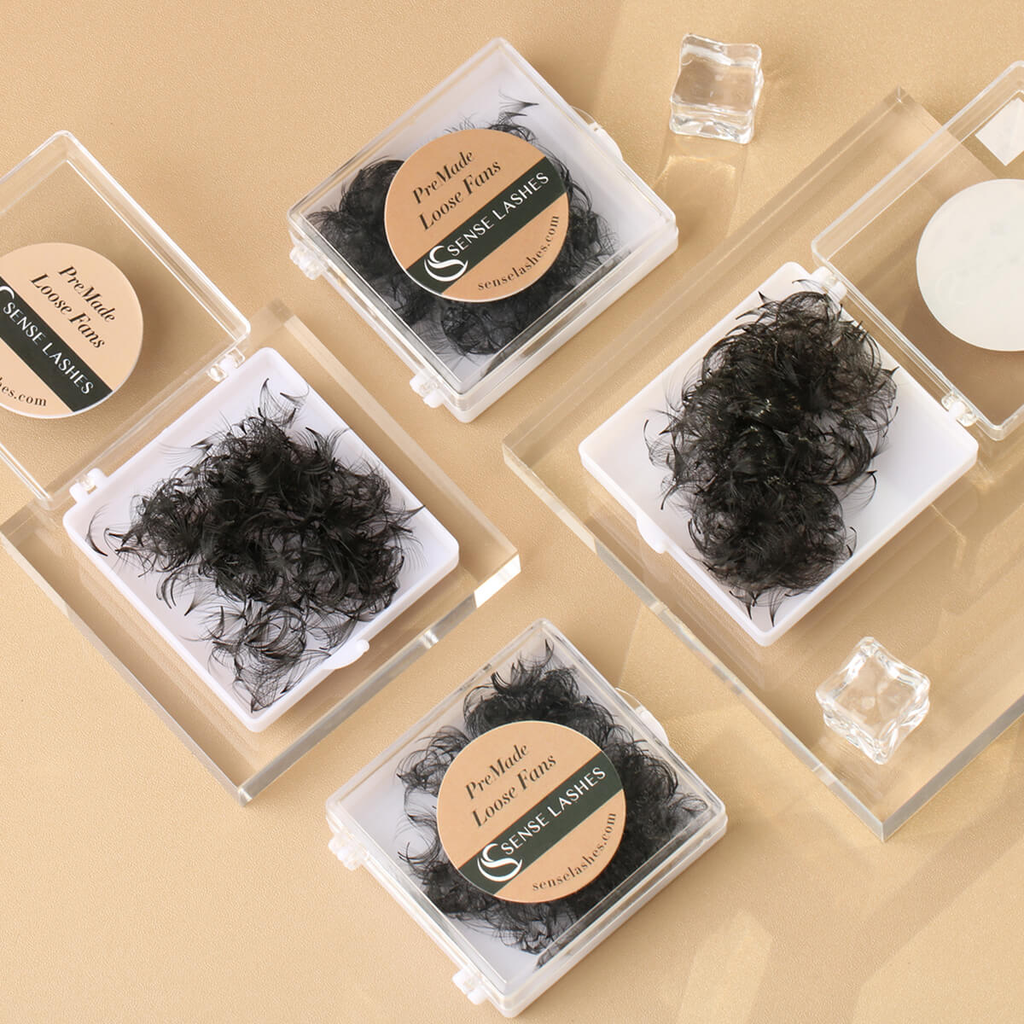
- Premade and Promade Fans: When applying 10D Handmade Loose Premade Fans Pointy Base(500 Fans), the requirement shifts from creating the fan to holding it securely without crushing the pre-bonded base. A curved isolation tweezer or a standard volume tweezer with a wider grip is ideal here.
Safety, Hygiene, and Professional Standards
The choice of tweezer also has direct implications for client safety and salon hygiene. According to the CDC (Centers for Disease Control), proper sanitation of tools is the primary defense against the spread of conjunctivitis.
Preventing Mechanical Trauma
Poorly selected or maintained tweezers can lead to mechanical trauma. A case report in PMC (PubMed Central) highlights that corneal abrasions can occur during the application or removal process if tools are handled improperly or if the extensions rub against the ocular surface due to poor placement. Using a tweezer that allows for a "light touch" reduces the risk of accidental contact with the globe of the eye.
Chemical Sensitivity and Compliance
The interaction between your tweezers and your adhesive is also critical. Health Canada's 2023-2024 Report on Cyanoacrylate-based adhesives emphasizes the importance of chemical safety. If your tweezers are not made of high-quality stainless steel, they can react with adhesive vapors over time, leading to pitting or oxidation. This not only ruins the tool but can introduce contaminants into the application area.
Furthermore, the American Academy of Ophthalmology (AAO) notes that allergic reactions to acrylates are a significant risk. Maintaining clean, residue-free tweezers ensures that you are not transferring old, partially cured adhesive (which can off-gas more intensely) near the client's eyelid.

Troubleshooting Tweezer Performance
If you find that your fan success rate is dropping, perform the following "Tweezer Audit" before assuming the lashes or adhesive are at fault:
- The Click Test: If you can easily "click" the tweezer tips together with one hand using a light pinch, the tension is suitable for fast, repetitive work with lighter lashes. if you have to "white knuckle" the tool to get the tips to meet, it is time for a lower-tension replacement.
- The Residue Check: Even a microscopic amount of adhesive on the inside of the tips will cause lashes to stick to the tool rather than the natural lash. Use a professional-grade tweezer cleaner or acetone, but ensure you re-sanitize according to CDC guidelines afterward.
- The Alignment Test: Pick up a single 0.07mm lash. If it twists or rotates when you pull it, the tips are no longer parallel. This often happens if the tweezers have been dropped or used to pick up lashes that are too thick for their intended design.
Logic Summary: Tool Selection Heuristics
Analysis: Our selection logic assumes a professional environment where the artist prioritizes both "Lash Health" and "Operational Efficiency." We categorize tools based on the Mechanical Stress they place on the fiber vs. the Ergonomic Load they place on the artist.
- For Ultra-Fine Fibers (0.03mm): Prioritize Surface Contact Area over Point Sharpness.
- For Speed (Easy Fanning): Prioritize Low Tension to prevent hand cramping.
- For Hygiene: Prioritize High-Grade Stainless Steel that can withstand repeated autoclave or high-level disinfection cycles.
Professional Outcomes: Efficiency and Health
Investing in the right tweezers is an investment in your career longevity. The University of Waterloo has highlighted the link between cosmetic application and long-term eye health, emphasizing that contaminated or poorly used tools can alter the ocular surface microbiome. By selecting tweezers that allow for precise, clean application, you protect your client's health—and by selecting tools with proper ergonomics, you protect your own.
Key Takeaways for the Professional:
- Match the Tool to the Motion: Use 90-degree tweezers for pinching and L-type for on-tape fanning.
- Respect the Diameter: Dedicate a "Mega Volume" pair specifically for 0.03mm lashes to prevent tip springing.
- Audit Regularly: Use the "Click Test" and "Residue Check" weekly to maintain performance standards.
- Prioritize Sanitation: Follow CDC and AAO guidelines to ensure your precision tools remain safe for every client.
By refining your tool selection based on these technical parameters, you move beyond "standard" application into the realm of master artistry, where every fan is a testament to precision engineering and professional care.
Disclaimer: This article is for informational purposes only and does not constitute professional medical, legal, or financial advice. Eyelash extension procedures involve inherent risks to the ocular surface; always consult with a licensed health professional regarding eye health concerns and adhere to local regulatory standards for salon sanitation.