


Texturing for Monolids: Using Length Variance to Open the Eye
The Technical Challenge of Monolid Artistry
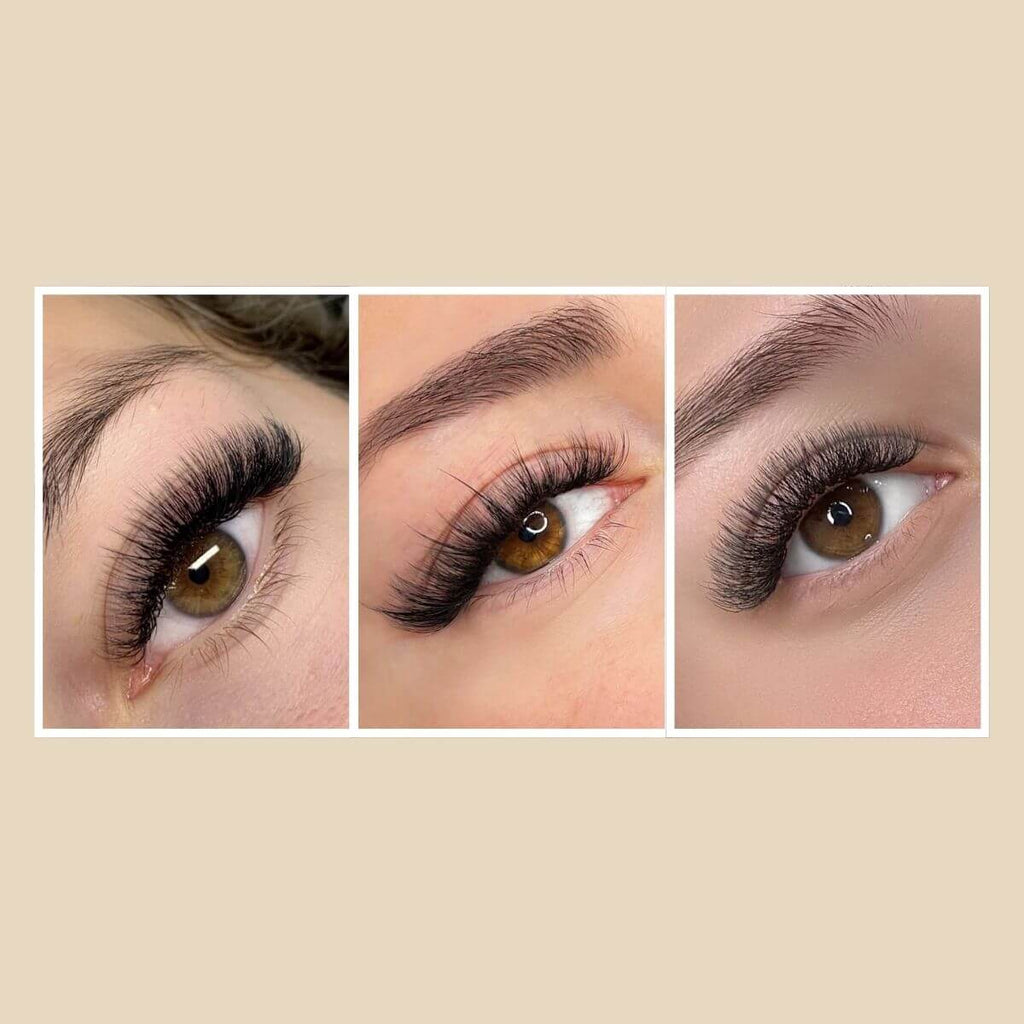
Monolid and hooded eye shapes present a unique mechanical challenge in the lash industry. Unlike almond or round eyes, where the lash line is readily visible, the monolid often features a heavy epicanthic fold or a descending lid that "swallows" the base of the extensions. We often observe that traditional mapping techniques—those relying on gradual 1mm increments—frequently result in a set that disappears entirely when the client opens their eyes.
To solve this, we must move beyond simple length selection and embrace high-contrast texturing. By using aggressive length variance and strategic diameter pairing, we can "break" the lid fold, creating an open-eye effect that provides visual lifting without the weight of traditional thick lashes. This article explores the technical synergy between length, diameter, and curl, grounded in ocular health standards and professional biomechanics.
The "Step-Ladder" Mapping Strategy
The most common mistake in monolid application is the use of a gradual length progression (e.g., 8-9-10-11-12mm). In our experience, this creates a uniform "curtain" of hair that the lid fold simply pushes downward. Instead, we recommend the "Step-Ladder" approach.
This technique utilizes aggressive 2-3mm jumps between key zones. For example, a map might transition from 9mm at the inner corner directly to 13mm at the peak, then drop back to 11mm at the outer corner. This creates a defined visual break. The longer "spikes" act as structural anchors that peek through the lid fold, while the shorter sections provide the necessary density.
Logic Summary: The Step-Ladder Model
Modeling Note: This strategy is a scenario-based heuristic derived from pattern recognition in professional lash studios. It assumes a standard lid fold depth of 2–4mm.
Parameter Value or Range Unit Rationale Inner Corner Baseline 8–9 mm Minimizes weight on delicate inner lashes Peak Transition Jump +3 mm Clears the epicanthic fold for visibility Texture Contrast 2–4 mm Creates the "spiky" open-eye effect Spike Frequency 1:5 ratio 1 spike per 5 volume fans to maintain fluff Base Length 7–9 mm Provides density under the fold
By pairing this mapping with L+ and M curls, which feature a flat base and a sharp upward angle, you can ensure the extensions clear the lid before the curl begins. This is particularly effective for clients with downward-pointing natural lashes.

Diameter Variance: 0.07mm Spikes vs. 0.03mm Fans
Texture is not just about length; it is about the interplay of weight and density. For monolids, a uniform set often looks heavy and "closed." To create a "fluffy" yet "spiky" look, we utilize length-diameter variance.
We recommend pairing a spiky 0.07mm diameter at the longest points (the "spikes") with fluffy 0.03MM Cashmere Premium Mega Volume Eyelash Extensions in the mid-sections. The 0.03mm fans provide a soft, dark base that hides the natural lash line, while the 0.07mm spikes provide the definition.
The Inverse Proportional Heuristic
A practical rule of thumb we use is to keep the diameter inversely proportional to the length jump in high-contrast areas. If you increase the length by 3mm for a spike, you should support that spike with a lighter diameter or a smaller fan (e.g., 0.03 or 0.05) to maintain fan integrity and client comfort. Heavy 0.15mm or 0.20mm lashes should be avoided on monolids, as the mechanical pressure from the lid fold can cause these heavier lashes to rub against the ocular surface.
According to research published in PubMed (Amano et al. 2012), mechanical irritation from poorly placed or overly heavy extensions can lead to keratoconjunctivitis. By using ultra-light 0.03MM Cashmere Premium Mega Volume Eyelash Extensions, you reduce the physical load on the natural lash, which is critical for long-term ocular health.
Adhesive Engineering and Retention
Retention issues on monolids often arise from the adhesive's inability to penetrate varied diameters or the artist's struggle to place spikes accurately during a fast-drying window. When working with mixed diameters like 0.03mm and 0.07mm, adhesive choice is paramount.
We have found that a medium-viscosity adhesive, such as the 1-2 Second Gold Eyelash Extension Glue, is the most effective choice. Its syrup-like consistency allows for better "wrapping" around the base of dense 0.03mm fans, ensuring every fiber is bonded. Simultaneously, the 1-2 second drying time provides enough "wiggle room" to perfectly align 0.07mm spikes without them leaning or crossing over.
Managing Fumes and Sensitivity
Monolid clients often experience higher sensitivity because the lid fold can trap adhesive fumes against the eye. A study in PubMed (35674514) highlights that Ethyl Cyanoacrylate can cause allergic contact dermatitis. To mitigate this, practitioners should strictly follow the Gap Rule, ensuring a 0.5mm to 1mm gap from the eyelid.
Furthermore, using a fast-curing adhesive like the 1-2 Second Gold Eyelash Extension Glue reduces the duration of fume exposure. For artists new to the "step-ladder" technique, using 0.05MM Easy Fanning Eyelash Extensions can accelerate the process, reducing the time the client's eyes are exposed to the curing environment.
Salon Sanitation and Ocular Health
As a professional, your technical skill must be matched by a commitment to safety. The CDC (Centers for Disease Control) provides clear guidelines on preventing the spread of conjunctivitis, which is a major risk in high-contact beauty services.
Preventing Blepharitis and Ocular Surface Disease
Poor hygiene and the buildup of bacteria at the lash base are primary causes of Blepharitis. The Mayo Clinic describes this as a chronic inflammation of the eyelids. For monolid clients, the fold can create a "micro-environment" where sweat, oils, and makeup debris are trapped.
We recommend a strict "Lash Hygiene SOP" for all clients:
- Daily Cleansing: Use a dedicated lash shampoo. Water is not enough to break down the oils that accumulate under the lid fold.
- Microbiome Protection: Recent 2024 investigations in PMC (11397841) suggest that long-term extension wear can alter the ocular surface microbiome. Using primers and sealants helps restore pH balance after application.
- Disposable Consumables: Always use disposable wands and patches to prevent cross-contamination.

Improving Efficiency with Premade Fans
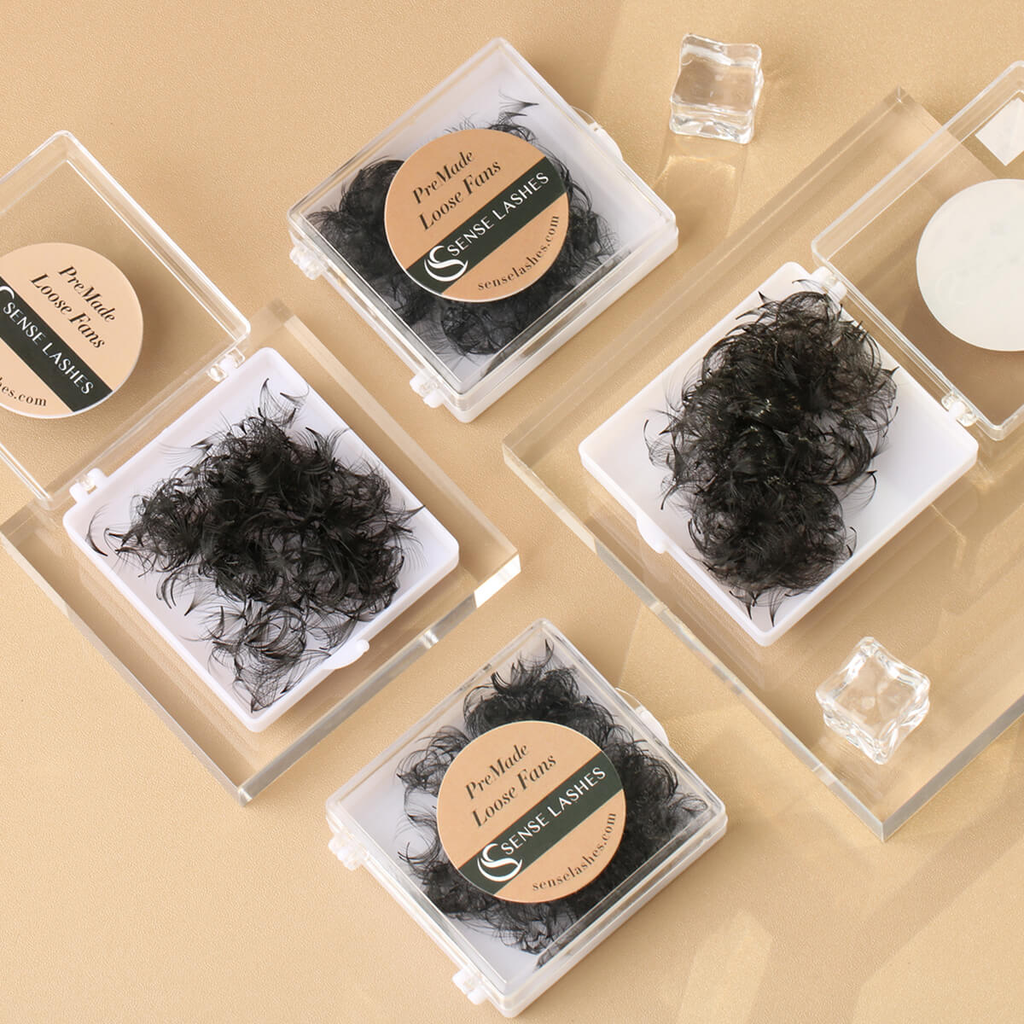
For high-volume salons, the "Step-Ladder" technique can be time-consuming due to the constant switching between diameters and lengths. To maintain a high turnover without sacrificing quality, integrating 6D Handmade Loose Premade Fans Pointy Base is a strategic move.
These fans feature a heat-bonded, ultra-slim base that mimics the look of artist-created fans. Because they are "pointy base," they offer a seamless bond to the natural lash, which is essential when Correcting Ocular Asymmetry or working on the dense lash layers often found in monolid clients.
Case Study: Standard vs. Textured Application
| Feature | Standard Volume Set | Textured "Step-Ladder" Set |
|---|---|---|
| Length Progression | 8, 9, 10, 11, 12mm | 9, 12, 10, 13, 11mm |
| Diameter | 0.07mm only | 0.03mm (base) + 0.07mm (spikes) |
| Visual Outcome | Uniform, may look heavy | Defined, "open-eye" effect |
| Retention | 4–5 weeks | 6–8 weeks (with Gold Glue) |
| Ideal Products | Easy Fanning 0.05mm | Cashmere 0.03mm |
Global Compliance and Business Growth
As the lash industry continues to grow—with a significant CAGR reported by Grand View Research—professional artists must navigate an increasingly complex regulatory landscape.
The 2025 Import Compliance Checklist
According to the Health Canada 2023-2024 Compliance Report, many cyanoacrylate adhesives fail to meet strict labeling and chemical safety standards. As a salon owner, sourcing from a manufacturer that prioritizes compliance—such as SenseLashes—is a "safe harbor" against customs seizures and legal liability.
Key compliance factors to verify:
- SDS (Safety Data Sheets): Ensure your adhesive has a current SDS.
- Ingredient Transparency: Avoid products containing prohibited formaldehyde levels or industrial-grade dyes.
- Labeling: Proper warnings and storage instructions must be present in the local language.
By positioning your salon as a technical authority that uses compliant, high-performance products like the 1-2 Second Gold Eyelash Extension Glue, you build a "professional credibility gap" between yourself and price-led competitors.
Technical Takeaways for the Professional
To master texturing for monolids, remember these core principles:
- Break the Fold: Use 2-3mm length jumps to ensure lashes are visible beyond the eyelid.
- Balance Weight: Pair longer lengths with lighter diameters (0.03mm) to protect natural lash health.
- Optimize Bonding: Use a medium-viscosity adhesive for mixed-texture sets to ensure maximum wrap and retention.
- Prioritize Health: Educate clients on blepharitis prevention and daily hygiene to maintain the ocular microbiome.
By implementing these advanced strategies, you provide more than just a beauty service; you provide a customized, technical solution that respects the client's anatomy and long-term eye health.
Disclaimer: This article is for informational purposes only and does not constitute professional medical or legal advice. Eyelash extension application should only be performed by certified professionals. Always consult with a qualified healthcare provider regarding eye conditions or allergic reactions.