


Horizontal vs. Vertical Flow: Mapping Your Lash Color Gradient
Quick Guide: Mastering Color Flow
For a successful color gradient, prioritize these three technical pillars:
- The 70/30 Rule: Blend 70% black with 30% color in transition zones to avoid "blocky" lines.
- Vertical Layering: Use ultra-fine 0.05mm diameters to prevent eyelid "bulk" and maintain meibomian gland health.
- Adhesive Heuristic: Increase adhesive contact area by approximately 10% for colored PBT fibers to compensate for surface texture differences.
Disclosure: This technical guide is authored by the SenseLashes expert team and contains references to our professional product line as illustrative examples of industry-standard materials.
The Evolution of Color Artistry in Modern Lash Extensions
The lash industry is undergoing a significant shift from corrective enhancement to high-level artistry. As the global false eyelashes market continues to expand—projected for substantial growth through 2025 according to Grand View Research—the demand for sophisticated color gradients has surpassed basic black sets. For the professional artist, mastering the "flow" of color is no longer optional; it is a technical requirement for high-ticket service menus.
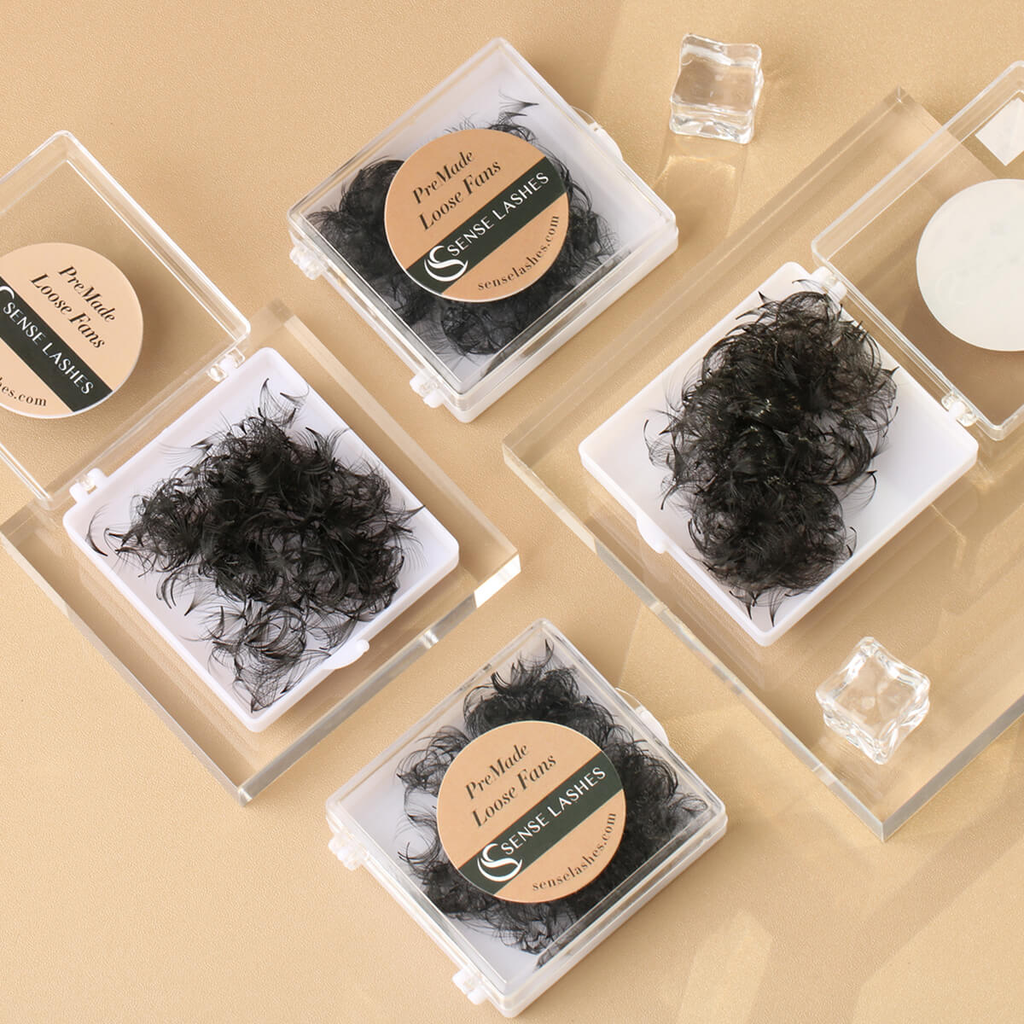
Color mapping involves more than just selecting a palette. It requires a deep understanding of optical blending, fiber chemistry, and ocular health. Whether you are creating a subtle "sun-kissed" look using Brown 12D PreMade Loose Fans - 0.05 - 500 Fans or a high-contrast editorial set, the choice between horizontal and vertical flow determines how the eye shape is perceived and how the set wears over time.
Technical Foundations: The Chemistry of Color Bonding
A common observation among experienced artists is that colored extensions may exhibit different retention patterns than standard black lashes. While black lashes are the industry standard, colored synthetic fibers—typically made from high-quality Korean PBT—often possess a different surface texture due to the pigments or dyes used during manufacturing.
Adhesive Viscosity and Drying Times
Based on internal workshop observations, colored lashes—especially lighter shades or those with additives like glitter—may benefit from a slightly thicker adhesive bead. For optimal bonding, a slower-drying adhesive (1–2 seconds) is often preferred over ultra-fast variants. This allows the adhesive to "wrap" more effectively around the colored fiber, which can have a smoother surface than standard carbon-black infused lashes.
Technical Heuristic: Our internal testing suggests that the absence of carbon black can alter the surface energy of the PBT. As a practical rule of thumb, we recommend increasing the adhesive contact area by approximately 10% compared to standard black applications to compensate for this texture variance.
When working with specialized textures like 0.07MM Wispy Glitter Eyelash Extensions, the mechanical bond is even more critical. Because cosmetic-grade glitter can shed, the base of the extension should be flush with the natural lash. Any "lifting" at the base can accelerate the shedding process and compromise retention.
Compliance and Safety
As a professional, your choice of materials must align with global safety standards. According to a 2023-2024 Health Canada Enforcement Report, non-compliance in adhesive labeling and chemical safety is a documented risk in the supply chain. Using professional-grade, compliant pigments is essential to mitigate the types of ocular disorders and chemical toxicities highlighted in recent PubMed studies (2024).
Horizontal Flow: Mastering the Ombré Transition
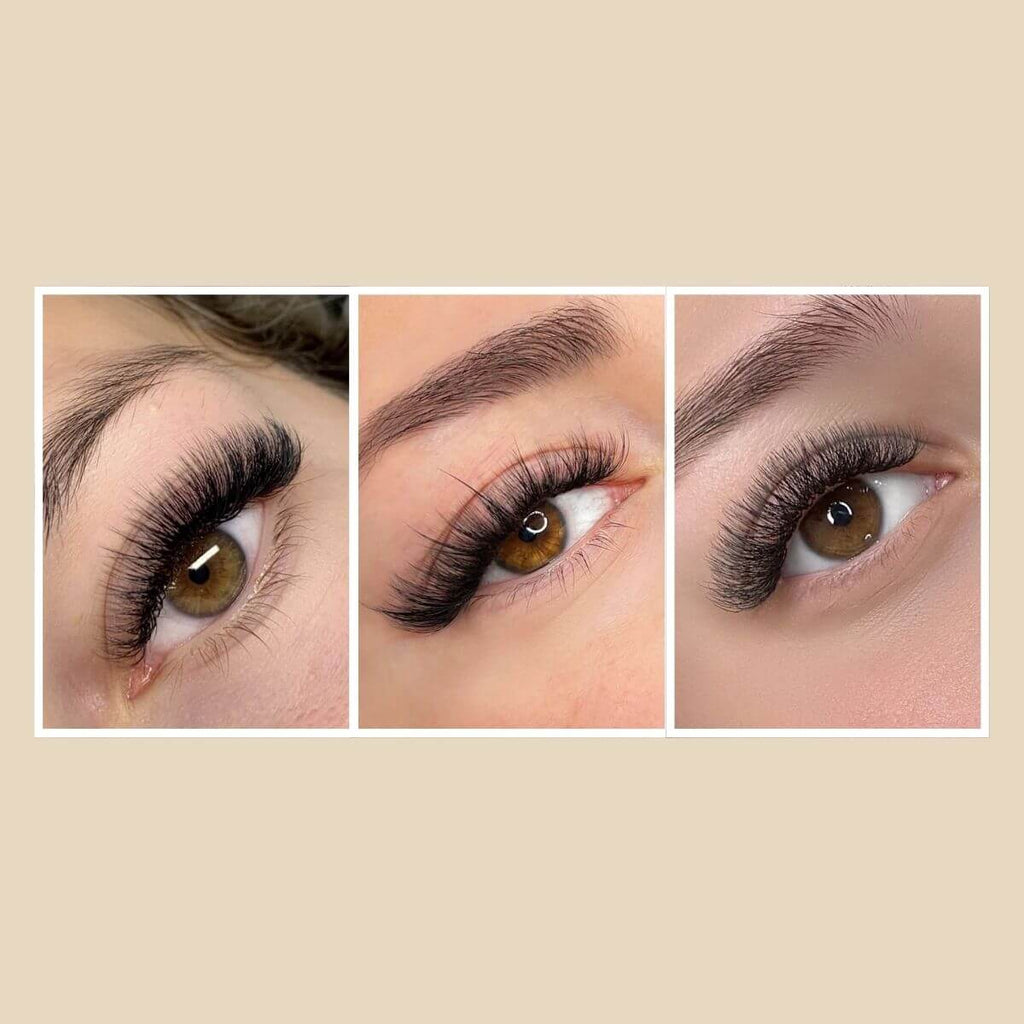
Horizontal flow refers to the lateral transition of color across the lash line, typically moving from the inner corner to the outer corner. This technique is often effective for "Cat Eye" or "Squirrel" mappings where the goal is to elongate or lift the eye.

The 70/30 Transition Rule
To achieve a seamless ombré and avoid a "blocky" transition (a stark vertical line where black ends and color begins), practitioners can utilize this ratio blending heuristic:
- Zone 1 (100% Black): The inner corners and initial sectors.
- Transition Zone (70/30): In the first 2–3 fans of the color section, use 70% black fans and 30% color fans.
- Zone 2 (50/50): The middle sector of the transition.
- Zone 3 (100% Color): The outer sector or desired "pop" area.
For clients who desire a natural enhancement, using Brown 20D PreMade Loose Fans - 0.05 - 500 Fans provides a softer transition than vibrant blues. The brown tones mimic natural melanin variations, offering a more conservative entry point for clients new to color extensions.
Vertical Flow: Layering for Depth and Dimension
Vertical flow involves mapping different colors according to the natural lash layers (bottom, middle, and top). This creates a "multi-dimensional" effect where the color appears to shift as the client blinks.
Managing the Base in Vertical Stacking
The primary technical challenge in vertical mapping is the weight and bulk of the base. When stacking, the bases must remain slim to prevent mechanical irritation. According to the American Academy of Ophthalmology (AAO), mechanical trauma from heavy or poorly applied extensions can lead to permanent lash loss (traction alopecia).
To mitigate this, use ultra-fine diameters like 0.05mm. When layering, use a precise, pointed tweezer to pinch the base of the fan before dipping it into the adhesive. This helps ensure the attachment point remains microscopic, maintaining the health of the meibomian glands, which are critical for tear film stability as noted by PMC research (2024).
| Parameter | Value/Heuristic | Rationale |
|---|---|---|
| Base Diameter | Max 0.07mm for layers | Prevents bulk and mechanical rubbing against the lid. |
| Layering Ratio | 1:1 (Lash to Extension) | Follows safety protocols to avoid natural lash overloading. |
| Adhesive Bead | ~1.5mm (Practical Estimate) | Heuristic for ensuring enough surface area for a secure "wrap." |
| Pinch Technique | Recommended for 12D+ fans | Keeps the base pointed and reduces potential for irritation. |
| Curing Time | 24-hour full cure | Based on standard cyanoacrylate polymerization rates. |
Modeling Note: This layering model assumes a healthy natural lash density. For clients with sparse lashes, vertical stacking should be limited to the middle layer only to preserve the integrity of the natural lash cycle.
Ocular Health and Professional Responsibility
High-level artistry must be balanced with clinical hygiene. The CDC guidelines on conjunctivitis emphasize the importance of non-porous surfaces and disposable tools. In a color-focused salon, cross-contamination of pigments or shared adhesive palettes can lead to outbreaks of bacterial buildup.
Safety Protocol: Patch Testing & Contraindications
Prior to any full color set, especially when using higher-viscosity adhesives, a standardized patch test is recommended:
- Placement: Apply 3–5 short extensions to the outer corner of each eye or a small amount of adhesive behind the ear.
- Window: Observe for 24–48 hours.
- Reaction Check: If itching, redness, or swelling occurs, do not proceed with the service.
- Contraindications: Services should be avoided for clients with active eye infections, chronic blepharitis, or those who have had recent ocular surgery (within 6 months or until cleared by a physician).
Blepharitis and Allergic Responses
Poor lash hygiene is a frequent contributor to Blepharitis (eyelid inflammation). As detailed by the Mayo Clinic, bacteria and Demodex mites thrive in debris trapped by extensions. Daily cleaning with a pH-balanced lash foam is a non-negotiable recommendation for all clients.
Distinguishing between irritation and allergy is vital. A PubMed study (2022) highlights that Ethyl Cyanoacrylate is a known allergen. If a client experiences swelling 48+ hours after application, it can be indicative of a delayed hypersensitivity reaction rather than simple irritation. In such cases, professional removal and medical consultation are advised.
Choosing the Right Flow for Your Client
Scenario A: The Professional "Low-Key" Client
- Goal: Subtle enhancement for a corporate environment.
- Recommendation: Horizontal flow using Brown 12D PreMade Loose Fans.
- Technique: A 90/10 blend where the brown is primarily visible in the outer corners under direct sunlight.
Scenario B: The Editorial/Special Event Client
- Goal: Maximum impact for photography or a festival.
- Recommendation: Vertical layering using 0.07MM Wispy Glitter Eyelash Extensions.
- Technique: Use a "sandwich" method—black fans on the bottom, colored fans in the middle, and glitter spikes on top.

Strategic Business Growth: The 2025 Outlook
For salon owners, color artistry is a key differentiator. The ability to troubleshoot complex issues—such as distinguishing between dry eye syndrome (which can be exacerbated by fumes) and a product reaction—builds client trust. Utilizing resources like WebMD’s guide on Dry Eyes helps you consult with clients effectively.
As the industry moves toward more rigorous regulation, being a salon that uses compliant, high-quality PBT fibers and balanced-pH adhesives can protect your business from legal risks. A 2012 study (Amano et al.) identified formaldehyde release in older glue formulas; modern practitioners should ensure their current supplies are engineered to minimize these risks.
Summary of Professional Best Practices
- Adhesive Management: Use a slightly larger droplet and a slower-drying adhesive for colored PBT to facilitate a full "wrap" bond.
- Transition Control: Implement the 70/30 ratio for horizontal flows to ensure aesthetic continuity.
- Base Architecture: Pinch the base of layered fans in vertical flows to maintain eyelid health.
- Hygiene Advocacy: Educate clients that lash shampoo is a necessity for preventing Blepharitis and Demodex infestation.
- Material Selection: Prioritize 0.05mm diameters for high-density volume sets to remain within safe weight limits for natural lashes.
Disclaimer: This article is for informational purposes only and does not constitute professional medical, legal, or financial advice. Lash artists should always operate within their local regulatory frameworks and consult with medical professionals regarding client eye health issues.
References
- American Academy of Ophthalmology - Eyelash Extension Safety
- Centers for Disease Control and Prevention - Conjunctivitis Prevention
- Mayo Clinic - Blepharitis Symptoms and Causes
- Health Canada - Cosmetic Regulations Enforcement Report 2023-2024
- PubMed - Ocular Disorders and Eyelash Extensions (2024)
- Grand View Research - False Eyelashes Market Analysis