


Troubleshooting Glue Wick: Why Mega Fans Close on Application
The Technical Challenge of High-Density Fan Symmetry
In the specialized field of mega volume artistry, the transition from 5D to 15D+ fans introduces a complex set of fluid dynamics. For the technician, few frustrations compare to the "wicking" effect—when a perfectly symmetrical, hand-crafted fan snaps shut the moment it touches the adhesive or the natural lash. This phenomenon, often referred to as "closing fans," is not merely a stroke of bad luck; it is a predictable result of capillary action, adhesive viscosity, and environmental variables.
When we observe high-density sets (10D-20D) under magnification, the margin for error narrows significantly. A fan created with 0.05MM Cashmere Premium Mega Volume Eyelash Extensions requires a delicate balance of tension and adhesive volume. If the adhesive wicks up the fibers, it destroys the fanning geometry, adds unnecessary weight, and can lead to mechanical stress on the natural lash.
This article provides a technical deep dive into why mega fans close, the physics of adhesive travel, and the professional-grade corrections required to maintain consistent, open architecture in every set.
The Physics of Wicking: Capillary Action and Viscosity
Wicking is driven by capillary action—the ability of a liquid to flow in narrow spaces without the assistance of, or even in opposition to, external forces like gravity. In lash fanning, the narrow spaces are the gaps between individual fibers at the base of the fan.
Fiber Density and Surface Area
The choice of diameter is the first variable in the wicking equation. While 0.03mm fibers allow for extreme lightness and high density, they possess a tighter packing density at the base. This proximity creates stronger capillary "suction." Conversely, using 0.05MM Cashmere Premium Mega Volume Eyelash Extensions in a 12D-16D fan provides slightly more interstitial space between the fibers, which can offer a technician more control over adhesive travel.
Adhesive Viscosity: The "Syrup" Heuristic
Adhesive viscosity—the "thickness" or resistance to flow—is a critical tool for managing wicking. Ultra-thin, watery adhesives are prized for their fast drying times, but they are highly prone to rapid wicking in mega volume sets.
Based on technical patterns observed in high-density applications, we often recommend a "syrup-like" consistency for mega fans. A slightly higher viscosity adhesive, such as the 1-2 Second Gold Eyelash Extension Glue, provides a better working window. Its consistency allows it to sit at the base of the fan rather than racing up the fibers.
Logic Summary: Our analysis of wicking assumes that capillary force is inversely proportional to the gap between fibers and directly proportional to the surface tension of the adhesive. High-density fans (15D+) using ultra-fine fibers (0.03mm) create the "perfect storm" for wicking unless viscosity is adjusted.

Environmental Catalysts: The Humidity Factor
Environmental conditions are non-negotiable factors in adhesive performance. Cyanoacrylate, the primary ingredient in professional lash glues, requires moisture to polymerize (cure).
In environments where humidity falls below 50%, the adhesive often seeks moisture from the lash fibers themselves or the surrounding air. This search for moisture can accelerate the wicking effect as the liquid adhesive "reaches" upward to find reactive molecules. Furthermore, low humidity slows the curing process, giving the adhesive more time to travel up the fan before it sets.
Temperature and Flow
High temperatures decrease the viscosity of the adhesive, making it "runnier" and more prone to wicking. To maintain the "syrup-like" consistency of the 1-2 Second Gold Eyelash Extension Glue, technicians should aim for a controlled room temperature of 18-25°C (64.4°F - 77°F).
| Parameter | Recommended Range | Impact on Wicking |
|---|---|---|
| Relative Humidity | 48% – 70% | Low humidity (<50%) accelerates wicking travel. |
| Room Temperature | 18°C – 25°C | High heat reduces viscosity, increasing flow. |
| Adhesive Viscosity | Medium/Syrup-like | Thinner formulas wick faster in 10D+ fans. |
| Fiber Diameter | 0.03mm - 0.05mm | 0.03mm has higher packing density/wicking risk. |
| Fan Density | 10D - 20D | Higher D-count increases capillary "suction." |
Note: These values are estimated based on common professional practice and typical adhesive specifications.
The Professional Correction Protocol
To prevent fans from closing, a technician must modify their physical interaction with the adhesive bead and the fan base.
The Modified Dip Technique
The most common mistake in mega volume is dipping the fan too deep into the adhesive. For a standard volume set, a 1-2mm dip might be acceptable. However, for mega volume, we recommend a "modified dip" where only the first 0.5mm of the base contacts the glue.
By only touching the very tip of the base to the 1-2 Second Gold Eyelash Extension Glue, you leave the majority of the fan stem dry. This creates a physical barrier that prevents the adhesive from climbing.
The "Pinch and Release" Method
Another observed correction involves the use of non-stick tweezers. Immediately after placing the fan on the natural lash, a momentary "pinch and release" at the base can break the surface tension of the adhesive. This physical disruption stops the wicking process before the adhesive cures, locking the fan in its open, fluffy state.
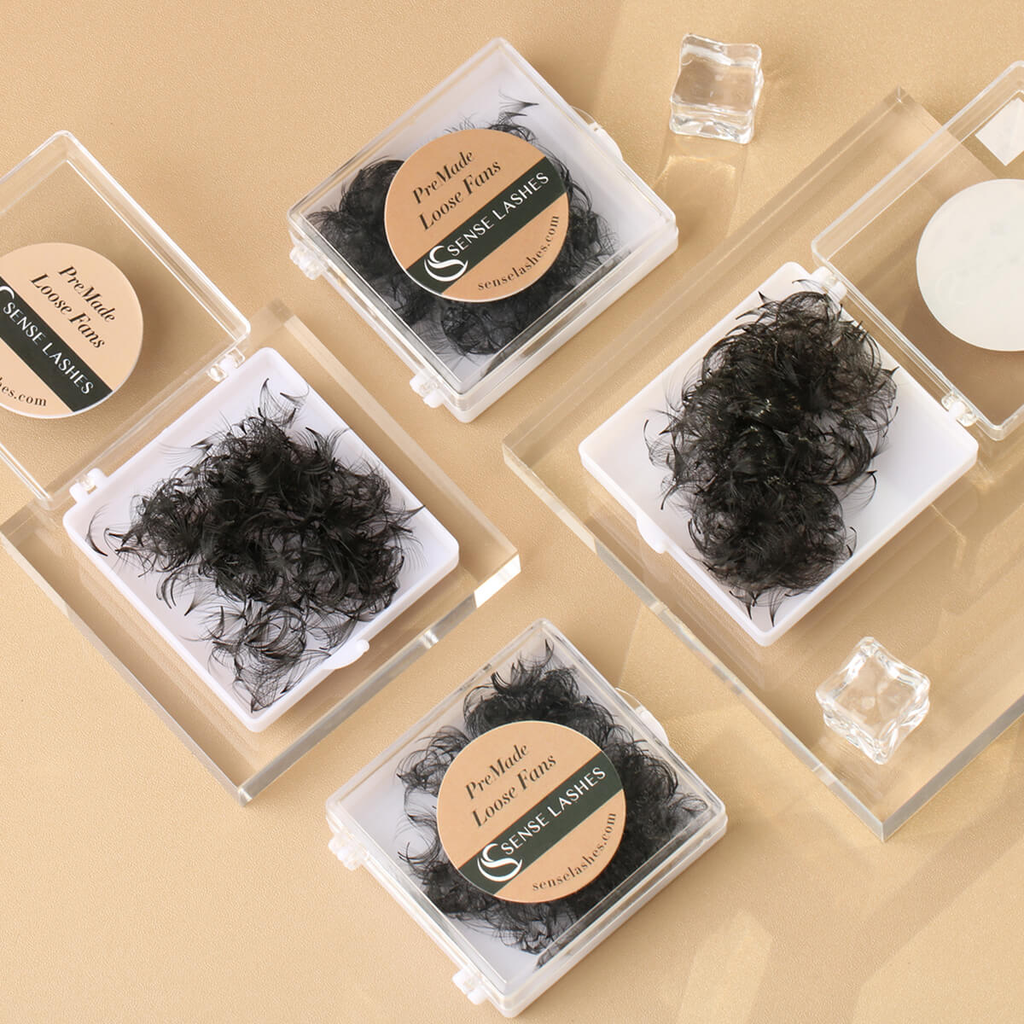
For those struggling with handmade fan consistency, utilizing 10D Handmade Loose Premade Fans Pointy Base(500 Fans) can provide a benchmark for how a "pointy" and "wick-free" base should behave. These fans are heat-bonded or pro-made with minimal adhesive, ensuring they stay open upon application.
Safety, Compliance, and Ocular Health
As a professional, technical excellence must be matched by a commitment to safety. The chemistry of lash adhesives involves risks that every technician must manage.
Managing Formaldehyde and pH
Research by Amano et al. (2012) identified that older generations of lash glues could release formaldehyde and had pH levels that caused keratoconjunctivitis (inflammation of the cornea and conjunctiva). Modern, professional-grade adhesives are engineered to balance pH and minimize emissions.
Using a high-quality adhesive like the 1-2 Second Gold Eyelash Extension Glue is a step toward mitigating these risks. However, technicians should also be aware of the American Academy of Ophthalmology (AAO) safety facts, which emphasize the risk of infection and allergic reactions to acrylates.
Allergic Contact Dermatitis
A study on Allergic Contact Dermatitis caused by Ethyl Cyanoacrylate highlights that reactions can be delayed. It is essential to distinguish between simple irritation from fumes (often related to dry eyes or poor ventilation) and a true immune response. We recommend implementing a "Patch Test Protocol" and providing clients with a safety consent form that outlines these risks, positioning your salon as a high-standard, medical-conscious facility.

Long-Term Maintenance: Preventing Blepharitis
The density of mega volume sets makes them prone to trapping debris, oils, and bacteria. According to the Mayo Clinic, Blepharitis (eyelid inflammation) is often caused by bacteria buildup at the base of the lashes.
When fans "wick" and close, they create even tighter clusters that are harder for the client to clean. Educating clients that "water is not enough" is vital. Daily cleansing with a professional lash shampoo is non-negotiable for preventing ocular surface changes and maintaining the health of the meibomian glands.
Logic Summary: We link technical wicking issues to health outcomes because closed, "chunky" fans increase the surface area for biofilm accumulation. Proper fanning is not just an aesthetic choice; it is a hygiene necessity.
Scenario Analysis: Standard vs. Mega Volume Wicking
To better understand how to apply these insights, let us look at two distinct application scenarios.
Scenario A: The Standard Volume Set (3D-5D)
- Fiber: 0.07mm
- Adhesive: Thin viscosity, 1-second dry time.
- Wicking Risk: Low. The larger diameter of 0.07mm fibers creates enough space at the base to prevent rapid capillary travel.
- Approach: Standard dipping (1mm) is usually sufficient.
Scenario B: The Mega Volume Power User (15D+)
- Fiber: 0.03mm or 0.05MM Cashmere Premium Mega Volume Eyelash Extensions.
- Adhesive: 1-2 Second Gold Eyelash Extension Glue (Syrup consistency).
- Wicking Risk: Extremely High. The high fiber count creates intense capillary suction.
- Approach: Modified dip (0.5mm), environmental monitoring (humidity >50%), and the "pinch and release" technique.
For technicians who find handmade mega volume fans consistently challenging, the 0.05MM Easy Fanning Eyelash Extensions offer a middle ground. The unique sticky base of these lashes prevents the fan from separating or wicking too far up, making them an excellent transition tool for mastering high-density sets.
Summary of Key Takeaways for the Professional
To master mega volume and eliminate the frustration of closing fans, the advanced technician should focus on three pillars: physics, environment, and technique.
- Optimize Viscosity: Transition to a medium or "syrup-like" adhesive for sets exceeding 10D. This provides the mechanical resistance needed to stop wicking.
- Control the Dip: Limit adhesive contact to the first 0.5mm of the fan base. This is the single most effective physical change to prevent fans from snapping shut.
- Monitor Humidity: Keep your workspace above 50% relative humidity to ensure the adhesive cures before it has the opportunity to travel up the fibers.
- Prioritize Hygiene: Use technical precision to ensure fans stay open, which facilitates better cleaning and prevents conditions like Blepharitis as outlined by the Mayo Clinic.
- Sanitation SOPs: Align your salon practices with CDC guidelines for preventing conjunctivitis, ensuring all consumables are professional-grade and disposable.
By understanding the "why" behind glue wicking, you can move from reactive troubleshooting to proactive mastery. Consistency in mega volume is not about speed; it is about the precise management of the materials and the environment in which they perform.
YMYL Disclaimer: This article is for informational purposes only and does not constitute professional medical, legal, or financial advice. Eyelash extension application involves chemicals and proximity to the eye; always follow local regulations and consult with a healthcare professional regarding ocular health concerns.
References
- Centers for Disease Control and Prevention (CDC) - Conjunctivitis Prevention
- Mayo Clinic - Blepharitis Symptoms and Causes
- American Academy of Ophthalmology (AAO) - Eyelash Extension Safety
- Health Canada - Compliance Verification Report on Cyanoacrylate Adhesives
- Amano et al. (2012) - Formaldehyde and pH in Eyelash Glue
- PubMed - Allergic Contact Dermatitis from Ethyl Cyanoacrylate
- PMC - Corneal Abrasion and Mechanical Stress in Lash Extensions