


Color Temperature Balance: Neutralizing Redness via Cool Tones
Color Temperature Balance: Neutralizing Redness via Cool Tones
In the professional lash industry, our ability to enhance a client's natural beauty often involves more than just length and volume. For clients presenting with skin sensitivities, mild rosacea, or persistent eyelid redness, a standard jet-black set can sometimes inadvertently emphasize these warm undertones through high contrast. As practitioners, we must transition from being application technicians to becoming masters of color theory. By utilizing cool-toned lash colors like plum and navy, we can visually neutralize redness, transforming a standard service into a corrective beauty solution.
This guide explores the technical mechanisms of color neutralization, the safety protocols required when working with sensitive skin, and the precise mapping strategies needed to achieve a harmonious, professional outcome.
The Physiology of Redness: Professional Assessment and Safety
Before selecting a lash palette, we must distinguish between permanent skin conditions and active ocular health issues. Redness in the eye area is not always aesthetic; it can be a clinical indicator. According to the Mayo Clinic, blepharitis is a common cause of eyelid inflammation often triggered by bacteria or clogged oil glands. If a client presents with crusting or significant swelling, application must be deferred in favor of medical consultation.
Furthermore, we must differentiate between simple irritation and a true allergic response. A study published in PubMed highlights that Ethyl Cyanoacrylate, the primary component in most lash adhesives, can cause allergic contact dermatitis. While irritation from fumes is temporary, an immune response is a contraindication for future services. To help your clients understand these differences, we recommend providing a detailed guide on distinguishing reactions from irritation.
Logic Summary: Our assessment protocol prioritizes ocular health over aesthetic application. We categorize redness into three tiers: Chronic (Rosacea/Skin Tone), Environmental (Dry Eye/Fumes), and Pathological (Infection/Allergy). This ensures that corrective color is only applied to healthy, albeit sensitive, tissue.
Sanitation as a Foundation for Sensitivity
For clients with pre-existing redness, preventing further irritation is paramount. The CDC (Centers for Disease Control) emphasizes that proper hygiene and the use of sterile, disposable tools are the first line of defense against conjunctivitis. We maintain a strict Standard Operating Procedure (SOP) that includes using fresh Clear Mascara Wands for every client to prevent cross-contamination and ensure the delicate eye area remains undisturbed by debris.
The Physics of Color Neutralization
The core of our corrective strategy lies in the color wheel. Redness (a warm undertone) sits opposite green and blue-green on the spectrum. However, applying pure green lashes is often too literal for a natural "beauty" look. Instead, we look to "cool" tones that contain blue or violet bases.
The Plum Heuristic
In our professional experience, plum tones—a sophisticated blend of blue and red—are the most effective for neutralizing diffuse facial redness. Because plum contains a blue base, it sits directly opposite the yellow-green spectrum and provides a cooling effect on the surrounding skin. A common mistake in the industry is using a pure navy or primary blue; while blue is a cool tone, it can create a dull, greyish cast on the skin if the client has a sallow undertone. Plum, however, retains enough warmth to look "alive" while providing the necessary cool-temperature balance.
Methodology Note: This heuristic is derived from additive color theory models where cool-spectrum wavelengths (roughly 450-490nm) are used to suppress the visual dominance of the longer red-spectrum wavelengths (620-750nm) reflected by inflamed skin.

Technical Mapping and Application Strategy
Successful neutralization requires a strategic distribution of color. It is rarely a "full set" of colored lashes. Instead, we use a blending ratio that allows the corrective tones to work subtly.
The 1:4 Blending Ratio
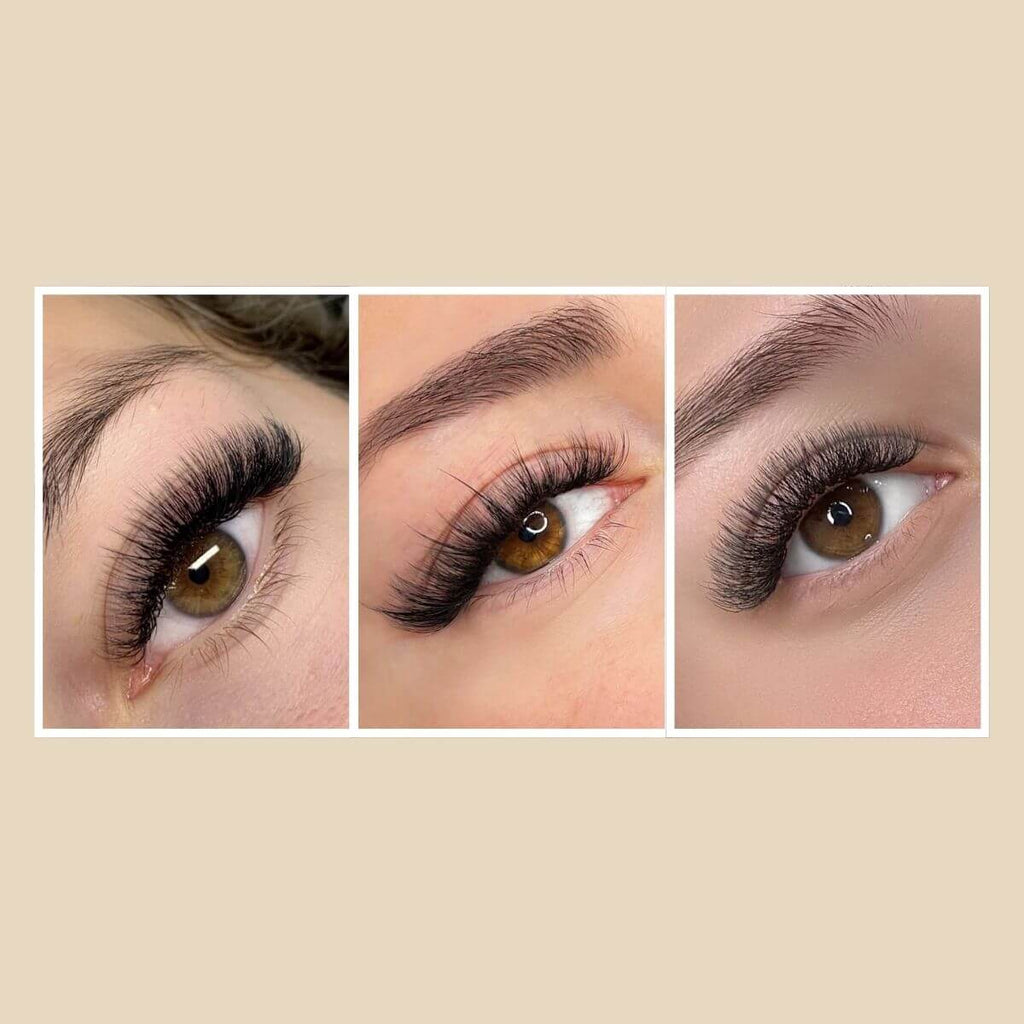
Through extensive salon modeling, we have determined that a ratio of one corrective lash fan to every four or five neutral fans (black or dark brown) provides the most effective harmonization. This allows the color to "tint" the overall appearance of the lash line without announcing itself as a "colored set."
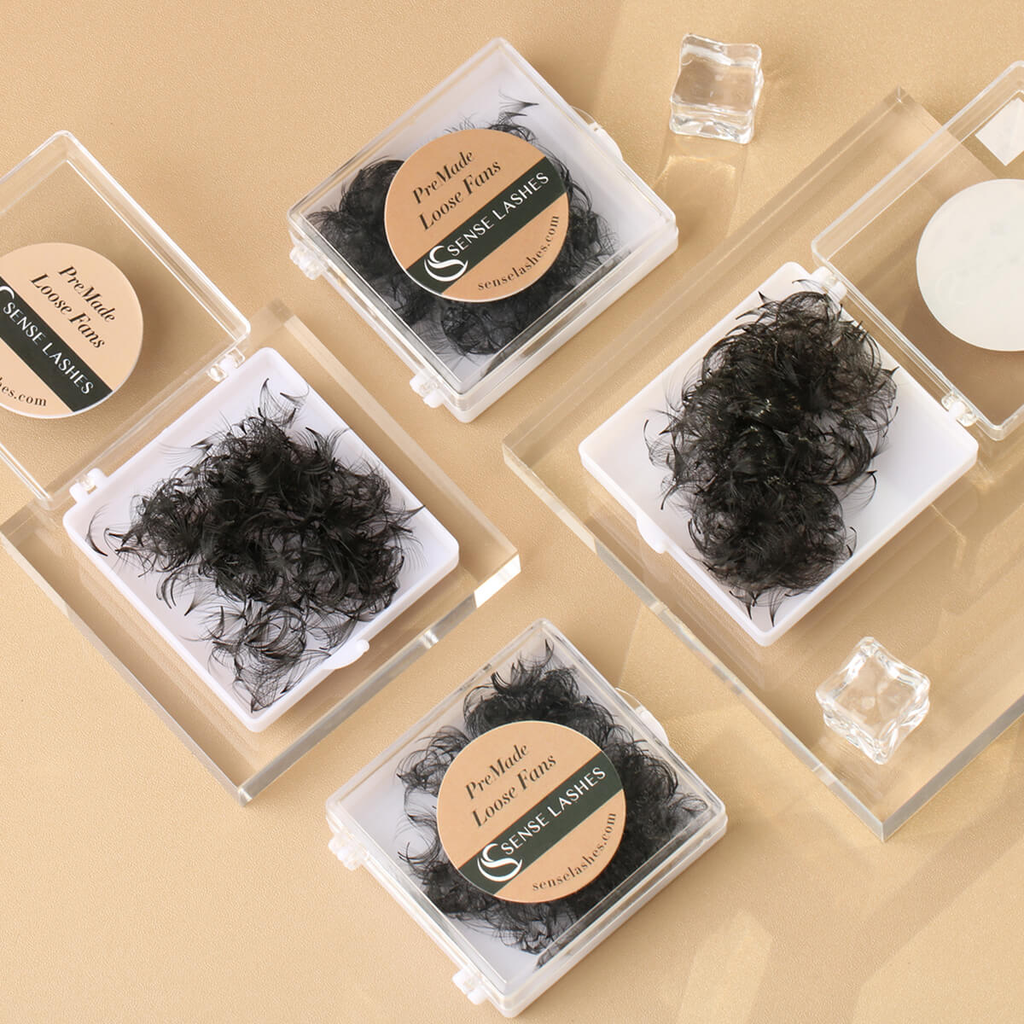
For clients who find black lashes too harsh against their redness, we often substitute the "neutral" component with Brown 10D PreMade Loose Fans - 0.07. The softer pigment of the brown fans reduces the high-contrast "starkness" that can make skin redness appear more vibrant.
Zonal Placement for Maximum Impact
Facial redness is typically most prominent in the inner and medial thirds of the eye, where the skin is thinnest and vascularity is most visible. To maximize the corrective effect, we concentrate the cool-toned fans in these specific areas.
| Parameter | Value or Range | Unit | Rationale / Source Category |
|---|---|---|---|
| Corrective Ratio | 1:4 to 1:5 | Fan Count | Prevents "costume" look while achieving neutralization |
| Placement Zone | Inner/Medial 1/3 | Eyelid Section | Targets areas of highest vascularity and thin skin |
| Ambient Light | 5000 - 5500 | Kelvin | Required for accurate color perception during mapping |
| Base Color | Dark Brown | Pigment | Softer than black; reduces contrast-induced redness |
| Accent Color | Plum / Navy | Pigment | Provides the cool-temperature neutralizing counterpoint |
Modeling Note: This mapping model assumes a standard almond eye shape. For clients with deep-set eyes, the ratio may shift to 1:3 to ensure the color is visible through the shadow of the brow bone.
Managing the Ocular Microenvironment
When working with sensitive clients, the application process itself must be optimized to minimize further redness. Research published in PMC indicates that lash extensions can affect tear film stability. For a client already prone to redness, any disruption in the tear film can lead to "dry eye" symptoms, which WebMD notes can be confused with allergic reactions.
Adhesive Chemistry and pH Balance
Historically, lash adhesives were known for high formaldehyde release and acidic pH levels, as noted in the seminal Amano et al. (2012) study. Modern professional formulas, particularly those designed for sensitive eyes, aim for a neutral pH to prevent keratoconjunctivitis. As a factory-direct supplier, we emphasize the importance of using fresh, compliant adhesives. Health Canada's 2023-2024 report highlights that many non-compliant products still circulate, often lacking proper labeling or exceeding safe chemical thresholds. Using a professional-grade, compliant adhesive is the most critical step in protecting the client's ocular surface microbiome.
For more on how adhesive choice impacts the eye, see our comparison of UV-cured vs. traditional sensitive formulas.
Advanced Customization: The Role of Texture and Shine
While color temperature is the primary tool for neutralization, texture also plays a role. A very shiny, "plastic" looking lash can reflect light in a way that draws attention to skin imperfections. We prefer matte or semi-matte finishes for corrective sets.
Integrating Brown and Glitter Accents
For a truly bespoke set, we often mix different volumes. Using Brown 14D PreMade Loose Fans - 0.05 provides a dense, soft texture that mimics natural lashes while the 0.05mm diameter ensures the weight is safe for even the most delicate natural lashes.
In some cases, adding a few 0.07MM Wispy Glitter Eyelash Extensions in silver or pale blue can further enhance the "cool" effect. The glitter acts as a focal point, drawing the viewer's eye toward the lash tips and away from any redness at the lash line. However, we advise caution: according to the FDA, any additive used near the eye must be cosmetic grade and applied with precision to avoid mechanical trauma to the cornea.

Client Consultation and Lighting Realities
A crucial part of our professional service is managing expectations regarding how color correction works in different environments. The corrective effect of plum or navy lashes is highly dependent on ambient lighting.
- Studio Lighting: Under neutral, white studio lights (5000K-5500K), the neutralization is most pronounced.
- Home Lighting: In warm, yellow incandescent lighting, the cool tones may be less visible, and the redness may appear more prominent.
We recommend discussing this with the client during the consultation. We also suggest a patch test protocol for any new color or adhesive, as late-2024 studies confirm that contact dermatitis patterns can be delayed by 48 hours or more.
Summary of Professional Outcomes
By integrating color temperature balance into your salon's repertoire, you offer a high-value, technical service that addresses specific client insecurities. The use of cool tones to neutralize redness is not just an aesthetic choice; it is a demonstration of your expertise in ocular health, chemistry, and advanced artistry.
Key Takeaways for the Professional:
- Prioritize Health: Always screen for blepharitis or active infections before application.
- Use the 1:4 Ratio: Blend one cool-toned fan (plum/navy) with four neutral fans (brown/black) for subtle correction.
- Target the Inner Third: Concentrate corrective colors where vascularity is most visible.
- Choose Quality: Ensure your supplies meet import compliance standards to protect your clients' sensitive skin.
- Educate the Client: Explain the impact of lighting on color perception to ensure long-term satisfaction.
Disclaimer: This article is for informational purposes only and does not constitute professional medical or financial advice. Eyelash extension application involves risks, including chemical burns and allergic reactions. Always consult with a medical professional regarding skin conditions and follow local regulatory guidelines for salon sanitation and product safety.
References
- Centers for Disease Control (CDC) - Conjunctivitis Prevention
- Mayo Clinic - Blepharitis Symptoms and Causes
- American Academy of Ophthalmology (AAO) - Eyelash Extension Safety
- Health Canada - Cosmetic Regulations and Cyanoacrylate Enforcement
- PubMed - Ethyl Cyanoacrylate and Allergic Contact Dermatitis
- FDA - Eye Cosmetic Safety