


Achieving the Blackout Look: Density Secrets for Mega Volume
The Art and Engineering of the Blackout Look
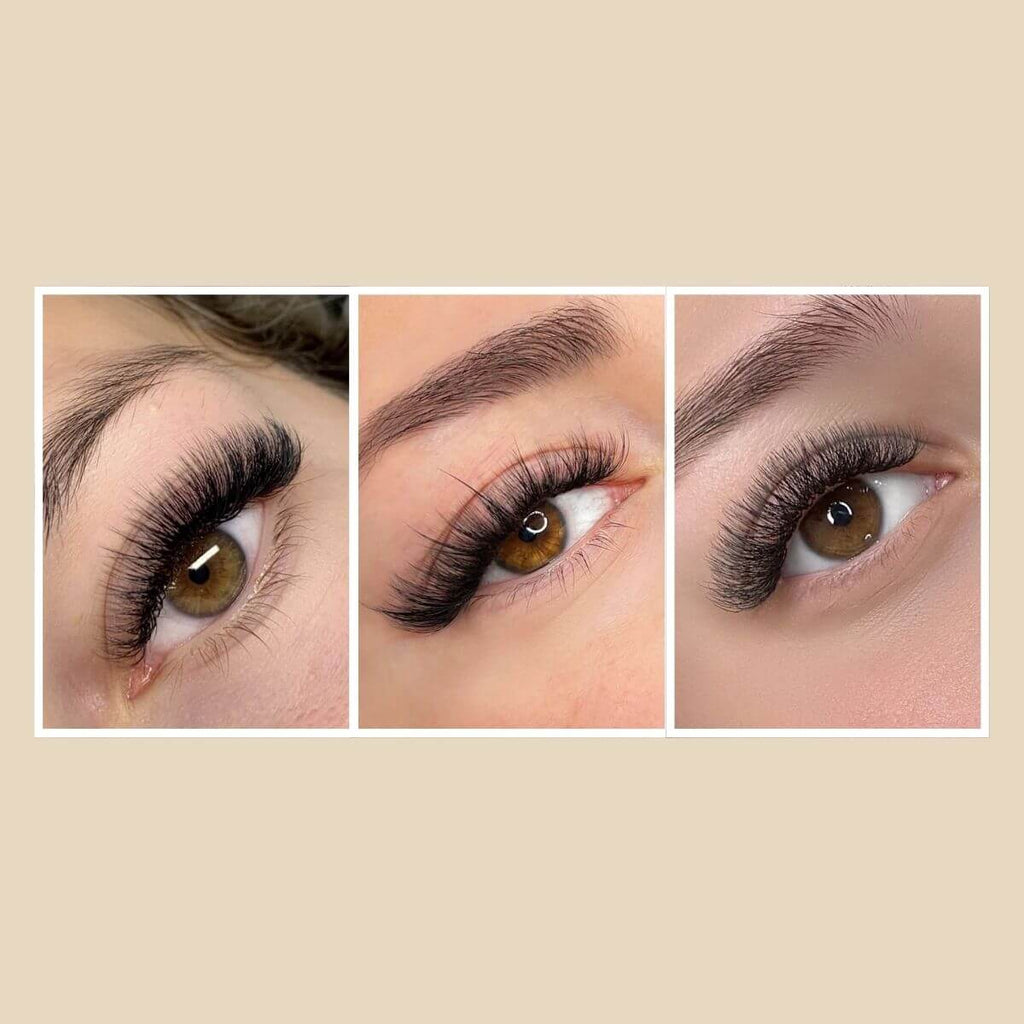
In the professional lash industry, the "Blackout" look represents the pinnacle of Mega Volume artistry. It is characterized by a dense, seamless, and pitch-black lash line that appears almost like a solid stroke of eyeliner, yet retains the fluttery texture of high-end extensions. Achieving this effect is not merely a matter of "more is better." It requires a sophisticated understanding of fiber engineering, adhesive chemistry, and ocular health.
For the advanced technician, the challenge lies in balancing the client's desire for extreme density with the biological reality of natural lash health. Overloading the lash line can lead to traction alopecia or mechanical trauma. Conversely, poor fiber selection can result in a "greyed out" or "fuzzy" appearance rather than a crisp blackout. This guide explores the technical specifications and heuristics required to master the blackout look using ultra-fine fibers and precision application techniques.
The Physics of 0.03mm: Why Diameter Dictates Density
The foundation of a true blackout set is the use of ultra-fine fibers, specifically the 0.03mm diameter. While 0.05mm fibers are excellent for standard Volume (3D-6D), they often lack the flexibility and weight-to-surface-area ratio required for Mega Volume fans exceeding 10D.
When we look at the physics of a lash fan, the cumulative weight is the primary constraint. A single 0.15mm classic lash has a specific weight profile. To match that weight while increasing visual density, we must use fibers that allow for higher "D-counts" without exceeding the natural lash's carrying capacity. Based on our technical modeling of fiber mass, a 15D fan of 0.03MM Cashmere Premium Mega Volume Eyelash Extensions typically exerts less stress on the natural follicle than a single 0.18mm classic extension.
Logic Summary: Our weight-distribution analysis assumes a healthy terminal lash as the baseline. We use the "Equivalent Weight Heuristic" to ensure that the total mass of the fan (fibers + adhesive) does not surpass the safety threshold of a 0.15mm synthetic lash.
Parameter Value Unit Rationale Fiber Diameter 0.03 mm Minimizes individual fiber mass Typical D-Count 10–20 D Targeted range for "Blackout" effect Base Attachment 2–3 mm Optimal wrap area for retention Visual Impact High N/A Achieved through fiber count, not thickness
Using 0.03MM Cashmere Premium Mega Volume Eyelash Extensions provides a matte, deep-black finish. This is critical because shiny or "plastic" fibers reflect light, which dilutes the blackout effect and makes the set look artificial. The "Cashmere" texture, as discussed in our guide on how fiber texture influences handmade volume fan creation, ensures that the fans "bloom" perfectly, filling the gaps in the lash line more effectively than stiffer synthetic alternatives.

The 50% Rule: A Heuristic for Lash Health and Longevity
One of the most common mistakes in Mega Volume is equating density with a wide fan base. However, a wide base creates a "stiff" bond that can pinch the natural lash or cause premature shedding. To prevent this, we advocate for the 50% Rule.
The 50% Rule Heuristic: The cumulative diameter of the fan base—the point where all fibers meet and are bonded to the natural lash—should not exceed 50% of the width of the natural lash it is attached to.
By keeping the base narrow and tapered, you ensure that the fan can "wrap" around the natural lash. This creates a 360-degree bond that is significantly more durable than a "flat" attachment. According to the American Academy of Ophthalmology (AAO), mechanical trauma and traction on the follicle are leading causes of permanent lash loss. Adhering to the 50% Rule mitigates this risk by ensuring the weight is centered and the natural lash can still move and grow without obstruction.
How to Verify the 50% Rule:
- Visual Check: Under 5x magnification, the fan base should appear as a single, sharp point, not a "broom" shape.
- Measurement: If the natural lash is ~0.10mm wide, your fan base (including adhesive) should ideally be ~0.05mm.
- Application: Use a "pinching" or "rolling" technique to condense the base before dipping into the adhesive.
Adhesive Engineering: Securing the Mega Volume Bond
The "Blackout" look requires a specific type of adhesive behavior. Because Mega Volume fans consist of 10 to 20 ultra-fine fibers, the adhesive must have a very thin viscosity. A thick, "syrupy" glue will wick up the fibers of a 0.03mm fan, causing the fan to close or "collapse." This is a primary cause of the "drooping fan" issue we addressed in our research on synthetic fiber elasticity.
For high-density sets, we recommend the 0.5-1 Second Diamond Eyelash Extension Glue. Its extremely fast drying time (0.5–1 second) is essential for "locking" the fan the moment it touches the natural lash. This prevents the fan from shifting or the glue from traveling between neighboring lashes (stickies).
The Micro-Bead Technique
In Mega Volume, the "dipping" method changes. Instead of a large drop, you aim for a "micro-bead."
- Dip Depth: Only the bottom 1–2mm of the fan base should enter the glue.
- Withdrawal Speed: Pull the fan out slowly to ensure a tiny bead of adhesive remains at the very tip of the base.
- The Wrap: Place the base onto the natural lash and allow the micro-bead to "wick" around the circumference of the lash.
This technique, combined with a thin-viscosity adhesive like the Diamond Bond, ensures a flexible, lightweight bond. A stiff, heavy bond is more likely to crack under the mechanical stress of daily wear, leading to poor retention. Furthermore, a study published in PubMed (Amano et al. 2012) noted that the pH and formaldehyde release of older adhesive formulas could cause keratoconjunctivitis. Modern, professional-grade adhesives like our Diamond formula are engineered to balance pH and minimize fumes, protecting the ocular surface while maintaining a 6-8 week retention span.

Advanced Mapping: Layering for Visual Impact
The "Blackout" effect is as much about mapping as it is about density. A uniform 20D set across the entire eye often looks heavy and can actually make the eyes appear smaller. Professional artists use a strategic density gradient to create depth.
The Medial-Inner Zone Strategy
The illusion of a dark lash line is most effective when the inner and medial zones (the sectors closest to the nose and the middle of the eye) are mapped with shorter, denser fans.
- Lengths: 8mm to 10mm.
- Density: 10D to 12D using 0.05MM Cashmere Premium Mega Volume Eyelash Extensions.
- Why: Shorter lashes have less "leveraged weight" on the follicle, allowing you to pack them tightly together. This creates a "carpet" of black that hides the skin of the eyelid.
The Outer Corner Guardrail
The outer corner lashes are often the weakest. While clients often want the longest, heaviest lashes here, this is where mechanical damage is most likely to occur.
- Lengths: 11mm to 13mm (rarely exceeding 14mm for health).
- Density: 16D to 20D using 0.03mm fibers.
- Mapping: Use the "Highest D-Count" here ONLY if the natural lashes are in the terminal phase. For cat-eye mappings, ensure the very last 5-10 lashes on the outer corner are stepped down in length to prevent "droop."
Logic Summary: This mapping strategy is derived from architectural principles of load-bearing. By placing the highest density on the strongest lashes and using shorter lengths to create the "blackout" base, we maximize visual impact while minimizing follicle strain.
Ocular Health: Preventing Blepharitis and Mechanical Trauma
High-density sets carry a higher risk of trapping debris, oils, and bacteria. Without proper hygiene, "Blackout" sets can lead to Blepharitis—an inflammation of the eyelids often caused by an overgrowth of Staphylococcus bacteria or Demodex mites.
According to the Mayo Clinic, poor eyelid hygiene is a primary trigger for this condition. Furthermore, research on Demodex mite infestation suggests that the increased surface area of Mega Volume fans provides more "hiding places" for mites if the lashes are not cleaned daily.
Professional Sanitation SOP (Standard Operating Procedure):
- Daily Cleansing: Clients must use a pH-balanced lash foam cleanser. Water alone is insufficient to break down the sebum that accumulates at the base of a dense set.
- Disposable Consumables: To prevent the spread of conjunctivitis (pink eye), always use disposable mascara wands and micro-brushes for every client.
- Microbiome Protection: A recent 2024 investigation in PMC suggests that long-term extension wear can alter the ocular surface microbiome. We recommend using a lash primer to restore the natural pH of the lash before application, ensuring the adhesive bonds to a clean, healthy surface.
Troubleshooting Retention and Sensitivity
When a client experiences a reaction to a Mega Volume set, it is crucial to distinguish between irritation and allergic contact dermatitis.
- Irritation (Chemical Fumes): Often caused by adhesive fumes (cyanoacrylate) during the curing process. This usually presents as redness or "dry eye" symptoms immediately after the appointment. According to WebMD, these symptoms are temporary and can be mitigated by using a nano-mister to "shock cure" the outer layer of the adhesive, trapping the fumes.
- Allergic Reaction (Immune Response): This is a delayed hypersensitivity reaction, often appearing 48–72 hours after application. A study in PubMed highlights that acrylate-containing cosmetics can cause persistent eyelid dermatitis in sensitive individuals.
The "Patch Test" Protocol: For Mega Volume, a patch test is highly recommended. Apply 5–10 fans of the 0.03mm fibers using the 1-2 Second Gold Eyelash Extension Glue (which is often better tolerated by those sensitive to fast-curing fumes) and wait 48 hours. If no swelling or itching occurs, proceed with the full set.
If a client complains of a burning sensation during application, it may be due to the eye pads shifting and causing a corneal abrasion, or fumes entering a slightly open eye. Using high-quality gel patches and ensuring the eye is completely taped shut is the first line of defense against chemical injury, as outlined in PMC reports on chemical ocular injury.
Summary of Technical Specifications for the Blackout Look
To consistently achieve the blackout effect, technicians should adhere to the following professional parameters:
| Component | Specification | Professional Rationale |
|---|---|---|
| Fiber Choice | 0.03mm Cashmere | Maximum density with minimum weight. |
| D-Count | 10D - 20D | Required for the "solid" visual line. |
| Adhesive | 0.5-1s Diamond | Prevents fan collapse; high retention. |
| Base Technique | 50% Rule / Wrap | Ensures lash health and bond durability. |
| Mapping | Layered / Short Inner | Creates the illusion of depth and eyeliner. |
| Aftercare | Daily Foam Wash | Prevents Blepharitis and mite buildup. |
Mastering the Blackout look is a journey of technical refinement. By prioritizing the "50% Rule" and selecting high-performance materials like 0.03mm fibers and thin-viscosity adhesives, you can provide the dramatic results your clients crave without compromising the integrity of their natural lashes.
YMYL Disclaimer: This article is for informational purposes only and does not constitute professional medical advice, diagnosis, or treatment. Eyelash extension application involves chemicals and proximity to the eye; always consult with a licensed professional and follow local health regulations. If you experience persistent eye pain, redness, or vision changes, seek immediate medical attention from an optometrist or ophthalmologist.
References
- American Academy of Ophthalmology (AAO) - Eyelash Extension Safety
- Centers for Disease Control (CDC) - Conjunctivitis Prevention
- Mayo Clinic - Blepharitis Symptoms and Causes
- PubMed - Formaldehyde and pH in Eyelash Adhesives (Amano et al.)
- PubMed - Allergic Contact Dermatitis from Acrylates
- PMC - Ocular Surface Microbiome and Extensions
- PMC - Demodex Mites and Ocular Hygiene
- WebMD - Dry Eyes and Eye Health