


Lash Lifts vs. Eyelash Extensions: A Professional Guide for Lash Artists

Confused about lash lifts vs. extensions? This pro guide gives you step-by-step tutorials for both, plus expert tips on tools, timing, and client advice.
Do you ever feel stuck when a client says, “I want something natural, but still noticeable,” and you are not sure whether to suggest a lift or extensions? You are not alone, and that is exactly why understanding the difference from a pro point of view matters so much.
Here we focus on what actually happens in the treatment room and in your booking system, from tools and techniques to simple ways to position both services on your menu. Think about your own studio as you go and consider where you could offer a better option, adjust your pricing, or explain things more clearly so clients trust your advice and feel excited to book their next visit.
| Aspect | Lash Lifts | Eyelash Extensions |
| Service Duration | 60 minutes; 75-90 with tint | 2-3 hours for a full set; 60-90 mins for fills |
| Processing Time |
|
|
| Client Return Time | Every 6-8 weeks | Every 2-4 weeks for fills |
| Basic Pricing |
|
|
| Room Requirements | Temperature: 70-72°F |
|
| Basic Application | 0.5mm from lash line (0.3mm for hooded eyes) | 0.5mm from lash line at a 45-degree angle |
| Material Costs | About $8 per service | About $10 per service |
| Contraindications |
|
|
| Aftercare Time | 24 hours no water | 48 hours no water/steam |

How to Do a Professional Lash Lift: Tools, Process, and Step-by-Step Tutorial
Which Professional Tools Do You Need?
To get smooth, consistent lash lift results, you need a basic set of pro tools you can rely on every time.
| Tool / Product | What You Need | Why It Matters |
| Silicone shields | Sizes XS to L, in Y and S styles | Lets you match different lash lengths and eye shapes |
| Lifting & neutralizing solutions | Professional solutions from trusted, FDA/CE compliant brands | Gives predictable results and keeps services safe |
| Lash lift adhesive | Lash lift specific, medical grade cyanoacrylate | Holds lashes firmly on the shield without lifting or slipping |
| Precision tools | Micro brushes, Y combs, curved tweezers, microfiber swabs | Helps you apply and remove product neatly and accurately |
| Barrier cream | Gentle cream with vitamin E | Protects the skin under and around the eyes during the service |
What Happens During the Chemical Process?
Behind every good lash lift is a simple chemical process that reshapes the natural lash and locks in the curl for weeks.
- First, a lifting solution breaks down the lash’s internal bonds so the hairs can be reshaped around the silicone shield.
- Next, a neutralizing solution rebuilds those bonds in the new curved position, making the lift last about 6–8 weeks. A keratin treatment can be added to nourish and strengthen the lashes.
- If you want to tint, do it at least 24 hours before or after the lift for best color and to keep the lashes healthy.
How to Perform a Lash Lift Step by Step
1. Get Your Lash Lift Station Ready
Set up your workspace before your client lies down. Lay out all your solutions (lifting solution, neutralizer, and optional keratin treatment), your silicone shields in different sizes (XS–L), your lash adhesive, and tools. Make sure the room is comfortable and stable, around 70–72°F, so the products work properly.
2. Prepare and Protect Your Client
Start with a quick consultation and check for any contraindications or allergies. Clean the lashes with an oil-free cleanser and dry them well. If it’s the client’s first lash lift, do a small patch test. Apply a gentle barrier cream with vitamin E under the eyes, then place your under-eye protection.
3. Choose and Place the Right Shield
Measure the lashes and choose the right shield size and style: Y-shields for a stronger, more dramatic lift and S-shields for a softer, natural look. Place the shield about 0.5–1 mm from the lash line. Use medical-grade adhesive to stick the shield to the lid, then brush the lashes up onto the shield with a Y-comb, making sure they are straight and evenly spaced.
4. Apply the Lifting Solution Correctly
Using a small micro-brush, apply the lifting solution from the base to the mid-shaft of the lashes, avoiding the tips. Follow timing based on lash type:
- Fine lashes: 8 minutes
- Medium lashes: 10 minutes
- Coarse lashes: 12 minutes
Watch closely and make sure no product gets into the eyes.
5. Neutralize and Set the New Shape
Gently remove all of the lifting solution with clean swabs. Then apply the neutralizing solution evenly over the same area of the lashes. Leave it on for about 8 minutes, keeping the lashes in place on the shield so the new curl sets properly.
6. Finish the Lift and Give Aftercare Tips
Carefully remove the neutralizer, then loosen and take off the silicone shield. If it’s part of your service, apply a nourishing keratin treatment to condition the lashes. Take clear after photos, and write down which shield size and processing times you used. Before your client leaves, explain aftercare: no water, steam, or heavy products on the lashes for 24 hours, and be gentle when touching the eye area.
How to Perfect Your Lash Lift Technique
1. Match Shield Size and Placement to the Eye
Place the shield close to the lash line without touching it: about 0.5 mm away for most clients and 0.3 mm for hooded eyes.
- Use XS–S shields for lashes under 7 mm, M shields for 8–10 mm, and L shields for lashes over 11 mm.
- Pick Y-shields for a stronger, more dramatic curl and S-shields for a softer, natural lift.
2. Apply Adhesive for Clean, Even Lash Wrap
Brush adhesive onto the shield in a Y-shaped pattern, then lift and separate each lash with a Y-comb. Check that the lashes are really stuck down by lightly tapping each section—if you hear a faint sound, the bond is secure.
3. Adjust Processing Time by Lash Type
Using a micro-brush, apply the lifting solution from the middle of the lash down to the roots, and skip the tips to avoid over-processing. Time it based on lash type:
- Fine: 6–8 minutes
- Medium: 8–10 minutes
- Thick/coarse: 10–12 minutes
For very resistant lashes, you can add up to 2 extra minutes if needed.
4. Adapt Your Shield Choice to Eye Shape
Use steeper shields for deep-set eyes so the lift is still visible. For round eyes, mix Y and S-shields to balance drama and softness. On monolids, focus on even, flat placement. You can also tweak the angle: around 15° at the inner corners and up to 45° at the outer corners for a flattering, lifted look.
5. Double-Check Everything Before and During Processing
Before applying any solution, inspect the lash wrap carefully. Use magnification to check that every lash is covered evenly. Time each step accurately, and always neutralize for at least 8 minutes, going up to 10 minutes for thicker lashes so the curl sets properly without damage.

How to Apply Eyelash Extensions: Equipment, Materials, and Application
What Should Your Professional Setup Include?
Before you think about styling or mapping, your setup has to work for you. A good lash station keeps you comfortable, protects your client, and helps your adhesive perform the way it should.
| Item / Area | What You Need | Why It Matters |
| Treatment bed | Fully adjustable electric bed | Supports good posture, keeps clients comfortable for long appointments |
| Lighting and magnification | LED lamp with about 2.5X to 5X magnification | Helps you see every lash clearly and place extensions with precision |
| Nano mister | Fine mist nano mister | Assists with adhesive curing and improves client comfort at the end of the service |
| Climate control | Hygrometer and thermometer to keep 47–55% humidity and 69–72°F | Keeps adhesive working within its ideal range and prevents retention issues |
| Adhesives | Fast cure adhesive (1–2 seconds) for classic work; flexible cure (2–3 seconds) for volume | Lets you match curing speed to your skill level and the technique you are using |
| Tweezers | Isolation tweezers, volume tweezers, curved placement tweezers | Gives you the control you need to isolate, fan, and place extensions accurately |
| Air quality | Medical grade HEPA air filter with carbon filter | Reduces fumes and particles in the room and supports a safer, more pleasant studio environment |
What Types of Lash Extensions Are Best for Your Studio?
Choosing the right mix of lashes makes your work easier and keeps more clients happy. Here is a simple overview you can use when planning your inventory.
Core Lash Materials and Diameters
| Category | Option / Size | When To Use It |
| Material | Premium synthetic, silk | Reliable quality, consistent curls and diameters |
| Material to avoid | Real mink | Falling out of favor due to ethical and allergy concerns |
| Volume diameters | 0.05 mm – 0.07 mm | For volume fans and light, fluffy sets |
| Classic on fine | 0.10 mm – 0.12 mm | For classic sets on weaker or finer natural lashes |
| Classic on strong | 0.15 mm – 0.18 mm | For classic sets on stronger natural lashes that can handle more weight |
Curls and Lengths To Keep in Stock
| Feature | Range / Type | Best For |
| B curl | About 30–35 degrees | Very natural looks and clients who do not want dramatic lift |
| C curl | About 45–50 degrees | Everyday wear, soft glam, most classic or hybrid sets |
| D curl | About 60–65 degrees | Bold, open eye effect and more dramatic styles |
| Classic length range | 8 mm – 15 mm (1 mm steps) | Full mapping options from inner to outer corners |
| Volume length range | 8 mm – 13 mm | Balanced volume sets without overloading the natural lash line |
How to Apply Lash Extensions Step by Step
1. Get Your Workspace Ready
- Keep the room comfortable, around 71°F with about 50% humidity. Use a hygrometer if you have one.
- Clean and disinfect your tweezers, eye pads, and other tools with medical-grade disinfectant.
- Lay out your lash trays from short to long, and group them by curl (B, C, D).
- Put your tweezers, glue, and micro-brushes on the side of your working hand so you can reach them easily.
- Adjust your lamp so it shines directly over the bed without blinding you or the client.
2. Get Your Client Ready
- Check your client’s previous notes and ask what style they want this time (natural, wispy, dramatic, etc.).
- Clean their lashes with an oil-free lash cleanser using a micro-brush, from root to tip.
- Gently dry the eye area with a lint-free wipe.
- Place gel eye pads under the lower lashes, as close as you can to the waterline without touching it.
- Use micropore tape to hold down any lower lashes that pop up.
- Apply a primer to the natural lashes with a micro-brush, working from the middle of the lash toward the tips.
3. Start at the Inner Corner
- Sit at a comfortable angle near the client’s head so you can clearly see the inner corners.
- Use your isolation tweezers to separate one natural lash at the inner corner of the right eye.
- With your other tweezers, pick up an extension that matches the natural lash thickness and is no more than 2 mm longer.
- Dip just the bottom 1 mm of the extension into the adhesive.
- Place the extension on top of the natural lash, leaving about 0.5 mm space from the eyelid.
- Hold it in place for a second or two until the glue grabs.
4. Work Across the Lash Line
- Keep isolating and attaching one natural lash at a time, moving from the inner corner to the outer corner.
-
As a simple map:
- Inner corner: about 8–10 mm
- Middle section: about 10–12 mm
- Outer corner: about 11–13 mm
- Keep the same 0.5 mm gap from the lash line for every extension.
- After placing each extension, quickly check that it is attached to only one natural lash and not stuck to its neighbors.
5. Check and Perfect Your Work
- Hold your nano mister about 8–10 inches away and mist the lashes for 2–3 seconds to help cure the glue.
- Wait about 30 seconds, then gently brush through the lashes with a clean spoolie, using downward and outward strokes.
-
Look at the lashes from:
- The front
- The left side
- The right side
Check that both eyes look even in length, curl, and fullness.
If you see any visible glue clumps, remove them carefully with a micro-brush and adhesive remover.
6. Finish Up and Explain Aftercare
- Slowly remove the eye pads, starting at the outer corner and peeling inward.
- Use a damp cotton pad to clean any leftover marks or residue around the eyes.
- Take a few photos: one straight on, and then from left and right 45° angles.
-
In your client’s file, note:
- Which curls you used
- Which lengths you used in each section
- Roughly how many extensions you applied
-
Before they leave, tell your client:
- Avoid water, steam, and oil-based products around the eyes for 48 hours.
- Brush their lashes daily with a clean spoolie, using gentle strokes.
How to Optimize Your Lash Service Scheduling
How Long Should You Allocate for Lash Lift Appointments?
For lash lifts, reserve 60-minute time slots, which include a 10-minute window for consultation and aftercare advice. For lift and tint combos, extend the block to 75-90 minutes. Set reminders for clients every 6-8 weeks, tailoring the schedule based on their lash type. Arrange your day to fit in multiple clients, leveraging the shorter duration of lift services.
How Much Time Is Needed for Extension Services?
Allocate 2-3 hours for full sets of extensions—with classic sets typically at 2 hours and volume sets ranging from 2.5 to 3 hours. Plan 60-90 minute intervals for refill appointments, adjusting based on how many extensions need replacement. Include extra time between sessions for cleaning and preparation. For frequent clients, offer 45-60 minute "mini fills" if they're within a 2-week return span.
What Makes Your Lash Studio Stand Out?
Your lash brand doesn’t start with a logo — it starts with how you position your services. Make it clear on your menu what each option is really for. Lash lifts can be framed as a low-maintenance, natural boost for clients who want to wake up and go. Extensions, on the other hand, are your customizable, more dramatic option, perfect for clients who love a specific style or fuller look.
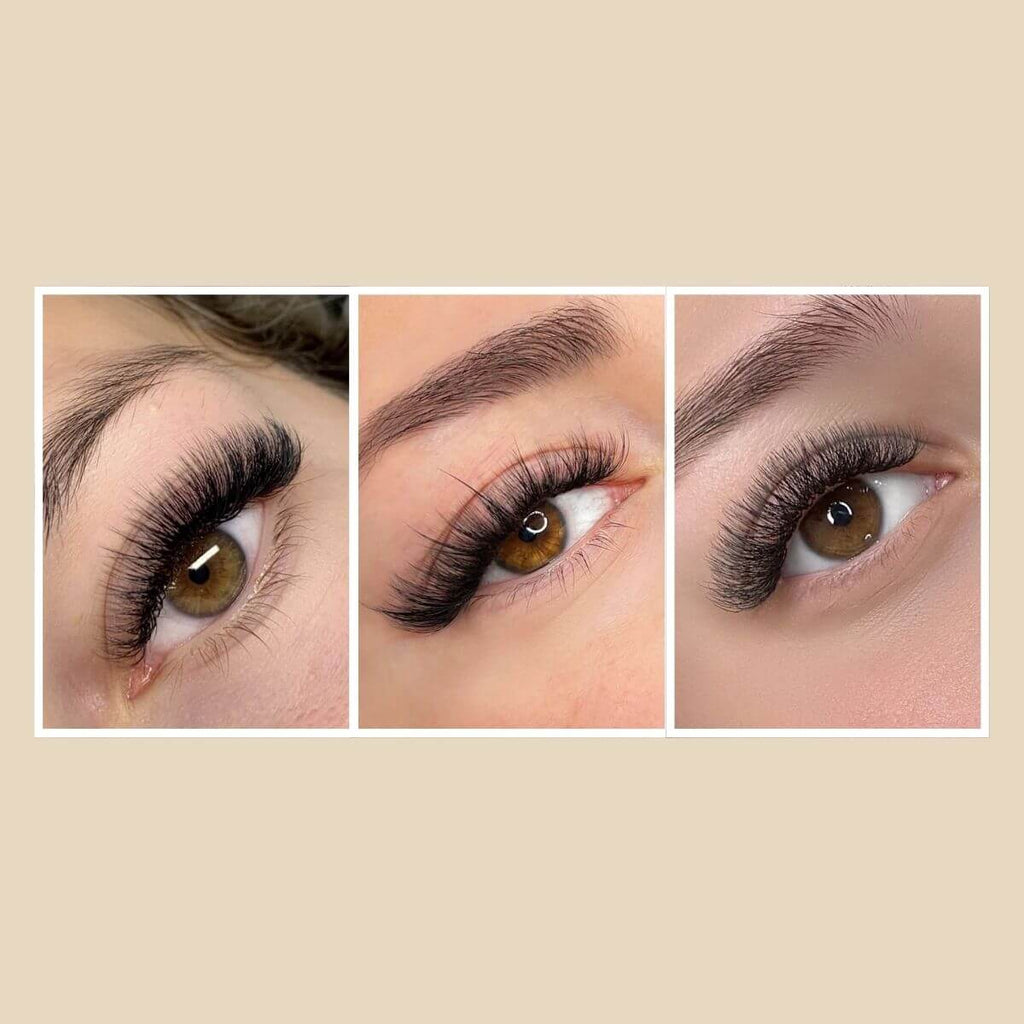
Back this up with a strong portfolio. Use consistent, well-lit before-and-after photos that show different styles, eye shapes, and levels of fullness, so clients can picture what’s possible on their own eyes.
Know who you’re talking to. Lash lift clients usually care most about looking natural and keeping things easy. Extension lovers tend to be more into custom styling, drama, and detail. Let that guide how you talk about each service and how you price them. Your pricing should reflect the time, product, and skill that go into each set.
Finally, don’t underestimate your online presence. A clean, simple website and a smooth booking system make you look professional and trustworthy before a client even walks through the door.
Growing Your Lash Business with Lash Lifts and Eyelash Extensions
Think of everything you learned about lash lifts and eyelash extensions as tools you can start using right away. Try one small improvement with each new client, whether it is better mapping, clearer consulting, or cleaner photos. Ask your clients what they love and what they would change so you can adjust quickly. The more you listen and refine, the more trust you build. That trust is what turns one-time bookings into long term regulars.
Leave a comment