


Classic vs Volume vs Mega Volume Lash Extensions: Which Is Right for You?

Classic volume and mega volume lash extensions differ by ratio diameter weight client suitability application skill pricing and retention risks today.
Three factors determine the right lash technique: natural lash assessment, client lifestyle, and technician skill. Classic, Volume, and Mega Volume each serve a distinct client profile. Recommending the wrong technique leads to early shedding, client dissatisfaction, and rebooking loss. Match each technique to the right candidate, price it correctly, and avoid the most common application errors.
What Actually Separates Classic, Volume, and Mega Volume Lash Extensions?
The difference between classic and volume lash extensions is not the final look. It is the extension-to-natural-lash ratio. That ratio determines weight, density, and application time for every technique.
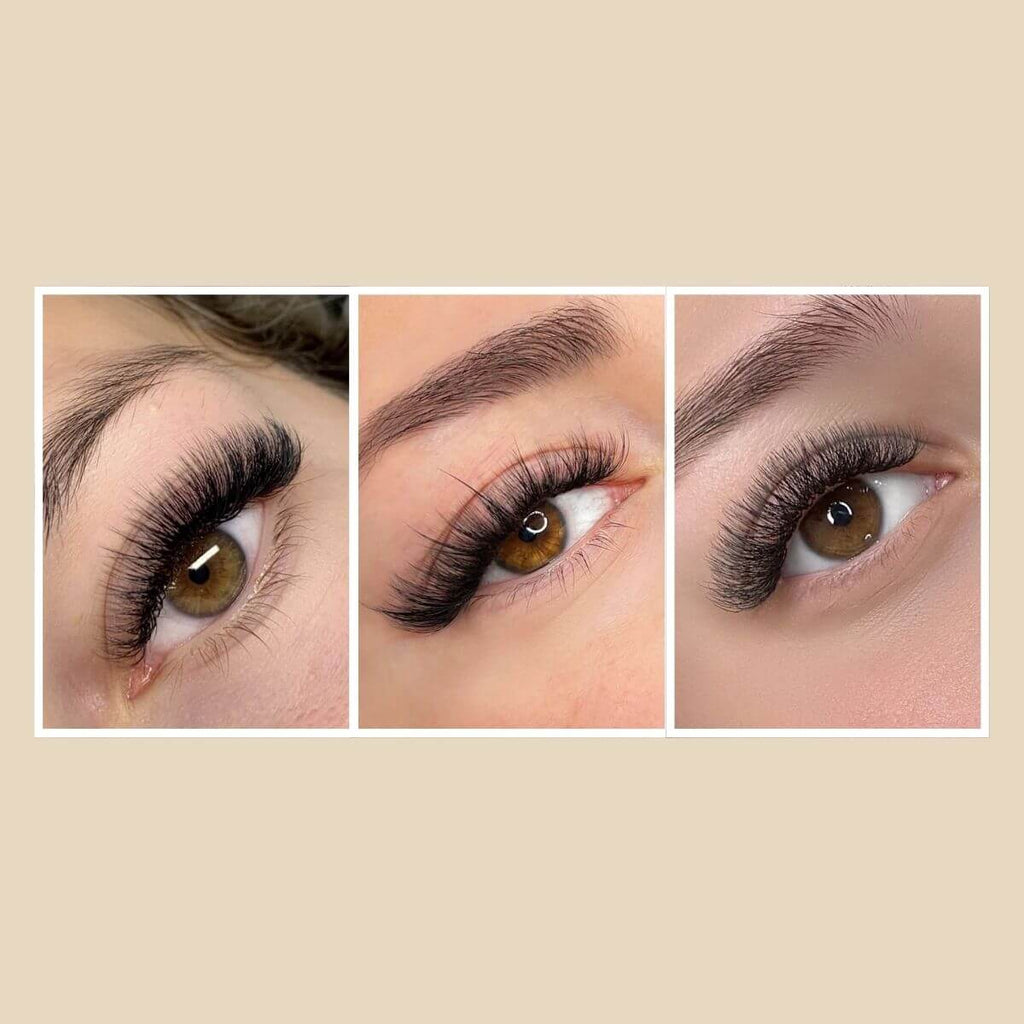
Classic lash extensions apply one extension to one natural lash at a 1:1 ratio. Extension diameters range from 0.10 mm to 0.15 mm. The result is a clean, mascara-like definition that adds length without stacking density.
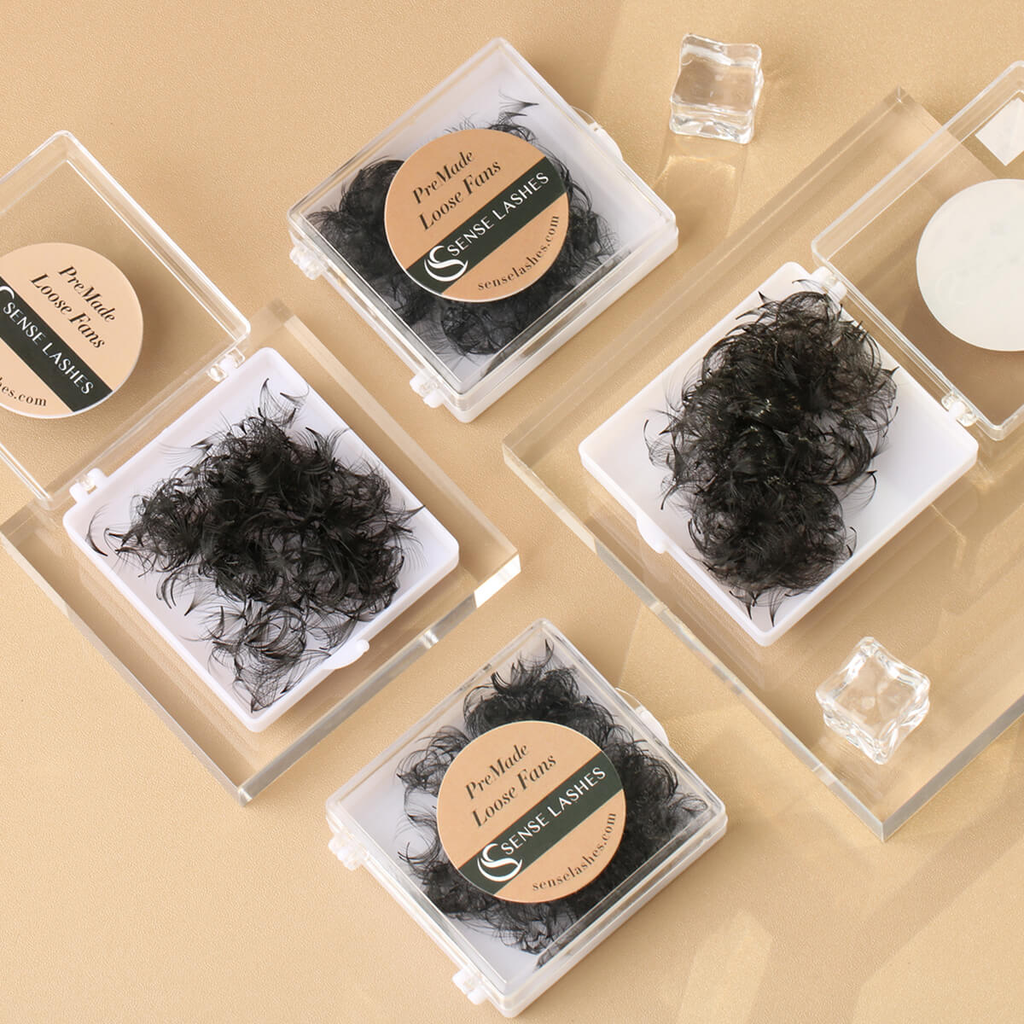
Volume lash extensions apply a fan of two to six extensions per natural lash. Diameters drop to 0.05 mm to 0.07 mm. Multiple ultra-fine fibers keep the combined fan weight within a safe range for the natural lash. This technique is also referred to as Russian Volume in many markets, and both terms describe the same application method.
Mega Volume pushes the fan to seven or more extensions per lash, reaching up to sixteen in advanced applications. Diameters fall to 0.03 mm to 0.05 mm. Ultra-fine fibers maintain safe total weight even at high fan counts.
| Technique | Extensions Per Natural Lash | Extension Diameter | Visual Result |
|---|---|---|---|
| Classic | 1 | 0.10–0.15 mm | Defined, natural |
| Volume | 2–6 | 0.05–0.07 mm | Full, fluffy |
| Mega Volume | 7–16+ | 0.03–0.05 mm | Dense, high-impact |
The ratio controls density. Diameter controls whether that density stays within safe weight limits for the natural lash.
Which Technique Should You Recommend to Each Client?
Technique selection is a clinical recommendation, not a style conversation. Evaluate three factors before any recommendation: natural lash health, client lifestyle, and eye structure.
Assessing Natural Lash Health First
Natural lash strength is the first checkpoint. No extension fan should exceed what the natural lash can support without bending or drooping. Check these markers during consultation:
● Natural lash diameter indicates safe load capacity. Fine lashes carry less weight per bond point.
● Lash density determines how a finished set reads visually across different techniques.
● Overall lash condition identifies brittle or damaged lashes that limit technique options.
Sparse lashes do not automatically qualify for Mega Volume. Sparse frequently means fine, and fine means lower load capacity. Light Volume at 2D to 3D is often the safer and more flattering choice for clients with thin natural lashes.
Matching the Technique to the Client’s Lifestyle and Wear Pattern
Daily habits predict which technique will hold and satisfy long-term.
● Classic fits clients with active routines, gym habits, or low-maintenance beauty preferences. At 1:1, every shed extension creates an immediately visible gap.
● Volume fits clients who treat lashes as a core part of their daily look. Residual fan density means the set looks fuller slightly longer between fills.
● Mega Volume fits clients with event-driven or editorial wear patterns who can sustain high fill frequency and cost.
If a client rubs their eyes regularly, sleeps face-down, or sweats heavily, start with Classic. Mechanical friction drives early loss across all techniques.
Mapping Eye Shape to the Right Technique
Classic applications allow flexible placement. You can work around hooded lids, asymmetry, or uneven growth without needing a uniform baseline. Mega Volume fans distribute best on a consistent, even lash line. Hooded eyes benefit more from curl selection than added density. Round eyes respond better to outer-weighted lengths in Classic than to uniform Mega Volume density. Almond eyes support all three techniques with proper lash mapping.
How Mega Volume Lash Extensions Differ from Standard Volume
The gap between mega volume and volume lashes goes beyond appearance. Fan construction, required skill, scheduling, and client experience all differ in ways that directly affect your business.
Fan Construction: Diameter, D-Count, and Fan Width
Volume fans hold two to six fibers at 0.05 mm to 0.07 mm each. Four to five fibers at 0.07 mm produce roughly the same combined weight as a single 0.15 mm Classic extension. This weight equivalence is the foundational safety principle behind the Volume technique.
Mega Volume fans drop to 0.03 mm to 0.05 mm. A twelve-fiber fan at 0.03 mm stays within a safe weight range for most healthy natural lashes. The lower the diameter, the larger the fan you can safely build. Fan width should stay narrow enough that the base sits cleanly on a single natural lash without overlapping adjacent lashes.
Match fan size to fiber diameter. Using 0.07 mm fibers in a ten-lash Mega Volume fan creates excess weight that the natural lash cannot sustain. Diameter selection is weight management, not an aesthetic preference.
Application Technique: Shimmy Method vs Standard Fan Build
Volume fans are commonly built using the pinching, wrapping, or shimmy method. The pinching and wrapping methods give artists direct control over fan width and base tightness. The shimmy method, which involves brushing the fibers sideways to open a symmetrical fan before pickup, is also widely used for Volume and is often preferred for its speed on larger sets.
Mega Volume fans most commonly use the shimmy method. At 0.03 mm diameter, the fibers are too fine for reliable pinching control, and the shimmy technique allows for more consistent fan spread across higher D-counts. It demands fine motor control, precision tweezers with fine enough tips for 0.03 mm fibers, and dedicated training beyond standard Volume programs.
Mega Volume should not appear on a service menu until the technicians performing it have completed Mega Volume-specific training. Poorly built fans create clumping, collapsed bases, and adhesive overload at the bond point.

What Mega Volume Clients Actually Experience Over Time
Mega Volume sets look fuller slightly longer as natural shedding begins. Clients may notice less urgency to rebook. Address this directly during onboarding. The actual fill interval should remain two to three weeks. Delayed fills create uneven fan weight distribution as surrounding natural lashes shed. Clients surprised by noticeable lash loss will not rebook consistently.
What Is a Classic Set of Lashes, and When Is It the Stronger Business Choice?
Classic is the most frequently underestimated service in lash studio menus. For throughput, accessibility, and margin consistency, it outperforms Volume and Mega Volume in many studio contexts.
Why Classic Sets Drive the Most Appointments in Most Studios
A Classic full set takes 90 to 150 minutes. Volume runs 150 minutes or more. Mega Volume runs 180 minutes or more. Classic allows more appointments per technician per day. Material costs are lower. The eligible client pool is larger because natural lash prerequisites are less restrictive. For studios building appointment density, Classic throughput creates a revenue baseline that Volume and Mega Volume cannot replace.
When Classic Extensions Outperform Volume Technically
Classic is the stronger technical choice in specific scenarios.
● Clients with strong, naturally dense lashes benefit from Classic’s clean separation. Volume fans on an already-full lash line can produce a heavy, overdone result.
● Hooded and deep-set eyes need lift more than density. A D or DD curl in a Classic set opens the eye more effectively than a dense Mega Volume set at a lower curl.
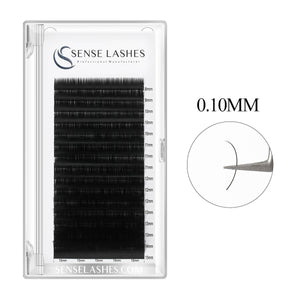
0.10MM Premium Classic Eyelash Extensions
LENGTH: MIXED 8-15MM
CURL: C
● Clients with adhesive sensitivities benefit from Classic’s minimal bonding surface. Reduced adhesive contact lowers the risk of reaction.
These client types are common in most studios. Classic is not a secondary service.
Common Application Errors in Classic Sets That Affect Retention
Classic errors are fully visible at 1:1. The most frequent technical problems are:
● Using diameters above 0.15 mm on fine natural lashes places excessive mechanical load at the bond point and accelerates early shedding.
● Placing extensions more than 3 mm beyond natural lash length adds excessive stress the follicle cannot sustain long-term.
● Poor isolation before bonding creates stickies. When a natural lash with stickies sheds, it pulls the adjacent bonded lash with it, producing compound loss.
Classic retention problems are almost always technical errors, not client aftercare failures.
Pricing, Profitability, and Client Expectations Across All Three Techniques
Pricing each technique correctly protects your margin and sets accurate client expectations from the first appointment.
Time-Per-Set and Its Direct Impact on Hourly Rate
| Technique | Average Full Set Time | Typical US Price Range |
|---|---|---|
| Classic | 90–150 min | $100–$250 |
| Volume | 150–210 min | $180–$400 |
| Mega Volume | 180–300+ min | $200–$500+ |
Prices reflect mid-tier to premium US salons. Rates vary by market, artist experience, and location. In higher-cost markets such as Los Angeles, pricing typically falls toward the upper end of each range.
Calculate your effective hourly rate per technique before setting menu prices. A Volume set priced at $180 requiring three hours may generate a lower hourly rate than a Classic set at $120 in 90 minutes. Price labor time, not lash count.
Annual Client Spend by Technique: Setting Realistic Expectations
All three techniques require fills every two to three weeks. A Classic client filling every three weeks at $60 per fill spends approximately $1,040 per year on fills. A Mega Volume client filling every two weeks at $120 per fill spends approximately $3,120 per year.
These numbers matter during onboarding. Clients who cannot sustain fill frequency reduce rebooking consistency and overall lifetime value regardless of technique tier.
How to Communicate Value to Clients Across Technique Tiers
Classic clients experience visible gaps quickly at 1:1. Rebooking motivation stays high, but the client may perceive the service as high-maintenance. Volume and Mega Volume clients see a slower visual decline between fills. Proactive reminder systems are more critical at the higher-investment tier. Frame the value conversation around annual consistency and lash health, not single-session price comparison.
The Biggest Technique Recommendation Mistakes in Classic, Volume, and Mega Volume
Most technique errors happen at the recommendation stage, before a single extension is placed.
Recommending Mega Volume to Clients With Weak or Compromised Natural Lashes
This is the most damaging recommendation error in technique selection. Sparse lashes are typically fine lashes, and fine lashes have low load capacity. A ten-fiber Mega Volume fan on a very fine natural lash creates stress the follicle cannot sustain. The outcomes are premature shedding, stickies from fan weight pulling adjacent lashes, and potential long-term lash thinning with repeated application.
Always complete a lash health consultation before recommending Volume or Mega Volume. Clients with fine or compromised natural lashes should start with Classic or 2D to 3D Light Volume.
Using Incorrect Diameter in Mega Volume Applications
Using overly thick extensions in Mega Volume fans is a technical error that affects both safety and result quality.
● Four to five fibers at 0.07 mm already approach the classic extension weight at the bond point.
● Ten fibers at 0.07 mm create a combined load most natural lashes cannot carry safely.
As a general guideline, use 0.03 mm for fans above 10D. For 7D to 10D fans, 0.05 mm is typically the maximum appropriate diameter. Diameter selection is weight management, not an aesthetic preference.
Overlooking Technician Skill as the Primary Variable
Your service menu should reflect what your team can execute consistently, not what clients request. A well-built Classic set outperforms a poorly constructed Mega Volume set in every measurable outcome: retention, natural lash health, client satisfaction, and rebooking rate. If your technicians are not trained at the mega volume level, do not add it to the menu based on client demand alone. Execution skill is the primary variable in every technique outcome.
Choose the Right Classic, Volume, or Mega Volume Technique for Every Client
Technique selection starts with natural lash assessment, moves through client lifestyle, and ends with your team’s execution capability. Classic builds appointment throughput and serves the widest client pool. Volume delivers fullness with manageable weight. Mega Volume creates maximum density for the right candidate with the right technician. Match each client to the technique their lashes can actually support, and your retention and rebooking rates will reflect it.

FAQs
Q1. Can I Fill a Volume Set Over an Existing Classic Set?
No. Filling Volume fans over Classic extensions creates uneven weight distribution and inconsistent bonding surfaces. Complete a full removal first, then apply the new Volume set on clean, healthy natural lashes. Skipping removal compromises both retention and lash health.
Q2. How Long Do Lash Extensions Last With Classic vs Volume?
Both techniques last the same duration. Extensions shed with the natural lash cycle, typically requiring fills every two to three weeks regardless of technique. Longevity depends on natural lash health, aftercare, and application quality, not technique type.
Q3. Why Do My Mega Volume Fans Collapse After Application?
Collapsed fans typically result from too much adhesive at the base, fibers that were not fully separated before pickup, or tweezers with insufficient tip precision for ultra-fine diameters. Check your shimmy technique and reduce adhesive contact to the fan base only.
Q4. Can Clients With Oily Skin Get Lash Extensions?
Yes, but technique selection matters. Oily skin accelerates adhesive breakdown, so Classic is the more forgiving choice. Fewer bond points mean less total adhesive exposure. Recommend oil-free aftercare products and slightly shorter fill intervals to maintain retention.
Q5. How Does Eye Shape Affect Which Curl Type to Pair With Each Technique?
Curl type compensates where technique cannot. Monolid eyes need L or LC curls to prevent extensions from disappearing under the lid fold. For hooded and deep-set eyes, curl selection drives more visible lift than increasing fan density.
Leave a comment